


If you are a Malaysian student who has an avid interest in the relationship between space and physics, you've probably read a lot about Tan Sri Dr Mazlan binti Othman.
She is none other than the first astrophysicist in Malaysia who has previously served as the director of the United Nations Office for Outer Space Affairs (UNOOSA) in Vienna.
We're pretty sure you can guess what her favourite school subject was and what she majored in during her university days correctly!
Before you are thinking of pursuing a similar field of study for your undergraduate studies, you might want to build a solid foundation in Physics when you're taking your A-Levels studies.
In this article, we will tackle 5 essential tips to master the A-Levels Physics subject throughout the semesters.


Tip 1: Diving Deep Into Each Chapter And Sub-Topics (Comprehension Is Key!)
Altogether there are 25 chapters that you need to study for all five papers of your A-Levels Physics assessments.
We know it could be overwhelming at first glance. But it's important to identify the key sub-topics and learning outcomes for each chapter as you're revising.
This will help you tremendously when you're making your own notes or doing topical exercises later.
For example, let's look at the sub-topics that you need to master for the 11 chapters under the AS syllabus.
Chapter 1: Physical quantities and units
- Physical quantities
- SI units
- Errors and uncertainties
- Scalars and vectors
Chapter 2: Kinematics
- Equations of motion
Chapter 3: Dynamics
- Momentum and Newton’s laws of motion
- Non-uniform motion
- Linear momentum and its conservation
Chapter 4: Forces, density and pressure
- Turning effects of forces
- Equilibrium of forces
- Density and pressure
Chapter 5: Work, energy and power
- Energy conservation
- Gravitational potential energy and kinetic energy
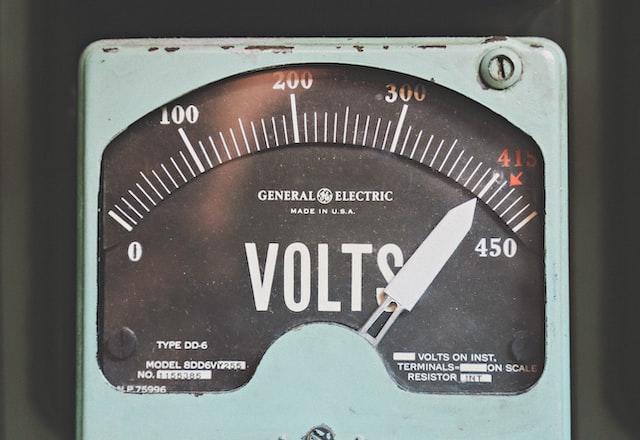
Photo by Thomas Kelley on Unsplash
Chapter 6: Deformation of solids
- Stress and strain
- Elastic and plastic behaviour
Chapter 7: Waves
- Progressive waves
- Transverse and longitudinal waves
- Doppler effect for sound waves
- Electromagnetic spectrum
- Polarisation
Chapter 8: Superposition
- Stationary waves
- Diffraction
- Interference
- The diffraction grating
Chapter 9:Electricity
- Electric current
- Potential difference and power
- Resistance and resistivity
Chapter 10: D.C. circuits
- Practical circuits
- Kirchhoff’s laws
- Potential dividers
Chapter 11: Particle physics
- Atoms, nuclei and radiation
- Fundamental particles
Apart from theoretical learning objectives, candidates should also remember that they will be tested for practical components under both AS and A-Level topics.
This is in alignment with the third assessment objective (AO) of the Cambridge International AS & A Level Physics 9702 syllabus.
Learning outcomes under 3rd AO: Experimental skills and investigations
- Candidates need to demonstrate good skills in carrying out experiments and investigations
- Candidates need to master the right way to collect, record and present observations, accurate measurements and estimates
- Candidates should be able to analyse and interpret experimental data to finalise solid conclusions
- Candidates should correctly evaluate the methods and quality of the experimental data and provide good suggestions for future improvements.
Don't miss these amazing revision resources for your A-Level Physics papers.
Tip 2: Creatively Summarise & Memorise The Important Points (Divide & Conquer)
After you have reviewed all the chapters, it's time to break them down into simple and concise points.
We know it's tempting to just highlight from top to bottom as you're turning the pages. But that's not effective in the long run.
What you can do is use diagrams, tables, mind maps and even bullet points to summarise everything you have learnt from the topic.
For example, you can use tables to list the difference between scalar and vector quantities, the difference between transverse and longitudinal waves and many more.
When it comes to concepts that require formulas and graphs, make sure you include the right illustrations and precise elaborations so that you can relate them together.
Bullet points are very practical when you need to memorise important definitions (according to topics) or when you need to explain a phenomenon step by step. This will help you tremendously when you are answering multiple choice questions (Paper 1) or short structured questions (Paper 2 and Paper 4) that require you to define/explain something.
You can arrange your notes according to the topics in AS and A-Level Physics so that you can it's easier to remember and relate them when you're preparing for different papers.
Read this article to master the latest examination format and marking scheme for your A-Level Physics assessments.
Tip 3: Master The Important Formulas & S.I. Units
The more you study Physics, the more you'll see its resemblance to Mathematics.
You'll come across plenty of calculation questions and core formulas that you not only have to memorise but also correctly apply according to the given scenario.
For instance, under the topic of energy conservation, you'll have to apply the formula: P = W / t (Power = Work over Time) to solve the problems, in which the S.I unit for Power is Watts.
When you are answering the short structured questions or the practical components, make sure you always list down the complete formula in your steps and include the correct S.I unit for your final answer. If you fail to do that, it will cause you to lose some marks.
The more well-versed you are with the formulas and S.I. units, the more confident you'll be to ace the A-Level Physics subject.
Tip 4: Pay Attention To The Practical Experiments & Procedures
Even as a Science student during your SPM/IGCSE level, you should know that all three Science subjects have great emphasis on experiments. That's precisely the reason why we have labs and why we learnt the skills of sketching graphs and collecting data.
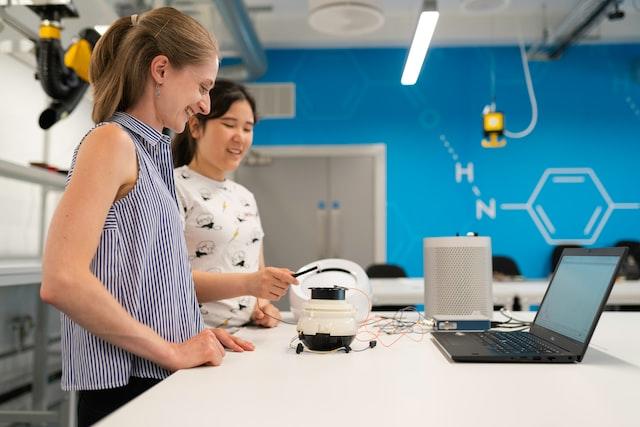
Photo by ThisisEngineering RAEng on Unsplash
When it comes to Paper 3 and Paper 5 of your A-Levels Physics, you will be tested exclusively on your experimental skills.
For Paper 3 (AS Level), you will be given one question which requires you to collect data, plot a graph and come out with conclusions and another question where you will focus specifically on the experiment's method and ways of improvement.
For Paper 5 (A-Level), you are required to plan an experiment and present your answers with a diagram and extended writing whereas the second part of this paper will centre around analysis, conclusion and evaluation components. Calculations might be involved.
Frett not, you can find the guidance for practical components through the latest Cambridge International AS & A Level Physics 9702 syllabus.
Tip 5: Take Refresher Lessons With A Physics Tutor
Now that you have gained a whole new insight into the ways you can study for different tested components for your A-Levels Physics, you might be wondering what's the next step you can take.
Sometimes as you are revising towards the end of the syllabus, you might find that you have a vague memory of what has been covered in the earlier chapters. And that's normal when you have other subjects that you're studying at the same time as an A-Level student.
Instead of cramming everything in one revision session, you can opt for refresher tutoring sessions with an experienced Physics tutor. At this point in time, you can just go straight to review the earlier lessons and do some relevant exercises to refresh your memory without starting from the basics again.
You can find a Physics tutor that caters to your learning needs and pace via Superprof!
Superprof is a tutoring platform that allows students to find the perfect tutor from a wide selection of home tutors and online tutors of different subjects across the globe. Currently, there are 173067 Physics tutors that offer their services in Malaysia, and the average hourly rate for Physics tutoring is RM44 per hour.
See, you have many talented Physics tutors to learn from, at such an affordable price too!
Do you know that 95% of Superprof tutors also offer their first lessons for free? Now, isn't that a great deal to begin your Physics tutoring?
Superprof allows you to find the perfect tutor through a series of effective filtering according to your subject, current city, maximum budget for your hourly rate, preferred learning methodology, the tutors' years of experience and many more.
All you need to do is just follow these three simple steps.
1)Find your perfect Physics tutor.
Look through and compare the Physics tutors' profiles freely and pick one that fits your preference best according to the learning mode, qualification, experience, hourly rates, past reviews etc). Contact the tutor via their profile for further discussions.

Photo by Ling App on Unsplash
2) Organise your Physics lessons
Talk to your Physics tutor and discuss the availability, frequency and intensity levels of the lessons. Be honest about your learning expectations and learning needs. At Superprof, you can easily schedule your future lessons and finalise your payment details securely via the inbox feature.
3) Discover a whole new world of learning possibilities
If you intend to learn other subjects other than Physics, you can invest in a Student Pass ( at only RM25) to have unlimited access to all the tutors at Superprof where you can take your passion for learning to the next level.
There you have it. Five practical tips to have a fruitful preparation for your A-Level Physics assessments. We hope you'll not only enjoy this subject but excel tremendously too.
Who knows, you might be the next Malaysian to make a name in this field of study.
Summarise with AI:
Did you like this article? Leave a rating!

 Loading...
