
How to create sejarah study notes? This is probably a million-dollar question for many students studying the subject. Unlike other subjects, Sejarah requires remembering a lot of facts, dates, names, and events, which can feel overwhelming.
Many students online swear by note-making as one of the best methods to study Sejarah and retain everything they learn. Studying this subject can be overwhelming and daunting, especially when you need to organise information from buku teks sejarah tingkatan 4 and buku teks sejarah tingkatan 5, and you don’t know how to create an effective note document.
The good news is, you can learn to prepare your own notes and boost your chances of scoring top marks. This method, when paired with the right study resources, becomes a golden formula for success. All you need to do is learn how to take effective notes and use the resources smartly.
In this article, we’ll show you how to create high-quality summaries or ringkasan, where to find the best resources, and how to use them smartly to excel in the national examination.
Disclaimer: Throughout this article, the terms “summaries” and “study sheets” are used interchangeably. Both are meant to refer to notes created to help you understand and revise key topics more effectively.
Nota Sejarah SPM: How to Make Better Study Sheets & Use Top Resources
- How to Create History Notes?
- Buying History Notes Online: What You Need to Know & What to Look Out For?
- Other Resources to Support You in Mastering History



How to Create History Notes Using Buku Teks Sejarah Tingakatan 4 & 5?
Creating your own book for note-taking is one of the most effective ways to study for the exam. Instead of copying the textbook word for word, highlighting all the paragraphs in yellow, or relying on ready-made summaries, making your own summaries helps you understand the material better and retain it longer. This may sound tedious at first, but follow this step-by-step guide, and you’ll be on your way to building high-quality study materials.
1. Start with the textbooks
Your buku teks sejarah tingkatan 4 and buku teks sejarah tingkatan 5 should be your besties now. These are the core sources for the subject, so you don’t need to buy extra reference books.
- Read each chapter carefully
- Highlight key facts, dates, and names
- Summarise everything in your own words
If summarising a whole chapter feels overwhelming, break it down by sub-topics. For example, in buku teks tingkatan 4, chapter 2 has eight sub-topics. Go through each one carefully and summarise it in your notebook.
Tips for Effective Notes:
- Focus on causes, events, and effects.
- Use bullet points for clarity and easy revision.
- Align your summaries with the exam format. For example, summarise topics in the way questions are asked, such as: “Faktor kemunculan gerakan nasionalisme di negara kita pada abad awal ke-20.”
- Use diagrams, timelines, or tables where possible. They help you visualise events and remember them as a story.
- Keep your summaries concise. Avoid long paragraphs or unnecessary details

By following these steps, you’ll gradually build a strong set of poket nota that’s easy to revise before exams and helps you understand the subject, not just memorise it.
2. Use your own words
This may sound basic, but many students copy everything word-for-word from the book. When rewriting, use your own phrasing based on what you’ve truly grasped. This allows your mind to process ideas more deeply instead of relying on pure memorisation.
Tips:
- Explain concepts as if you’re teaching someone else (the Feynman technique)
- Use short sentences and clear phrases
- Avoid copying entire paragraphs from textbooks
- Use simple Malay language, avoid fancy words
Most importantly, retain the keywords as they are. For example, if the keyword in the chapter says “Perjanjian Malaysia 1963”, you can create acronyms or shorthand for your own revision purposes, like “PM1963”. However, don’t change or shorten the official term when writing your summaries. Always keep the original and full keyword intact when you’re writing.
History is the sum total of things that could have been avoided.
Konrad Adenauer, Former Chancellor of Germany
3. Organise by topics and tingkatan
Structure your summaries by Form 4 (Tingkatan 4) and Form 5 (Tingkatan 5) chapters. You can also organise by themes or periods, such as:
- Colonial history
- National independence
- Modern Malaysia
This makes it easier to revise and locate information during the revision process.
4. Make pocket notes
If you prefer carrying it around, consider condensing your notes into small, pocket-sized sheets. These are handy for last-minute revision or quick revision when you want to recall some information from a topic. You can include:
- Key dates and events
- Important figures
- Short definitions
- Quick tips for answering KBAT questions
If you need help with this, watch the video below to learn how to create your own summaries.
5. Use visual tools
This is for the students who prefer learning visual elements. You can enhance your summaries with your preferred visual elements.
- Timelines for chronological events
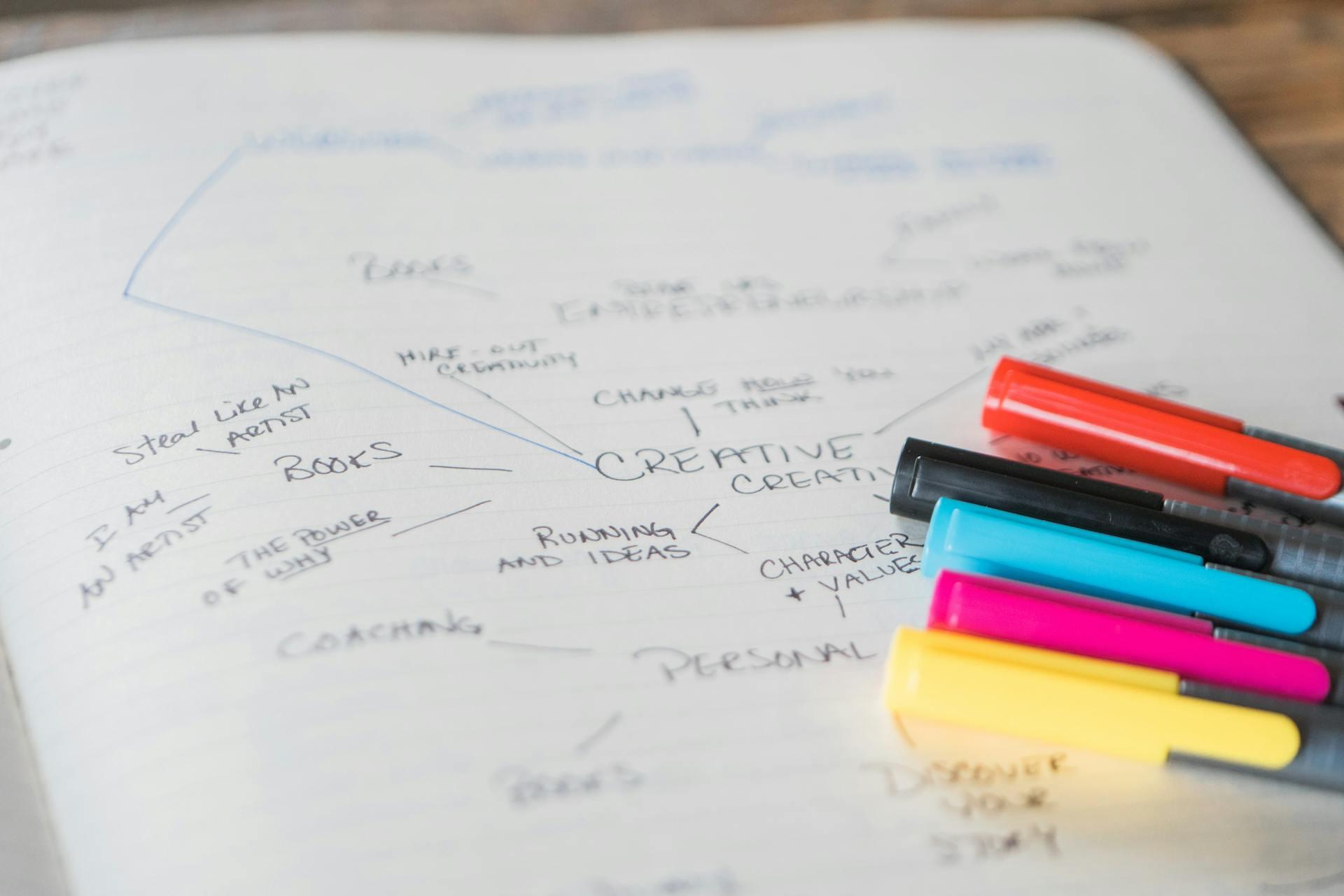
- Mind maps for connecting causes and effects
- Tables for comparing leaders, treaties, or policies
- Diagrams for complex historical processes
While textbooks are plain and boring, you can turn your summaries into something visually pleasing to make the subject less boring and more interesting. Visuals can make the subject feel lighter, easier to recall, and far more engaging during revision.
6. Review and refine
After making the initial ones, review them regularly to ensure accuracy and completeness. Add or remove points as needed, rewrite if necessary, and make sure your summaries are concise, clear, and exam-oriented.
Most importantly, keep them neat and consistent, whether digital or handwritten. A well-organised note encourages more effective revision; most importantly, it promotes revision itself.
There are other important study hacks you can combine with effective note-taking, and we’ve written a full article covering them all. Check it out to boost your exam preparation.
Buying Nota Ringkas Sejarah Online: What You Need to Know
For students who want a reference or are struggling to create their own, it’s possible to buy nota sejarah online. Many students who scored A or A+ in their SPM examinations create and sell the study sheets they used for their exams in PDF format. These sheets can cover content from Buku Teks Tingkatan 4 and Tingkatan 5 and are often well-organised, concise, and exam-focused.
Benefits of Buying Notes/Study Sheets
- Time-saving: Get a structured set of notes instead of starting from scratch
- Exam-oriented: Many top-scoring students include high-frequency topics, past year questions, and quick revision tips
- Inspiration for your own: You can use them as a reference guide while still creating your own personalised one
- Helps struggling students: Buying these study sheets allows students who are struggling to create their own
Things to Consider
- Affordability: Some PDFs are sold for a small fee. Only purchase if it fits your budget
- Not a replacement: Buying should complement your learning, not replace active studying
- Quality check: Get it from students with verified top grades. Check reviews, previews, or sample pages if available. Speak to the seller if needed. Don’t give away your money just like that.
Buying these study sheets online can be a useful supplement; still, the best results come from combining these with your own study methods, such as revising chapters every day, watching videos on a topic, and practising a lot of past-year papers.
Alternatively, you can also get it for free from online resources, which we’ll see later in the article, so keep reading. Now, let’s find out what you should be looking for when buying online.
Buying Nota Ringkas Sejarah Online: What to Look Out For?
We’ve looked at the benefits of buying nota sejarah online. Once again, this is not a shortcut to success. As mentioned, if you’re not revising regularly and practising past-year papers, you’ll still not get the grade.
Now, let’s take a look at what you should look out for when buying these study sheets online. While purchasing it can be helpful, it’s important to know what to look for to ensure your investment is worth it.
- Verified quality and credibility
- Look for notes uploaded by students who have proven results in the exam
- Check for reviews or testimonials from other buyers
- Avoid random PDFs found online, especially free content from unknown sources, which may contain errors and not be the most up-to-date
- Ensure it follows the KSSM curriculum
- Content coverage
- Ensure it covers all chapters from Tingkatan 4 & Tingkatan 5 (come sellers sell separately ot as a package)
- Ask for a sneak peek to see how interactive they are: do they include mind maps, tables, timelines, and are they easy to read and follow?
- Format and usability
- PDF versions are the best because they’re easy to open and view on any device
- Check if there are videos explaining mind maps, timelines, or tables.
- Confirm if these videos offer lifetime access for easy revision anytime.
- Affordability and value
- Check the price and the quality of the content. Don’t pay for study sheets that aren’t worth it – you can create a better one
- Only purchase it if you can afford it and if you struggle to create your own
- Remember, purchased study sheets are supplements, not replacements for textbooks. You can’t expect an A+ just because the seller got one.
Buying well-crafted study materials online can be very helpful if done wisely. Always focus on quality, content, coverage and usability.
Your brain processes visuals 60,000 times faster than text, so timelines, mind maps, and diagrams make remembering Sejarah facts much easier.
Other Resources to Support You in Mastering SPM History
We’ve looked at the ways to create your own summaries, step-by-step and other options like buying the study sheets under certain circumstances. Let’s take a look at the other resources that will definitely guide you to score well in Sejarah. When these resources are paired with active note-taking, you’ll be guaranteed your desired grade.
1. Sejarah Textbook
The KSSM buku teks sejarah tingkatan 4 & 5 are the best resources available and should be used as the main reference for studying the subject. Other reference books published by book companies may be used as a second reference if necessary. This is because the exam questions are taken/processed/drafted from textbooks. Most additional reference books do not thoroughly cover the same materials as textbooks.
The textbooks are excellent examples of writing essays. While it is true that the writings and style of writing in the textbook are long, with the right studying method, learning history can be interesting and thorough.
2. YouTube
Malaysians love to watch videos online. Watching online videos usually takes up most of the hours of the total amount of internet use. YouTube is the most popular platform for watching such videos.
People search for different types of videos on YouTube. Most of them would like to watch the current viral stories, while youngsters may usually look for gaming videos. Others may be stuck watching funny and cute cat video playlists for many hours.
Among the many advantages of YouTube, one of the most beneficial ones for students is the availability of various educational channels. This variety includes forms of light education videos referred to as edutainment and education to directly support students who face problems with the syllabus. These videos have gained so much popularity that many teachers have created and uploaded videos on YouTube to guide students to pass the subject.
These videos by Chekgu Anas are great for students as they cover everything from the textbooks. Videos are available for students from 1 to 5. There are two types of videos on this channel:
a) Video pembelajaran – Belajar dan Faham (Learning video - Learn and Understand)
These videos are basically a slideshow of summaries that cover simple and interesting learning information. The teacher gives relevant explanations to assist students to learn in-depth based on the subtopics.
b) Video ulangkaji- Revisi Pantas (Review video - Quick Revision)
These are short 5-minute videos for each chapter, which emphasise important content to ensure students are prepared for exams. If they want further explanations, students can opt to watch the LEARN & UNDERSTAND videos.
This is a compilation of videos produced by YouTuber teachers from the YouTuber Academy. These videos will benefit the students who will sit for the trial examinations and the actual examinations, as they will assist them with their revision process.
- Cheqghu Channel
CHEQGHU CHANNEL on YouTube features videos that focus on storytelling techniques from the Sejarah syllabus in order to bring this subject closer to students' hearts. These videos share beneficial knowledge for all Form 5 students.
- Didik TV on Astro
DidikTV KPM is a TV-education channel launched by the Ministry of Education, available on Astro (channel 147). You can tune into this channel to watch shows like DidikTV Road to Success, conducted by an experienced school teacher, providing tips and tricks to answer the questions better. Alternatively, you can also watch the recorded sessions on YouTube.
3. Notes
If you find it challenging to create your own summaries or aren’t sure which points are most important, many online resources provide ready-made versions. You can use these as a reference, but creating your own summaries will help you retain the content more effectively. Looking at summaries made by others can also offer a fresh perspective and improve how you organise key points.
On this website, students can find many useful resources not only for the Sejarah subject but other subjects. You can find summaries, reference materials and other resources, such as practice questions and even the SPM exam timetable.
- Sistem Guru Online
This website offers concise study summaries, including mind maps, to make it easier for students to understand important facts and events. The summaries are done well using different colours and fonts to captivate students' attention.
These are reliable resources that can serve as a central reference for understanding the subject as a whole.
4. Exam Reference Papers
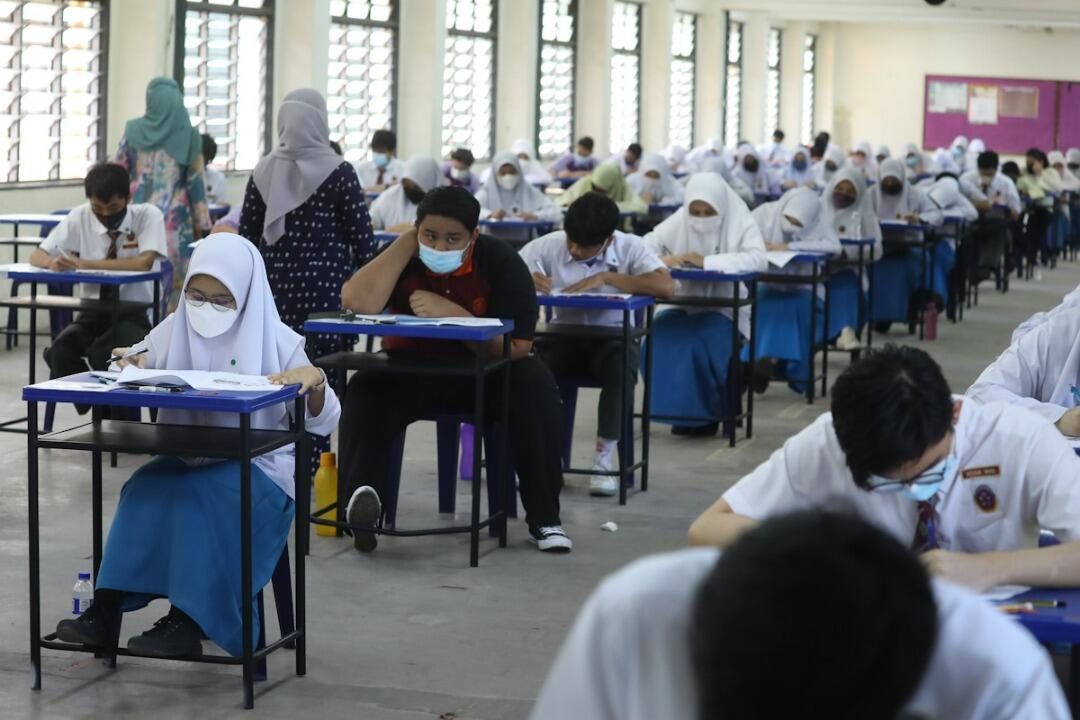
Candidates who attempt many sejarah reference papers, such as the actual past year papers, trial examination papers from different states or even practice question papers, will be better prepared, more confident, enthusiastic and be able to predict the shape or format of future questions.
Since SPM is the main national exam for students who study under the Malaysian National Curriculum, which determines the future academic path of many Malaysian students, there are ample resources available that make it easy for students to find study materials, practice questions and revision materials.
- Soalan Percubaan SPM Sejarah
There are many different trial examination papers from various states that students can study and attempt in order to help them score well in the subject. These trial papers are set by experienced teachers, and some of these teachers are actually involved in setting the actual examination questions.
- Actual Past Year Examination Papers
Knowing the examples of previous years' questions is very useful for candidates. It gives an overview of how a question is asked, and the number, distribution and frequency of each topic.
- Practice Questions
If you have not finished studying all the chapters for both Form 4 and Form 5 yet and feel that you are not ready to attempt the actual past year's papers and the trial exam papers, you can attempt practice questions for each chapter as you study as well.
Most importantly, understanding how your papers are graded is crucial to ensure you’re practising the correct answer-writing techniques.
5. Private Tutor
One of the most effective ways to learn this history subject is by taking lessons with a private tutor. Everyone has their own learning style. Some are visual learners, while others may be auditory learners. If you have a private tutor who will design the lessons according to your learning style, you will be able to progress faster in mastering the subject.
You will be able to discuss your goals before you start lessons with your tutor, which will lead you to have tailor-made lessons. Some might need to learn how to answer the KBAT questions. Others may need to brush up on their skills in remembering historical facts and events. Whatever area needs improvement in the subject for you to score an A+ in the examination, having a private tutor will support you in achieving it.
Getting individual one-to-one attention means you get to learn at your own pace. The tutor will focus solely on you during your session. If you are shy to ask for a more detailed explanation on a particular topic, it will only be you and your tutor during classes. This will put you at ease, improve your concentration, and build your confidence.
Superprof is an online platform which connects students with tutors from all around the world. Superprof tutors are highly qualified to teach their respective subjects as they are required to upload their credentials, which are verified before being posted on the website.
Students have the flexibility to choose according to their preference based on the tutor’s availability, qualifications and classes being conducted online or face-to-face. Search for the right tutor here on Superprof!
Summarise with AI:
Did you like this article? Leave a rating!

 Loading...