
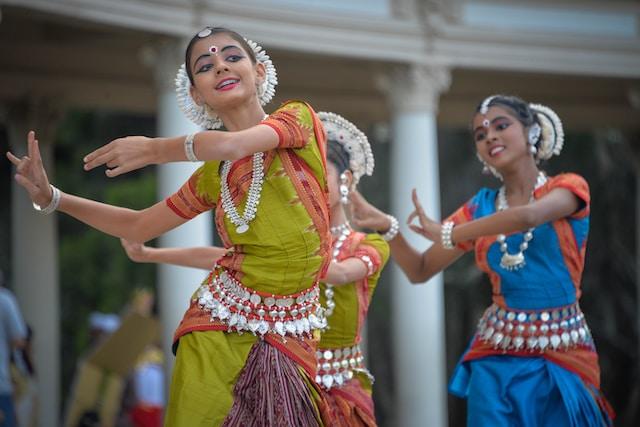

One of the ways we can tell a master from a new student when it comes to dancing is through their actions and movements.
There's a clear difference in terms of how they articulate their techniques and perform consistently.
From memorising the basic steps to coordinating the different body parts and even making the right facial expression, a good dancer is born.
While this principle rings true across all dance genres, it is especially obvious when it comes to a classical Indian dance like Bharatanatyam which has a rich cultural heritage.
Do you know that there are close to 10 core techniques in Bharatanatyam?
In this article, we will review some of the essential techniques as you build a strong foundation for Bharatanatyam and discuss the steps that you can take to improve your Bharatanatyam dancing skills.


Three Myths About Learning Bharatanatyam
We believe it's important to have the right mindset before you dive deep into the techniques of learning Bharatanatyam.
Oftentimes, we unknowingly have self-imposed limitations that cause us to have doubts about learning something new for the first time.
Here are three myths about Bharatanatyam that you should debunk:
Myth 1: Bharatanatyam is an exclusive dance among the Indian community
While it is true that Bharatanatyam's root originates from Tamil Naidu, a southern part of India, it is a universal dance that has been embraced by many non-Indian dancers all across the globe.
Take, for instance, veteran Malaysian dancers such as Datuk Ramli Ibrahim and Mavin Khoo who have performed Bharatanatyam for a very long time.
Not only that, the National Academy of Arts Culture and Heritage (ASWARA) provides a multicultural approach when it comes to the Bharatanatyam syllabus for non-Indian students.
Do you know that there is a growing population of Japanese in Gurungan and parts of Delhi who are learning Bharatanatyam? This serves as proof that many dance lovers view Bharatanatyam as a bridge across cultures and nationalities.
Take a look at some examples of non-Indian Malaysian performers who are excellent Bharatanatyam performers.
Myth 2: It's too late to master Bharatanatyam as an adult
With clear focus, consistent practice and exceptional passion, students of all ages can enjoy and excel in Bharatanatyam.
There are many working adults and even retirees who choose to pick up Bharatanatyam and in due time become an established dancer.
There are many group lessons and one-to-one lessons that are catered for adult learners according to their learning level and learning pace.
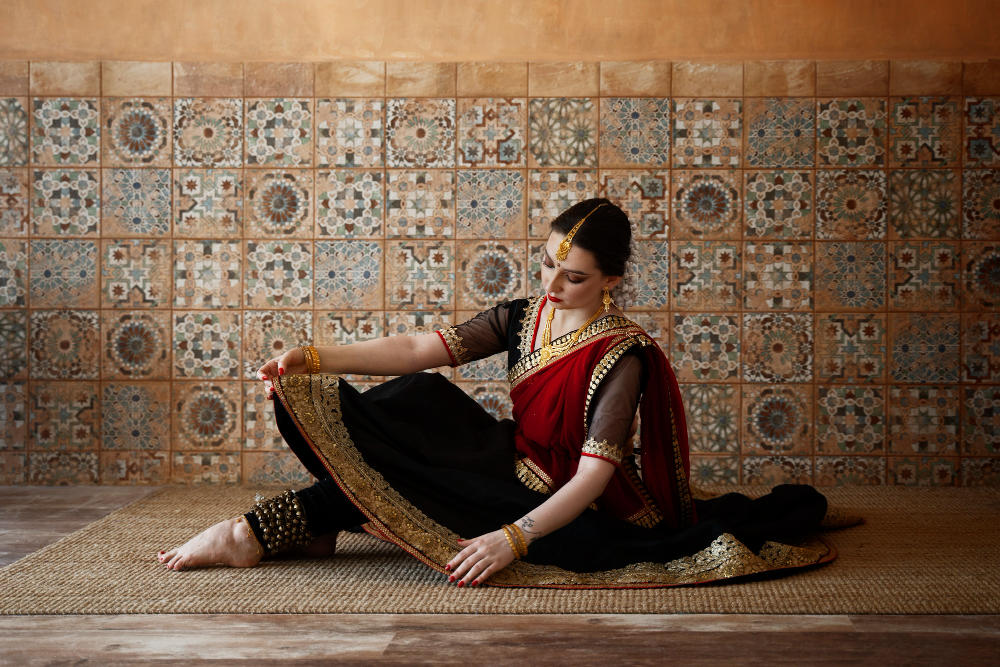
Image by Freepik
Myth 3: I should only learn Bharatanatyam if I intend to pursue a full-time dancing career
Given that it may take years for a Bharatanatyam dancer to truly perfect their craft, you may think that it is a waste if you don't turn professional one day.
First and foremost, you must recognise that Bharatanatyam is essentially a performing art that is meant to be enjoyed and appreciated. One of the main motivations to learn Bharatanatyam is definitely the health benefits and personal fulfilment that you can gain from it.
Think about it this way. It's the same when you learn a new sport. You don't necessarily need to pursue it competitively just because you are good or you have spent lots of time learning it.
Now that you have relearned new facts about Bharatanatyam, it's time to look at the key components of Bharatanatyam dancing techniques!
Core Key Techniques That Are Important In Bharatanatyam
We have previously mentioned that there are close to 10 techniques in Bharatanatyam. For now, let's focus on the core key techniques that you should aim to master as you begin to learn Bharatanatyam.
Core Technique 1: Adavus [Steps and Movements]
Adavus comprises the basic steps and movements of your hands, legs, feet and body during the whole dance.
Some examples of Adavus that you will come across include:
- Tatta Adavu
- Natta Adavu
- Visharu Adavu
- Tatti Metti Adavu
- Teermanam Adavu
- Mandi Adavu
- Sarikal Adavu and others
Core Technique 2: Mudras [Hand Gestures]
One of the main focuses of Bharatanatyam is certainly the distinctive hand movements during the dance.
Every hand movement and gesture conveys different things and meanings, depending on the storyline of the choreography.
Some examples of Mudras that you will learn throughout your lessons are:
- Shikhara Mudra
- Katakavardhana Mudra
- Alapadma Mudra
- Hamsasya Mudra
- Ardha Chandra Mudra
- Tripataka Mudra
- Anjali Mudra and many others
Core Technique 3: Abhinaya and Bhava [Emotion Expressions]
We can't miss out on conveying the emotions of Bharatanatyam through facial expressions, body movements, and other means while on stage.
Abhinaya and Bhava work together like a package to help you convey the story/ message of the dance through your costumes (hairstyle, makeup, colours), embellishments (jewellery), voice, and the unleashing of inner emotions (sentiments) to your audience.
Some of the emotions (known as Navarasa) that can be expressed through Bhava include:
- Tranquillity
- Fear
- Wonder
- Love
- Compassion
- Humour
- Heroism and others
You can master Bharatanatyam through different forms of dancing classes that are available near you, whether offline or online.
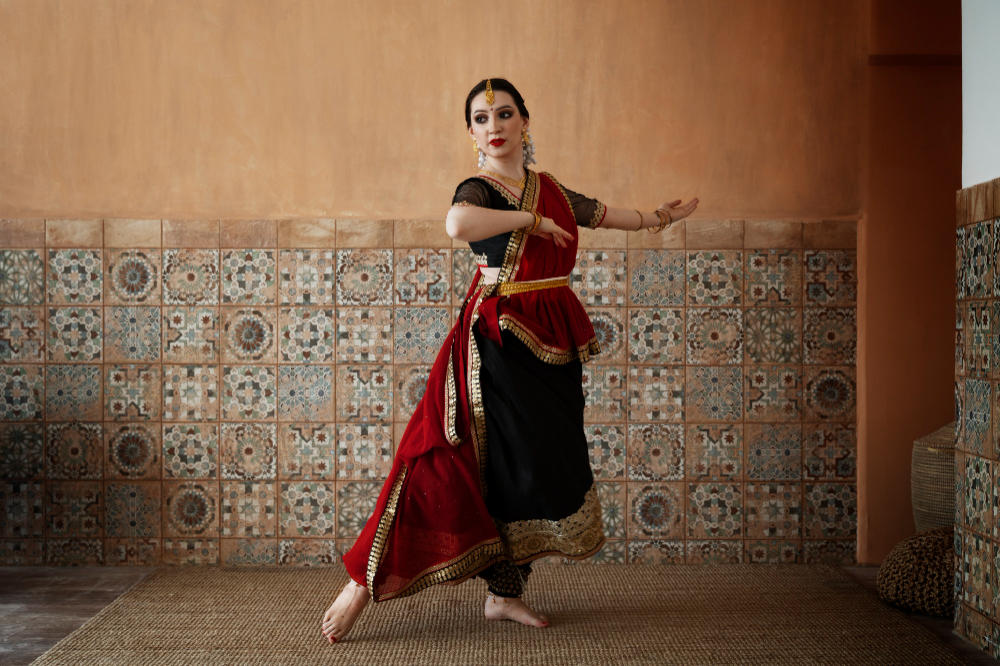
Image by Freepik
Adjustments That You Can Make As A Non-Indian Bharatanatyam Dancer
Maybe you are reading this as a non-Indian Malaysian who is interested to learn Bharatanatyam.
We understand that it's normal to have some considerations, especially when it comes to matters of your personal faith and culture.
Here are some adjustments to ensure that you can still learn Bharatanatyam seamlessly.
Adjustment 1: Practice and perform at different locations (non-religious related)
While many group Bharatanatyam classes used to take place at Hindu temples and religious institutions, this is no longer the case.
In recent years, there have been many dancing studios and academies that offer flexible lessons for non-Indian students too.
Adjustment 2: Come out with different choreography with your Bharatanatyam tutor (fusion)
There are many variations and room for fusion when it comes to learning Bharatanatyam.
You can discuss this with your Bharatanatyam tutor to see if you can even incorporate some of your own traditional dance elements (Malay/Chinese/ Sabah/ Sarawakian) into the choreography that you are learning.
Adjustment 3: Respect the traditions without diving deep into the religious roots
This is an important attitude to have when you approach Bharatanatyam. You need to respect and acknowledge the history of this dance without placing so much emphasis on the religious theme.
You can still be a good Bharatanatyam dancer when you work on the technical aspects of the dance like the mudras, adavu, abhinaya and bhava.
Check out these learning methods and tips to master Bharatanatyam progressively.
What You Should Look For In A Bharatanatyam Private Tutor?
Having theoretical knowledge is not enough, you need to put everything into practice. You need real action and a master to propel you forward.
With so many Bharatanatyam lessons available in the market now, it could be very difficult to make a choice. Instead of signing up at a dancing school, you might feel more comfortable to enrol for private lessons.
At Superprof, you can find a wide selection of home tutors and online tutors who can offer quality Bharatanatyam lessons according to your learning pace and preferences.
It's also super easy and convenient because you can just browse through the tutors' profiles and read through their particulars whenever and wherever you are.
Here are three pointers to help you as you finalise your Bharatanatyam tutor.
Performing Experience (Expertise)
Through the tutor's profile, you can read about his or her performing experience and relevant teaching experience.
Some of them even have international performing experiences after graduating as a dance major. So make sure you take your time to review their information before contacting them.
Flexibility (Time/Location)
This is an important element to discuss with your future tutor because both of you have different schedules.
For instance, if they have an overseas performance, you might need to come out with a learning schedule that both of you can commit on a regular basis or even switch to a hybrid learning mode.
Open Mindedness
As mentioned earlier, this would be a great bonus if you are approaching Bharatanatyam as a non-Indian dancer.
An open-minded Bharatanatyam tutor will explain to you the modification and fusion that can take place as well as explain patiently to you the parts that you can forgo if you are unsure to proceed which pertains to certain religious or cultural elements.
It's important that your tutor gives you a clear and comprehensive overview of your learning outcomes and expectations when you learn Bharatanatyam as a beginner.
How To Cultivate An Effective Bharatanatyam Practice Routine?
Your learning journey doesn't stop once you have found a reliable and experienced Bharatanatyam tutor.
You need a consistent practice routine to maintain the momentum. Continue reading these 3 tips to gain some insights on how to start.
Tip 1: Set a fixed time and location
It's important to dedicate a specific time and location to practice. Simply put, you are cultivating a new habit and reinforcing a new identity as a Bharatanatyam dancer.
It unknowingly drives you to be more passionate and self-disciplined throughout your learning.
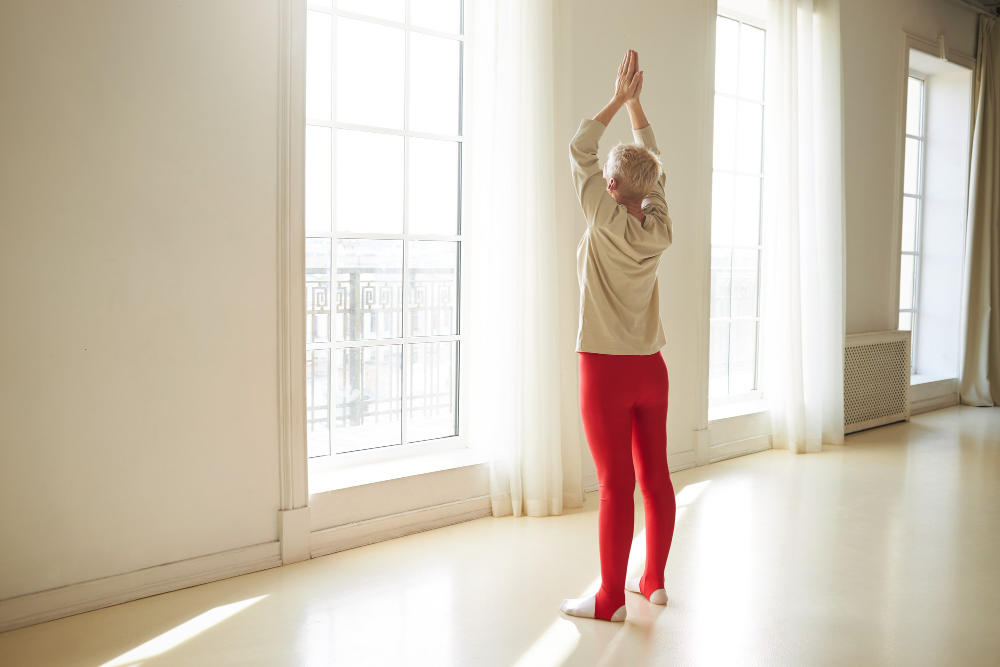
Image by shurkin_son on Freepik
Tip 2: Record your practice
Use your phone or camera to record your practice session. That way you get to look at yourself objectively and even let your tutor give you some feedback to improve faster.
Tip 3: Exercise/ warm up well to maintain your stamina
Your practice routine is not complete without proper warming-up sessions and exercises in between. This is very important because as you progress to an advanced level and learn more complex movements, you need greater stamina to last longer.
Learn more about other benefits (apart from health) that you can enjoy as you learn Bharatanatyam.
We hope you have gained some new understanding of the core techniques of Bharatanatyam.
Now, it's time to learn them in person and master them consistently so that hopefully one day, you can be a master to a new Bharatanatyam student too!
Summarise with AI:
Enjoyed this article? Leave a rating!

 Loading...
