
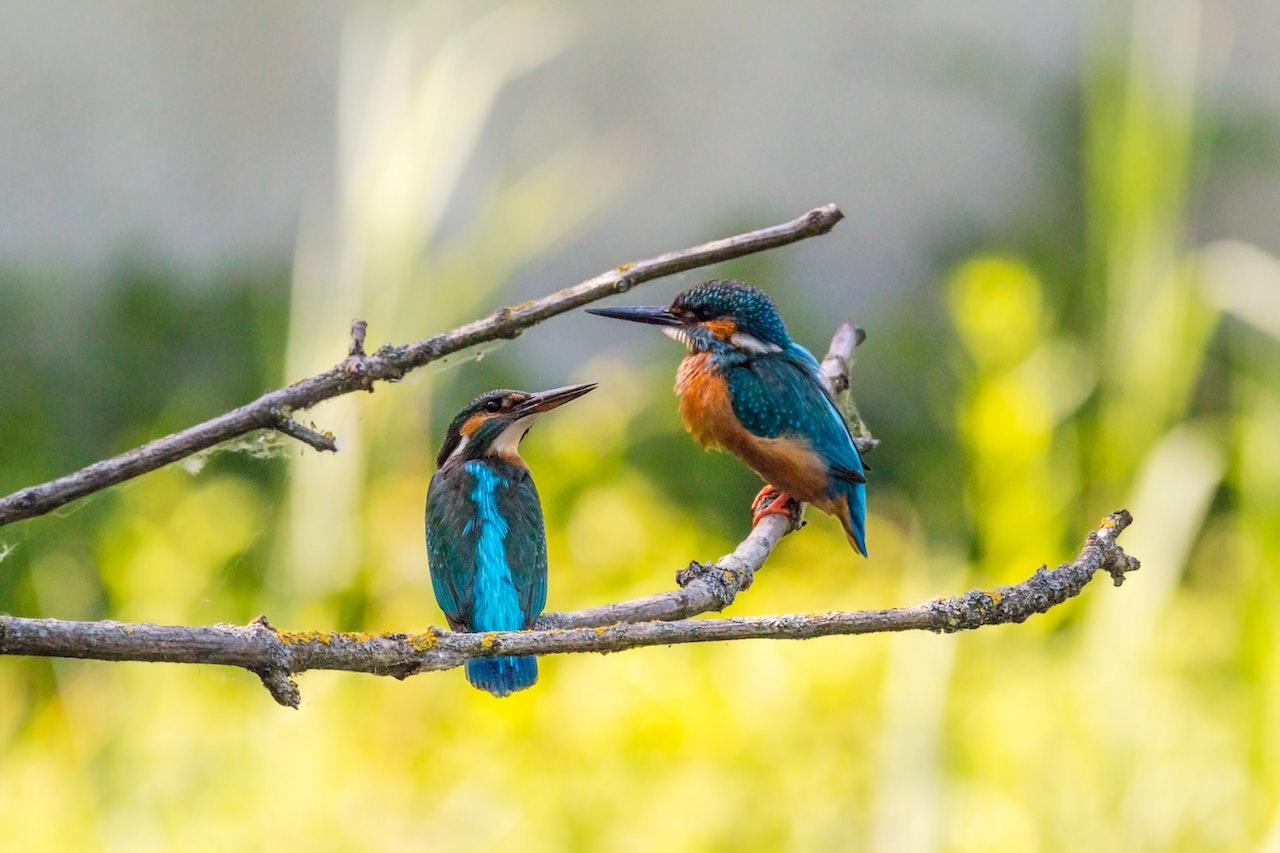

Biodiversity is taught in the Form 5 syllabus and included in the SPM biology exam. It refers to all life forms, including genes, evolution, and cultural processes. Biodiversity encompasses all living things, including undiscovered species, fungi, and microbes. Human activities threaten this diversity, pushing some species to the brink of extinction and causing others to go extinct.
One tiger species is recognised scientifically, called Panthera tigris, and is divided into nine subspecies: the Bali, Caspian, Javan, Malayan, Sumatra, South China, Indochinese, Bengal and Siberian. Out of these nine species, 3 of them have gone extinct. The three extinct subspecies are the Bali, Caspian and Javan subspecies. These tigers have been hunted till they went extinct. Over the past century, the tiger species has drastically declined. After many conservation efforts, the tiger population in some parts of the world has started to stabilise, and some even increased.
Malayan tigers are a protected species in Malaysia, but their numbers are declining. To conserve them, the Department of Wildlife and National Parks (PERHILITAN) has launched the Save Our Malaysian Tigers Campaign. PERHILITAN surveils and guards the tigers’ natural habitat to prevent poaching and remove traps.


Why is it Essential to have a Classification and Naming System for Organisms?
In Form 2, students learn about biodiversity, which involves the study of living organisms and their interactions. They also learn about categorising and naming living things.
Taxonomy is studying the science of naming, describing and classifying organisms methodically. Taxonomy includes all living things, such as plants, animals and all microorganisms. Taxonomy not only involves naming but also organising.
Taxonomy has three classification systems:
- Classification - An organism is classified by its physical appearance using the taxonomic hierarchy system. In this system. Listed below is a brief explanation of the taxonomic hierarchy system.
- Domain - this is the highest but most general ranking in taxonomy. There are three different domains, which are Archaea, bacteria and eukarya. Those species that have a nucleus are generally categorised under the eukarya domain.
- Kingdom - the next stage in this classification is kingdom. There are seven kingdoms in biology taxonomy: Archaebacteria, Eubacteria, Protista, Fungi, Plantae and Animalia.
- Phylums - this is the third classification level, differentiating the animal, plant, and fungus kingdoms. Did you know that humans are listed under the animal kingdom taxonomy?
- Classes - this is the further breakdown of each phylums. Let’s take the animal kingdom as an example. The animal kingdom has 35 phyla. These 35 phyla can be further categorised into 107 different classes.
- Orders - Next classification. Humans, for example, are listed under the animal kingdom and mammalian class.
- Genus - More detailed classification. Simply put, each genus can be grouped into specific families.
- Species - Last level of classification. This is the most specific classification you can get for a living thing.
- Identification - Dichotomous keys are what is used when it comes to the identification of living organisms. This is a tool that serves as the basis of how species are categorised. This is an essential tool for new discoveries.
- Naming - In taxonomy, the binominal nomenclature system is used. This is a system that names a species using two words. In science, a species is named based on its genus and species. For example, the African bush elephant’s scientific name is Loxodonta africana. Meanwhile, the Asian elephant’s scientific name is the Elephas maximus.
Classification of Organisms
There are six categories within the kingdom. All living things fall under these six categories:
- Archaebacteria - are ancient microorganisms that thrive in hot and acidic environments. They can be divided into methanogen, halophile, and thermophile groups.
- Eubacteria - this is a single-celled prokaryotic microorganism. They are found all over the world and are common. They usually form colonies and are generally known as ‘true bacteria’. These bacteria are typically classified according to their shape.
- Protista - These are unicellular and multicellular organisms that mostly live in damp environments and have simple cell organisation. They are divided into three groups: protozoa, algae, and slime mould.
- Fungi - fungi can be mainly found on land. They can live in soil or plant matter and play an important role in cycling other elements. While some fungi are good, some are generally seen as parasites. Similar to the Protista, fungi can be unicellular and multicellular organisms.
- Plantaie - Plants include flowers, mosses, ferns, etc. They can produce their food using photosynthesis and can reproduce asexually or sexually.
- Animalia - Animalia refers to multicellular animals that can reproduce sexually. They can be classified as vertebrates or invertebrates.
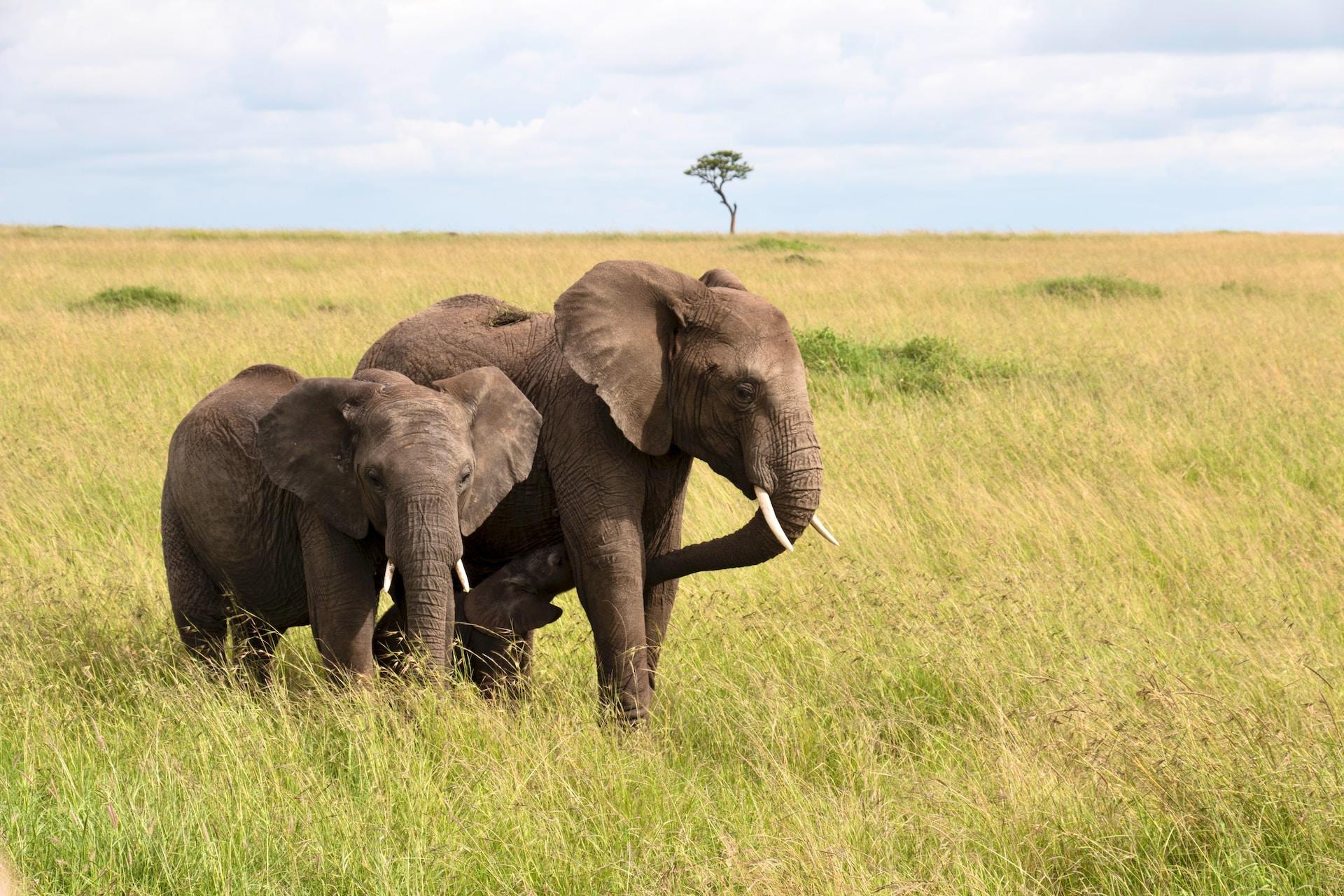
Examples of vertebrates are elephants. Photo by Craig Stevenson on Unsplash
Biodiversity
Biodiversity can be categorised into three different types:
Genetic Diversity
Variability in genes within a population and the genetic distinctions between populations of the same species result from individual isolation and adaptation to diverse environments. This phenomenon, illustrated by the gene combinations found in cultivated rice, enables the production of numerous rice varieties.
Species Diversity
Diversity and differences in life forms on earth encompass the overall species count in a given ecosystem (species richness) and how these species are distributed within that ecosystem (known as species evenness). For example, tropical rainforests are home to millions of species, including various insects and plants.
Ecosystem Diversity
The diversity of habitats within a biotic community and the ecological processes occurring in these varied ecosystems. For instance, ecosystems teeming with biodiversity can be found in environments like the ocean, land, deserts, and swamps.
Phylogenetic Tree
Phylogeny pertains to the evolutionary lineage of a species of organisms, and a phylogenetic tree is a graphical representation illustrating the evolutionary connections within a cluster of organisms.
Phylogenetic classification is:
- A categorisation method that depicts the evolutionary connections and past of the organisms under examination.
- Established on homologous structures, which are anatomical features inherited from a common ancestor, even if their functions vary among different organisms.
The Importance of Biodiversity on the Environment and Humans
- It serves as a source of sustenance, medicinal resources, and knowledge.
- It plays a crucial role in preserving the ecological equilibrium.
- Provides recreational opportunities.
- Supports scientific investigations.
In-situ conservation involves preserving species within their native habitats, while ex-situ conservation entails safeguarding species outside of their natural environments.
Microorganisms and Viruses
Microorganisms are minuscule life forms that are invisible to the unaided eye. To examine their structures, a microscope is necessary. Microbes can be classified into four primary categories:
Bacteria
- Bacteria lack a visible nucleus and have their DNA contained within a nucleoid.
- They can exist as single cells, pairs, forming filaments, chains, or clusters, and come in various shapes such as spherical, comma-shaped, rod or cylinder-shaped, and spiral.
- Examples include Lactobacillus, Streptococcus, and Staphylococcus aureus.
Viruses
- Viruses lack cellular structure and require other organisms for replication.
- They comprise genetic material enclosed in a protein capsid and are extremely small, ranging from 20 nm to 400 nm.
- Examples include the tobacco mosaic virus, bacteriophage T4, and HIV.
Protozoa
- Tiny, aquatic, single-celled organisms with animal-like traits.
- Use pseudopodia, cilia, or flagella for movement.
- It can be heterotrophic or autotrophic.
- Euglena sp. is an example of autotrophic protozoa.
- It can be free-living or parasitic.
Algae
- Encompass single-celled microorganisms like Chlamydomonas sp. and multicellular microorganisms such as Fucus sp.
- Certain algae utilise flagella for aquatic mobility.
- Autotrophic organisms since they possess chloroplasts. Nevertheless, unlike plants, they lack true leaves, stems, and roots.
- It can be located in various aquatic environments, including ponds, lakes, and the sea.
Fungi
- Microscopic organisms can be single-celled or multicellular, heterotrophic, and lack chlorophyll.
- They exist as mycelium and typically thrive in dark or damp environments.
- Examples include yeast and Mucor sp.
The Role of Microorganisms in the Nitrogen Cycle
Nitrogen plays a crucial role as a vital macronutrient essential for plant growth. Plants utilise nitrogen in the forms of ammonium ions (NH4+) and nitrate ions (NO3-) to facilitate the production of proteins. The nitrogen cycle represents a natural process where atmospheric nitrogen is transformed into nitrate compounds by both plants and animals.
The Role of Microorganisms
Producers
- Phytoplankton, with chlorophyll for photosynthesis, is the main producer in aquatic ecosystems.
- It drifts near the surface of water bodies such as ponds, lakes, and the sea.
- Varieties include green algae, blue-green algae, dinoflagellates, and diatoms.
Decomposers
- Saprophytic fungi and bacteria are primary decomposers that break down complex organic materials into simpler compounds like ammonium.
- They release digestive enzymes and reintegrate the end products like carbon, nitrogen, and sulfur back into the soil for plant utilisation.
Symbionts
- Organisms that share a close association with their hosts.
- There are two categories of symbionts: ectosymbionts, which reside externally to the host cells, such as fungi that live in the vicinity of plant roots, and endosymbionts, which inhabit the interior of host cells, as exemplified by the protozoan Trichonympha sp. residing in the digestive tract of termites.
Parasites
- Parasites that live off their hosts can harm and even kill them, but many don’t.
- Take Plasmodium sp., for example, which lives in female Anopheles mosquitoes and can be transmitted to humans through mosquito bites.
Pathogens and Vectors
Pathogens - microorganisms capable of inducing infectious diseases. They encompass viruses, bacteria, protozoa, and fungi, and they can invade the body, reproduce within it, and damage its cells.
Vectors - living organisms that transport pathogens, leading to the spread of particular diseases. Mosquitoes, flies, and cockroaches are illustrations of vectors responsible for transmitting these diseases.
While progressing through the various chapters included in SPM, such as topics like sexual reproduction, variation, nutrition, and inheritance, don’t hesitate to seek assistance, whether it’s from your educators or a private tutor. Tutors evaluate their students’ requirements and consider the subject’s demands. Superprof allows you to find a suitable personal tutor right from the convenience of your residence.
Summarise with AI:
Enjoyed this article? Leave a rating!

 Loading...
