
Ever wondered why is Chinese New Year celebrated and what makes this festival so special? As Malaysians, we’re certainly familiar with it, thanks to the vibrant Chinese community in the country. Besides the Public holiday1, which everyone in the country enjoys, living in a multiracial society gives us the chance to witness celebrations from different cultures.
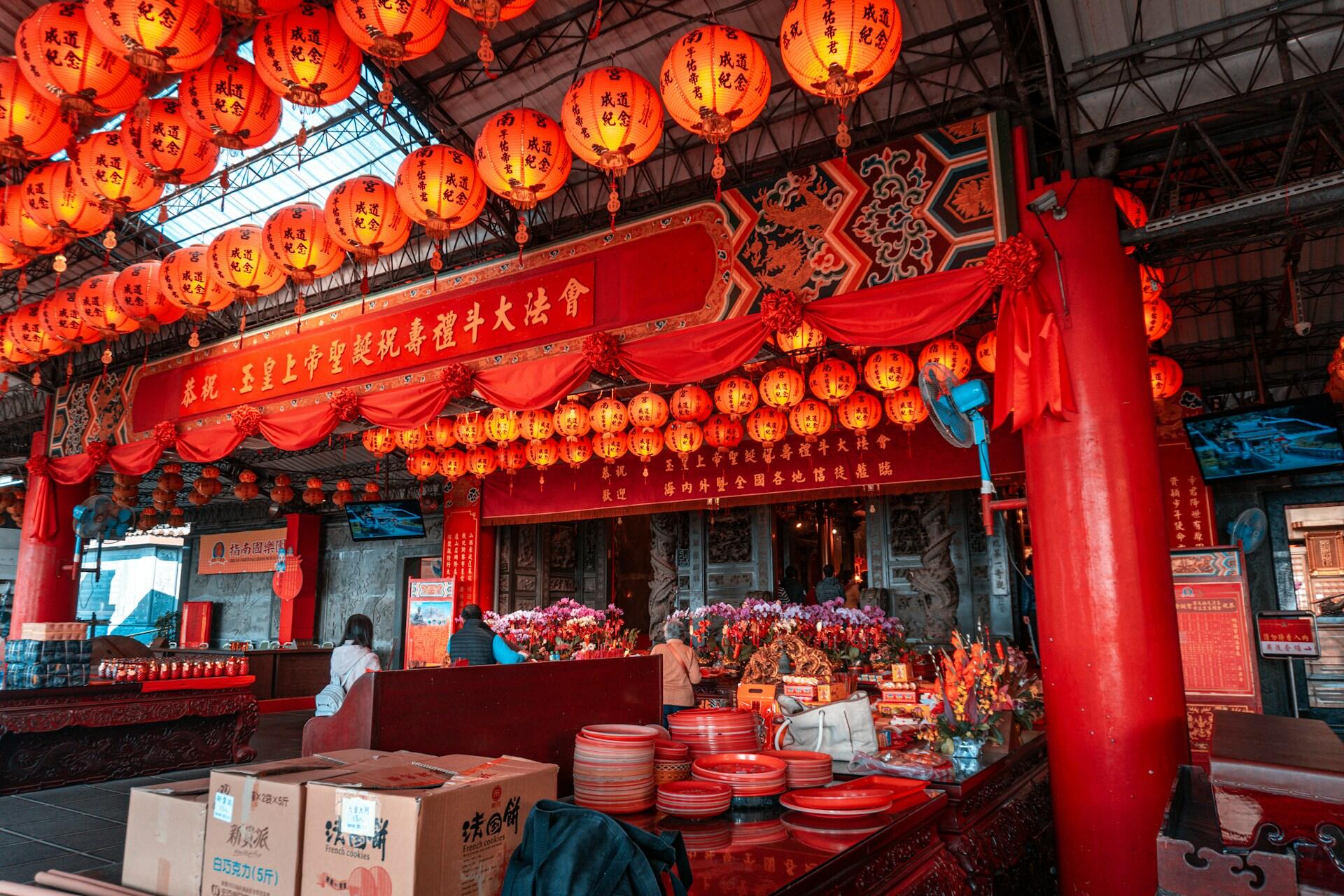
Every year, during the Chinese New Year, also known as the Lunar New Year, malls across Malaysia come alive with red lanterns, festive lights, paper cutouts of the Fu character, and zodiac-themed displays. Let’s not forget how the iconic artificial cherry blossoms add a touch of beauty and meaning that lifts the entire decor 🌸
This time of the year is crucial for vendors selling firecrackers, traditional CNY foods and snacks, and decorations that you can see in the malls and certain night markets (pasar malam). If you stroll through the malls before Chinese New Year, you’ll experience this festive buzz firsthand.
CNY gets a lot of attention across the world, but have you ever wondered about the origins, history, and traditional customs behind this observance?
Don’t worry – I've got you! In this article, I’ll guide you through everything you need to know about CNY. By the end of this article, you’ll be ready to impress anyone with the knowledge you’ve gained!
Chinese New Year Festival in This Article:
- The origin and cultural significance of the Chinese New Year
- How traditional practices have evolved over the years
- Symbolism, customs, and taboos are observed during the New Year celebrations
- Activities before, during, and after New Year's Eve and New Year's Day
- Proper greetings and phrases for happy New Year wishes
- Essential facts about CNY, family reunions, and good fortune


Why Chinese New Year Is Important: Origins and Cultural Significance
The Chinese New Year, also known as the Lunar New Year, marks the start of the new year on the lunisolar calendar and emphasises bringing family reunions, getting rid of bad luck, and welcoming good fortune, health and prosperity as the year unfolds.
Now, let’s take a look at how it all started.
Mythological Beginnings
Though the exact beginning is unknown, it is said that the origins of this seasonal observance can be traced back over 3,000 years as a harvest ritual to honour ancestors and deities. Over the centuries, the occasion has evolved, shaped by changing dynasties, regional practices, and the way communities lived. Stories, customs, and practices were added over time– from the legend of the mythical beast Nian influencing red decorations and firecrackers, to reunions becoming a central part of the observance.
One of the earliest explanations for why the occasion is observed comes from folklore. According to legend, a mythical beast named Nian (/nyen/) would emerge on New Year's Eve to terrorise villagers, eat their crops and livestock – sometimes humans as well!
Coincidentally, Nian, the “yearly beast”, sounds the same as “year” in Chinese.
They decided to offer food at their doors as a result to protect themselves and their livelihood on New Year’s Eve. It’s believed that later they discovered the beast was scared of loud noises, fire and the colour red.
As a result, they decorated their homes with red lanterns and scrolls on their windows and doors to prevent the beast from entering. They also utilised crackling bamboo to scare it away, which was later replaced by firecrackers in modern practices.
These rituals were believed to drive away evil spirits and protect households from misfortunes. Over time, these practices evolved into what we now see as the traditional Chinese customs. Even today, we can see that the red envelopes, fireworks, and vibrant decorations remain central to this occasion, symbolising protection and fortune.
新年快乐! - Xīn Nián Kuài Lè! (Happy New Year!)
Standard Chinese New Year Greeting
How Do People Celebrate Chinese New Year: Evolution Over Millennia
While many of us are familiar with how the special day is celebrated today, have you ever wondered about its origins? How did it all begin, how was it celebrated in the past, and how did it evolve into what we recognise today?
Let’s take a look at the journey through time:
Shang Dynasty (1600-1046BC)
It is said that CNY originated in this dynasty, where individuals held sacrificial ceremonies to honour Gods and ancestors at the beginning of the year.
Zhou Dynasty (1046–256 BC)
During this era, the character nian (年), meaning “year,” was introduced. It became customary to offer sacrifices to ancestors and gods at the turn of the year, and people also worshipped nature to bless the coming harvest – reflecting how the observance was closely tied to the agricultural cycle.
Han Dynasty (202 BC – 220 AD)
It was during this period that the CNY was officially set as the first day of the first month in the lunar calendar. Many ceremonial practices also became widespread, including burning bamboo to create loud crackling sounds – a practice believed to scare away evil spirits, which later evolved into the setting off of firecrackers.
Wei and Jin dynasties (220–420)
During this era, practices became more joyful and personal. Beyond worshipping gods, ancestors, and nature, households began gathering with their families to have dinner together, clean their homes to prepare for the occasion, and stay up late on the Eve.
Tang to Qing Dynasties
The prosperity of the economy and culture during this period helped the Lunar New Year grow into a major celebration. In fact, many of the modern practices we recognise today began to take shape here. Setting off firecrackers, visiting relatives and friends, and eating dumplings became central. It’s said that during this dynasty, entertainment also became a bigger part of the practices, where communities watched dragon and lion dances at temple fairs and enjoyed the beautiful lantern displays. Over time, the occasion gradually shifted from being primarily a religious ritual to a social and entertaining gathering, much like the way it is celebrated today.
Modern Era
In 1912, the lunar calendar was replaced with the Gregorian calendar, and January 1 was established as the official start of the year. Today, traditions continue to blend ancient practices, such as honouring ancestors and firecrackers, with cultural performances like dances, and modern customs, including dinners and red envelopes (ang pao).
Chinese New Year Culture and Traditions
Meaning and Symbolic Practices
I can’t talk about CNY culture without mentioning the Chinese calendar, which is closely tied to the zodiac. Each year is associated with an animal sign, and many look to it for insight and guidance.
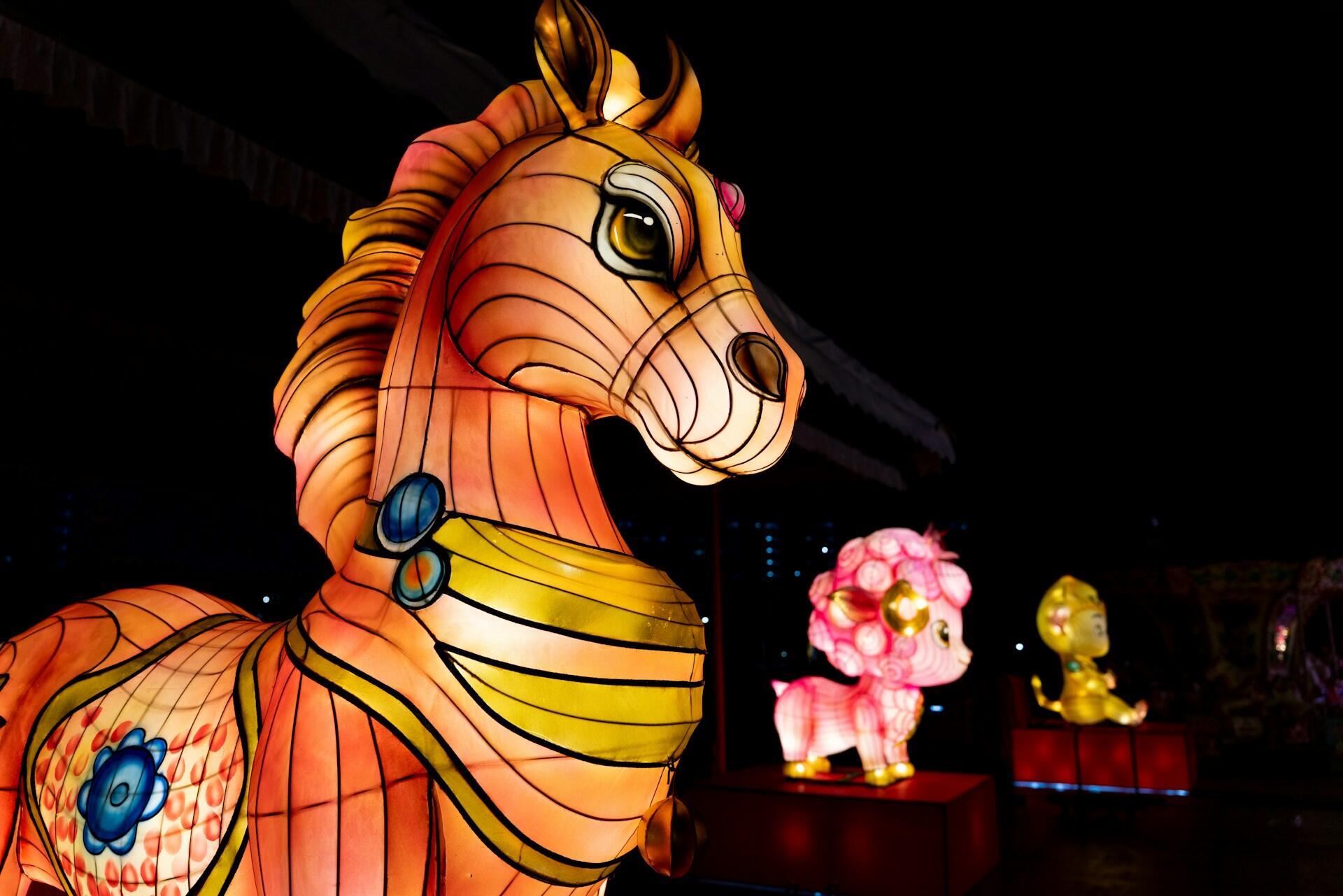
The Chinese zodiac is one of the dominant features of Lunar New Year celebrations in Chinese culture. This annual forecast is much deeper and far more detailed than modern horoscope systems.
It's not enough to know which animal you are. You must also know which Earthly element influences your creature.
For instance, a Fire Tiger is often described as more driven and bold than, say, a stubborn Water Tiger. Besides Fire and Water, Gold, Earth, and Wood represent distinct personality traits. Those five are the Earthly elements, as explained in the video below.
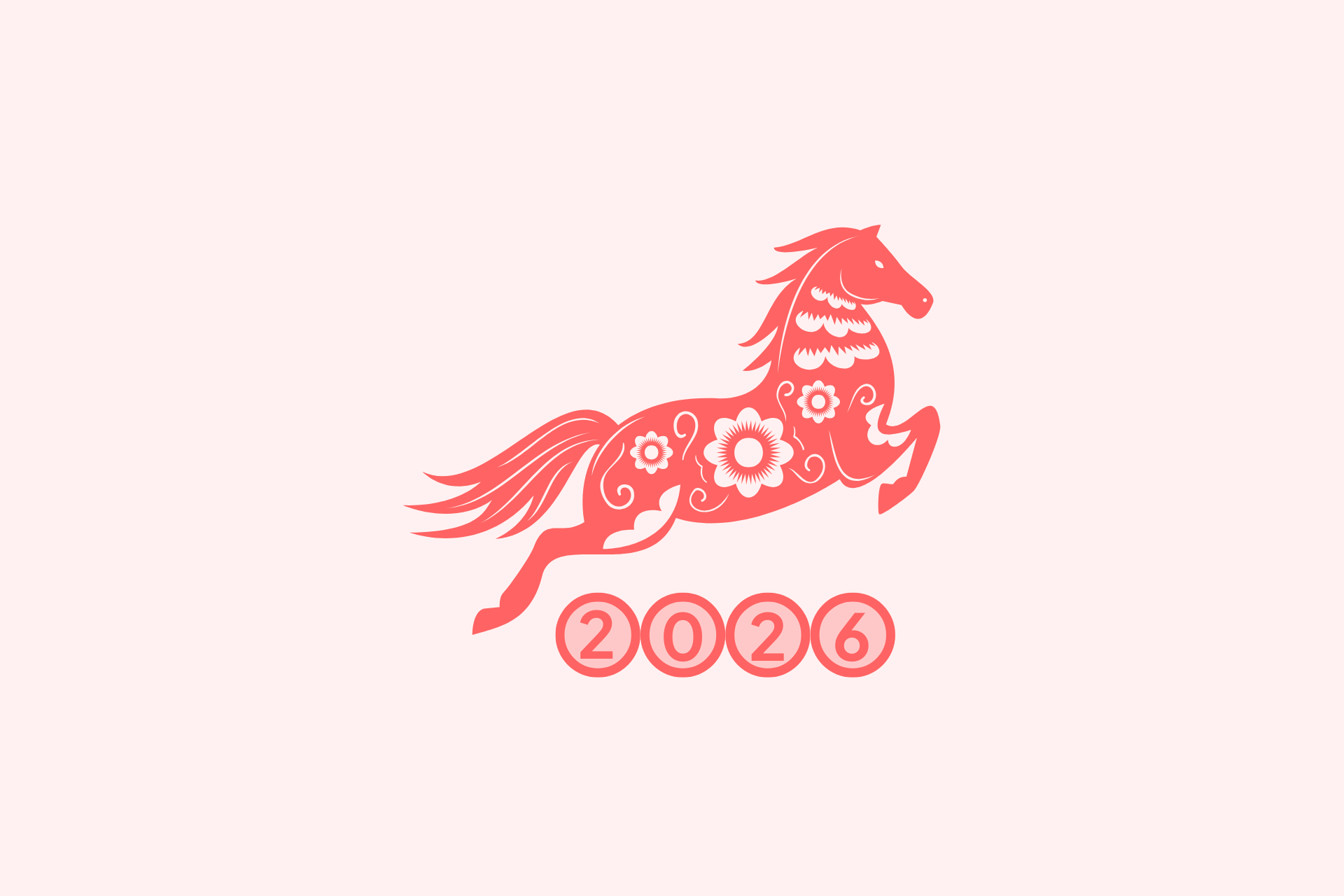
The horse is the Chinese New Year animal for 2026.
One notable contrast between these two belief systems is the lack of general predictions. For instance, the former often highlights societal trends and general happenings, while the latter centres on personal outlooks.
Other differences between the two systems include:
Western astrology
- based on constellations
- solar calendar sign
- is determined by birth month
- emphasises individual traits
- features four elements
Chinese zodiac
- based on mythology
- lunar calendar
- sign is determined by birth year
- emphasises generational characteristics
- features five elements
This clip explains the difference between these two:
What is Tai Sui?
And, more importantly, why does it matter? The concept of tai sui (太岁 - tài suì) revolves around the God of Age. Any zodiac animal facing tai sui is in for a challenging cycle.
Discovering which of the animals influences your life could be beneficial, especially if you're facing tai sui effects. Or, if you’re curious about how the 2026 animal may influence you.
Taboos
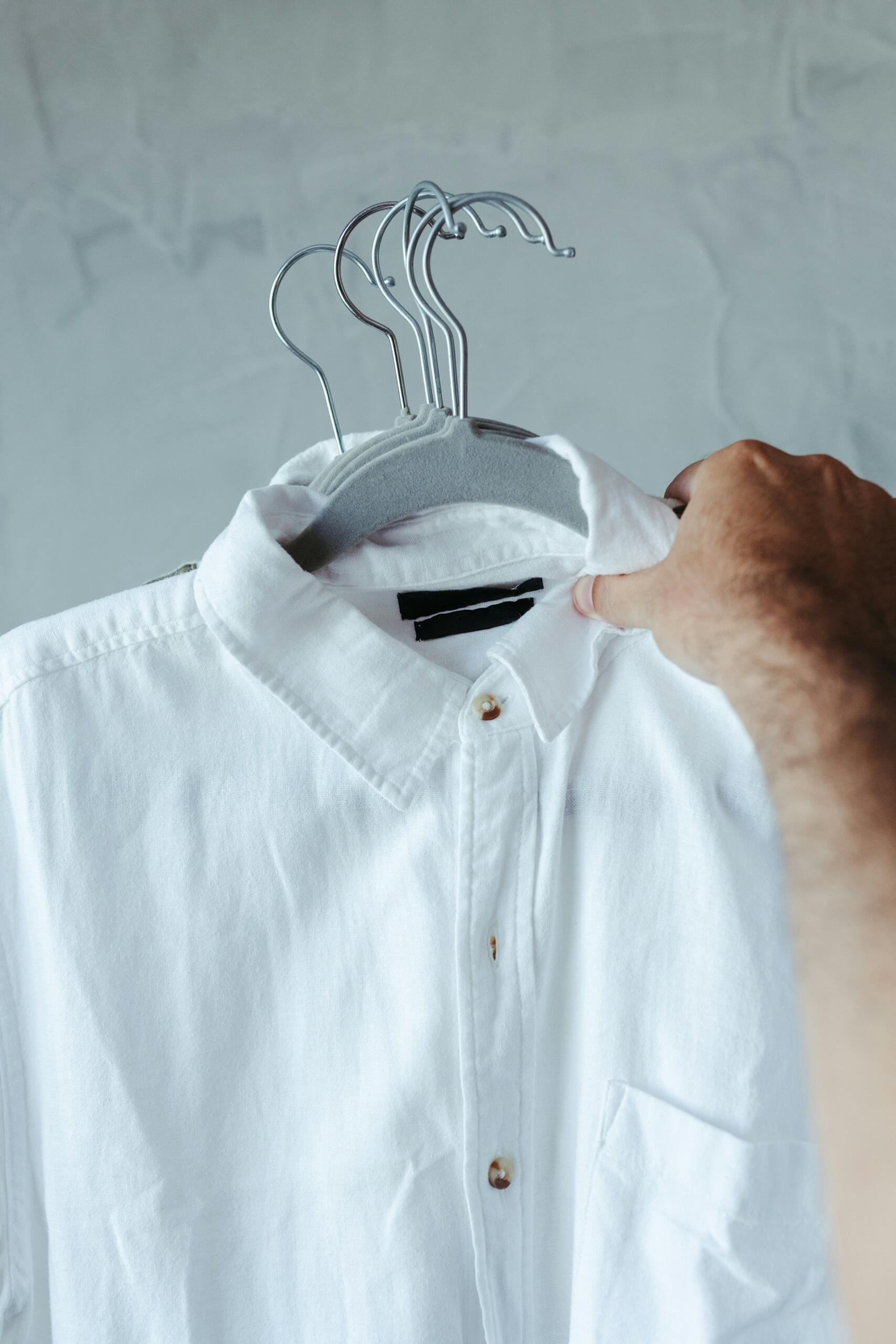
For the most part, present-day Chinese communities are innovative, progressive, and only minimally superstitious. That all changes come time to travel home for the country's biggest holiday.
Almost as soon as everyone returns home to celebrate, the superstitions and taboos begin. For starters, anyone wearing anything white or black will be severely scolded.
Those colours symbolise death. That's not a welcome presence during this period.
That's a bit paradoxical, because Chinese culture accepts death as a part of life. Indeed, one of the most respectful greetings one might offer for the New Year hints at death. More on greetings in the next segment, though.
Entertaining a young girl during a family's dinner, I taught her how to make flowers from tissue paper.
Unfortunately, that tissue paper was white. As she tucked the flower she made behind her ear and showed it off, the elders around the table scolded her. This child, no more than five years old, dissolved into tears.
It was totally my fault. I had no idea that wearing anything white, even so much as a tissue paper flower, could have such dire consequences.
I could have saved that poor child from her tears if only I had known about it. This is why it's essential to know all the traditions, to keep from breaking a taboo.
Want to learn more about the taboos surrounding the occasion and why they matter? Watch the video below to understand the symbolism behind these customs, so you’ll know what to avoid when you’re invited to a CNY gathering.
Chinese New Year Activities
In this section, we’ll look at what families do before the New Year, on its Eve and on its first day to get some ideas about the activities done throughout the observance.
Before the CNY
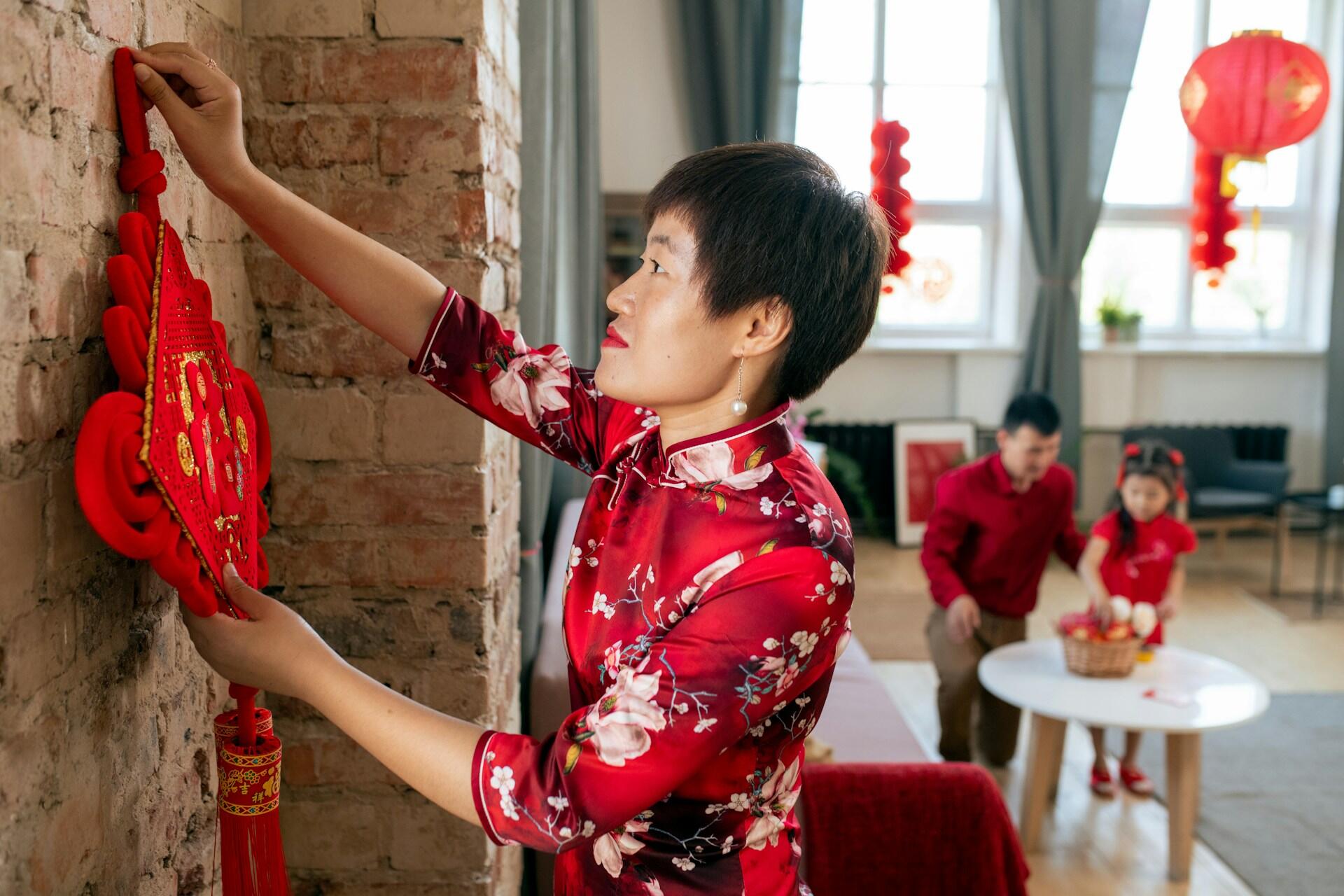
In the days leading up to CNY, families clean their homes thoroughly to sweep away all the bad luck and make space for positive blessings to come in. Doors and windows are decked out in red and gold ornaments.
These can include red lanterns, paper cuttings and couplets wishing prosperity, joy, and wealth, auspicious plants, such as bamboo, plum blossoms, or mandarin orange trees. “Gong Xi Fa Cai” on doors, red cushions, tablecloths, runners, curtains, and animal sign figures. The exact decorations vary by household, but in most homes, you’ll definitely see red accents brightening both the interior and exterior.
Ingredients and special foods for the observance are bought and arranged, ensuring everything is ready for the upcoming feasts.
CNY Eve
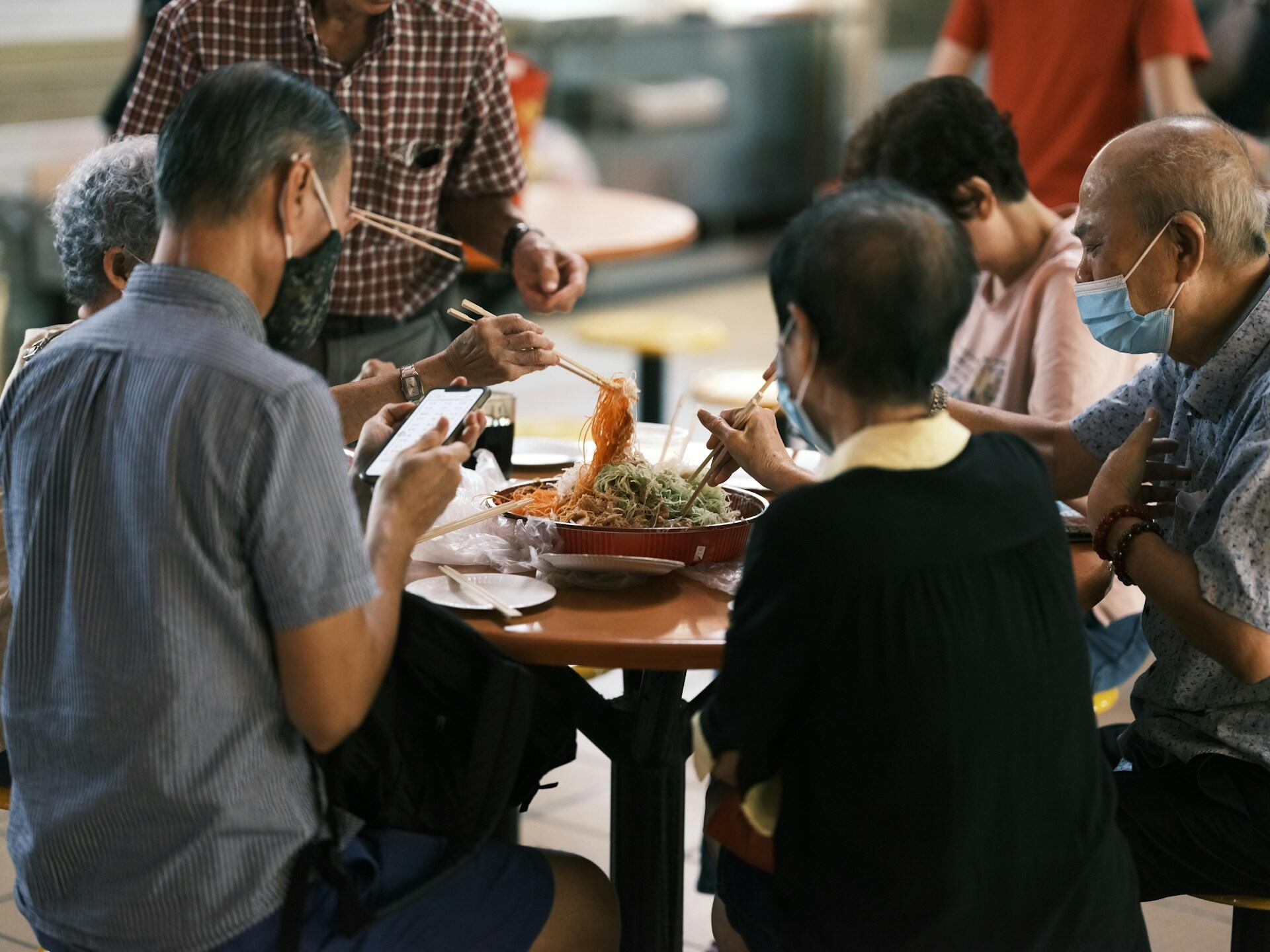
The Eve is the most significant moment of the observance. Families gather for the reunion dinner (年夜饭, Nián Yè Fàn)2, a lavish feast where every dish carries symbolic meaning, which we will explore shortly. Many families also perform ancestral rites, offering food and incense to honour their ancestors.
Traditionally, firecrackers (or crackling bamboo in earlier times) were set off to scare away evil spirits, a practice that eventually evolved into the firecrackers we see today. It’s a night full of warmth, family bonding, and anticipation.
Let’s take a look at the dishes served during the reunion dinner and what they represent. Firstly, the classic dumpling (饺子 - jiǎo zi). These tasty morsels take many shapes, but the most common one looks similar to ancient money.
The animal sign system may be captivating, but the classic dishes served during this season are downright irresistible.
As it is, Western palates love the distinct flavours and textures of Chinese cuisine. Now, add to that the knowledge that each seasonal dish has special significance.
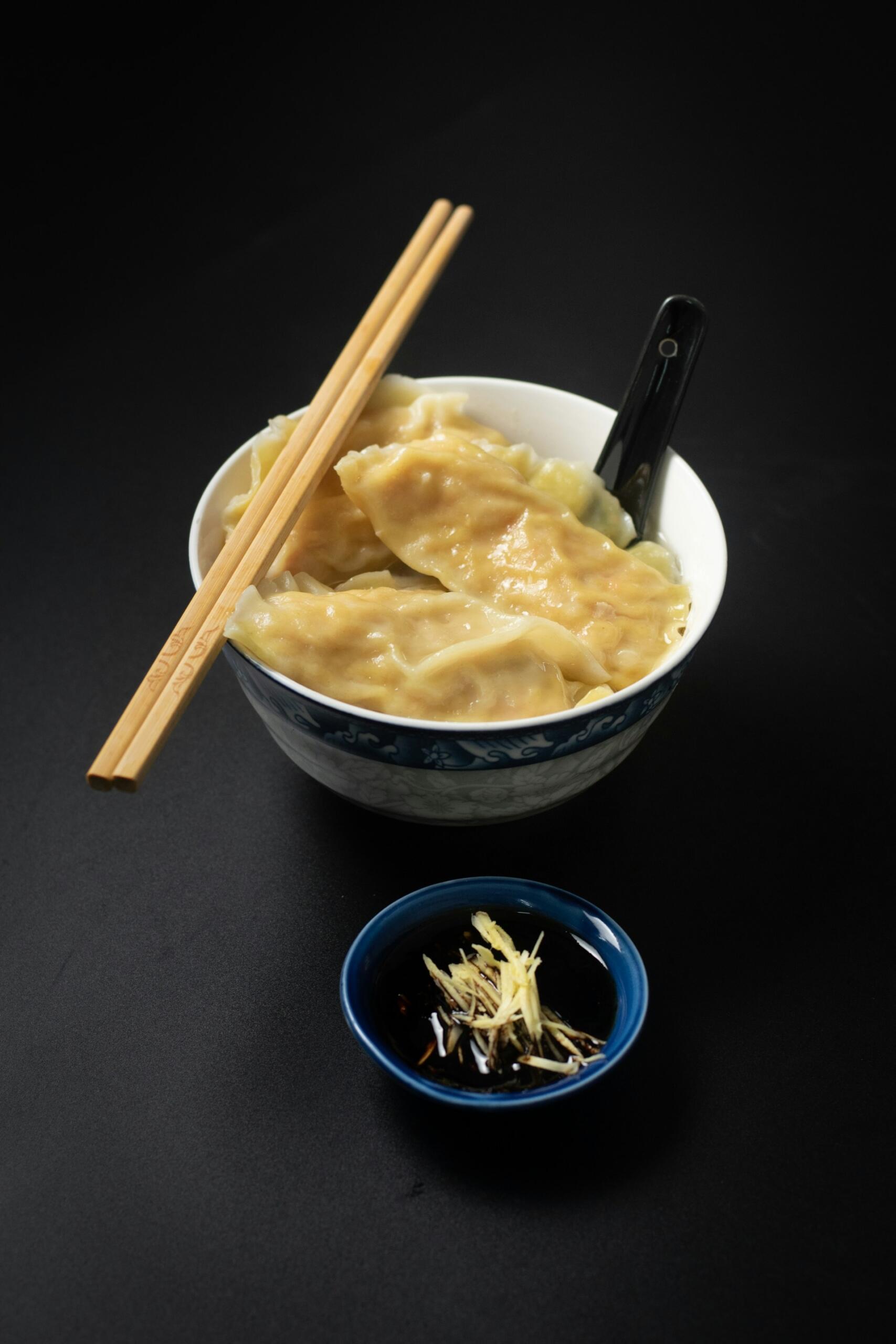
Jiǎo zi represents wealth, so making and eating as many dumplings as possible means you're welcoming much prosperity in the coming cycle.
It's not just dumplings that have special meaning during this season. There is a list of dishes that offer specific blessings. These are the most notable ones:
- Fish - for prosperity
- Lion's Head meatballs - for strength, unity and prosperity
- Chicken - for wholeness
- Shrimp - for happiness
- Braised pork belly - for abundance
- Longevity noodles - long life
- Green vegetables - wealth
- Sweet rice balls - togetherness
- Citrus fruits - fortune and success
- niangao - improvement
You may also load your plate up with spring rolls. Similar to the dumplings, their golden, bar-like appearance symbolises wealth.
Some households choose to stay up past midnight to welcome the beginning of a new year, keeping the festive spirit alive.
If you’re curious about the iconic dishes served during this occasion, their meanings, and even some recipes you can try at home, this guide has got you covered!
CNY Day
On the first day, individuals wake early, often dressed in new clothes and accessories. Red envelopes (hóngbāo or angpao in Malaysia) are given by elders to younger household members as a symbol of fortune and blessings. This is usually done by married elders to younger and unmarried household members (children, nieces/nephews). But sometimes individuals extend this fortune and blessings to others around them, such as employers to employees or colleagues to teammates. I once received an angpao from a colleague, which I still keep as a memory! 🧧
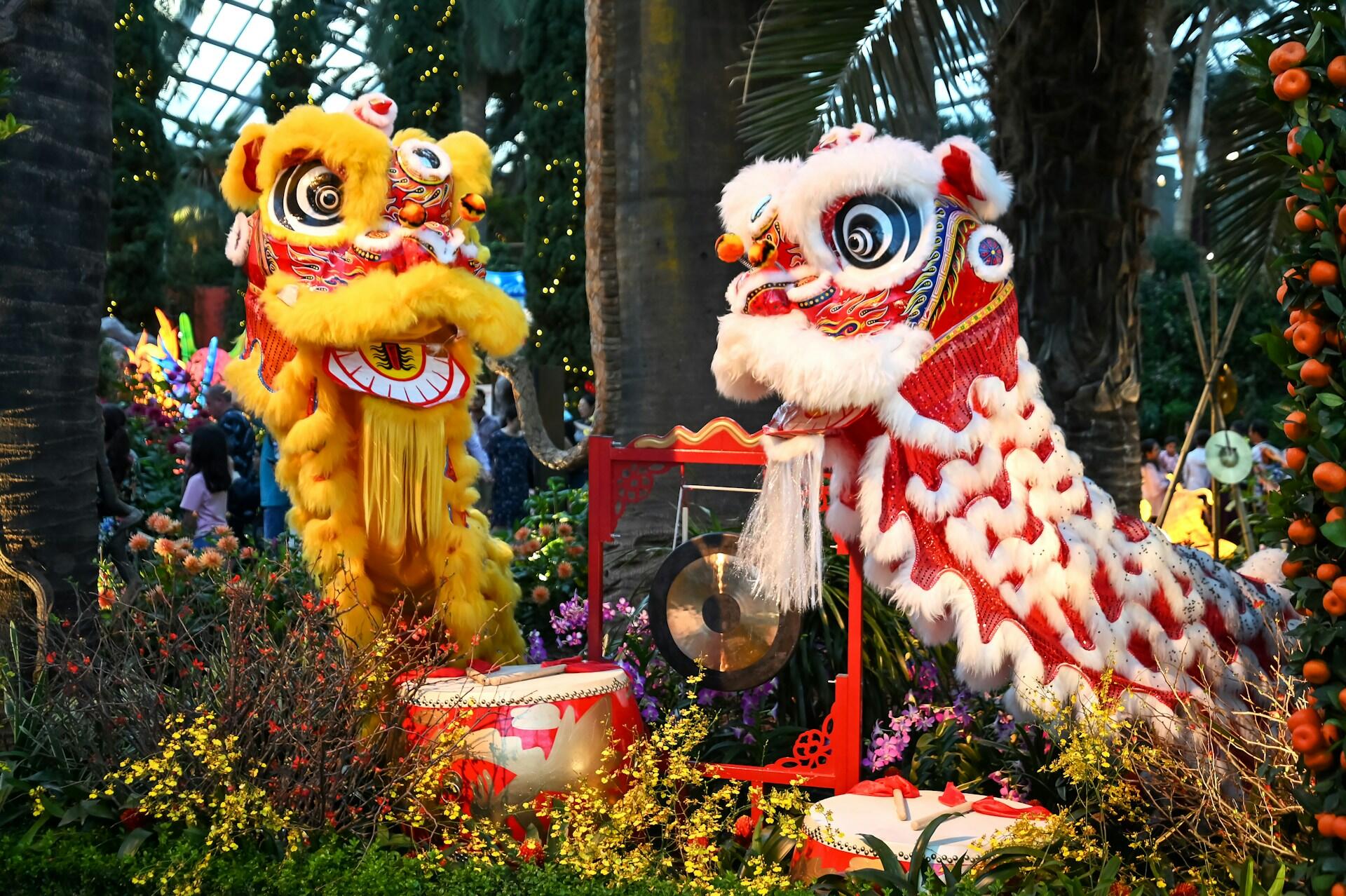
They also visit relatives and friends to offer New Year greetings (bài nián), bringing gifts or fruits as a token of appreciation and respect. Festive dishes are enjoyed throughout the day, while cultural activities such as dragon and lion dances, lantern displays, and temple fairs add an entertainment aspect.
It is indeed a day of joy, togetherness, and hope for prosperity in the upcoming term 🧨🎆
Curious to learn more about how this occasion is observed in detail? This guide breaks down key practices and explains the meaning behind them.
CNY Greetings
Let’s learn some basic and advanced greetings in Chinese, which you can include next time when extending your wishes to a friend or colleague.
五福临门 - Wǔ Fú Lín Mén (The Five Blessings at Your Gate)
Spring Festival greeting
It is reserved for the most venerated person in the household, typically the elderly. In a pinch, you may also offer it to high-ranking officials or your company's chief executive officer. But only if it's a lofty company, where the CEO wears a suit and appears only rarely.
Health, Wealth, Longevity, Virtue, Natural Death
Now, you can understand the confusion over not wearing white/black, yet invoking death as a sign of respect. To avoid misunderstandings, focus on fun greetings.
| Greeting | Pronunication | Meaning |
|---|---|---|
| 财源广进 | cái yuán guǎng jìn | Abundant financial resources! |
| 一本萬利 | yī běn wàn lì | Small investment, big profit! |
| 龙马精神 | lóng mǎ jīng shén | (May you embody) the Dragon Horse spirit! |
| 马到成功 | mǎ dào chéng gōng | Success for you! |
| 阖家幸福 | hé jiā xìng fú | Family happiness! |
| 恭贺新禧 | gōng hè xīn xǐ | Good luck in the New Year! |
| 吉星高照 | jí xīng gāo zhào | May good luck find you! |
| 笑口常开 | xiào kǒu cháng kāi | Laugh often! |
How to Offer Greetings
Many Chinese New Year greetings sound similar to exclamations, phrases you might offer up just before clinking glasses and drinking. To avoid giving off that vibe, preface your greeting with "Wishing you... ". The only trouble is, which 'you' should you use?
你 (nǐ) - simple
您 (nín) - formal
你们 (nǐ mén)- plural
你们两 (nǐ mén liǎng) - 'you two'
你们都 (nǐ mén dōu) - 'you all'
大家 (dà jiā) - 'everyone'
Now, you only need to pick the correct 'you' for the situation. And, the appropriate greeting, too. This one is ours, to you:
🎉祝大家心想事成 (zhù dà jiā xīn xiǎng shì chéng) - Wish for everyone that their dreams come true.🎉
How to Respond to New Year Wishes
This can be a tricky proposition. As always, in a formal culture such as the Chinese, how you respond determines the future relationship. Fortunately, you have three choices:
"Wish you the same"
(祝你同样的 - zhù nǐ tóng yàng de)
Repeat the greeting
Offer a superlative greeting
The first option should only be for friends and anyone you interact with regularly, such as workmates (but not bosses!). The second is for anyone you interact with occasionally, such as shopkeepers or your neighbours. You may preface it with "I also wish you ... " (我也祝你 - wǒ yě zhù nǐ ...).
Social competition is an important aspect of Chinese culture.
It manifests in often comical ways, such as arguing over who will pay the restaurant tab. Or how low to hold one's glass to avoid its rim being higher than the person you're toasting.
So, if someone offers you a Chinese New Year greeting, delivering one that offers superior blessings is advised. Especially, if that person is 'higher' than you on the social scale: older, or professionally advanced. Or, if you're a guest in their home.
Them: "新年快乐 - xīn nián kuài lè" (Happy New Year).
You: "恭喜您发财 - gōng xǐ nín fā cái" (Happiness and Prosperity to you).
There are many ways to wish someone on this auspicious day. You don't have to figure it out alone. This guide will help you learn more greetings and wishes, so you're not limited to just the basics!
Chinese New Year or Lunar New Year? Facts You Need to Know
Many get confused over what to call. Is it Chinese New Year or Lunar New Year (LNY)? Both are correct – the former is a broader term used by several East Asian cultures, while the latter (also called Spring Festival) refers specifically to the Chinese celebration.
They are often used interchangeably, but the LNY acknowledges other cultures, such as Korean and Vietnamese, who also observe similar festivals.
Similarly, individuals get confused over whether to call it LNY or Spring Festival. In China, these are essentially the same – Spring Festival (春节, Chūnjié) is the official name for Chinese New Year.
This celebration has no set date. It happens on the second full moon after the Winter solstice.
It does not have a fixed date on the Gregorian calendar. It begins on the first day of the first lunar month, usually falling between January 21 and February 20.
For those who ask, "How long does it last?" Customarily, it is observed for 15 days, from New Year’s Eve to the Lantern Festival. Some may count 16 days if including the Eve.
The season may be considered longer if one counts the mid-December Laba Festival (腊八节 - là bā jié), which is a pre-New Year event. Including this, the cultural celebration period stretches for several weeks!
La is the traditional name of the last month of the lunar calendar.
bā (八 - eight) represents the eight gods to make offerings to at year's end.
The Laba Festival is the unofficial start of the CNY celebrations.
During this period, the world's largest annual human mass migration takes place. It's called Spring transport (春运 - chūn yùn), the time when everyone returns to their hometown. Similarly, in Malaysia, many travel back to their hometowns to be with their loved ones on this auspicious occasion.
This season is filled with customs, rules, and shared moments at home. We, cultural outsiders, lack many facts about this seasonal occasion, so we might miss some of that magic. Still, we can always learn and appreciate them, can't we?
References
- HARI KELEPASAN AM – Laman web rasmi BKPP JPM. (n.d.). https://www.kabinet.gov.my/hari-kelepasan-am/
- Spring festival, social practices of the Chinese people in celebration of traditional new year - UNESCO Intangible Cultural Heritage. (n.d.-b). https://ich.unesco.org/en/RL/spring-festival-social-practices-of-the-chinese-people-in-celebration-of-traditional-new-year-02126?
Summarise with AI:
Did you like this article? Leave a rating!

 Loading...