
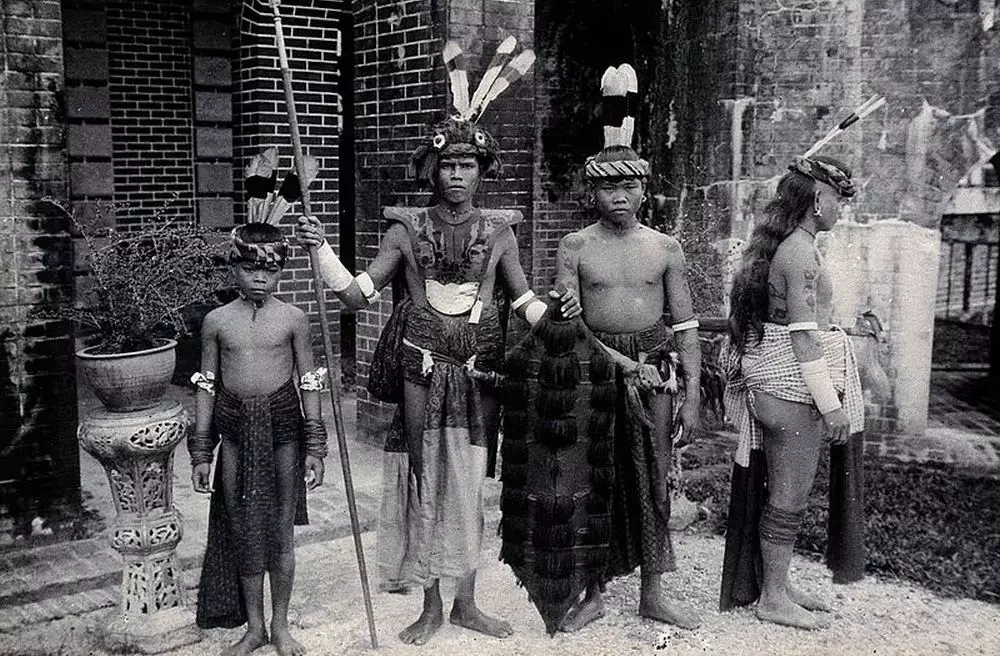

When people think of Sabah and Sarawak, they often associate them with amazing beaches, abundant wildlife, and vibrant cultural traditions. But few know that Sarawak’s ethnic communities also have a rich combat culture—Borneo martial arts. At the heart of this are the Ibans, who make up a significant portion of Sarawak’s population.
Historically, this tribe was feared for its headhunting skills. Today, while the headhunting practice has long been abandoned, the tribes continue to honour their indigenous culture in various forms of expression—through dance, combat arts, weaponry, and rituals. Festivals across Sabah and Sarawak, like Gawai Dayak and Kaamatan, promote martial exhibitions that are helping in the Revival of Martial Arts in Malaysia.
Let us learn about these combat arts in more detail.


Combat Arts of Sarawak
Dayak Kuntau
Kuntau is a martial art that is regarded by many as one of the oldest martial art systems, possibly predating Silat and the era of headhunting. It is a style that brings together both northern and southern Chinese martial arts under one school. Dayak Kuntau or Iban Kuntau is an adaptation of traditional Kuntau and is mostly practised by the people of Sarawak. This localised form of Kuntau also incorporates headhunting experiences and animal behaviour into its style.

In Kuntau, artists use a variety of techniques to defeat opponents. They are:
Throwing
- Locking
- Trapping
- Breaking
- Dodging
- Striking
Similar to Buah Pukul, Kuntao was practised in secrecy, with its knowledge being limited to certain clans. It was only during the latter half of the 20th century that Kuntau became accessible to the outside world. Today, it is recognised as a vital part of Sabah's traditional martial arts.
Are you interested in learning about other martial arts? Read Traditional Arts Beyond Silat to gain a comprehensive understanding of Malaysian martial arts.
Kuntau Bangkuis
Bangkui is a martial art inspired by the movement of the bangkui (a monkey found in the forest of Borneo). Though this martial art relies primarily on the use of bare hands, it is lethal. A single move is enough to destroy an opponent. Because of its lethality, this martial art needs to be practised carefully.
Origins
According to legend, a hunter once encountered a group of short-tailed macaques known as "Bangku” in the Dayak Ngaju language in a forest. Driven by instinct, the man threw his spear—the “lundju” at the herd. Strangely enough, the apes managed to evade the attack. He tried again with other weapons, yet the apes continued to dodge his attacks with remarkable precision.
Amazed by the monkeys' skills, the hunter, upon his return, developed a martial art known as Kuntau Bangkui. What sets Kuntau Bangkui apart is its unique philosophy: the practitioner first retreats, then judges the opponent’s action, and finally counters.
Has this piqued your interest? Do you want to learn about martial arts? At Superprof, we have experienced tutors who can help you realise your dreams of being a martial arts expert. Look for a martial arts class near you in Malaysia and start your martial arts journey.
Pencak Silat
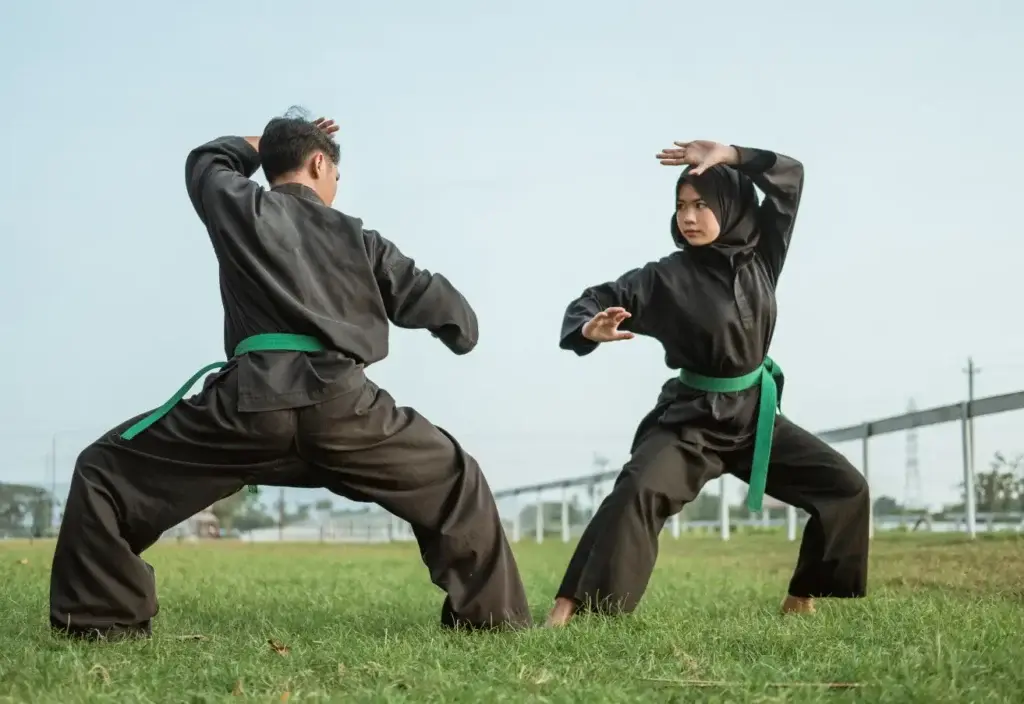
Pencak Silat is a martial art native to Indonesia that enjoys widespread popularity in Sabah and Sarawak. Pencak Silat is renowned for its exceptional close combat prowess, utilising every part of the body for grappling, throwing, and attacking opponents.
The fighting style emphasises both offensive and defensive strategies.
In an offence strategy, the practitioner uses the entire body to attack the opponent
In a defence strategy, blocks are the most basic form of defence. Other defence moves are dodging and countering.
Pencak Silat uses a variety of weapons like trisula (tridents), swords, knives, and toya (wooden staffs).
Martial Arts in Sabah
Silambam
Silambam is a martial art from India that is practised with bamboo sticks. It is known for its speed and footwork. Although not an indigenous martial art, it is quite popular in Malaysia, including Sabah, where it is gaining traction. According to coach Leorenboy Lawason, hundreds of people are taking up Silambam classes in Sabah, leading to a revival of martial arts, especially in the districts of Tambunan, Tenom, Keningau, and Kemabong.
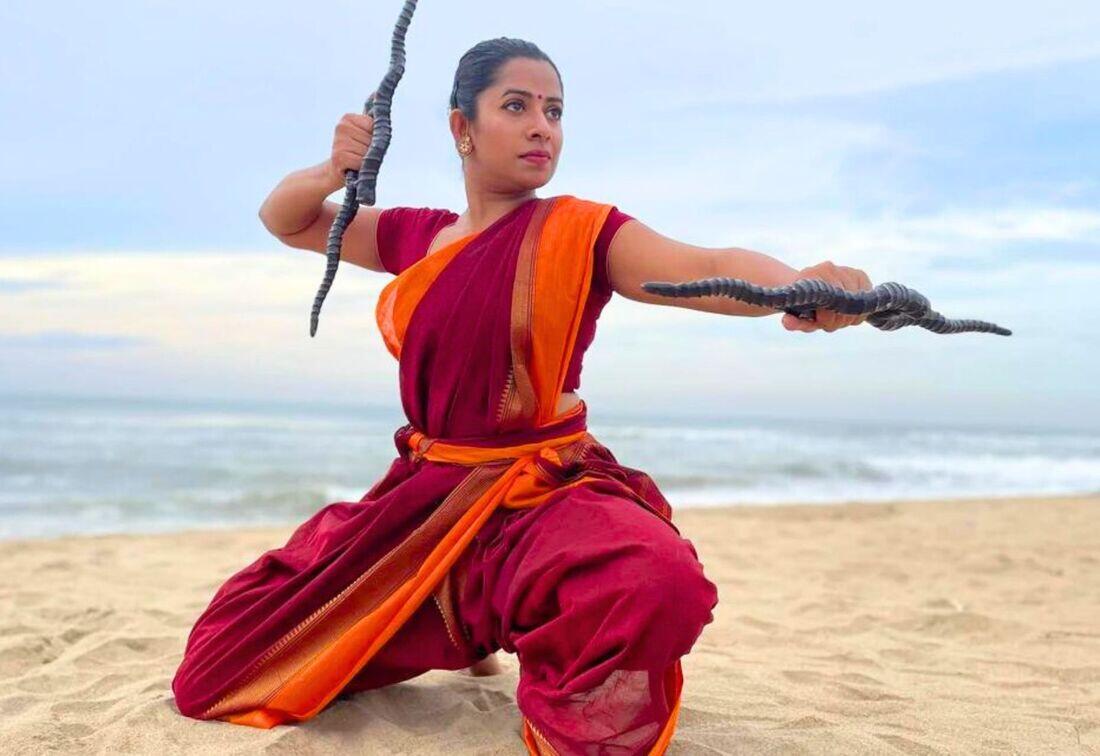
The rise of Silambam perfectly reflects the multicultural spirit and inclusive approach of Malaysian society. At the 2024 Sukma games, a completely non-Indian group participated in the event, showing the sport's growing appeal across communities. Silambam enthusiasts have been participating in the Sukma Games since 2008. Last year, it was introduced as a medal sport in the event.
Talking at the event, Minister of Youth and Sports, Hannah Yeoh said:
This is a traditional sport of the Indian community, and it's certainly unfamiliar in Sabah and Sarawak. However, thanks to the association's efforts, many non-Indian children here are taking part in this event at Sukma this time.
Hannah Yeoh, Minister of Youth and Sports
Buah Pukul
While more common in Peninsular Malaysia, Buah Pukul (meaning “striking fruit”) has found practitioners in Sabah as well. This close-quarter martial art is an offensive style of martial fighting that uses all the limbs as weapons to avoid being hit, making it an aggressive and lethal combat martial art. Known for its explosive strikes, its striking feature is the ability to defeat multiple opponents at once. Smooth fluid movement combined with street-level application tactics gives Buah Pukul the reputation of an undefeatable art.
If you would like to dive deeper, check out this detailed guide on Buah Pukul: Johor's Art of Fast Combat.
Challenges to Borneo Martial Arts
Despite their rich cultural significance, Sabah and Sarawak's traditional martial arts are facing a threat to their existence. The reasons are:
- Most of these combat arts are part of an oral tradition passed down from masters to students. With the passing away of these masters, the arts are at risk of disappearing
- The younger generation is migrating to the cities and moving away from their roots
- Modern sports like mixed martial arts and more popular martial art forms are drawing the younger generation away from traditional martial arts
- There is a lack of government recognition for these sports
- There is a perceived bias against these sports in modern times, leading to their decline
Contemporary Revival
SIKAR
The Sarawak Indigenous Kuntau Association (SIKAR) was started in 2017 to support the gurus (Kuntau masters) and students of Dayak Kuntau. The association is committed to turning Dayak Kuntau into a full-fledged sporting event, supporting Iban Kuntau practitioners with a funding path and providing recognition.
Currently, SIKAR has over 50 branches and a membership strength of 5,000. It conducts structured training, competitions, and grading systems. Recently, it was allotted 10,000 RM by the tourism ministry to encourage the revival of Kuntau and promote it as a recognised martial sport.
The types of competition held by the organisation are:
Piala Seni Kuntau – It is a detailed, choreographed pattern of kuntau stances
Piala Bukut Kuntau – It is a simulated form of fighting between two individuals
Learn how the government and other organisations are supporting and promoting Tomoi in Tomoi in Kelantan: Muay Thai’s Cousin with a Twist.
Rumpun Silat Sarawak (RSS)
Rumpun Silat Sarawak (RSS) is a Sarawak-based NGO that promotes traditional Pencak Silat through sports events, training, and cultural exhibitions. You can even check their dedicated Facebook page for details on lessons, tournaments, and community gatherings in Kuching.
Silat is a unique art form in this archipelago; hence it’s our duty to develop and mould Silat exponents from a tender young age for the betterment of the cultural heritage of this art form in Malaysia, and specifically Sarawak.
Dato Mohamad Yusnar Matalie
Apart from promoting Silat, RSS also carries out community activities to popularise Malay tradition and culture in Sarawak. In 2023, they hosted the inaugural Sarawak Premier International Silat Championship (SPISC), which saw 500 participants from 11 countries showcase their Silat skills.
To know more about Silat, check out their YouTube channel: The Fastest Way to Learn Silat by Rumpun Silat Sarawak.
Pertubuhan Silat Seni Gayong Sarawak (PSSG Sarawak)
PSSG Sarawak is an organisation in Sarawak that aims to produce skilled Silat practitioners who can represent Malaysia at the international level. To encourage competition, PSSG organises the Sarawak Gayong Invitation Silat Championship every year. Last year, Team Kuching Fighters emerged as the winner with a total of 42 gold medals, while Team DBKU secured runner-up position with 31 gold medals.
Organising championships like these helps instil a sense of pride in the youth and inspires them to learn about Sabah and Sarawak's traditional martial arts. Interested in knowing how traditional arts can be revived. Check out the Revival of Martial Arts in Malaysia.
This championship was not just a competition but also aimed at inspiring the younger generation to appreciate and uphold the art of silat, ensuring its continuity and appreciation for years to come.
PSSG Sarawak
Conclusion
The indigenous martial arts of Borneo are a testament to the region’s diverse historical and cultural landscape. While traditional practices like headhunting are a thing of the past, the combat martial arts of Sabah and Sarawak have endured through community support and local participation.
If you stay in Sabah or Sarawak and are inspired to learn Borneo martial arts, like Silambam, Pencak Silat, and Kuntau, look no further. Superprof martial arts tutors are highly qualified and can teach you the intricacies of these arts. So, visit our website today and browse through the martial art teacher profiles in Malaysia. You are guaranteed to find a tutor who aligns with your needs.
Contact us today!
Summarise with AI:
Did you like this article? Leave a rating!

 Loading...