
Have you ever noticed that when something new becomes a trend, it's bound to stay on for some time?
Think about new fashion styles, new song genres or even movie genres. It becomes something that wants to follow.
But new explorations in art do not just happen randomly. It happens because someone keeps pushing the boundaries, and someone keeps wanting to pioneer something new.
American artist, Tim Yanke once said, "There is life in movement, death in stagnation. I approach every painting with the idea that I want that painting to continuously move."
In this article, we will review some of the most famous art movements, their respective characteristics as well as their artistic style.


Capturing Stories, Records of Events & Nature — Romanticism
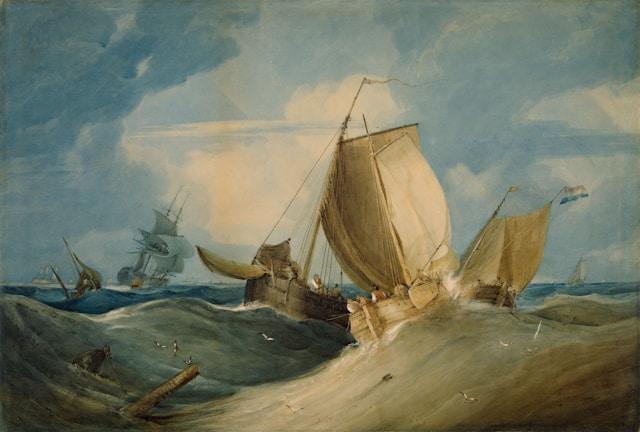
The Romanticism movement started in the 19th century and rapidly spread across Europe and even the United States up to the 20th century.
One of the major characteristics of Romanticism is the importance of emotions and senses instead of sole reasoning and order (as advocated during the Age of Enlightenment before that) when it comes to understanding experiences and happenings of the world.
This was a period where society began to celebrate passion, individuality, imagination, subjective perceptions, and even unpredictability through their music, literature, architecture and art.
Another key focus of Romanticism art is newfound attention to the wonders of nature and landscape art — signifying more outdoor observation and paintings.
Some examples include:
- Wanderer above the Sea of Fog by German painter, Caspar David Friedrich
- The Hay Wain by English painter, John Constable
- Wanderer above the Sea of Fog by English painter, J. M. W. Turner
- The Ninth Wave by Russian painter, Ivan Aivazovsky
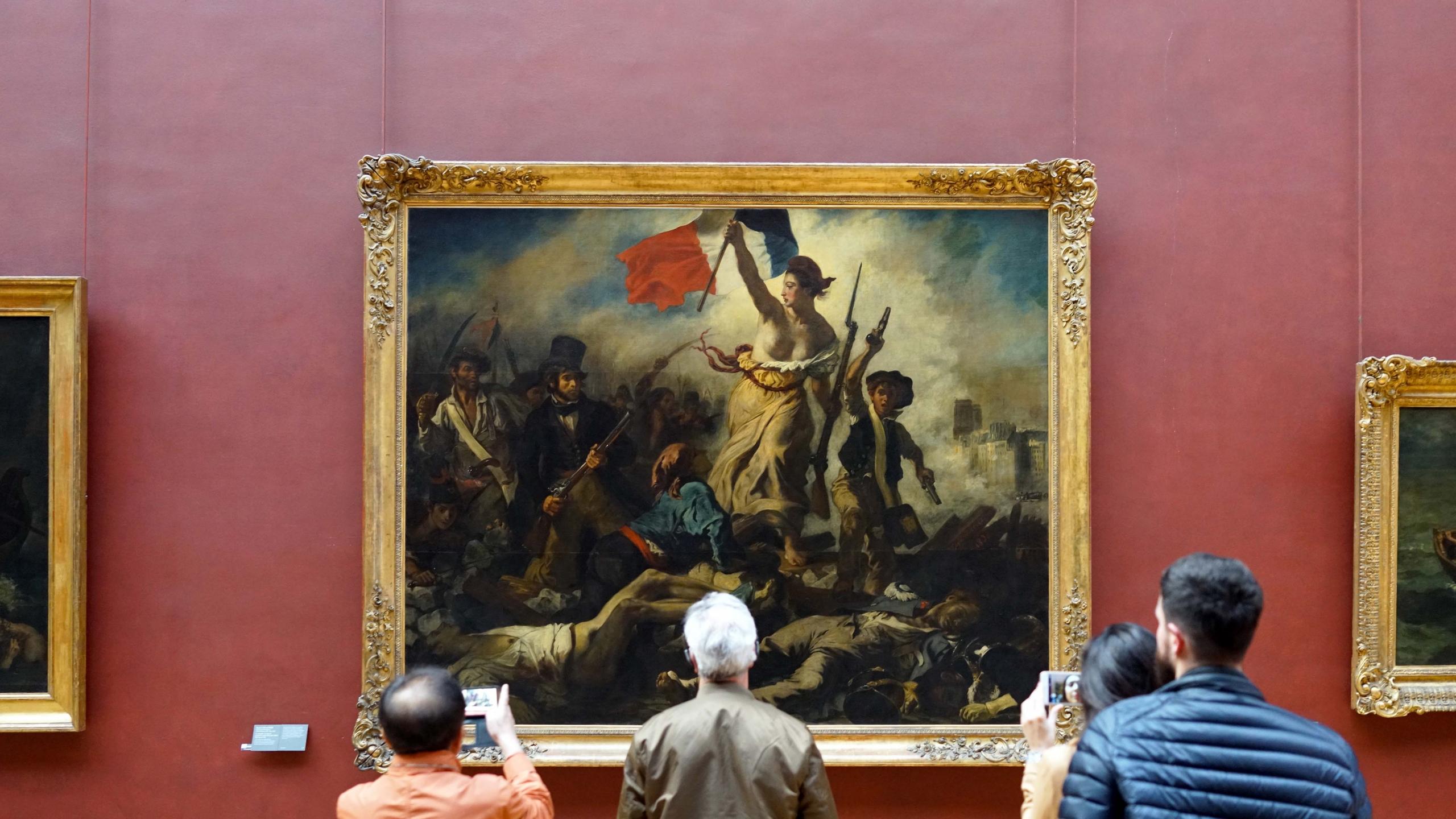
On the other hand, there was also a shift in how nationalism and freedom were perceived across the globe. Bear in mind, the late 18th century and the early 19th century were an eventful period where major historical events such as The French Revolution, and The American Revolution took place.
Subsequently, this leads to a gradual shift of focus on wars, tragedies, contemporary events and themes of patriotism in many artworks during the period — leading to bold brushwork and vivid colours (painting style)
Some notable examples that you might have heard include Liberty Leading the People by French painter, Eugène Delacroix, The Third of May 1808 by Spanish painter, Francisco Goya and The Raft of the Medusa by French painter, Théodore Géricault.
Get a glimpse of various pioneering artists throughout history and how they influenced the beginning of a new art movement.
Source: Smarthistory
A Touch of Everyday Life Scenes and Authentic Reality — Realism
The next art movement that followed Romanticism was none other than Realism, which bloomed in the mid-19th century.
The key characteristic of Realism is to portray the world as it is, as real as possible (no pun intended) without any hint of extravagance and perfection. It basically rejects the ideas of Romanticism on imagination and individuality.
That's why you'll notice that the subject of paintings of the Realism art movement mostly revolves around ordinary people leading ordinary lives as well as everyday settings instead of focusing on historical and mythological events.
Furthermore, it also has a special emphasis on the depiction of workers (the middle-class group and the peasant community) as well as their different workplaces.
When it comes to Realism landscape paintings, the painters pay more attention to realistic portrayals of animals, and how to recreate the position of trees, mountains, clouds, and effects of lights and shadows through the right painting textures and painting strokes.
Like any other art movement, Realism also has its roots in Europe (especially in France) which slowly spread to other regions of the globe, influencing various artists in the United States of America and even Russia.
Some examples of famous Realism paintings include:
- A Burial at Ornans by French painter, Gustave Courbet
- The Gleaners by French painter, Jean-François Millet
- Barge Haulers on the Volga by the Russian painter, Ilya Repin
- The Gross Clinic by American painter, Thomas Eakins
The Essence of Moments and Light Movements — Impressionism
Impressionism is an art movement that is a continuation of Realism with its focus on everyday scenes and surroundings. However, it has distinctive characteristics in terms of painting techniques and brush movements.
The most obvious characteristic of the Impressionism movement is it features loose brush strokes that are repetitive. So, it's not creating fine lines and fine forms but portraying the subject or the scene at that moment.
Another key characteristic is the application of a bright and vibrant colour palette with the usage of darker contrasting hues to create a shadowy effect instead of using the colour black directly.
With the combination of loose brush movements and bright colours, Impressionism painting often exudes a light and airy charm.
Impressionism also marked the advent of “En plein air” — which means in the open air. This means that painters start to paint outdoors and do what we call "live painting", engaging with the people, nature, the weather and natural interactions that are taking place.
It was viewed as a significant change because, for most art movements before Impressionism, the painting process usually took place in a confined place with pre-arranged models and subjects.
Under Impressionism, there was also another branch called Post-Impressionism where new painting techniques like pointillism were introduced, leading to a whole new generation of painters such as Georges Seurat, Vincent Van Gogh and Paul Cézanne.
Some examples of amazing Impressionism paintings include:
- Water Lilies by French artist, Claude Monet
- Luncheon of the Boating Party by French artist, Pierre-Auguste Renoir
- The Starry Night by Dutch artist, Vincent Van Gogh
- A Sunday Afternoon on the Island of La Grande Jatte by French artist, Georges Seurat
Don't forget to discover a myriad of amazing artworks throughout the years by these talented artists.
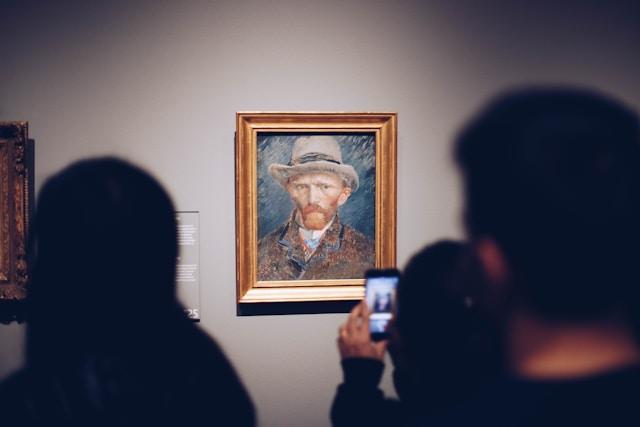
Photo by Ståle Grut on Unsplash
Assorted Arrangements of Shapes and Collages — Cubism
We can't talk about modern art without mentioning the Cubism movement. Every beginning of a new art movement is a result of various experimentation of different art styles from the previous movement, Cubism is no different.
One of the key artists of the Impressionism movement, Paul Cézanne encouraged and advised young painters to start painting nature as not what they see, but through different angles, and shapes such as cylinders, cones, and spheres.
From there, two promising artists named Georges Barque and Pablo Picasso began to work on these ideas and in due time, the Cubism art movement was born during the early 20th century.
That's why the most apparent characteristic of Cubism painting is the portrayal of different perspectives through different geometric forms.
Not only that, the geometric forms are fragmented and flattened. This means the whole composition of the painting looks like a set of puzzles that you need to put together. You can only make sense of it when you learn to "see within the lines."
Another major characteristic of Cubism painting is that it has a more monochromatic colour palette (usually muted colours). At least, that was during the early stages of Cubism painting, more commonly known as Analytic Cubism.
There was another branch known as Synthetic Cubism which incorporated more patterns and colours in the artwork, It began to expand beyond mere painting and mixed a range of materials like sands, and wooden wallpaper to form what we call a collage. This soon became a trademark of many Cubism painters.
Now, let's review some examples of famous Cubism art:
- Violin and Candlestick by French painter, Georges Barque
- The Accordionist by Spanish painter, Pablo Picasso
- I and the Village by Belarusian-French painter, Marc Chagall
- Portrait of Picasso by Spanish painter, Juan Gris
If you are a fan of Cubism art and Pablo Picasso, you can certainly learn more about the background of Picasso and his contributions to modern art today.
Bold And Unique Celebration of Popular Culture — Pop Art
The pop art movement is undeniably one of the most revolutionary art movements for a few reasons. The first one, is its geographical significance. Unlike its predecessors, the movements did not emerge in places like France or Italy.
This time, it revolves around the English-speaking continents like the United Kingdom and the United States of America.
Secondly, the subject of pop artwork no longer adheres to traditional forms of fine art but is taken through images of popular cultures, through different forms of media like comics, movies, and advertisements. It has a similarity to the Realism art movement where people turn to celebrate what is common and mass.
Some of the examples of pop art artwork include:
- Crying Girl by American artist, Roy Lichtenstein
- Campbell’s Soup Cans by American artist, Andy Warhol
- The Splash by British artist, David Hockney
- On the Balcony by British Artist, Peter Blake
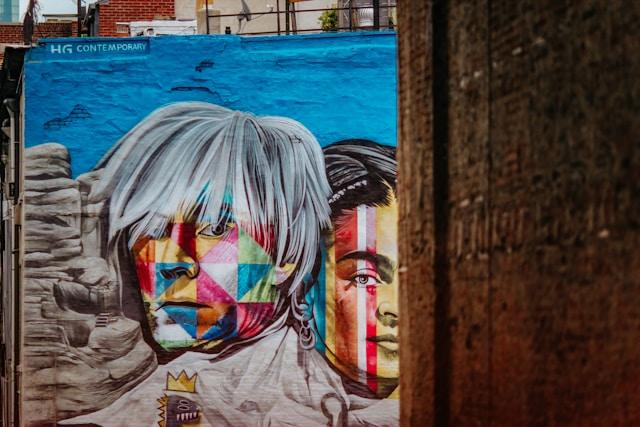
Photo by Jon Tyson on Unsplash
These major art movements have certainly shaped how we look at art and create art today.
One of the best ways to immerse yourself in the world of creating art is to check out various art learning resources for different age levels in Malaysia.
We highly recommend you to find an experienced art tutor at Superprof to master various painting styles from different art movements that were mentioned earlier.
Superprof offers a flexible and personalised learning experience regardless of your learning level.
Not only that, you can opt for physical or online art lessons regardless of your location in Malaysia. All you need to do is just review the tutors' profiles via the Superprof homepage and book your first lesson when you're ready.
In just a few clicks, you are all set to begin your art learning journey, at your pace.
Catch up with all the different art movements with Superprof today!
Summarise with AI:
Did you like this article? Leave a rating!

 Loading...