

Welcome to the best place on the web to dive deep into the world of playing guitar across multiple genres. In this article, we’ll explore the techniques and styles that make every genre unique, from smooth jazz guitar to emotional blues, and even the complex tones of a 7-string guitar. Whether you’re here to learn the right technique, discover related guitar posts, or just want to skip the basics and master advanced works, you’ll find everything right here.
So, if you’re ready to explore what makes each genre special, let’s begin this musical journey, the best thing you’ll do for your guitar skills this and beyond.


Jazz Guitar Techniques Every Guitarist Should Know
Playing jazz guitar is all about expression, timing, and understanding how harmony works. Unlike most genres, jazz demands both technical skill and creative improvisation. Here are some of the most essential techniques every guitarist should learn to truly capture the sound and feel of jazz:
- Chord Voicings and Extensions: Jazz guitarists often use complex chords like 9ths, 11ths, and 13ths to create rich, colourful harmonies. Learning how to build and transition between these voicings is the foundation of jazz rhythm playing.
- Walking Bass Lines: One of the most authentic jazz guitar techniques, this involves playing bass notes along with chords to mimic the sound of a full rhythm section. It gives your playing a fuller, more sophisticated sound.
- Improvisation and Scales: Understanding modes such as Dorian, Mixolydian, and Lydian is crucial for crafting smooth improvisations. Practising improvisation over jazz standards strengthens your ear and creativity.
- Swing Rhythm and Timing: The hallmark of jazz lies in its unique rhythm. Mastering the swing feel, where the timing between notes slightly alternates, helps you lock into the groove with authenticity.
- Arpeggios and Voice Leading: Jazz guitar often uses arpeggios to highlight chord tones. Smooth voice leading ensures seamless transitions between chords, creating a professional, flowing sound.
Learning jazz guitar is not just about memorising scales and shapes; it is about developing a deep understanding of harmony and timing. With consistent practice and focus on these techniques, your playing will evolve into a more refined and expressive style that truly represents the best of the jazz guitar tradition. If you’re just beginning your musical path, explore how to start playing guitar for beginners to build a strong foundation before diving into jazz techniques.
Essential Blues Guitar Techniques for Beginners and Beyond
The blues guitar is the heart of modern music, influencing genres from rock to soul. Its power lies in emotion, phrasing, and the ability to make a few notes speak volumes. Below are the most important techniques that every guitarist, whether beginner or advanced, should explore to master the blues sound:
- Bending and Vibrato: A defining feature of blues guitar playing is the expressive use of string bends and vibrato. These techniques allow you to imitate the human voice and convey deep feeling through subtle pitch variations.
- Call and Response Phrasing: Inspired by gospel and early blues singing, this approach involves creating a “conversation” between musical phrases. It helps develop storytelling through melody and improves improvisational awareness.
- 12-Bar Blues Structure: This classic progression is the foundation of the blues. Understanding how chords move within the 12-bar pattern gives you the flexibility to play confidently in any key and to jam with other musicians.
- Turnarounds: A turnaround is a short, distinctive phrase that leads the listener back to the start of the progression. Learning several turnaround variations is essential for keeping your blues guitar playing fresh and dynamic.
- Dynamics and Touch: In blues, volume and tone are tools of expression. Experiment with picking intensity, muting, and finger control to create contrasts between soft, soulful passages and powerful, emotional peaks.
- Pentatonic and Blues Scales: The minor pentatonic and blues scales are central to soloing in this genre. Focusing on phrasing and note placement rather than speed gives your playing authenticity and soul.
The beauty of blues guitar lies in simplicity, emotion, and connection. Each note tells a story, and mastering these techniques will help you express yourself with sincerity and confidence across every style influenced by the blues. To truly appreciate where this expressive art form began, take a look at the origins of the guitar and discover how its early evolution shaped the soulful sound of blues we know today.
How to Master the 7 String Guitar Step by Step
The 7-string guitar expands a player’s creative and tonal range far beyond what a standard six-string offers. Favoured in modern metal, jazz fusion, and progressive rock, this instrument demands precision, patience, and an understanding of how the extra string changes your playing approach. Follow these key steps to master it with confidence:
- Understanding the Extended Range: The seventh string is typically tuned to a low B, adding depth and power to your sound. Familiarise yourself with how this affects chord shapes, scale patterns, and overall fretboard navigation.
- Adjusting Your Fretboard Visualisation: A 7-string guitar introduces new spatial challenges. Train your eyes and hands to recognise positions accurately by practising simple scales and arpeggios that incorporate the extra string.
- Developing Muting Control: With a lower string comes more resonance and potential noise. Learning to control unwanted string vibrations with both hands is essential for clarity, especially in distorted or high-gain settings.
- Creating Balanced Chord Shapes: Chord voicings change on a 7-string. Experiment with partial chords and extended harmonies that make use of the lower register without overcrowding the sound.
- Exploring Genres Beyond Metal: While the 7-string guitar is often associated with heavy genres, it also offers incredible versatility in jazz, ambient, and cinematic music. Experiment with clean tones and open tunings to uncover its melodic potential.
- Right-Hand Technique and String Skipping: Precision picking is vital. Focus on right-hand discipline and string skipping exercises to maintain articulation across all seven strings.
- Fretboard Mapping and Practice Routine: Create structured practice sessions that include scales, riffs, and chord drills specific to the 7-string layout. Consistency is key to mastering coordination and finger placement.
Mastering the 7-string guitar is not about speed or complexity but about understanding its expanded musical possibilities. With consistent, focused practice and awareness of tone control, this instrument can elevate your sound to a professional, expressive level that stands out in any genre. For inspiration and insight, explore the best guitarists ever who have pushed the boundaries of technique and creativity across styles and generations.
10 Guitar Styles and How to Play Them
When it comes to learning to play guitar, aspiring guitar players generally don't know which style to choose. If you're a beginner, maybe you're wondering if you should learn by playing rock, blues, jazz, funk or country?
Blues guitar, jazz guitar, and rock guitar, whilst similar, are really completely different - and this is pretty much a difference of arpeggios and chord shapes, and chord progressions. Then there are those genres you might prefer to play on acoustic guitars, such as those genres based around rhythm guitar.
So before you embark on the guitar adventure, discover a selection of ten guitar styles!
A Common Basis for all Guitar Styles.
For all the styles of music to play on the guitar, you need to know the basics.
To play rock, blues or pop, you'll need to: train and muscle your fingers, gain flexibility, strength, speed, coordination and precision. You'll need to master your fretboard and work on your fingerstyle. You can also do daily harmonic or arpeggio exercises - and you might benefit from learning a bit of music theory.
Each music style has its own codes and characteristics, and this'll condition the efforts and time for you to totally master it. Whilst blues is usually based around the pentatonic scale, for example, the guitar solos in jazz are much more complex, working with different chord progressions and melodies.
Whether it's funk, rock'n'roll, hard rock, or punk, a guitar player is bound to encounter difficulties during training and guitar lessons. To truly progress, you'll also need to leave your commonly held beliefs about the guitar and different styles behind, opening your mind to new techniques, tones, and musical approaches.
A Common Knowledge Base
To become a good guitarist in a particular style of music, there are three aspects to consider, regardless of the genre:
- Effectively train your fingers: this is the basis of your guitar practice. If your fingers aren't sufficiently trained and if all your muscles aren't warmed up, you'll never achieve all the potential development desired in your specific guitar style. By working out your finger muscles and the flexibility of your wrists and forearms, you'll be able to control your fingers while being relaxed and at ease.
- Acquire the necessary tools to play the desired music genre. Each style requires you to acquire its own techniques, singular scales, basic chords, and so on.
- Develop a musical experience in the style you want to play on the guitar by putting into practice the genre's famous techniques. By knowing how to use these various techniques, a musician will enrich their game and progress.
And yes! The guitar is good for your health. And you can make a living off of it.
Some Styles of Guitar for You to Learn.
1. Rock'n'Roll
Rock appeared in the 1950s in the United States. It came from blues, rhythm & blues, country and gospel. Guitarists like Chuck Berry, Little Richard and Bill Haley propelled it and brought music into a new era.
To learn this musical genre, you need to equip yourself with a vintage semi-hollow guitar, such as a Gibson ES or a solid body, such as a Telecaster.
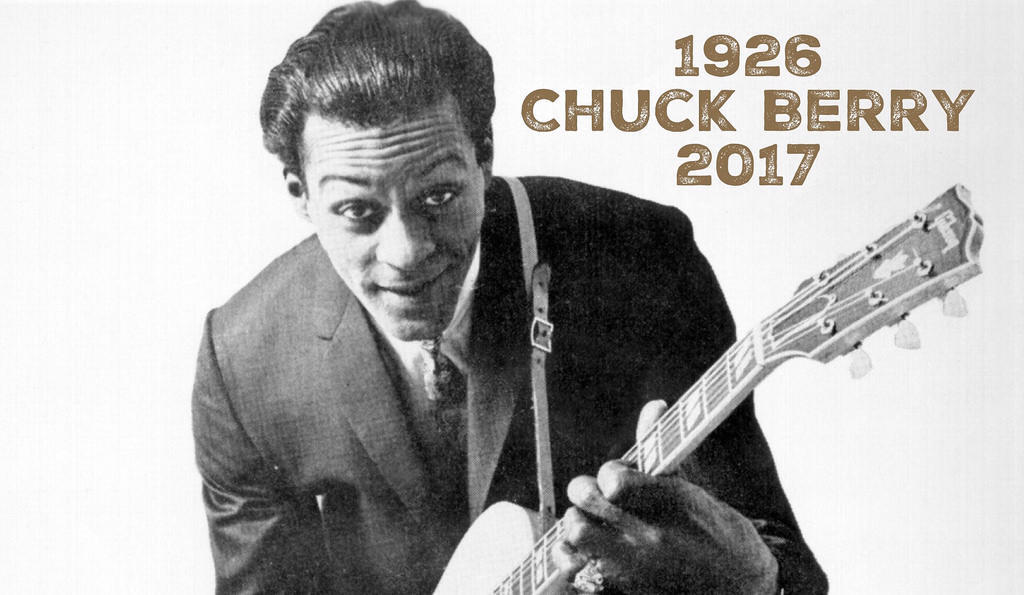
Each sound must be sharp to favour fast and jerky rhythms. The amps are powerful, and there are practically no sound effects, even though some reverb can be used.
2. Rock
In the logical extension of rock'n'roll, rock has become the unavoidable movement of the electric guitar. It's less of a dancing evolution than its predecessor. It opened the way for what we called the first "guitar heroes", such as Jimi Hendrix, Jimi Page, Clapton or Jeff Beck in the 60s.
To play rock, you need a minimalist spirit because it's built around powerful sound. Rock is played hard based on chords mostly stemming from blues.
A guitar like a Les Paul (Gibson) or a Stratocaster (Fender) is ideal. For sound effects, just turn to a wah-wah pedal or a fuzz for solos. For rock, it’s better to learn to play the electric guitar and explore the benefits of playing guitar to understand how this instrument can enhance not only your music but also your overall well-being.
3. Hard Rock
Developed around rock and in a similar but more violent spirit of rebellion, hard-rhard rockights guitars and their distortions with singing.
Many bands such as AC/DC, Van Halen, Guns'N'Roses, Extreme, Scorpions or Bonandovi, but also Black Sabbath, Led Zeppelin and Deep Purple are among the greatest.
To play this extreme music style, you have to push rock to its utmost. It's a muscular music: riffs are heavier, contain more distortion, singing is often perched in the treble, volume is impressive, guitars are often carried very low at the end of the strap.
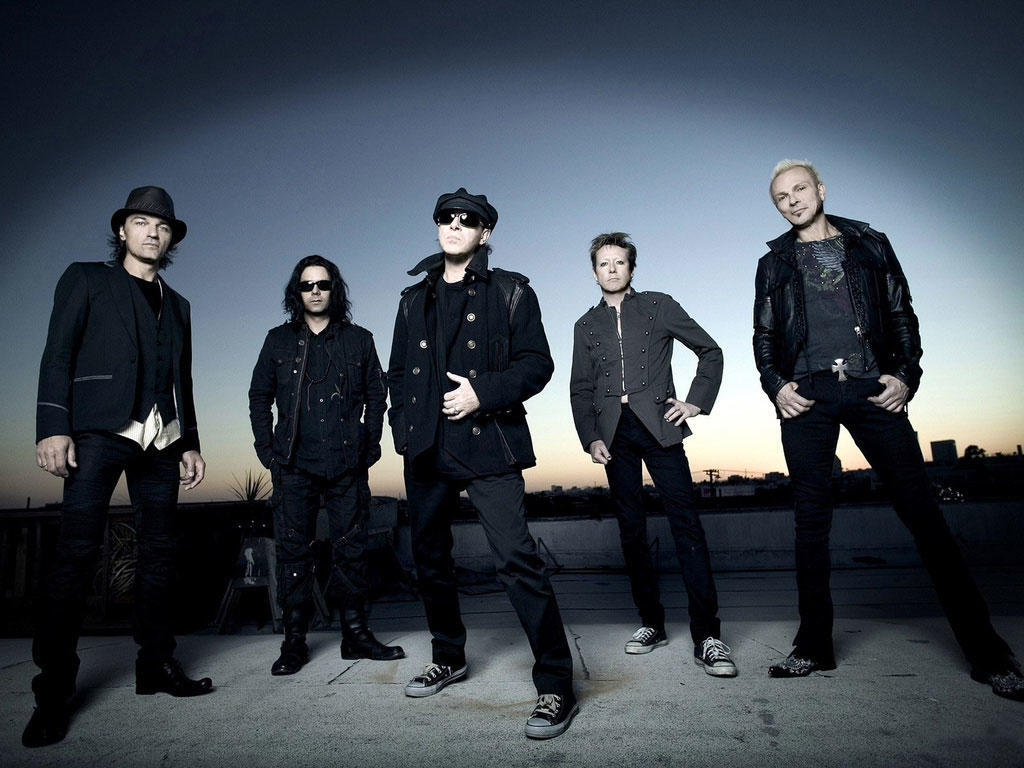
Guitarists become virtuosos.
4. Heavy Metal
Slightly different from hard rock, heavy metal is inspired directly by rock and not blues. Sounds are harder and riffs are heavier.
Heavy metal is also inspired by classical music, imprinted with blackness. Some guitarists even know how to play the guitar with one hand.
For those who like distorted loud sounds, who love music built around an extreme sense of rhythm, a melodic song and death or underworld-inspired themes, then heavy metal meets your requirements. And yes, we're far from classical guitar lessons.
Heavy metal is mainly powerful distortions, syncopated rhythms, variations of a single piece and a multi-pedal system to multiply sound effects.
5. Funk
For Nile Rodgers, Bootsy Collins, George Georgeon Buallal, Jamiroquai, James Brown, Earth, Wind and Fire fans, funk is the style of groovy rhythms.
Basic notions are required, such as rhythmic flow, swing, accentuation, etc. If you don't know of these, ask your guitar teacher for help during your acoustic, electric or bass guitar lessons.
To play funk, train with a metronome as often as possible to set your playing on an accurate rhythm. Slow down the tempo of certain exercises to coordinate your right hand and start your practice sessions with a clean tone, free of effects. Consistent rhythm training not only sharpens your musical precision but also contributes to your overall focus and guitar-related health and wellbeing.
Once you master the rhythm, add on a wha-wha pedal or a Phaser.
Rhythm – the basis of funk – is mostly based on sixteenth notes: the left hand is placed entirely on the strings to smother them slightly, and the right hand makes back-and-forth movements (called strumming).
Volume is constant, and one shouldn't be afraid to strike the strings thoroughly to gain in sound and assurance.
6. Reggae
Reggae is a music style from the Caribbean, especially Jamaica. Bob Marley and his band, The Wailers, widely popularised it.
With the right hand, notes are played with a pick (downstrokes) and the setbacks are made in return. With the left hand, you obtain silences by suspending fingers while maintaining contact with the strings.
It's imperative to play "staccato" and not let the sound last.
Reggae regularly uses a technique that alternately plays the fundamental note in the bass and the acute notes of a chord (with fingers or a pick).
7. Country
Country is an American style, especially in the southern regions of the USA. We recognise this musical genre by its sound, rhythms and chords.
To play country on the guitar, you must master pick strokes. Prefer metal strings (forget nylon ones) that are thicker and therefore sound louder, even if they're harder on your fingers.
Country is played as follows: a bass accompaniment with alternating chord positions, low-string notes with a brushed chord on the acute strings. With practice, mastering this technique can help you perform confidently and even explore how a good guitarist can earn money through their skills and performances.
8. Jazz
Jazz is surely one of the bases for any current music. Originally,y we electrified it to give more sound to an acoustic guitar. It's this style that saw the birth of guitar microphones.
Solid body guitars, as a Rickenbacker will, enable you to play as Birelli Lagrene, Pat Metheny, John McLaughlin or Django Reinhardt did.
To play jazz, you must use amps with powerful, clear and homogeneous sounds. The guitars have deep tones with high sustain.
Note that you must master improvisation basics and be experienced (or benefit from several guitar lessons). It's required to know how to play the guitar well enough.
9. Blues
Blues is as old as jazz, although it precedes it in the specific guitar history. Blues is recognisable in its approach and emotion it releases: it's a music of rage, anger, hope, and amentation.
The basis of blues is the progression of 3 chords, 12 measures and a characteristic tempo. Technically you'll have to master bends, slides and bottleneck game to render a generally clear and warm, slightly saturated sound.
BB King, Stevie Ray Vaughan, Albert King, Clapton and Hendrix knew how to master this style brilliantly. Hendrix was also a blues guitarist (see our article: How to play the guitar when we are left-handed?).
10. Pop
Pop was born from the Folk movement in the United States, inspired by revisited Irish ballads. Today, style is somewhat overused, and pop is identified as "international variety". Yet great bands populapopularisedch as The Beatles, REM, U2, Dire Straits, The Police or even Toto.
Pop is the result of rock arrangements. It changed material needs, notably in terms of sound effects, multi-effects racks, endless pedals, extreme compression, and a guitar such as a Stratocaster or a Telecaster, are enough to turn you into a pop guitarist. To better understand how tone, rhythm, and stage presence shape musical expression, explore how impressive guitar music continues to influence modern pop and performance styles.
Recap: Some Guitar Styles to Learn.
| Rock 'n' Roll | The original electric guitar music. |
|---|---|
| Rock | Pop music with distorted guitars. |
| Hard Rock | Not as dark lyrics as metal, but distorted guitars and driving bass and drum lines |
| Heavy Metal | Distorted guitars, guttural vocals, and heavy bass. |
| Funk | Complex rhythms and catchy bass grooves |
| Reggae | Syncopated rhythms. |
| Country | Fingerpicking, simple chord work, and vocals. |
| Jazz | Expected complex harmonies and rhythmic innovation |
| Blues | Based around twelve bar progression and a pentatonic with the 'devil's note'. |
| Pop | Simple chord progressions |
Summarise with AI:
Did you like this article? Leave a rating!

 Loading...