
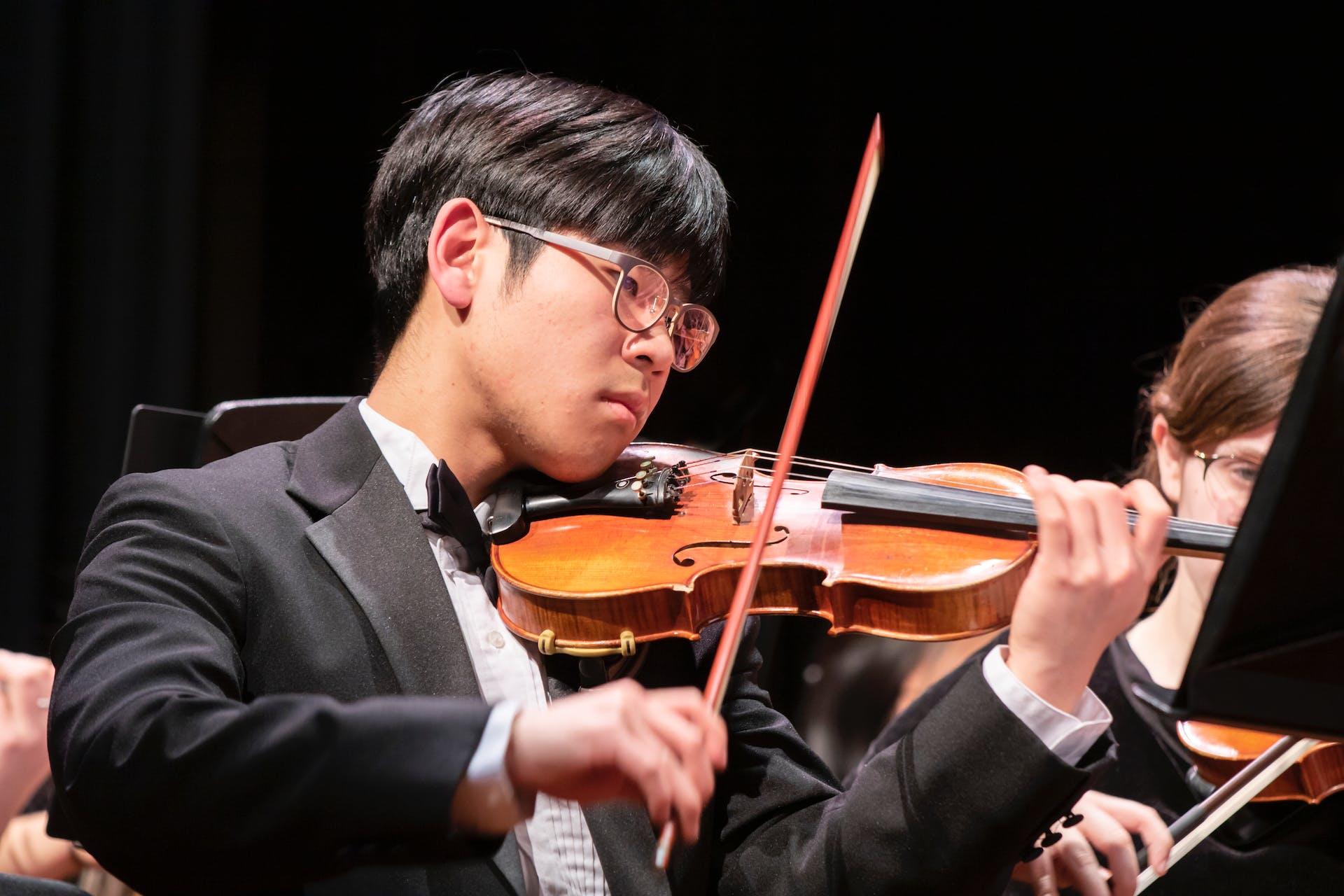

The violin is a magnificent yet challenging instrument. Achieving mastery and producing a beautiful sound requires extensive practice. Just as vocal cords are essential for singers, the violin strings are tools for expressing emotions. While some may have natural talent, others may need more time to practice. Despite our physical differences, we all possess two hands and ten fingers, and each must discover ways to simplify tasks whenever feasible.
Every student recognises that the level of practice directly correlates to their proficiency as a violinist. This understanding motivates students to dedicate numerous hours to practice.
One might think that the more time invested, the greater the outcome; this is true to some extent. However, the effectiveness of your violin practice is not solely dependent on the duration of practice but also on the level of intentionality. Identify areas for improvement and create a systematic plan to implement changes.
You are in the right place to discover how to enhance your violin practice and take your training to a higher level. If you're looking for ways to improve your violin practice sessions, this article is just for you. It covers various techniques and tips that will help you improve your overall performance and master the violin.


Develop Good Practice Habits
The key is to practice the violin with intention. Whether you're a beginner in playing the violin or an expert, identify areas for improvement and make necessary adjustments. Structure your practice sessions with a focus on gradual learning. Consistent daily practice, even for short durations, is ideal. Cultivating good habits is a process that requires patience and persistence.
Tuning & Warm Up
Before starting your practice session, it's essential to tune your instrument first. This prevents time wastage and enhances and hones your pitch perception. After tuning, briefly line up your ears and finger muscles by playing with scales. Scales serve as an ideal warm-up, preparing you to transition seamlessly into the rest of your daily practice routine.
Posture
Ensure correct positioning of the violin and bow, and maintain smooth and functional movement in both arms and hands. Consistent practice with a slouched posture and improper mechanics can lead to the formation of detrimental habits.

Head & Shoulder
During practice, refrain from tilting your head sideways to maintain alignment between your neck and spine, preventing strain in your back, shoulders, and muscles. Keeping your shoulders relaxed is essential, although they may involuntarily tense up, so stay attentive to your body's signals during practice. Over time, as you develop muscle strength and uphold proper posture, this will become more manageable, but it's crucial not to overlook your body's alignment while playing.
Repeat the Correct Version More Times Than the Wrong Version
To correct mistakes, ensure you repeat the correct version more frequently than the incorrect one. If the error is repeated, that repetition should not be counted. The correct version needs to become your new habit through consistent practice.
How to Practice Violin Effectively?
Mastering the violin requires practice, much like honing the skill of playing in tune. It is essential to practice the art of practising itself. Understanding how to practice the violin effectively can help you achieve more significant progress in a shorter period. This efficiency allows you to allocate more time to other aspects of violin practice.
Break the Music Down to Smaller Parts
Mastering music requires dedicated practice to enhance muscle memory and familiarity with the piece. This practice also benefits sight-reading skills. Breaking the music into smaller sections and focusing on individual parts aids concentration and allows for targeted improvement. Slowing down during practice, especially when starting a new piece, helps understand each movement. Addressing challenges one step at a time promotes progress and skill development in your performance when learning how to play the violin.
Use a Metronome
Timing is crucial in music, and our pitches must be proportionate for the music to flow cohesively. This involves playing the correct rhythms that align with the pulse of the music. Our sense of time can be distorted when we are focused on other aspects. When encountering a challenging technical issue, consider using a metronome. Listening to the metronome while playing lets you quickly identify any timing inconsistencies. Using a metronome lets you concentrate on one aspect of your performance, freeing up mental space to address technical challenges. Preemptively using the metronome can prevent timing errors from becoming ingrained during practice sessions.
Click here to find out what equipment is needed to master the violin
Use a Mirror
Using mirrors can provide valuable visual feedback on your violin technique. As you gain experience, you will develop an intuitive sense of what looks correct while playing. A glance in the mirror can instantly show you if your actions are effective. Like with the metronome, it's important not to rely solely on the mirror. Position yourself in a way that allows you to easily see your reflection without turning your head. When monitoring your bowing, adjust your body slightly to the left so that your feet are at a 45-degree angle to the left of the mirror. This positioning enables you to assess the correctness of your bow angles and whether the bow is parallel to the bridge.
Repetition is Key to Improvement
Have you ever struggled with playing a musical piece flawlessly? The key to mastering any piece lies in identifying the areas that need improvement and taking things step-by-step. Break down each section into smaller parts to help you focus better. And here's a handy tip: repetition is your best friend! Listen to a correct rendition of the piece repeatedly to help you internalise the patterns, rhythms, and tones. This will enable you to replicate them with ease. Trust me, iterating through each section individually will enhance your mastery of the piece and help you become a pro in no time!
Plan a Good Practice Session
Occasionally, practice sessions can be unproductive. Imagine a violinist going through a rehearsal with poor posture, difficulty recalling notes, and putting in minimal effort to get through it. Ultimately, the violinist leaves the room without improving their playing skills. What distinguishes effective practice sessions from unsuccessful ones? How can you ensure that your practice, regardless of the skill you are honing, is not a waste of time?
Allocate Space for Practice
A designated practice area is crucial to establishing a routine and maintaining concentration. Keep this space free from distractions, such as other individuals or a television. Consider leaving your cell phone in another room unless you utilise apps like a tuner or metronome to aid your practice.
It can be challenging to fully engage in an activity when other distractions are on your mind. Keep your practice area minimalistic, with only essential items like your music stand, sheet music, metronome, and violin.

Decide the Frequency of Practice
How many days per week do you aim to practice the violin? How many days per week can you realistically dedicate to practice? Begin with what you consider achievable. This could mean practising every other day, on weekdays, or solely on weekends. Consistency is key. Once you establish a regular practice routine, you can work towards practising more frequently to reach your desired goal.
Research has shown that dividing practice sessions can enhance material retention. For instance, engaging in intense practice for ten minutes, taking short breaks to do other activities, and returning to practice can be beneficial. Alternatively, you could split a one-hour session into two shorter sessions for better results.
Structure Your Practice Well
Before starting each practice session, outline the scales, studies, and pieces you intend to focus on. Determine the amount of time you will dedicate to each task, and consider using a timer to help you stay on track. Remember, there's no need to feel pressured by this structure; the goal is to create a framework that supports your practice. Approach your planning as a means of support rather than adding stress. Clearly define your objectives for each session to guide your practice effectively.
Online Resources to Practice the Violin
When you learn violin, it's beneficial to have useful websites bookmarked to aid your practice and learning outside of violin lessons. We will recommend some top websites and apps for learning violin. These resources can assist both beginners and advanced players in enhancing their skills.
8Notes
8Notes is a predominantly free online platform for musicians seeking to enhance their music and instrument skills. While its main focus is on providing free sheet music, it also offers some audio and video lessons. This resource is ideal for individuals on a budget or those who prefer learning through ear and sheet music rather than through detailed video tutorials.
It offers a wide range of instruments and music genres. In addition to lessons and sheet music, 8Notes provides various supplementary resources. For violinists, these include play-along tracks, chord charts, tuners, metronome tools, music theory materials, and forums where you can engage in discussions and seek advice from fellow violinists.
Violinspiration.com
Violinspiration.com provides a wide range of lessons for learners. Beginners will find the platform beneficial as it simplifies intricate violin techniques into manageable steps, offering numerous free resources without any cost, which is always positive. The platform provides free sheet music, weekly videos, and a complimentary three-day boot camp for individuals interested in exploring the platform before committing to a purchase.
If you're seeking a trustworthy platform to find a private violin tutor, we suggest exploring Superprof. Through Superprof, you can efficiently search for a violin teacher based on various criteria such as your budget, preferred qualifications, teaching approach, subject coverage, and learning mode (online/in-person). You can search for violin lessons "near me" or online based on your preference. If you are unsure regarding the cost of learning violin, check out Uncover the Rates of Malaysia's Violin Instructors. Superprof offers a convenient and adaptable learning experience, irrespective of your location.
Summarise with AI:
Did you like this article? Leave a rating!

 Loading...
