
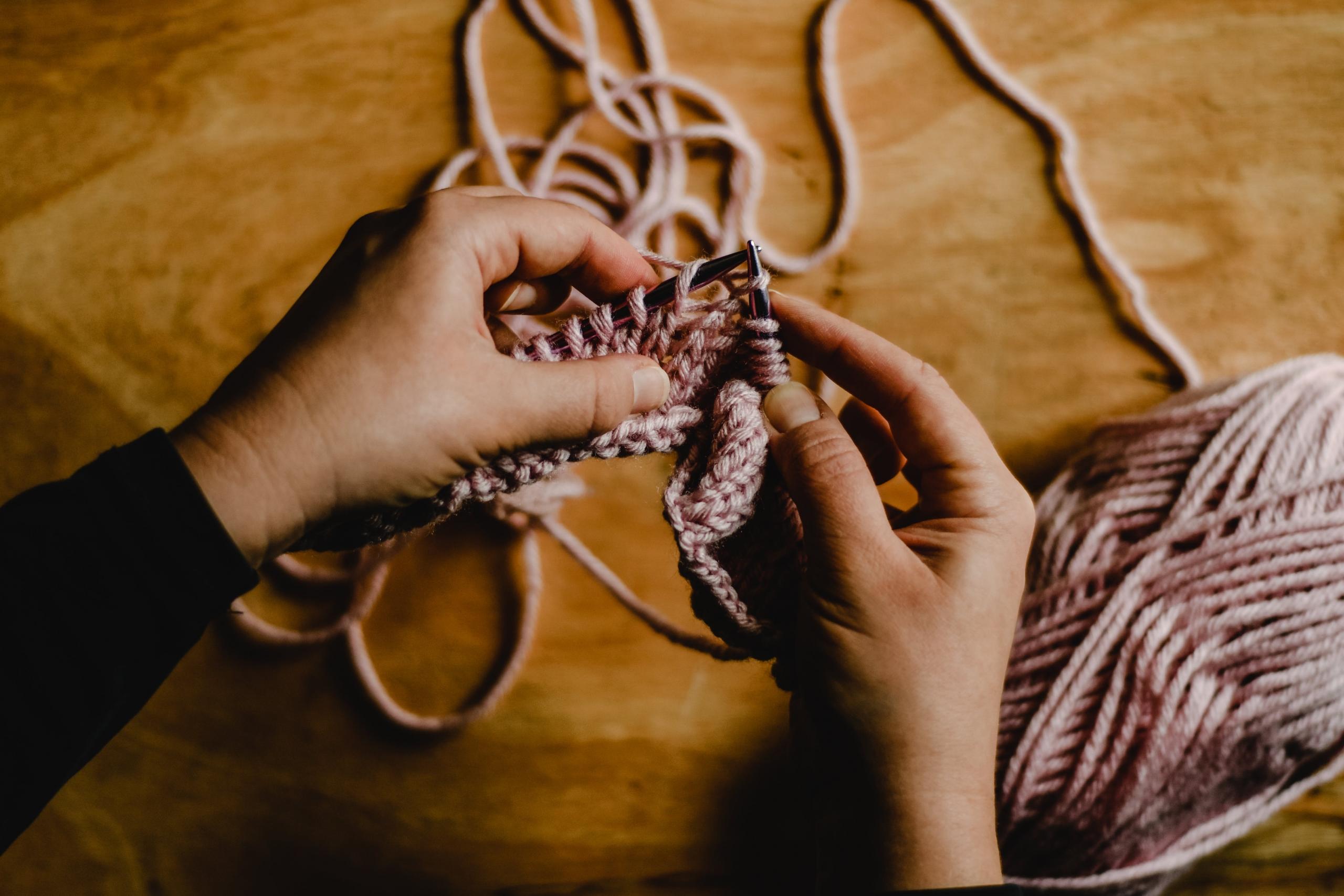

There are various opinions about where knitting originated.
The consensus is that knitting was invented somewhere in the Middle East during the 5th century before spreading to Europe and other parts of the world.
What we do know for certain is that knitters have come up with various knitting techniques since then!
It's time to explore the methods of learning how to knit and which knitting style could be right for you.






What are the basic items needed for knitting?
Before we get into the details of how to knit, let's take a look at some essential knitting tools you're going to need if you want to get started on any project.
Needles
Your knitting needles will be your most frequent tool for knitting, so consider purchasing needles of various types and sizes. When knitting in rows, you will need straight needles whereas double-pointed needles are used for tubular projects.
Beginner knitters often start with circular needles as they can be used for various knitting projects, regardless of whether one is using the English method or the Continental method.
Yarn
The first thing that comes to mind may be sheep's wool, but there are dozens of yarn types you can choose from! As an example, natural fibre yarns come in two types: yarns that come from animals and those that come from plants. Animal fibre yarns, like alpaca yarn and pashmina yarn, are great insulators and provide warmth: awesome for making winter clothing!
For a more sustainable option, opt for plant fibre yarns like cotton yarn and bamboo yarn - these are hypoallergenic and just as soft.
On the other hand, synthetic fibre yarns are similar to natural fibre yarns and tend to last longer. Nylon and rayon are popular materials for producing synthetic fibre yarns.
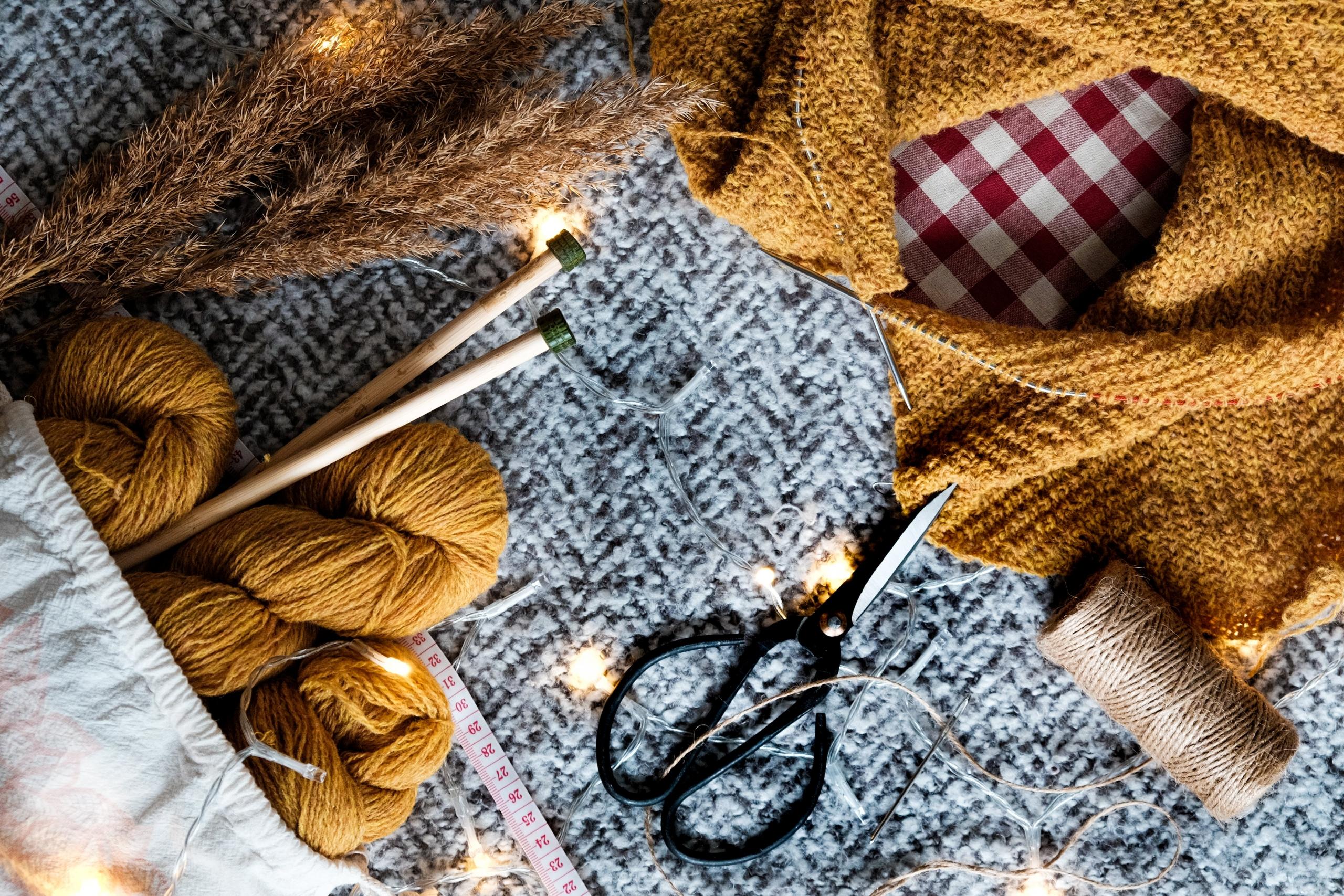
Other tools
You will benefit from having quality scissors, measuring tape and stitch markers to serve as your visual reference when knitting. When choosing between techniques like the Portuguese method and the Shetland method for your knitted pieces, having quality knitting tools makes the process smoother and more enjoyable.
Look out for fantastic knitting resources to kickstart your first knitting project.
What should you know how to knit first?
Generally, every knitting process begins with casting on, and then performing a stitch or stitches, before finally casting off. This is the process you should familiarise yourself with before getting into any complex stitches or knitting methods! So, let's look at how to knit according to these steps.
Step 1: Casting On
There are several cast-on methods for knitting, such as the single cast-on and longtail cast-on that are recommended for beginners. For the single cast-on, ensure the slip knot on your needle is tight before looping the working yarn around your thumb. Then, bring the needle under and up through this loop on your thumb, remove your thumb from the loop, and then pull the yarn.
Repeat this process from the step of looping the working yarn around your thumb until you have cast on the required number of stitches. There's your single cast-on!
You can also follow along to this step-by-step video for casting on efficiently.
Step 2: Performing a Stitch
This is where you will knit a certain number of "rows" until you've reached the desired knitted piece size. All knitters should know how to perform the basic knit stitch and purl stitch for this process.
For the knit stitch, insert the right needle through the first loop of the left needle. Next, using your left forefinger, wrap the yarn around the right needle in a counter-clockwise direction. Bring this yarn back through the first loop again and allow the left hand's yarn to come through. Then take the original loop off the left needle and keep the new loop on the right needle. You did it!
If you're interested in the purl stitch, this is a short video on how to do it!
Step 3: Casting Off
Now that you've knitted, it's time to stop without unravelling your beautiful work! Perform a knit stitch and slip this stitch back onto the left needle. Then, perform another knit stitch: watch out though, you should now stick the right needle through the last two stitches on the left needle. Pull the loop through both stitches and notice that you have made two knits with one stitch on the right needle.
Continue pulling the loop through the entire width until you have your one stitch remaining. Cut the yarn, pull the end through the loop to lock it, and pull tight. Well done!
Are you ready to try out some easy knitting projects?
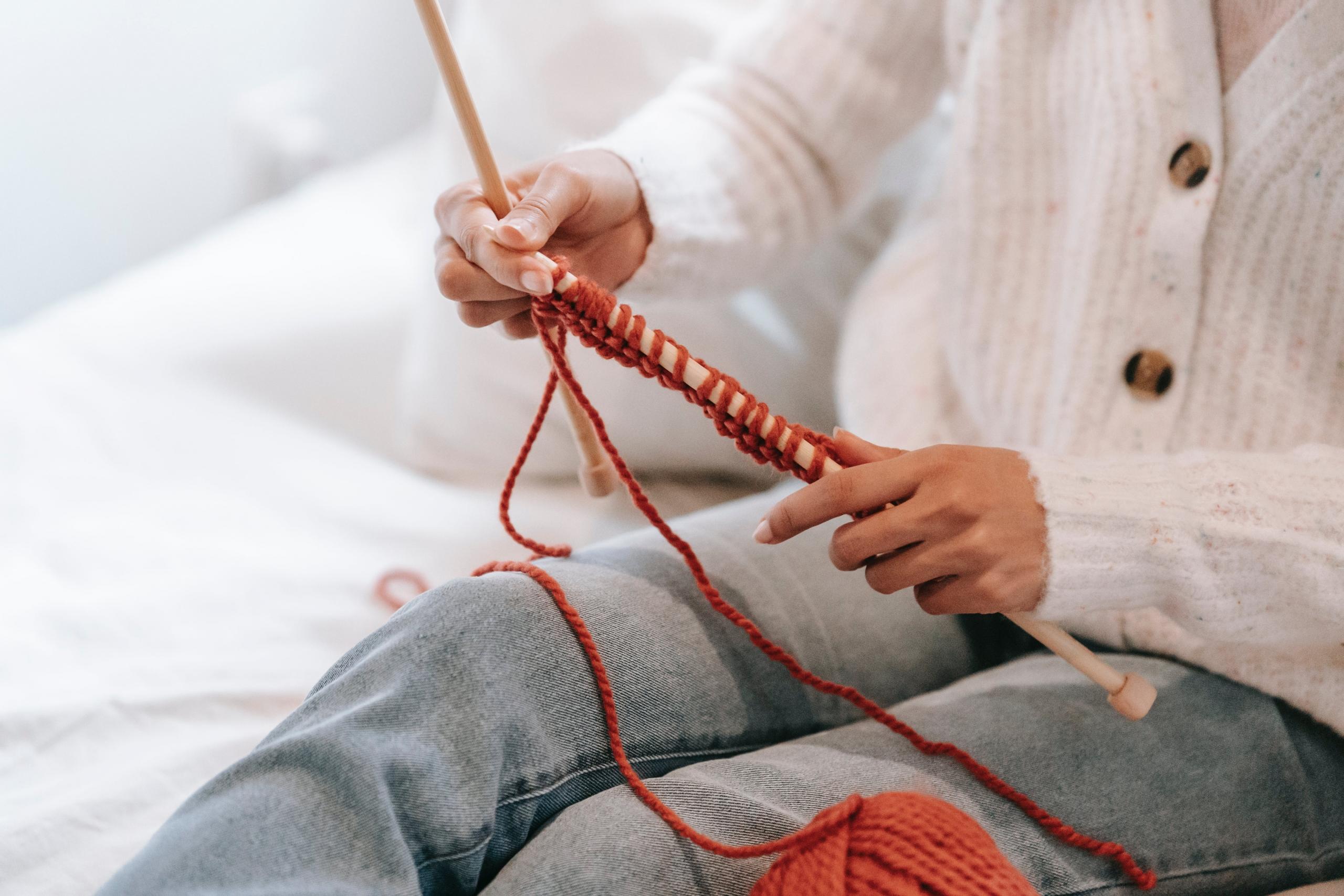
What methods of knitting are there?
Curious about knitting techniques like the Lever method? These are some of the knitting techniques that you should learn if you want to see progress in your knitting and become better at using your knitting needles.
English method vs Continental method
To differentiate between these two, it's pretty much about in which hand you are holding your working yarn. For the English method, the yarn is held in the knitter's right hand whereas the yarn will be in the left hand of someone using the Continental method.
The English method is more popular in England while the Continental method is considered well-known in certain parts of Europe. If you prefer the "throwing" style of knitting, you may prefer English knitting over the Continental method which uses a "picking" style.
Lever method
For the Lever method, long straight needles are used but it is only the left needle that moves. The right needle acts as a stationary lever with the working yarn being held in the right hand. This method allows you to work efficiently without putting strain on your joints.
Portuguese method
Don't be alarmed if you see a knitter wearing yarn around their neck - they are likely using the Portuguese method! In the Portuguese method, the knitter either places the yarn around the neck to create tension or uses a knitting pin on the left shoulder to wrap the working yarn. This particular way of knitting is great for the purl stitch.
Shetland method
The Shetland method is another efficient knitting technique like the Lever method. For this method, the working needle is held in place by a knitting belt so that it takes most of the knitting weight, making it easier to work around the knitting.
Did you know the Shetland tradition of knitting on wires is becoming increasingly rare?
Get to know more about the concept of knitting and its benefits here.
Choosing your knitting method: which knitting style is best?
You should know that all these knitting methods exist because there is no one perfect way to knit!
What you can do is weigh out the pros and cons of the knitting techniques. For instance, you may choose the Shetland method to avoid strain on your wrists while knitting, but it could be a hassle sourcing out the right knitting belt for this method. In this case, the Lever method might be a better option for you.
Additionally, consider your personal preferences and the type of knitting best suited to your project. For instance, you may be a fan of simple scarves so just use the knit stitch to create simple patterns.
You may have also heard of crochet as another popular needlework activity, so do make your choice after comparing knitting versus crocheting styles.

How do I become good at using knitting tools?
Unless you have a natural gift for knitting, almost everyone who picks up knitting needles will not know how to use them correctly at first.
Here are a few common mistakes to look out for when knitting and how to fix them:
- Making stitches that are too tight prevents your knitting needles from going into the stitches. Whenever you make a new stitch, gently lift the right needle to make it slightly bigger.
- Dropping a stitch happens to even the most experienced knitter. You just need to mark the stitch and use a repair hook to pick the stitch.
- When there are unwanted holes in your fabric or the knits are "looser" than you intended, you'll likely need to reknit. If you are doing a knit stitch, keep your yarn behind the stitch; for purl stitches, make sure your yarn is in the front.
If you want to know how to knit and create successful pieces, you can consider taking knitting classes for a hands-on learning experience.
Taking lessons with a sewing tutor on Superprof is the right way to go. Over 500 sewing tutors on Superprof are ready to help you have the best experience in knitting, but you can also look for knitters who know how to create the knit pieces you are looking for or even just to teach you how to make cute knitted accessories.
To specify your search for the best knitting tutor on Superprof, look for sewing tutors who have extensive knitting experience, offer specialised knitting lessons to students and provide video links for interested students who are curious about their knitting style. You just need to click on the tutor profile of your choice to access these details and get to know the tutor.
Whether it's the Continental method or the Portuguese method you want to master, you can become a master of your knitting tools when you learn with Superprof.
Summarise with AI:
Did you like this article? Leave a rating!

 Loading...
