Chinese New Year, also known as the Spring Festival, is a time-honoured celebration marking the beginning of the lunar new year. With a history spanning over 3,500 years, this 15-day festival is rich in cultural significance and is celebrated not only in China but across the world, from Malaysia to Singapore, Thailand, Vietnam, London, San Francisco, Hong Kong, and Sydney.
At its core, the Chinese New Year is about family, culture, and renewal. Traditions such as thorough house cleaning to sweep away bad luck, decorating homes with red and gold for prosperity, enjoying a family reunion dinner on New Year’s Eve, exchanging red envelopes (hongbao/ ang pow) to share good fortune, and taking part in cultural performances like lion and dragon dances make this celebration truly special.
Beyond these well-known practices, there are also taboos, superstitions, and gift-giving customs that play a meaningful role in how the festival is observed. Understanding these customs not only provides insight into Chinese heritage but also helps anyone participating in the celebrations to appreciate the meaning behind each ritual.
Here in Malaysia, our multiracial society allows us to witness and enjoy these traditions firsthand. While the official public holiday in Malaysia lasts just two days, the festive spirit extends far beyond, from vibrant house decorations to family gatherings and rituals.
In this article, I’ve rounded up the key Chinese New Year traditions, including taboos, superstitions, gift etiquette, New Year’s Eve dinner, and the celebrations around the world to show just how far this festival has travelled.
Chinese New Year Tradition
- Chinese New Year, also called the lunar new year, is a major festival based on the Chinese lunisolar calendar that marks a fresh year and a meaningful holiday for Chinese people in China, Hong Kong, and beyond.
- New Year’s Eve centres on the reunion dinner, where family gathers to share a symbolic dinner believed to bring good luck and good fortune for the coming Chinese New Year.
- On New Year's Day, red envelopes, fireworks, and visits are part of the new year traditions that help celebrate the Chinese New Year and set a positive tone for the new year celebrations.
- From the Spring Festival to the Lantern Festival, Chinese New Year celebrations are observed over 15 days, making it one of the most widely celebrated cultural events in the world.


History and Significance of the Chinese New Year
As shared earlier, the Chinese New Year dates back over 3,500 years, originally starting as an ancient agrarian tradition rooted in ancestor worship, honouring deities, and praying for a good harvest. These early rituals marked the end of winter and the start of a new agricultural cycle, particularly during the Shang and Zhou dynasties and earlier.
The well-known folklore of Nian came in much later. According to legend, Nian was a mythical beast that appeared at the start of the lunar new year, frightening villagers and damaging homes and livestock. Over time, people discovered that the creature was afraid of loud noises, fire, and the colour red. To protect themselves, villagers decorated their homes with red banners and lanterns and burned crackling bamboo to create sharp sounds – a practice that eventually evolved into the firecrackers and drums used today.
While the Nian story is symbolic rather than historical, it became a popular way to explain existing customs. In modern celebrations, red decorations are used to invite good luck and happiness, firecrackers are set off to ward off negative energy, and lion dances are performed to bring prosperity and blessings for the year ahead.
We will look into it in detail – keep reading!
The word “Nian” also means “year” in Chinese, linking the mythical creature directly to the festival's name.
Pre-Festival Preparations
Pre-festival preparations usually start weeks before the Chinese New Year and include spring cleaning and shopping for essentials such as new clothes, decorations, and cooking supplies. Homes are cleaned thoroughly, reorganised, and decorated to symbolically sweep away bad luck and welcome good fortune for the year ahead.
In Malaysia, it’s also the time for the famous Chinese New Year sales! Pop-up booths appear in malls and popular areas, selling festive decorations, snacks, traditional biscuits, and other must-have items for the celebration.
CNY decorations typically focus on red and gold colours associated with luck and prosperity. Common items include red lanterns, paper cuttings featuring the Fu character, fresh flowers such as cherry blossoms, orchids, or peonies, and traditional calligraphy couplets.
One item you’ll definitely notice during this season is mandarin oranges. Most of us have experienced receiving these sweet oranges from clients, customers, colleagues or even employers as a gesture of good luck and prosperity!
I always look forward to receiving these oranges during CNY because there’s no CNY without these mandarin oranges 🍊
The reunion dinner1 is one of the most important parts of the Chinese New Year celebration. It is meant to bring family members together, often travelling from different places, to share a meal on Chinese New Year’s Eve. For many families, this is the only time in the year when everyone gathers around the same table.
Reunion Dinner
In Malaysia, Yee Sang tossing (Lou Sang) is commonly done during reunion dinners or New Year gatherings. Families and friends gather around the table to toss the salad while shouting auspicious wishes to welcome prosperity, good health, and success in the coming year.
The dishes served during the reunion dinner are carefully chosen for their symbolic meanings, as food is believed to bring blessings for the year ahead. Typical dishes include:
- Whole fish (鱼, yú) – Symbolises abundance and surplus, as yú sounds like “extra” or “more than enough”.
- Roast chicken or duck – Represents family unity and completeness.
- Prawns (虾, xiā) – Symbolise happiness and good fortune.
- Longevity noodles (长寿面) – Signify long life and good health; they are usually eaten uncut.
- Abalone or seafood dishes – Associated with wealth, success, and prosperity.
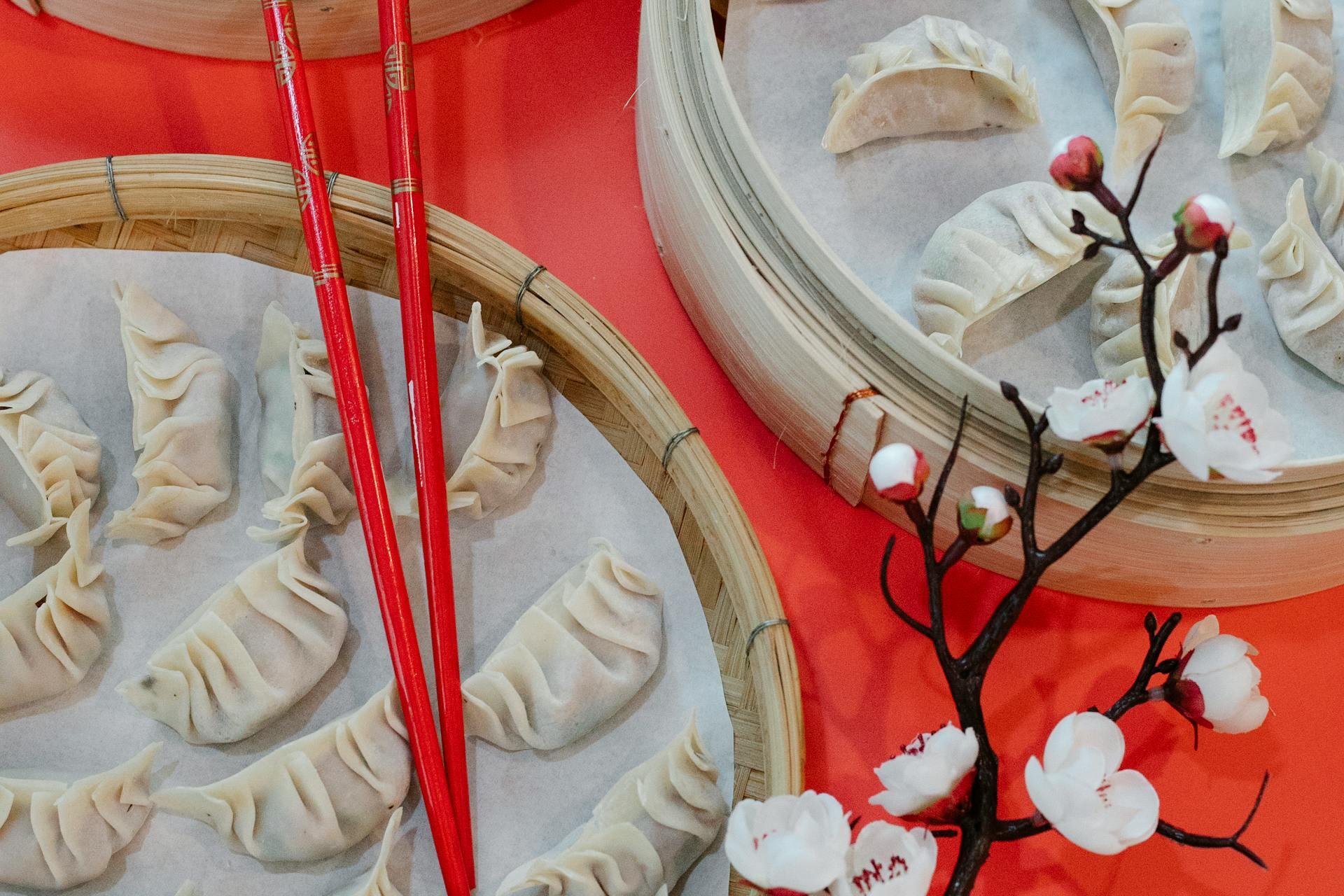
- Dumplings – Symbolise wealth because they resemble ancient gold ingots.
While the exact dishes vary from family to family, the meaning remains the same: to start the new year surrounded by loved ones, with food that represents good luck, unity, and blessings for the year ahead.
Want to learn more about the popular foods enjoyed during CNY and some recipes you can try at home? Find them all in this article!
Timeline of the 15-day festival
First day: 初一 (chū yī)
The first day of the CNY is about waking up early, greeting elders, offering sacrifices to ancestors, wearing new clothes, and getting ang pows from family and relatives. Many families also avoid cleaning on this day to prevent “sweeping away” good luck.
Second day: 初二 (chū èr)
It’s the day for married daughters to visit their parents’ houses. Many families prepare for these visits by preparing a large array of dishes like steamed chicken, kuih spreads, and prosperity platters to welcome their daughter, sons-in-law and grandchildren.
Third day: 初三 (chū sān)
Day three is considered an inauspicious day for visiting and is known as “Red Dog Day” (赤狗日. It’s believed to bring arguments or bad luck during social visits, so many Malaysian Chinese choose to stay home and spend the day quietly with their families.
Fourth day: 初四 (chū sì)
Day four marks the welcoming back of the Kitchen God, who is believed to return from heaven. Families observing this tradition, especially among Hokkien and Cantonese households, prepare offerings such as fruits, sweets, or tea at their home altars. You may also notice temples getting busier on this day.
Fifth day: 初五 (chū wǔ)
Day five is associated with the God of Wealth (Cai Shen), and many businesses choose to reopen on this day. This is also when households resume cleaning, especially for those who avoided it during the first few days of the new year.
Sixth day: 初六 (chū liù)
By day six, many taboos are lifted. Families begin returning home from their hometowns, and some people may start returning to work, especially in urban areas.
Seventh day: 初七 (chū qī)
This day is known as Renri (人日), meaning the “birthday of mankind.” It is celebrated as the birthday of all human beings. Families may eat longevity noodles, yee sang, or a seven-vegetable dish to symbolise health, harmony, and long life.
Eighth day: 初八 (chū bā)
This is a special day for the Hokkien community in Malaysia as they prepare for the Jade Emperor’s birthday at midnight. Preparations include setting up pink paper altars or pagodas, offering special cakes, roasted meats, and sugarcane stalks.
Ninth day 初九 (chū jiǔ)
The ninth day marks the birthday of the Jade Emperor. Devotees visit temples or pray at home to offer thanks and seek blessings, honouring the Jade Emperor as a divine protector, especially within the Hokkien community.
Tenth day: 初十 (chū shí)
By day ten, life largely returns to normal. Some families may still continue temple visits or small gatherings, depending on tradition and personal practice.
Eleventh day: 初十一 (chū shí yī)
Traditionally, the 11th day is considered a good day to host in-laws or close family members. In Malaysia, families often organise small dinners, steamboat meals, or casual gatherings with relatives and friends.
Twelfth day: 初十二 (chū shí èr)
From this day onward, families begin preparations for the final celebration of the season — the Lantern Festival (Chap Goh Meh).
Thirteenth day: 初十三 (chū shí sān)
Families continue preparing for the Lantern Festival while enjoying a quieter day before the final celebrations.
Fourteenth day: 初十四 (chū shí sì)
Final preparations take place, including getting lanterns, candles, and tangyuan (Glutinous rice balls in sweet syrup) ingredients ready. In Penang, the annual lantern display at Kek Lok Si Temple attracts large crowds during this period.
Fifteenth day: 初十五 (chū shí wǔ)
Chap Goh Meh marks the final day of Chinese New Year celebrations. In Malaysia, families gather to eat tangyuan as a symbol of unity, visit temples, or attend lantern events. In Penang and the Klang Valley, the well-known mandarin orange–tossing tradition sees singles throwing oranges into rivers or lakes in hopes of attracting love or romantic luck.
The days described here may not reflect every Chinese household in Malaysia, as traditions differ across families, dialect groups, and personal practices.
Many households will also avoid meat in the morning as a symbolic gesture of compassion, a custom still observed by some Buddhist families today.
Chinese New Year Superstitions & Taboos
We’ve explored the pre-festival preparations, reunion dinner, and the 15-day celebration timeline. Now, let’s dive into the famous superstitions and taboos2 around this Lunar New Year.
Beware that these are not strictly Chinese New Year superstitions. Many of these taboos apply year-round and for any occasion, particularly gift-giving ones.
Still, the Lunar New Year is this culture's most important celebration. So, extra pains must be taken to avoid unlucky acts. We must also take extra measures to ensure we welcome good fortune for the coming year.
Accordingly, Chinese culture delivers a long list of beneficial actions we can undertake.
Try Not to Break Dishes
Breaking something is a bad omen in many cultures, not just Chinese tradition. Especially during a big festival. Still, during the spring festival, breaking a dish holds special significance. It can mean anything from incompleteness to a family breakup.
If you do happen to break something, you can avert bad luck. Simply wrap the broken dish in red paper, and say 岁岁平安 - suì suì píng ān.
The particle 'suì' can mean 'broken'(碎) or 'year'(岁). So you’re using a homophone to wish safety and peace for the new year rather than a mishap.
Don't Use Cutting Instruments
Superstitions about scissors and knives cutting life short are common in folk history. In Chinese culture, during the Lunar New Year, they are especially meaningful.
The open-close-open action of scissor blades mimics a mouth delivering cutting words. So, the theory goes that using scissors on New Year's Day invites a year's worth of arguments and insults.
Likewise, with using any type of blade. For one, you risk an accident, which would set the tone for the year ahead. Also, making a cut symbolises cutting one's chances at prosperity.
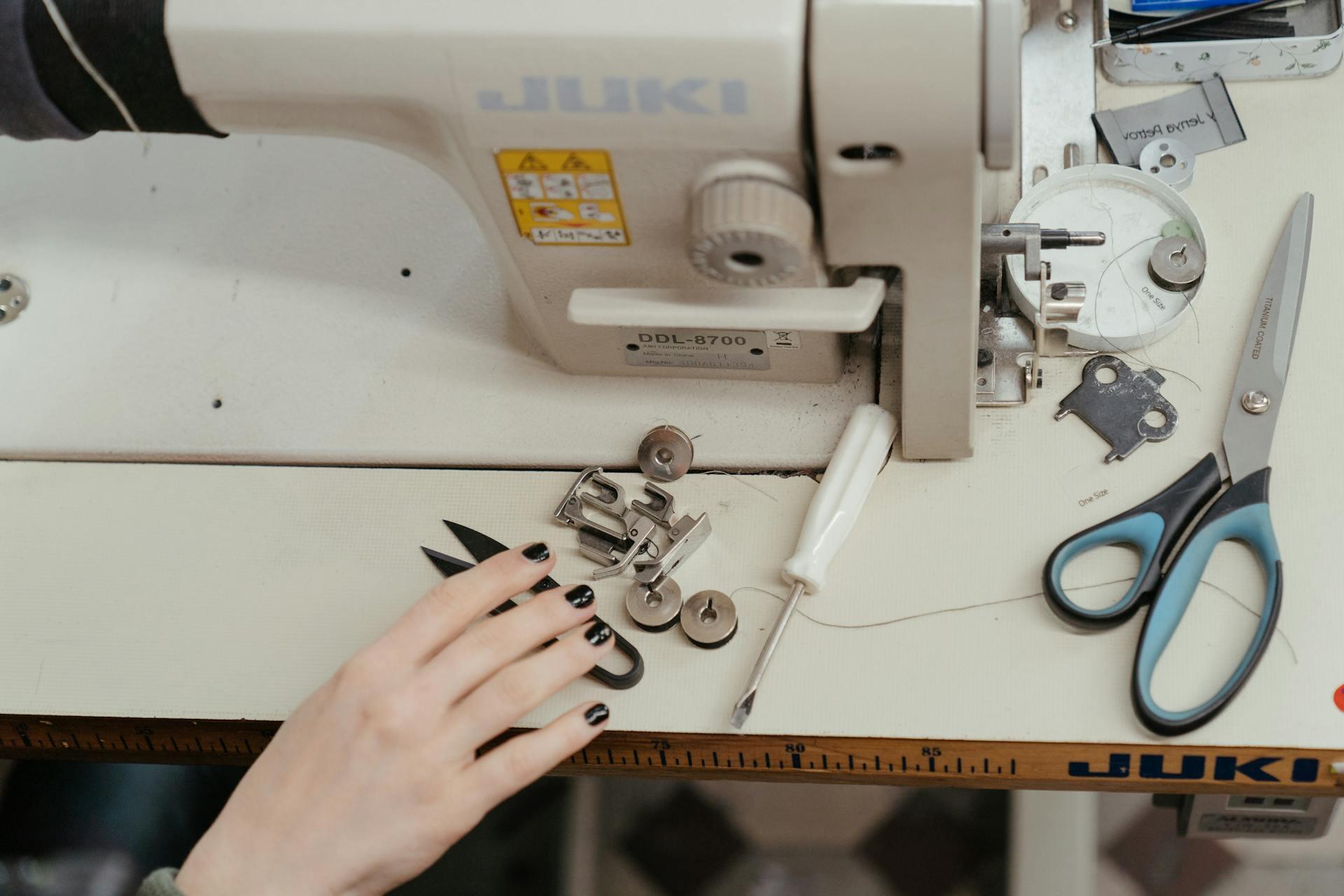
Abstain from Needlework
Sewing is almost a lost art in our society; in some parts of China, it's an important activity. Still, no matter how deft you are with your needle, it's best to leave it on the day of the Chinese New Year.
This taboo has its roots in the clothing industry.
Long ago, women worked in collectives, hand-sewing for hours each day.
They got five days off for the New Year celebrations.
Leaving your sewing kit idle for five days after New Year honours those workers. It also means the year ahead won't be full of hard work.
If you happen to lose a button or burst a seam during that time, put your wealth on display. Changing your clothes mid-celebration shows you're already quite prosperous.
Avoid Unlucky Words
If you're in China, you might notice some doorways have yellow and black decorations, rather than the traditional red and gold. That signals that a family member passed away during the previous year.
You might offer your condolences, but do so carefully.
They're all pronounced 'si' in Mandarin Chinese, differentiated only by their tones (司,思,丝, and 四, respectively).
The particle "si" is very common in Mandarin. Unfortunately, 'death'(死) is also a 'si' word. Thus, you must avoid speaking the 'si' particle at all costs.
Speaking 'unlucky' words like 'death' and 'loss', or anything related to poverty and illness, is taboo. Instead, allude to what you want to say in a roundabout way. "I'm sorry your auntie is gone", for instance.
Lending and Borrowing
Neither a borrower nor lender be.
from Hamlet
Traditional Chinese culture dictates that all debts should be paid before the new year. That way, all past misfortunes that caused borrowing are resolved.
No matter how needy you or a borrower might be, heed Shakespeare's advice during the Lunar New Year. Misfortune will follow debt collectors and borrowers alike throughout the year.
These are just a few general concepts that make Chinese New Year remarkable. Others are more targeted.
Chinese New Year Taboos About Cleanliness
Chinese New Year taboos about cleaning the house and oneself might seem extreme to cultural outsiders. To cultural insiders, they appear contradictory.
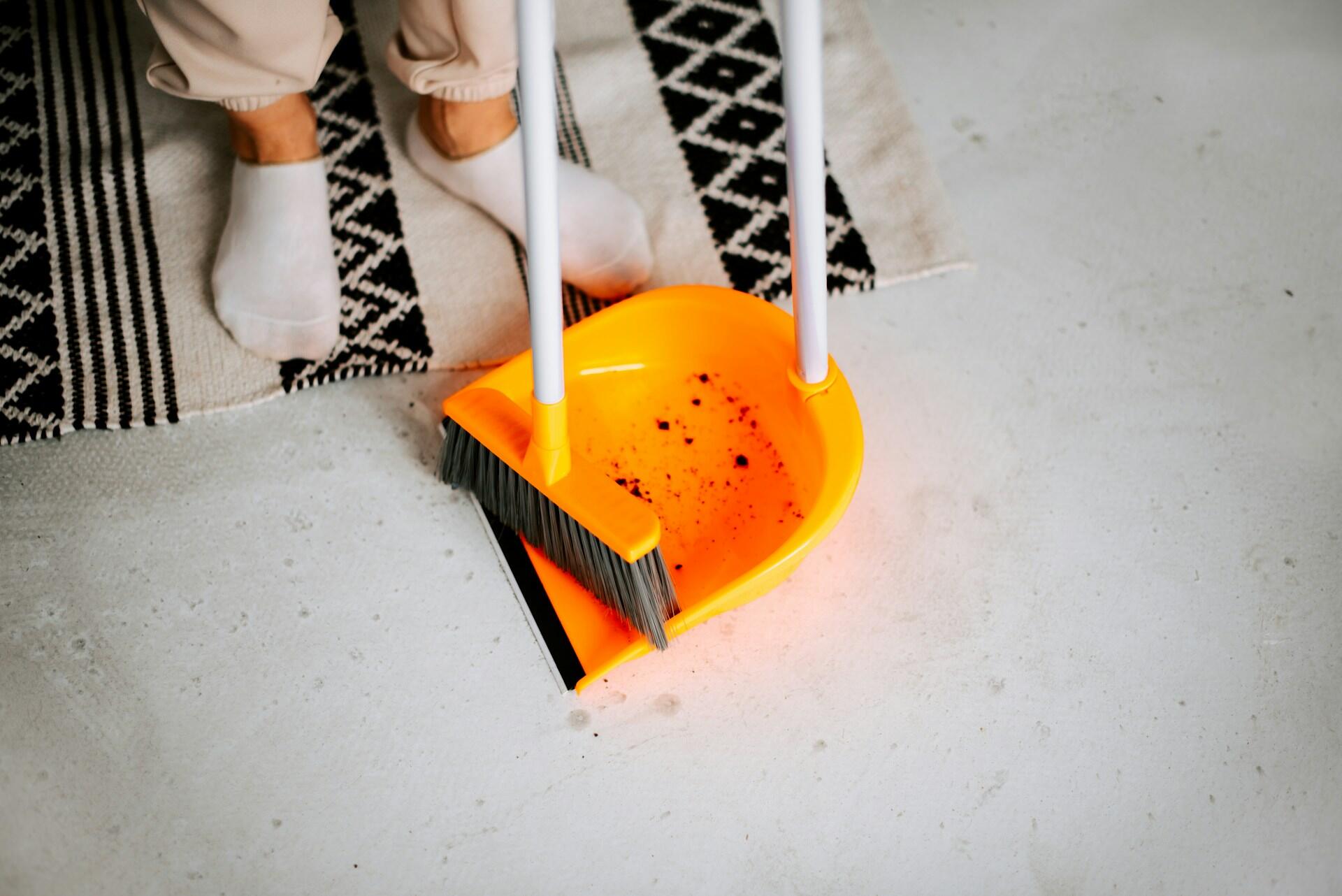
After all, keeping one's house and body clean is a hallmark of being Chinese. Still, one shouldn't do these things on New Year's Day.
You mustn't
- sweep the floor
- take out the trash
- wash clothes
Instead, do this
- pick up or kick away large clumps
- leave the full bin bag by the bin
- wait 2 days to wash
Washing clothes is a double bad-luck whammy. Water is a wealth symbol, so pouring dirty water out means you're tossing your fortune.
Also, the Spring Festival coincides with the water god's birthday. This is a little-known fact about the Chinese New Year. Washing clothes on this god's birthday is disrespectful.
Can You Shower on New Year's Day?
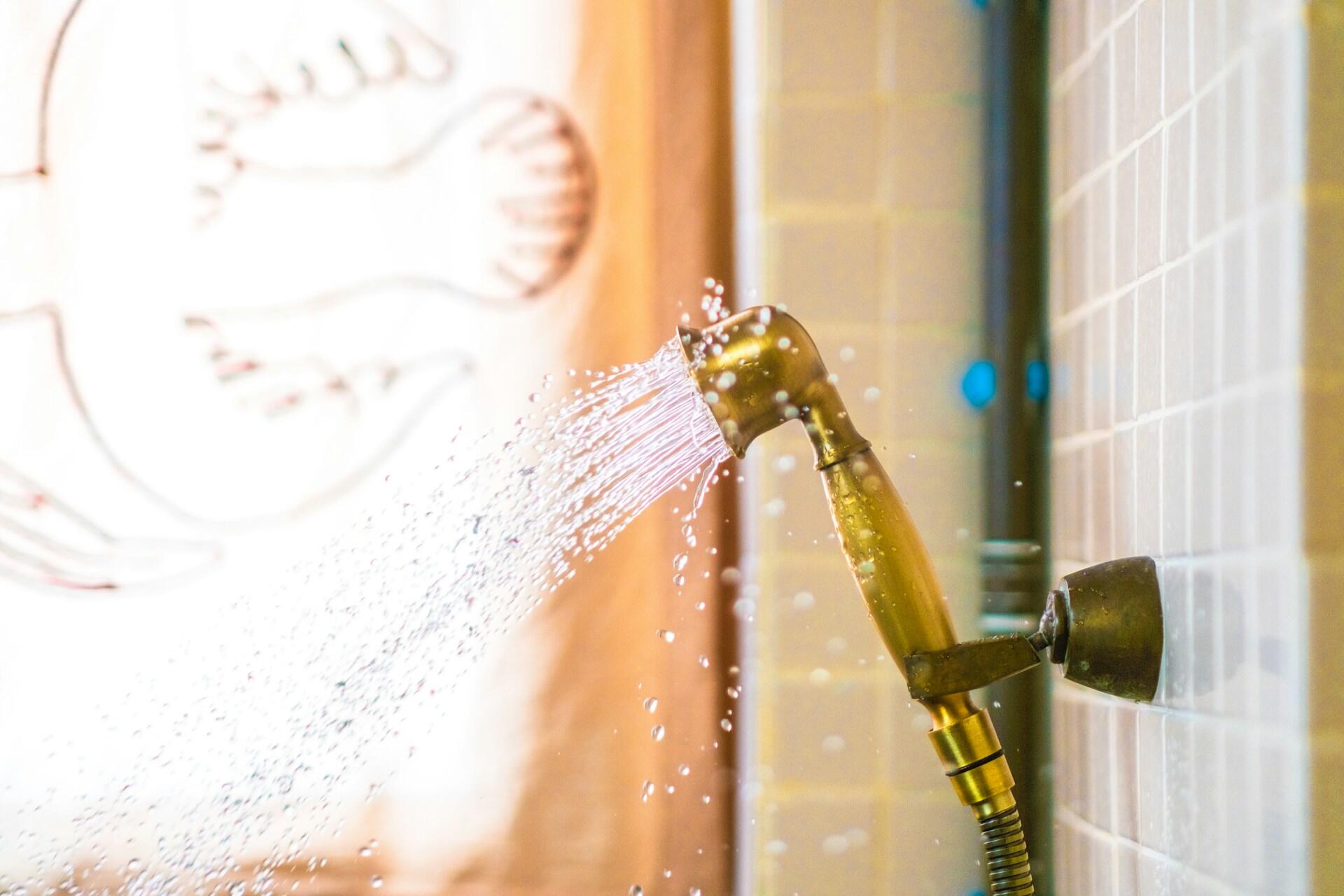
Yes, but do not wash your hair. As is typical in Chinese culture, the reason is elegant and logical.
The third character in this greeting, fa, features in the Chinese word for hair (头发 - tóu fa). It also has the same tone.
If you wash your hair, superstition says you are also washing away your prosperity. The question: "Can you wash your hair on New Year's Day?" must meet a resounding 'No!'.
Nobody will panic if you wash your hair on the second day. In fact, the trend is now to visit the salon for a wash and cut just before the Spring Festival. That way, one greets the new year with 'new prosperity', while avoiding a wash on the day of.
If you've ever wondered, "Can you shower on New Year's Day?" or whether doing the dishes is frowned upon, the 'laws' are clear. Now, you know them and their reasons.
Chinese New Year is a time to honour ancestors, strengthen family bonds, and prepare for a prosperous year ahead.
Derived from Confucian values
Traditions Regarding Food
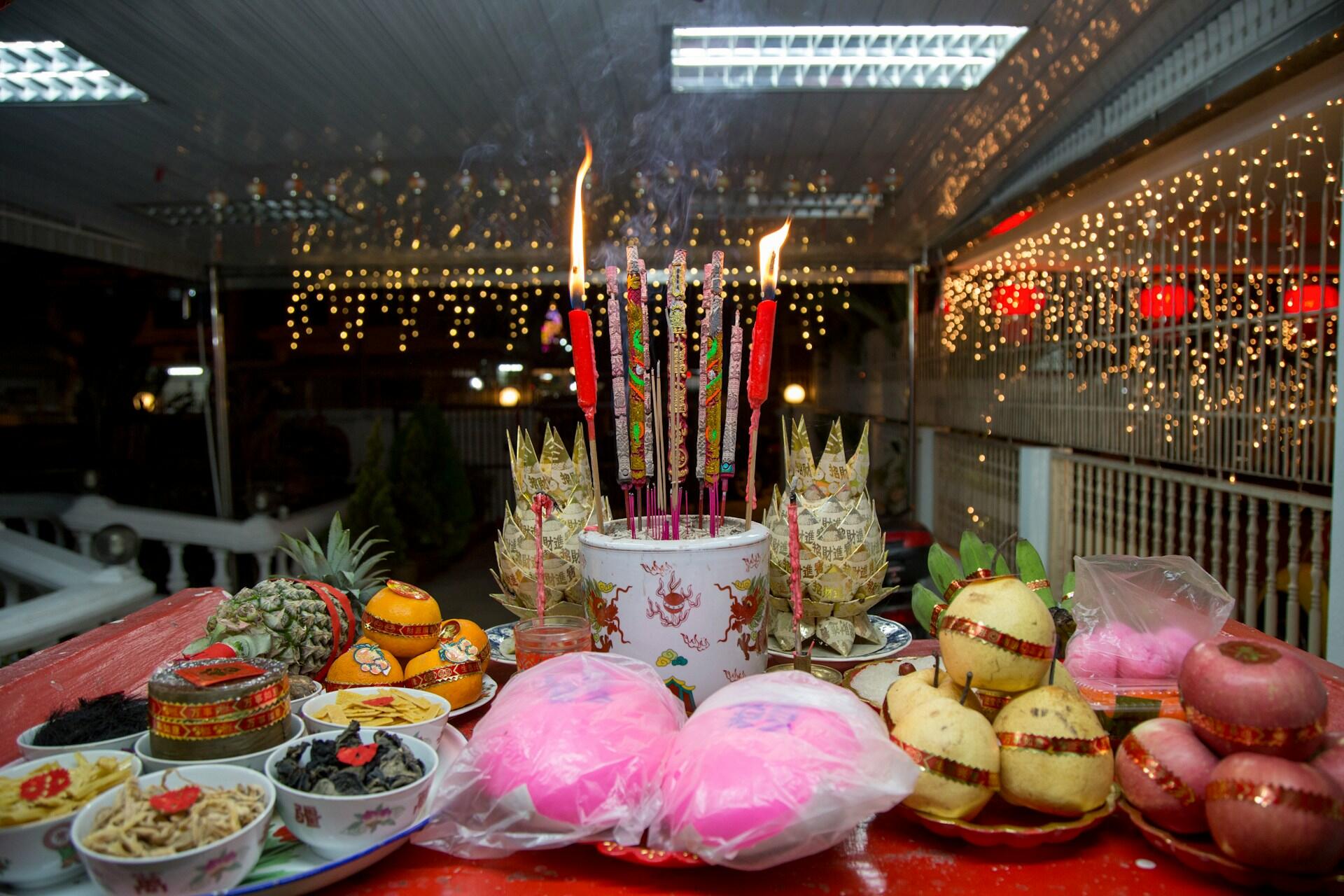
The only hard-and-fast rule about New Year's eating is to avoid 'poor' foods. Porridge must not be a breakfast meal. It is cheap to make, something destitute people might fill their bellies with.
Clearly, that's not the message to send out when asking fortune to smile on you. These are the foods and dishes to load your Chinese New Year table with:
- dumplings (jiǎo zi - 饺子) for wealth
- fish (yú - 鱼) for prosperity
- chicken (jī - 鸡) for luck
- spring rolls (chūn juǎn - 春卷) for wealth
- sweet rice balls (tāng yuán - 汤圆) for togetherness
- glutinous rice cake (nián gāo - 年糕) for higher pay or position
- noodles (cháng shòu miàn - 长寿面) for longevity
- steamed pork belly (hóng shāo ròu - 红烧肉) for prosperity
Besides these dishes, fruits and vegetables feature prominently. Leafy greens - lettuce and bok choy- represent fortunate aspects. Also, their Chinese names are near-homophones for wealth and fortune.
The pomelo (yòu - 柚), a mild citrus fruit, sounds like 'to have' (yǒu - 有) - save for the tone. Also, it's a homophone for 'again' (yòu - 又). So, eating this treat symbolises having wealth, health, and happiness again. That sentiment is the essence of the Chinese New Year.
Gift-giving and Chinese Red Envelope Etiquette
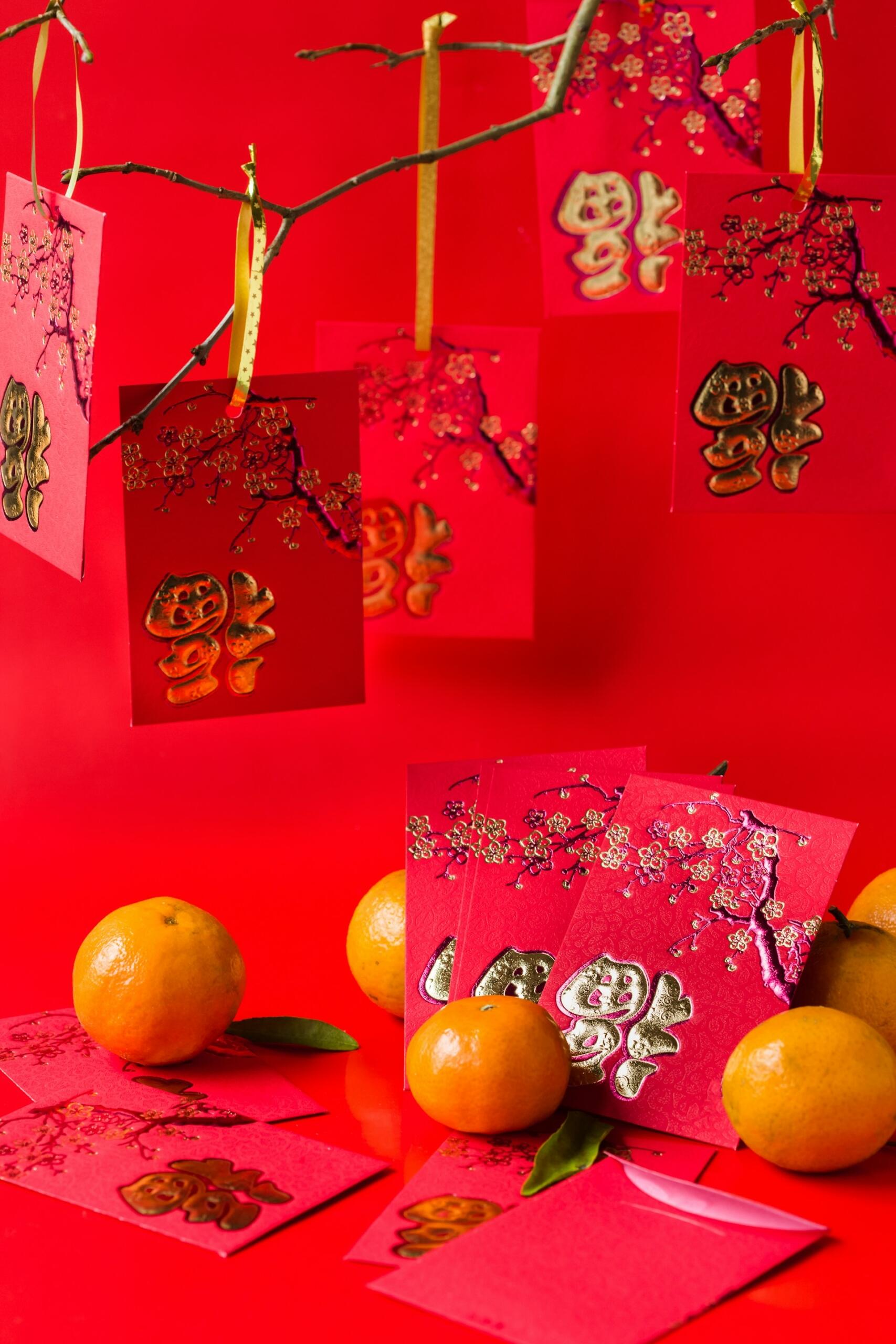
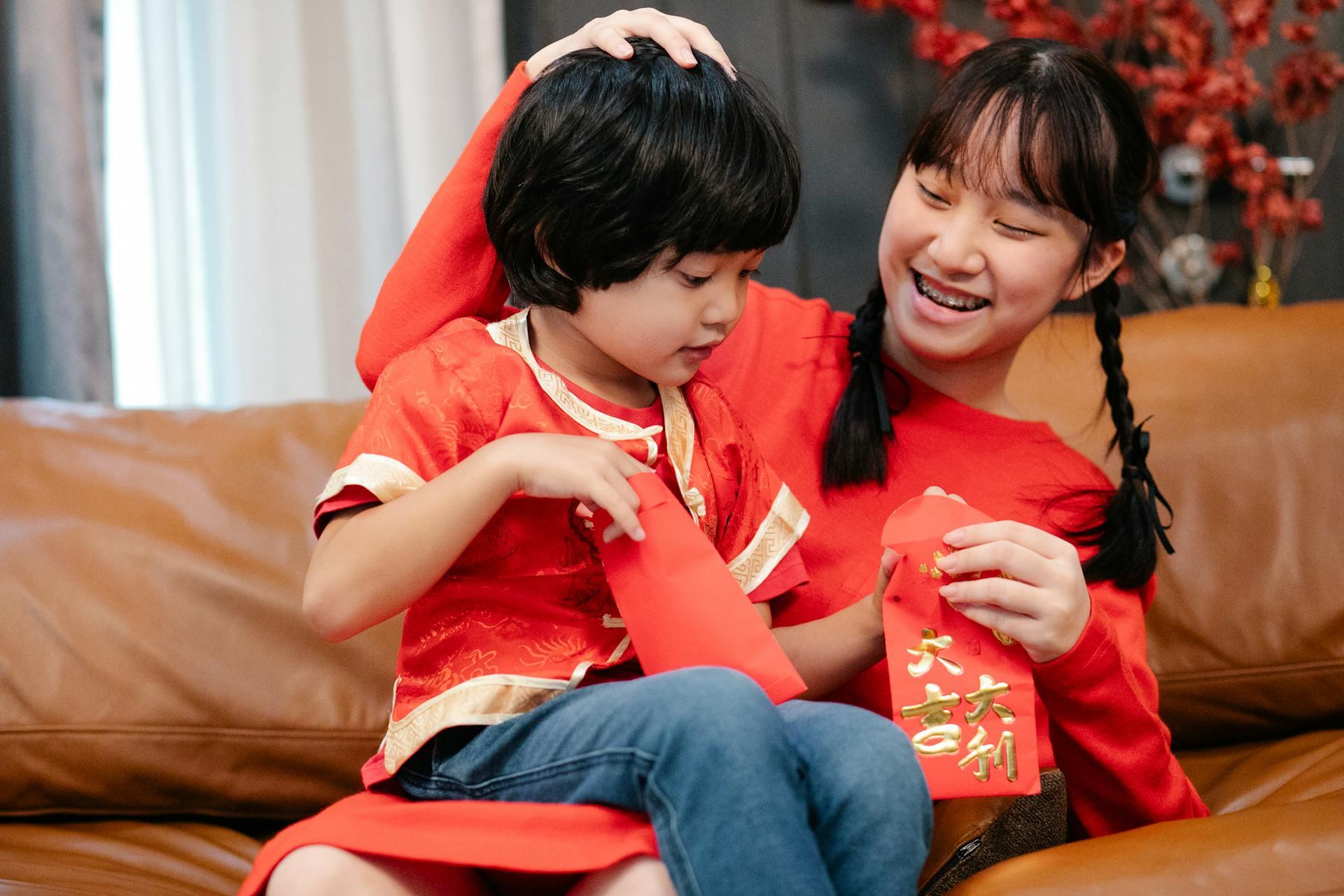
The Chinese New Year red envelope - hongbao (红包) is one of the most keenly anticipated New Year gifts. It's exactly what its name describes: a red envelope, usually adorned with Chinese writing and symbols in gold foil, symbolising prosperity and good fortune. The red colour itself represents good luck and is believed to ward off evil spirits.
Typically, this gift is reserved for children, though parents will often give their adult children a hongbao as a gesture of continued blessing and care.
The tradition also extends to married couples giving hongbao to their unmarried friends and relatives, and employers presenting them to employees as year-end bonuses.
The trick to receiving it respectfully is with both hands, while giving a slight bow and expressing gratitude. While protesting vehemently that mum and dad shouldn't have, this modest refusal is actually part of the cultural etiquette - a dance of giving and receiving that demonstrates humility and respect for one's elders. The amount inside should never be checked in front of the giver, as this would be considered extremely rude.
These days, many people prefer digital payment methods, such as QR codes, Touch ‘n Go e-wallets, and other cashless options.
Any amount, as long as it's a lucky number.
Any number containing four or five is out.
6,8, and 9 are widely considered lucky numbers. An angpow containing RM 88 hits all the right notes, as 8 is the most fortunate number of all. A pair of eights doubles the luck.
In feng Shui, 6 means good fortune, 8 implies wealth and prosperity, and 9 means longevity and completeness. Just make sure the amount is equal to an even number and avoid odd numbers at all costs!
Gifts to Give, and Ones to Avoid
The lucky number philosophy extends to gifting anything that comes in multiples of four. RM 40 or RM 400, in a hongbao, is a grave taboo. Tea sets with four cups, cake boxes with four cakes… All of these are definite no-nos. This is because 4 is considered highly unlucky for CNY and other occasions because its pronunciation in Chinese is very similar to the word “death”.
Otherwise, this chart presents a list of suitable and unsuitable gifts.
| 🎁Gift | 💔Why it's unlucky | 😇Give this, instead |
|---|---|---|
| Sharp objects: pocket knives, scissors, any blade instrument | Symbolises cutting off the relationship. | Tea set, dishes |
| Timepieces: watches, clocks | Symbolises time running away/running out. Sounds exactly like 'attending a funeral' (song zhong 送终) | Clothes, books |
| Shoes | Chinese word for shoes (xie 鞋) is a homophone for evil (xie邪) | Scarves, clothes |
| Flower bouquets/cut flowers Candles, scented or not | Suitable for funerals, not celebrations! | Plants, fruit |
| Dolls | Attract/harbour evil spirits | Sweets, books |
How do People Celebrate Chinese New Year?
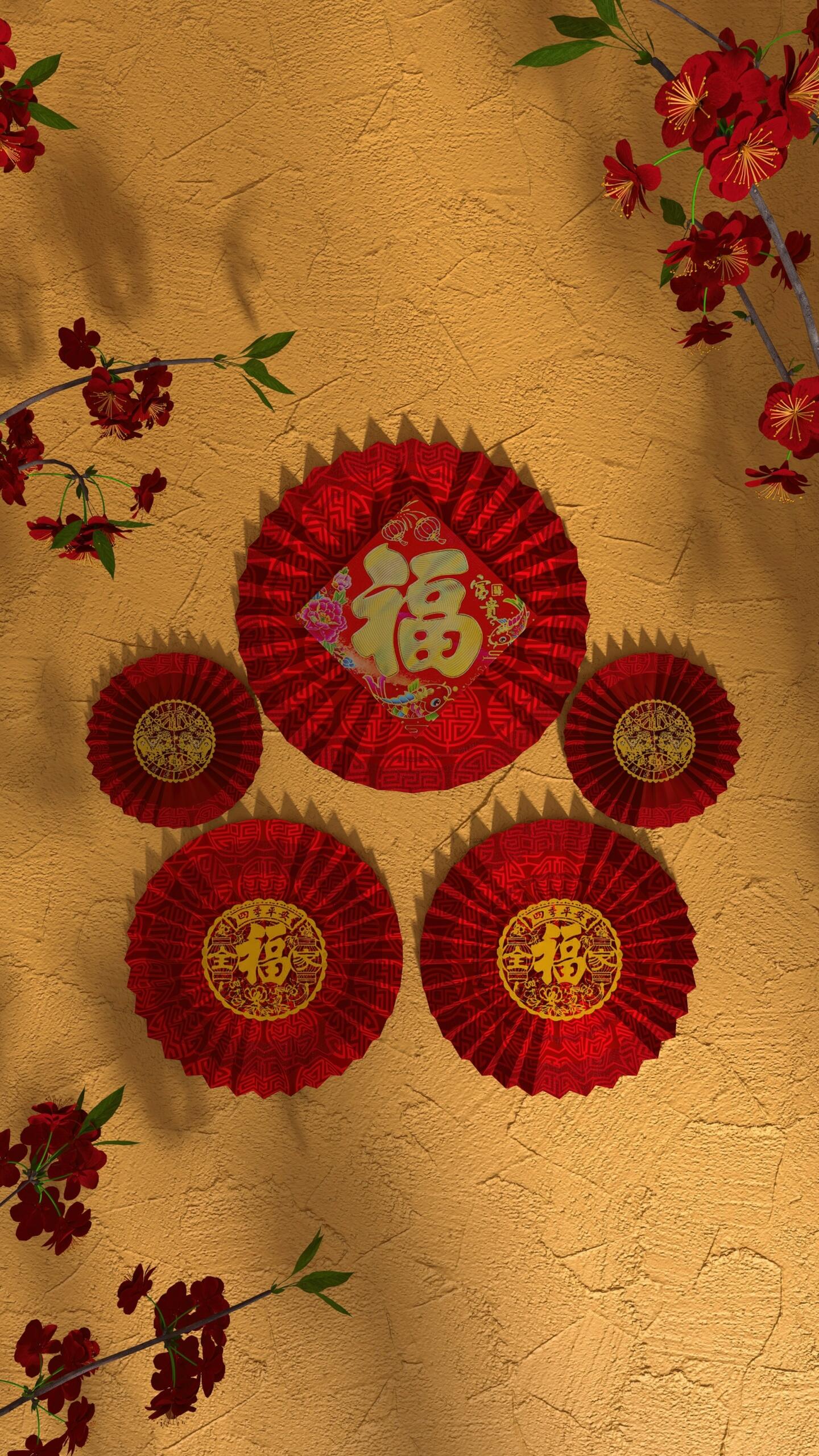
Whatever you do, don't fail to greet everyone you interact with during the Spring Festival - it's considered essential for maintaining harmony and showing respect in Chinese culture, even with casual acquaintances.
You should save the most meaningful phrases for people you're close to, or heartfelt wishes for their family's prosperity and health.
But, be sure to deliver a cheerful New Year greeting to shopkeepers and neighbours, at the very least - a simple "新年快乐" (xīn nián kuài lè) or "恭喜恭喜" (gōng xǐ gōng xǐ) shows thoughtfulness and helps strengthen community bonds.
The greeting (恭喜发财 gōng xǐ fā cái), is standard during the Lunar New Year. Of course, that's not the only way to express your Spring Festival best wishes - you can also say "万事如意" (wàn shì rú yì) for "may all things go as you wish," or "年年有余" (nián nián yǒu yú) meaning "may you have abundance year after year."
Happy New Year
- xīn nián kuài lè – Happy New Year
- xīn nián hǎo – Good New Year / Happy New Year
Happy Spring Holiday
- chūn jié kuài lè – Happy Spring Festival
- xīn chūn kuài lè – Happy New Spring
Happy Year of the Horse
- mǎ nián kuài lè – Happy Year of the Horse
- mǎ nián dà jí – Wishing you great luck in the Year of the Horse
1. Simply repeat the greeting
2. Say "Wish you the same" (zhù nǐ yě yī yàng - 祝你也一样)
3. Deliver a superlative greeting (especially to older people and officials!)
Chinese New Year traditions mark new beginnings and hopes for prosperity, health, and happiness. Every one of these 'rules' aims to realise those hopes. They're most important at this time, as we reconnect with family.
References
- Xue H, Zhao X, Nikolay P, Qin J (2022), "Family identity construction: an interpretation of the Lunar New Year's Eve dinner consumption ritual". Journal of Contemporary Marketing Science, Vol. 5 No. 1 pp. 29–48, doi: https://doi.org/10.1108/JCMARS-10-2021-0037
- Sidek, A. (n.d.-b). Chinese New Year taboos. https://www.nlb.gov.sg/main/article-detail?cmsuuid=93731a7e-f34a-4caf-a67f-fd8ba72eb135&utm
Summarise with AI:
Did you like this article? Leave a rating!

 Loading...