

In recent times, Pilates has experienced a significant rise in popularity around the world, including in Malaysia. This is not surprising, considering the numerous advantages it offers, with many Pilates instructors providing top-notch classes. The history of Pilates, a type of exercise developed by Joseph Pilates, began in the early 1900s. This low-intensity workout primarily aims to strengthen core muscles, enhance posture, and boost flexibility.
As Pilates has grown in popularity, a multitude of studios, fitness centres and personal instructors offer various classes in Malaysia. This physical fitness system is designed to develop strength, flexibility, balance, and posture, providing a low-impact exercise option that can be performed on a mat or with specialised equipment, such as a reformer machine.
Prior to initiating an exercise regimen or purchasing workout equipment, it's crucial to determine if the chosen exercise suits your needs. The beauty of Pilates lies in its suitability for nearly everyone including men and even pregnant women . This can be attributed to the extensive range of benefits it provides, coupled with its low-impact, full-body workout approach.
Having the right equipment can greatly impact the success of your Pilates workout, ensuring it meets your desired outcomes.


Practicing Pilates at Home
Initially, Pilates was restricted to Pilates studios and similar exclusive fitness centers due to the equipment required for the workouts and the absence of workout videos or online sessions.
However, with the availability of a variety of exercise equipment, live online lessons and videos, you can now engage in Pilates workouts at home. There are several benefits to practicing Pilates at home, including the flexibility to exercise at your convenience and not be bound by the schedule of a studio.
You can also work with a personal instructor to tailor your workouts to your own pace without feeling pressured by others. When practicing Pilates at home, you may not have access to all of the specialised pieces of equipment such as the reformer or Cadillac.
However, there are many exercises that can be done using just a mat and some basic props. Many Pilates instructors also offer online classes that provide modifications for those who do not have access to studio equipment.
Overall, while studio equipment can enhance your Pilates practice and provide additional challenges and benefits, it is still possible to get a full-body workout and achieve your fitness goals with just a few basic props including:
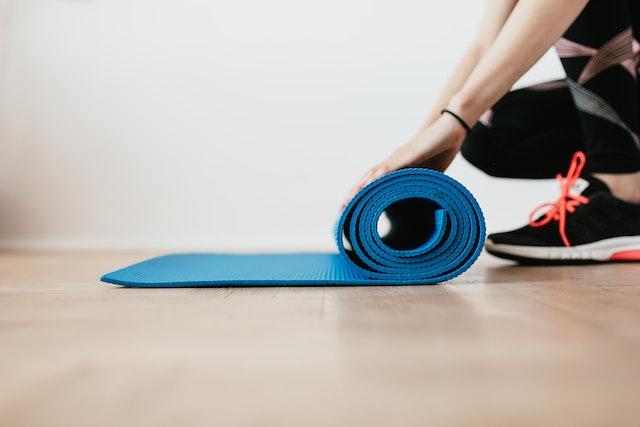
Mat
Using some form of floor padding, such as a yoga mat, is typically necessary to support and cushion your movements during home workouts. Nevertheless, sufficient padding is particularly crucial for Pilates routines, during which you'll spend significant time on the floor.
Pilates mats are more cushioned than standard yoga mats since they provide more support for the tailbone and knees, often in contact with the floor. This is because there is less balancing on a single leg and more time spent on all fours or seated positions.
Find out what is the difference between Pilates and Yoga?
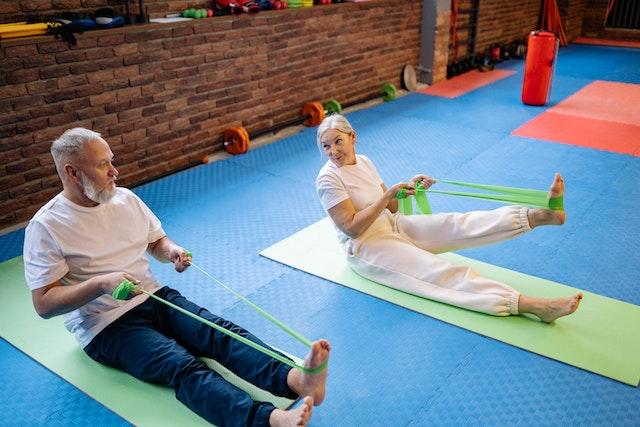
Resistance Band
Using resistance bands is an effective method to intensify your workout routine. They can be incorporated into Pilates exercises to increase the resistance level, making them more demanding.
For instance, you can wrap a band around your thighs while performing a bridge sequence to compel yourself to resist the band's pull and prevent your knees from collapsing inward.
You can substitute weights with a resistance band while working on arm exercises or stretching after a Pilates session.
Magic Circle
According to experienced Pilates practitioners, incorporating a Pilates ring, also called a magic circle, can enhance the effectiveness of almost any Pilates routine. Pilates rings help target smaller muscles that may not receive as much attention as larger muscle groups. Holding the ring with your hands, knees, or feet can develop significant strength in your chest, inner thighs, hip flexors, and other areas. Additionally, the ring can be utilized to increase resistance during specific postures, focus on your core, or improve your balance.
If you are new to Pilates, using a Pilates ring can be beneficial but optional. This is because most foundational Pilates exercises can be performed without any equipment.
Exercise Ball
The small, inflatable Pilates ball is similar to a Pilates ring, focusing on targeting small muscles, increasing muscle activation, building stability, and supporting the lower back. Unlike the Pilates ring, the ball is more portable and easy to store due to its compact and squishy nature, making it easy to grip and squeeze.
Using a Pilates ball can enhance your Pilates routine and be useful in other fitness methods such as barre, yoga, and stretching. One popular way to use the ball is in the fire hydrant position, where the ball is placed behind the knee at a 90-degree angle, engaging the glutes while pulsing the heel toward the ceiling.
Practicing Pilates in a Studio
For a lot of individuals, exercising at a Pilates studio is an excellent choice. By working with a certified Pilates instructor, you can be confident that you are receiving proper guidance throughout your workout. Additionally, many Pilates studios provide personal Pilates sessions that are customised to your specific needs.
There are several differences in the equipment used for practicing Pilates at home versus in a studio. In a Pilates studio, you typically have access to a wide range of specialised equipment that is designed to support and challenge your body in specific ways. Some of the most common pieces of Pilates equipment found in a studio include:
Reformer
The Pilates Reformer comprises a platform resembling a bedframe, called the carriage, connected to springs. The carriage is cushioned and equipped with shoulder blocks to prevent slipping, an adjustable foot bar for the legs, and resistance cables for the arms at the opposite end.
Also referred to as the Universal Reformer, the Reformer is a versatile apparatus that enhances core strength and can alleviate back pain by aligning the spine and reducing tension in the back muscles.

The most commonly performed Pilates Reformer exercises involve pulling the cables with your arms and pushing the bars with your legs to stretch your limbs. These exercises include the Hundred, the Frog, the Elephant, Leg Circles, and Knee Stretch with a round back or arched back.
Cadillac
Picture a cushioned table that doubles as a raised workout mat, with monkey bars on top and various resistance mechanisms attached - this is what a Pilates Cadillac resembles.
Although the modern Pilates Cadillac is equipped with all sorts of features, Joseph's original design was created using only a hospital bed and mattress springs attached to a wall. The first Trapeze Table was created to allow bedridden patients, particularly injured soldiers, to exercise.
Most exercises on the Cadillac's push-through and roll-back bars aim to tone and strengthen muscles, increase joint flexibility, and promote stretching and decompression.
Wunda Chair
The Pilates Wunda Chair, also known as the Low Chair, resembles a typical chair without a backrest, except it is lower and has a cushioned wooden base. It features a pedal under the seat and springs that can be adjusted to provide low, medium, or high resistance levels. It is truly an excellent chair!
Despite its professional appearance, the Wunda Chair is well-suited for beginners. It is recommended for those undergoing physical therapy, recovering from an injury, or with limited mobility. It is also a popular choice among cross-training athletes.
The most common Pilates Wunda Chair exercises include the Push Down, which targets the lower body, and the Pull Up, which focuses on the torso.
What to Wear for Pilates Practice?
Now, that we have gone through the list of Pilates exercise equipment, let's examine some other items necessary for your Pilates class. It is important to note that the dress code may differ depending on the studio, so it is advisable to confirm with your instructor or studio what attire is appropriate.
Form-fitting Clothes
When practicing Pilates, it is essential to wear form-fitting clothes that allow unrestricted movement. Loose or baggy clothing should be avoided in favor of stretchy garments that provide a snug fit. It is advisable to select clothing with stitching and seams that follow the center or sidelines of your body to assist your instructor in checking your alignment and symmetry. Additionally, given the various unique positions involved in Pilates, ensuring that your clothing adequately covers all body parts when your legs are in the air or during stretching is crucial.
Pilates Socks
Pilates socks are designed for Pilates workouts and feature silicone or rubber grips on the soles to prevent slipping during exercises on both reformer and mat. While many Pilates studios require these socks during reformer Pilates, they can also be worn during mat Pilates. These ankle-length socks allow your Pilates instructor to check your foot alignment while providing warmth and protection for those who prefer not to go barefoot.
It is crucial to avoid wearing regular socks during Pilates, as they lack the necessary non-slip features and can lead to injuries. Instead, only socks with non-slip soles should be used for Pilates workouts. It is also a good idea to consult your Pilates studio to determine their recommended sock type.
Pilates Shoes
Even though shoes are not recommended for Pilates, there are specific Pilates shoes that are different from regular footwear. These shoes come in various shapes and sizes but are generally lightweight and similar in appearance to Pilates socks. They fit snugly on the feet and have rubber soles to prevent slipping during challenging poses. Although Pilates shoes feel more solid than socks, they allow for the same natural movement.
If you wish to learn and practice Pilates, we recommend you start searching for a private instructor right here on Superprof to help and guide you through the process. Superprof provides a diverse range of teachers who are capable of teaching beginners, intermediates, and experts. It's worth noting that you have the option to choose between online or in-person learning, depending on your preference.
Summarise with AI:
Did you like this article? Leave a rating!

 Loading...
