


Tomoi is a powerful martial art practiced mostly in the northern states of Kelantan and Kedah in Malaysia. During the 1800s and the Japanese occupation, Kelantan was under Siamese influence. Even after it became part of the Malayan Federation, it maintained close geographic, ethnic, and historical ties with Thailand.
As a result, many Thai customs were absorbed into Malay practices—one of which was Muay Thai, which took on the name of Tomoi in Malaysia. However, over time, Tomoi has evolved into a unique Malaysian fighting style.
What differentiates the two sports is cultural factors. While Muay Thai is influenced by Buddhist customs, Tomoi follows Islamic traditions, leading to variations in its practice. Thus, Tomoi can actually be called Muay Thai’s cousin with a twist.
Knowing about the techniques and methods used in Muay Thai combat will help you understand the differences better.


What is Tomoi?
The word Tomoi is derived from the Thai word dhoi muay, which means fist fighting. It is also known as "The Science of Eight Limbs" as it allows the use of punches or fists, kicks, knees, and elbows to decimate opponents.
In tomoi, a petomoi (Tomoi practitioner)executes strikes using eight "points of contact" as opposed to "two points" (fists) in boxing and "four points" (fists, feet) used in karate. So, apart from standard punches and kicks, the petomoi also uses knees and elbow strikes.
“The art is not for sport! Neither is Silat Tomoi for show and there are no fancy moves or flashy techniques in this art as this was the knowledge that was developed and devised by assassins and warriors of the bygone days for the sole purpose of specializing in countering enemy forces and oppression from raiding invaders.”
Gurú Jak Othman
Interested in learning about other traditional martial arts? Then read Traditional Arts Beyond Silat.
Traditional Tomoi Techniques
Malaysian Muay Thai or Tomoi involves two modes of action:
Attack Position
In an attacking stance, the fighter uses
Punches
Elbows
Kicks
Knee strikes.
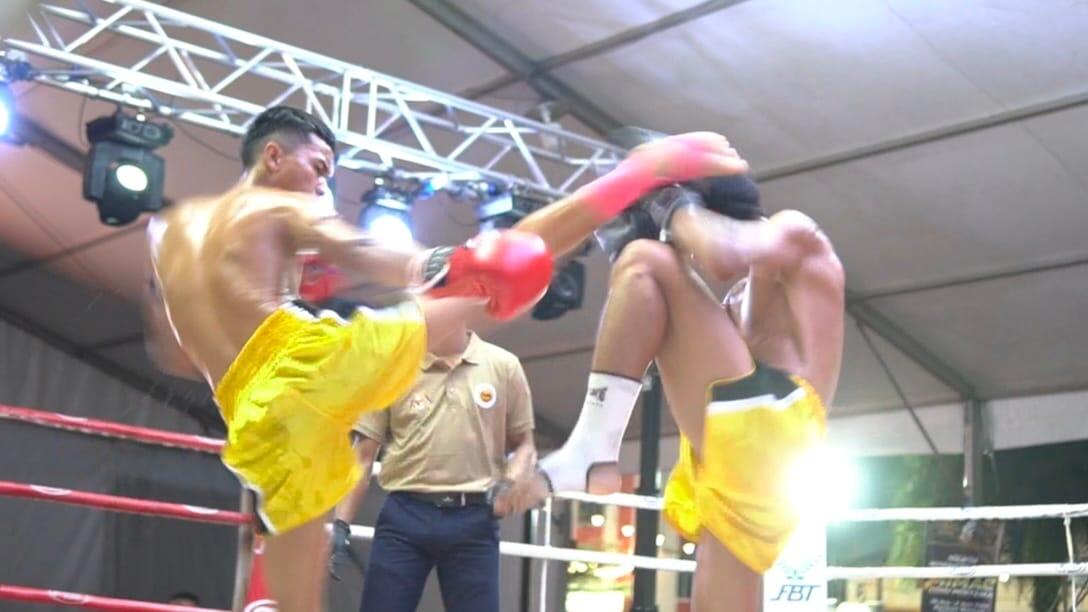
In Tomoi Malaysia, points are awarded for cleanly landed kicks to the head, body, or neck. Because a knockout to the head gives a higher score, all fighters aim for the head.
Defence Position
Defence is usually done by:
- Blocking
- Redirection
- Avoidance
- Evasion
- Disruption
- Anticipation
In defense
- Low and mid-body kicks are blocked with a raised shin
- High-body strikes are blocked using the elbow, forearm, or shin
- Sweeping the other leg of the opponent to prevent roundhouse kicks
- A boxing guard is used to block punches
Tomoi vs Muay Thai: Key Differences and Similarities
Although Muay Thai and Tomoi Malaysia share the same ancestor, a Malaysian Muay Thai (Tomoi) vs Muay Thai comparison reveals some key differences between them.
Shared Techniques and Origins
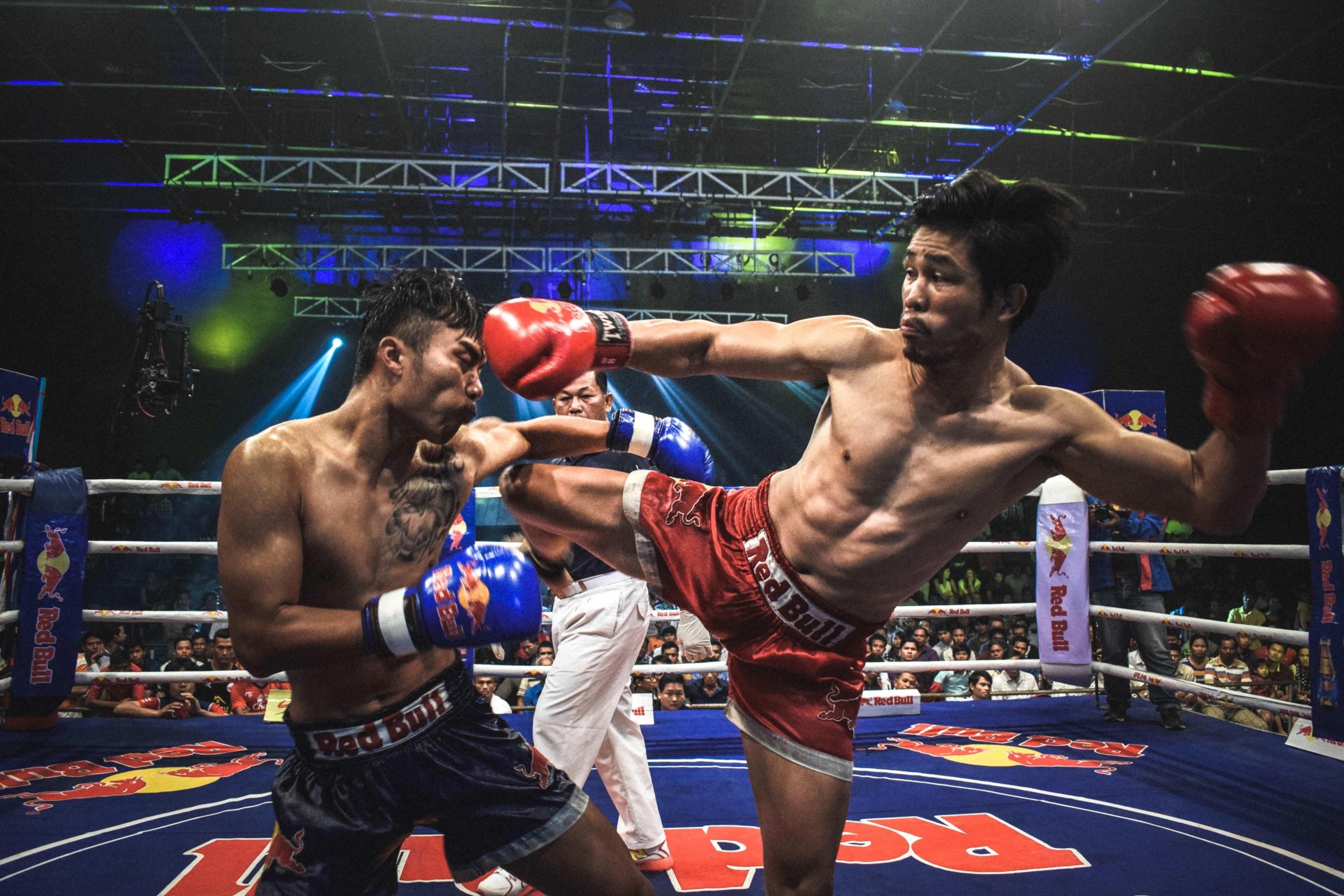
- Both Tomoi martial arts and Muay Thai make use of all parts of the body, using punches, elbow blows, kicks, and knee strikes
- Both are close-range fights and use elbows and knee strikes to attack/defend
- Fighters use clinching techniques to land devastating blows
- Both forms require years of rigorous training
- Each has a pre-fight ritual to pay homage to their ancestors and teachers. While Muay Thai has Wai Khru Ram Muay, Tomoi’s rituals are more subdued, adapted to Islamic rules
Key Differences
| Feature | Muay Thai | Tomoi |
|---|---|---|
| Religion | Buddhist | Islamic |
| Music | Traditional Music | Almost none |
| Attire | Often bare-chested | Conservative attire |
| Training | Comparatively easier | Takes years to learn |
| Rituals | Wai Khru Ram Muay dance | Islamic prayers |
Silat vs Tomoi
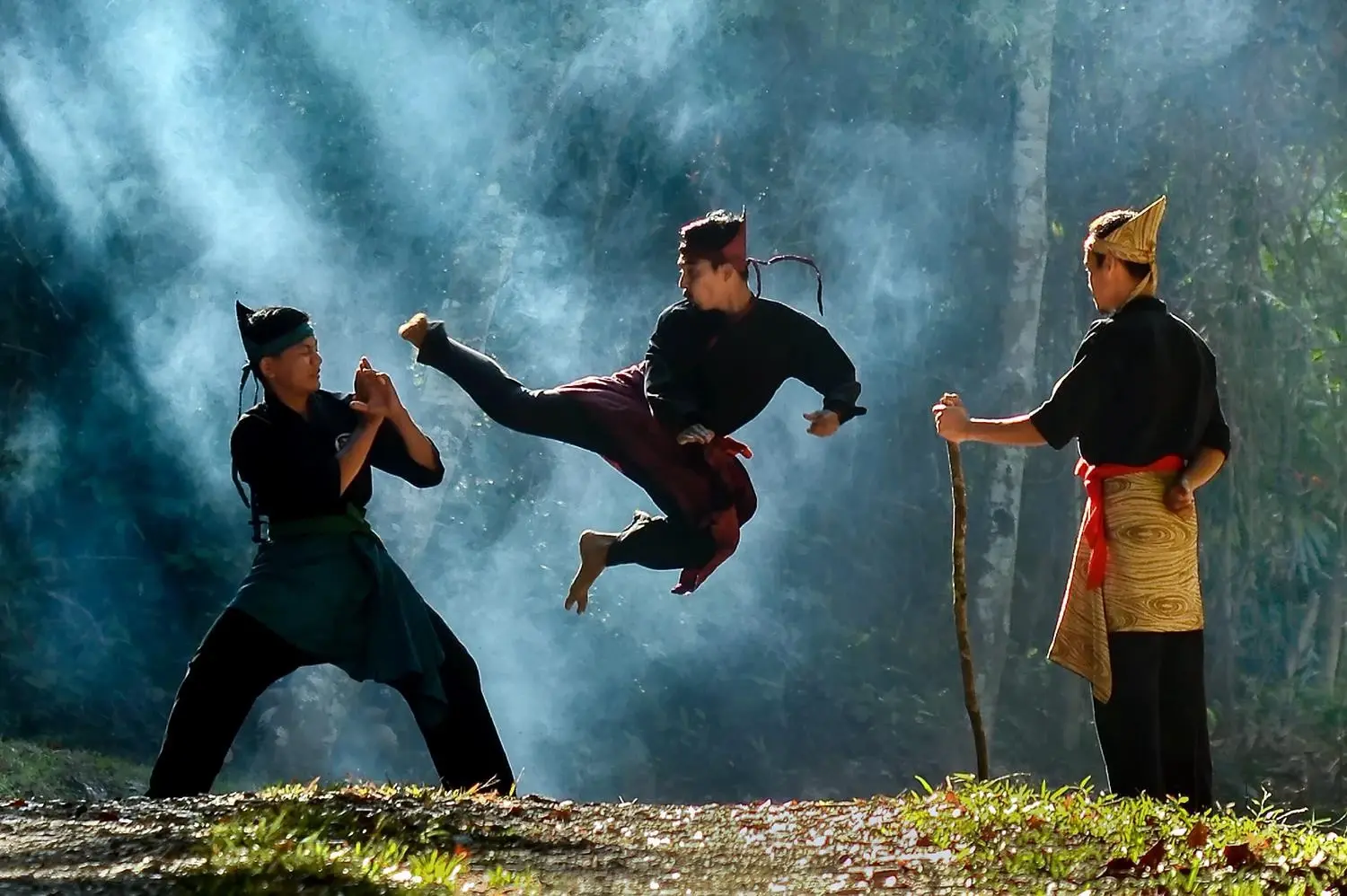
There is another comparison between Silat and Tomoi. Silat refers to traditional Malay-Indonesian martial arts and is characterised by fluid movements and intricate joint locks. Tomoi, on the other hand, blends Muay Thai’s hard-hitting strikes with Silat’s locking and low stance techniques.
| Characteristics | Silat | Tomoi |
|---|---|---|
| Origin | Malay-Indonesian origin | Influenced by Thai Muay |
| Ceremony | Rich dance and rituals | Minimal ceremony |
| Weapons | Uses a variety of weapons like knives, kris, etc | Uses simple tools |
| Philosophy | Holistic training | Lethal-oriented philosophy |
| Movement | Fluidity in movement | Powerful strikes |
The Position of Tomoi
Tomoi was a popular martial art until the 1990s, when Tomoi, along with other traditional arts, was banned by the PAS government in Kelantan for being un-Islamic. In 2006, the ban was abolished under new religious guidelines.
They are:
- Tomoi was renamed "Muay Kelate" respecting local dialect and religious sensibilities
- Boxers are required to cover the upper body parts during bouts
- The aurat—the area from the navel to the knee must also be covered
- The traditional pre-fight ritual, the langkah sembah wasi banned for being animistic
Influential Names in Tomoi
Hussein Deris
Hussein Deris, also known as Poksing Apollo, is one of Malaysia’s most celebrated Muay Thai fighters ever. During his heyday, in the 1970s and 80s, he was a revered fighter and a skilled Muay Thai practitioner. Older fighters say Poksing had a very good chin, meaning he could take hard punches to the head without getting knocked out.
“They say the speed of my jump and the thrust of my knee were like the Apollo spacecraft taking off, heading for the moon.”
His signature move was the flying knee, which involved a jump and thrust of the knee to the head or upper body of an opponent, resulting in a stunning knockout.
Want to learn from the best. At Superprof, we connect you to top-rated teachers. Explore the best tutors available and start learning today.
Kru Jak Othman
Kru Jak Othman is a recognised Guru of several Silat styles who owns a chain of Muay Thai schools. His hands move with lightning speed. And with or without a knife, he is known to shred his opponent with his hands, elbows, and knees.
Kru Jak has developed an innovative training program to teach Muay Thai to the current generation, preparing them both for amateur and professional competitions.
In addition to teaching Muay Thai, he also organises special evening seminars where he teaches students ancient Tomoi techniques.
To know more about ancient arts, read the guide on Indigenous Combat Arts of Sabah and Sarawak.
Mohd Faizal Ramli (“The Golden Elbow”)
Mohd Faizal Ramli is a renowned Malaysian martial arts expert. Nicknamed Siku Emas or the Golden Elbow for his potent elbow strikes, Ramli trained in Kelantan under Mohd Isa Sulaiman of the Black Tiger club. He has not only defeated tomoi fighters in the country but also tomoi fighters from Australia and Thailand.
His achievements include:
- 30 wins without defeat and a draw
- Represented his country in The Contender Asia reality TV show
- Winning the 2009 World Muay Thai Championship (WMC) in Bangkok
“As a result of my participation in tournaments abroad, overall tomoi fans and boxers from all over the world are now awestruck and acknowledge the greatness of our boxers."
To know about another great martial art that deserves recognition, read Buah Pukul: Johor’s Art of Fast Combat.
Conclusion
While both Muay Thai and Tomoi have differences in origin, they share many commonalities. We can therefore call them cousins as they have a common ancestor. But it is facing increasing competition from international martial arts, like MMA, Brazilian Jiu-Jitsu, and numerous other sports.
Its survival depends on conscious efforts to preserve and promote it. This includes institutional support and the Revival of Martial Arts, documentation of its styles and philosophies, and the establishment of training centres that remain faithful to its cultural roots.
If you want to learn Tomoi, Superprof makes it easy for you to connect with experienced tutors who can teach you this powerful martial art. You have the option to select between face-to-face or online classes, as per your convenience. Find your ideal teacher on Superprof by visiting our website, where you can view tutor profiles, check their hourly rates, and review the lessons they offer. Everything is in one place, making the process convenient for you.
So, why wait any more? Begin your Tomoi lessons today and start on your martial arts journey with Superprof.
Summarise with AI:
Did you like this article? Leave a rating!

 Loading...