

What is inheritance? It is the process by which genetic information is passed down from parents to their offspring. This happens in all organisms, allowing inherited traits and characteristics to be passed down through generations. The study of inheritance and how it affects genetic variation is known as genetics. Essentially, genetics is all about understanding how genes work and how they determine the traits of an organism. Inheritance is a topic in chapter 11 of the Form 5 student syllabus. Let's explore this chapter together!





Monohybrid Inheritance
Monohybrid inheritance involves inheriting one characteristic and contrasting traits controlled by a gene.
Mendel Experiments
An esteemed scientist, Gregor Mendel, made a groundbreaking discovery about how characteristics are inherited. He found that these plants possess seven distinct characteristics through his experiments with pea plants, known as Pisum sativum. Mendel formulated a theory explaining how these characteristics are passed down from generation to generation through the male and female reproductive cells, known as gametes.
The reason why the pea plant was selected for this study is because it is a plant that can be easily cultivated and yields a large number of offspring. Additionally, the pea plant possesses both male and female reproductive structures, making it convenient for studying the inheritance process. Another advantage is that the pea plant has a relatively short time between generations, allowing quicker observation of traits and characteristics. Moreover, the pea plant exhibits distinct and easily identifiable contrasting traits, making it ideal for the research.
Mendel conducted a monohybrid inheritance experiment wherein he focused on studying purebred plants. These plants were specifically chosen because they were produced through self-pollination, ensuring they possessed the same traits as the parent plant. In this case, Mendel chose purebred tall plants. As a result, when these purebred tall plants were used to produce seedlings, all of the offspring inherited the tall trait from their parent.
Understanding the Terms in Inheritance
Let's look at the genetics vocabulary of all the terms that are related to inheritance:
Gene
A gene is the basic unit of inheritance consisting of a DNA segment located on a specific chromosome locus. It controls a specific characteristic of an organism.
Allele
An allele is an alternative form of the gene for a specific trait located on the same locus of a pair of homologous chromosomes.
Dominant Allele
A dominant allele is an allele that always shows its trait when it is present. It suppresses the effect of the recessive allele. It is always presented in capital letters, for example, B.
Recessive Allele
A recessive allele is an allele that shows its trait when both alleles are recessive alleles. The presence of the dominant allele suppresses the effect of the recessive allele. It is represented in small letters, for example, b.
Characteristics
A characteristic is a heritable feature, such as height, eye colour, blood group, and presence of dimples. Each of the characteristics is a feature of a different organism on Earth.
Trait
A trait is a variation of specific characteristics. Each of the inherited characteristics consists of specific traits.
Dominant Trait
A dominant trait is expressed when both alleles are dominant, or one dominant allele is paired with a recessive allele.
Recessive Trait
A recessive trait is expressed if a recessive allele is paired with another recessive allele.
Phenotype
Phenotype is the observable characteristics of an organism, such as weight.
Genotype
Genotype is the genetic composition of an organism that cannot be seen.
Homozygotes
Both alleles at the loci of a pair of homologous chromosomes are the same.
Heterozygote
Alleles at the loci of a pair of homologous chromosomes are different.
Parental Generation
The parental generation is the first generation of two individuals mated to predict or analyse the genotypes of their offspring.
Filial Generation
Filial generation is a successive generation due to mating between individuals of purebred parental generation.
Purebreed
A purebred is an individual that carries two identical alleles for a trait. Self-cross always produces offspring with the same characteristics in every generation.
Hybrid
Hybrid is the product of mating between two purebred varieties.
Mendel's First Law
According to Mendel's First Law, also known as the Law of Segregation, a specific characteristic in an organism is determined by a pair of alleles. However, only one of these paired alleles, known as gametes, will be transmitted to the reproductive cells.
Dihybrid Inheritance
Dihybrid inheritance involves the inheritance of two characteristics where a different gene controls each characteristic. The dihybrid inheritance experiment on pea plants consists of the colour and shape of the seeds.
Mendel's Second Law
Mendel's Second Law, also known as the Law of Independent Assortment, states that when forming gametes, each allele from one pair can randomly combine with any allele from another pair. This law emphasises that one trait's inheritance does not influence another's inheritance, allowing for a random assortment of alleles and increasing genetic diversity in offspring.
Genes and Alleles
Each chromosome carries many genes. The number of genes that code for proteins in a set of haploid chromosomes for humans is estimated to be 25,000. The allele that represents a gene is located at the same locus as the gene.
Inheritance in Humans
In humans, we have two different kinds of chromosomes: autosomes and sex chromosomes. Autosomes make up 44 of our chromosomes, while we have two sex chromosomes. A karyotype is a way of organising and studying chromosomes, where they are arranged based on their size, the position of the centromeres, and the patterns of bands on the chromosomes.
Differences between Autosomes and Sex Chromosomes
Autosomes
- Characteristics: The paired homologous chromosomes numbered from 1 to 22
- Functions: Control all characteristics of somatic cells
- Examples: Height, skin colour, types of blood groups
Sex chromosomes
- Characteristics: Paired homologous chromosomes 23
- Functions: The genes an individual inherits can determine their gender.
- Examples: The male sex chromosome is XY, whereas the female sex chromosome is XX
When homologous chromosomes fail to separate during anaphase or sister chromatids fail to separate during anaphase II, it can result in an abnormal number of chromosomes. This condition is called nondisjunction. If nondisjunction occurs in the reproductive cells (gametes), the resulting number of chromosomes may be either less than or more than the normal 23. As a result, when fertilisation occurs, the zygote may end up with either 45 or 47 chromosomes. Some genetic disorders associated with this are Down syndrome, Turner syndrome, and Klinefelter syndrome.
Human Inheritance
ABO Blood Groups
There are four main types of human blood groups: A, B, AB, and O. The ABO blood groups are determined by a gene that has three different versions, called alleles: I A, I B, and I O. These alleles determine which antigens are found on the surface of red blood cells. I A and I B are dominant alleles, meaning they have a stronger influence, while I O is a recessive allele with a weaker influence.
Phenotypes (blood groups) and Genotypes in Alleles
I A and I B exhibit codominance, which means that when these alleles are present together, they express themselves and create the AB blood group.
- Blood group A: Genotypes- IA IA or IAIO
- Blood group B: Genotypes- IB IB or IBIO
- Blood group AB: Genotypes- IAIB
- Blood group O: Genotypes- lOIO
Rhesus Factor (Rh)
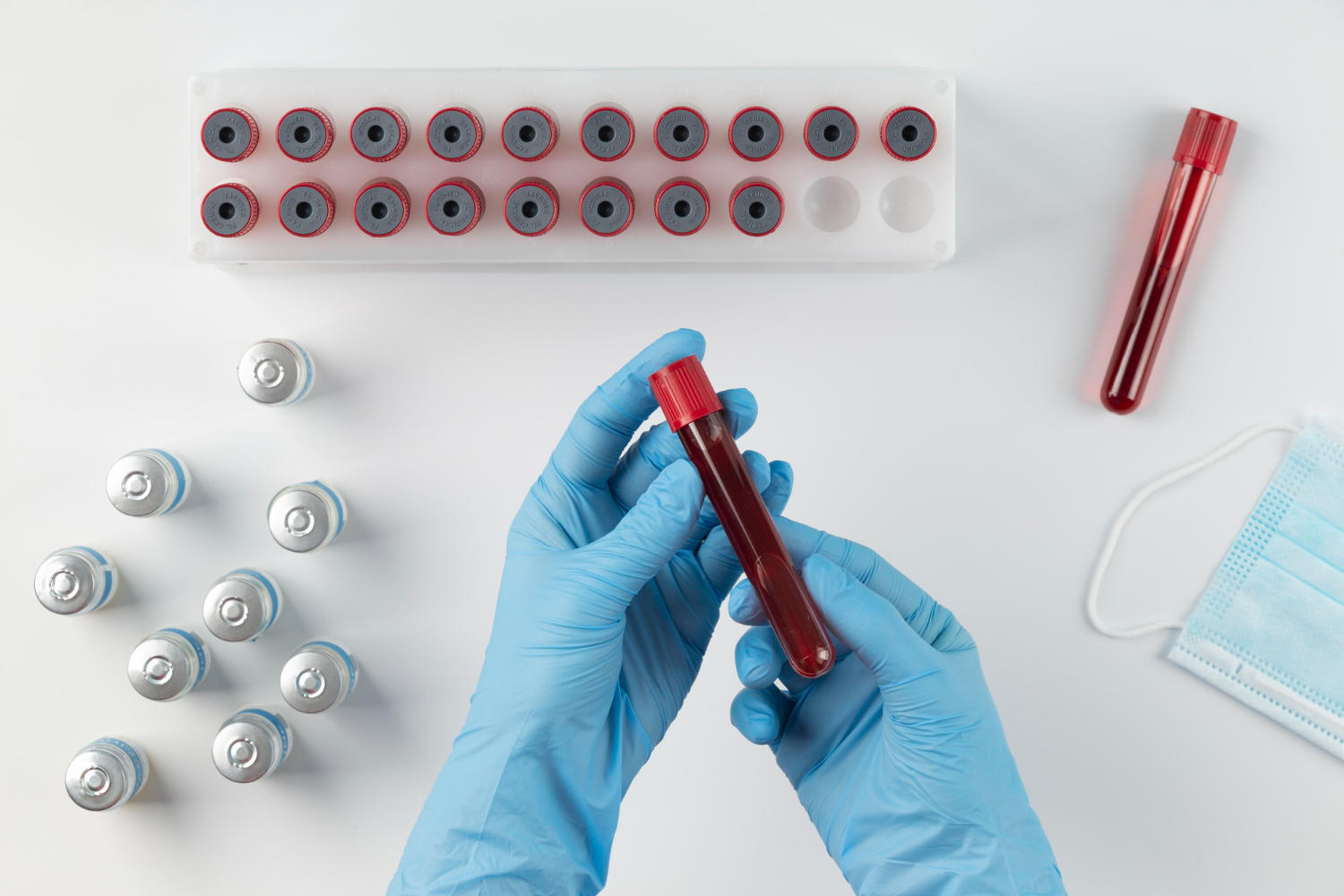
Another antigen present on the surface of red blood cells is known as the D antigen or the rhesus factor (Rh). People with the Rh factor are referred to as Rh positive (Rh+), while those who lack this factor are called Rh negative (Rh-). The presence or absence of the Rh factor is determined by a gene with two alleles: Rh+ (dominant) and Rh- (recessive).
Thalassemia
Thalassemia is a genetic disorder characterised by the production of abnormal and decreased levels of haemoglobin. Individuals with thalassemia often experience fatigue, paleness, shortness of breath, and changes in facial bones from 3 to 18 months. This condition is caused by a mutation in autosome genes, specifically chromosomes 11 or 16.
People with one recessive allele for thalassemia are carriers and don't show symptoms. Those with two alleles have thalassemia and show symptoms.
Sex Determination
Males have 44 + XY chromosomes, whereas females have 44 + XX chromosomes. For males, the gametes formed consist of 22 + X and 22 + Y, whereas for females, the gametes formed consist of 22 + X.
Sex-linked Genes
Sex-linked genes determine specific traits on the sex chromosomes but are not involved in determining an individual's sex. For example, genes related to colour blindness and haemophilia are found on the X chromosomes and are therefore referred to as X-linked genes. These conditions are caused by recessive genes located on the X chromosomes. Any traits influenced by a dominant or recessive allele on the X chromosome will be expressed in males.
Family Pedigree
A family pedigree or lineage is a visual representation in the form of a flowchart that depicts ancestral relationships and the transmission of traits from one generation to the next. This pedigree is useful in studying and analysing inherited human characteristics. It can help uncover and identify recessive genes that may be concealed within a particular generation.
No matter where you are in your biology education journey, it can be for the biodiversity chapter or the human digestive system; there might be times when you need extra assistance. This is especially true if you're preparing for SPM and facing the challenges of studying, staying patient, and managing your time. Luckily, finding a tutor has become incredibly convenient, thanks to platforms like Superprof.
Superprof provides an easy way to locate a private tutor in your area, whether you prefer online or in-person sessions. And guess what? You even get the opportunity to have your first class for free!
Summarise with AI:
Did you like this article? Leave a rating!

 Loading...
