

Chemistry is the study of transformation. This deep understanding of chemistry reflects the subject's core and captures the exciting journey students experience as they tackle the challenging STPM chemistry syllabus. While understanding chemistry theories and concepts is important, excelling in STPM chemistry depends on how well students perform under the scrutinising lens of the marking scheme.
When it comes to the academic world, grades serve as the ultimate benchmark of achievement, which impacts future opportunities and career paths. Having a passion for the subject and understanding its principles are essential. However, it’s equally crucial to be able to share that knowledge well during exams. That’s why getting a good handle on the STPM Chemistry marking scheme is useful.
The STPM Chemistry marking scheme shows how marks are allocated, the level of detail needed in your answers, and the type of critical thinking to excel. By getting to know the marking scheme, you can tackle each question more strategically, helping you reach your highest potential.
This article is here to help you understand the STPM Chemistry marking scheme better. We want to give you a clearer idea of what examiners are looking for so you can prepare more effectively.





How are the STPM Chemistry Papers One, Two & Three Graded?
The Malaysian STPM Chemistry exam consists of five papers, each highlighting different areas of the subject. Here’s a closer look at the format and how marks are distributed for each paper.
Paper 1
This will be the first assessment students will attempt for this subject. According to the examination schedule released by MPM, the examination for this paper will be held on 15 January 2025.
The paper’s code is 962/1 and is titled Chemistry Paper 1. This assessment is a written exam worth 60 marks, contributing 26.67% to your overall grade. Students are given a total of 1 ½ hours for this assessment.
There are three sections for paper 1 and all questions are based on topics covered in the first term:
Section A
- Students are given 15 compulsory multiple-choice questions and are required to answer all.
- This part carries 15 marks.
Section B
- Students are given 2 compulsory structured questions to be answered.
- This part carries 15 marks.
Section C
- Students are given 3 essay questions. They must answer 2 out of the 3 questions.
- This part carries 30 marks.
Paper 2
This will be the students' second assessment for this subject. The paper is coded 962/2 and is called Chemistry Paper 2. The exam timetable for the second term of 2025 has not been released yet by MPM for now. Please check the website regularly to get the exam schedule.
You can expect all the topics you learn in term 2 to be included in this assessment, so you should know your materials thoroughly.
This assessment is a written test. It carries a total of 60 marks and is worth 26.67% of your overall grade. Students are given a total of 1 ½ hours for this assessment.
There are three sections for paper 2:
Section A
- Students are given 15 compulsory multiple-choice questions and are required to answer all.
- This part carries 15 marks.
Section B
- Students are given 2 compulsory structured questions to be answered.
- This part carries 15 marks.
Section C
- Students are given 3 essay questions. They must answer 2 out of the 3 questions.
- This part carries 30 marks
Paper 3
This will be the third assessment students will have to take for this subject. This paper is referred to as Chemistry Paper 3, coded 962/3. This exam will cover everything you’ve studied in term 3, so make sure you’re familiar with the material. The exam timetable for the third term of 2025 isn’t out yet, but keep an eye on the MPM website for updates. If you want to practice before the big day, check out Use Past Year Papers to Boost Your STPM Chemistry Grades.
This assessment is a written test. It carries a total of 60 marks and is worth 26.67% of your overall grade. Students are given a total of 1 ½ hours for this assessment.
There are three sections for paper 3:
Section A
- Students are given 15 compulsory multiple-choice questions and are required to answer all.
- This part carries 15 marks.
Section B
- Students are given 2 compulsory structured questions to be answered.
- This part carries 15 marks.
Section C
- Students are given 3 essay questions. They must answer 2 out of the 3 questions.
- This part carries 30 marks.
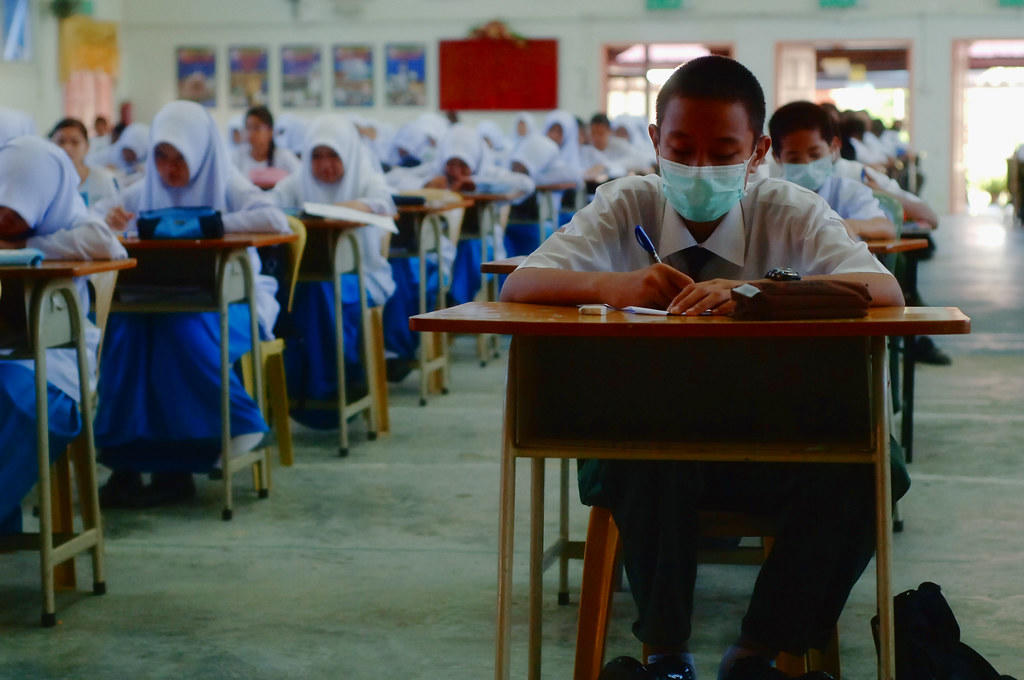
Getting to Know the Marking Scheme for Paper Four & Paper Five
Paper 4
The paper is coded 962/4 and is called Chemistry Paper 4. The practical work assessment for form six students occurs throughout the school term (term 1, term 2 and term 3) and applies to candidates from both government and MEC-approved private schools. It is a School-based Assessment of Practical. If you sit for this paper, you do not need to attempt paper 5. It contributes 20% weighting overall.
Please find the details for paper 4 below:
Experiments
- 13 compulsory experiments
- Assessed by subject teachers throughout the terms
Group Project
- Conducted in the third term in groups of 2 or 3 students.
- Specifics (title, topic, objective, theory, apparatus, procedures) are provided in the Teacher’s and Student’s Manual for Practical Chemistry.
- Manual available for download from MEC’s Portal from the first term.
Paper 5
The paper is coded 962/5 and is called Chemistry Paper 5. Eligible candidates include individual private candidates, students from private schools without practical assessment permission, repeat upper six students, those who have not attended lower and upper six for two consecutive years and candidates who take chemistry other than the package offered by schools.
The test consists of three structured questions on routine practical work and experiment design, with flexibility in question content beyond the syllabus. Candidates will demonstrate their skills in recording data, explaining experimental setups, completing data tables, interpreting results, performing calculations, and conducting tests for gases and ions. You do not need to attempt paper 4 if you are eligible to sit for paper 5. Please find the details below:
- Written Practical Test
- 3 compulsory structured questions to be answered
- This paper carries 45 marks (20%)
- To be completed within 1½ hours
Understanding the STPM Grading System
STPM uses the Cumulative Grade Point Average (CGPA) system to figure out your overall results. Since 2012, the points for each subject have been called Nilai Gred Mata Pelajaran (NGMP). So, it's essential for candidates to know how to calculate their latest STPM results. This way, you can plan your strategy to get awesome grades and make sure you’re ready to apply for universities, whether it's in the country or overseas.
STPM results are now shown using a scale of 11 grades, as opposed to the previous 7 grades. Check out the table below:
| Paper Grades | Subject Grades | NGMP | Level of Achievement |
| A | A | 4.00 | Lulus Penuh |
| A- | A- | 3.67 | Lulus Penuh |
| B+ | B+ | 3.33 | Lulus Penuh |
| B | B | 3.00 | Lulus Penuh |
| B- | B- | 2.67 | Lulus Penuh |
| C+ | C+ | 2.33 | Lulus Penuh |
| C | C | 2.00 | Lulus Penuh |
| C- | C- | 1.67 | Lulus Sebahagian |
| D+ | D+ | 1.33 | Lulus Sebahagian |
| D | D | 1.00 | Lulus Sebahagian |
| F | F | 0.00 | Gagal |
When it comes to grades, a full pass is anything from a C to an A, which means scores between 2.00 and 4.00. If you get grades D to C, that’s seen as a partial pass, landing between 1.00 and 1.67. Meanwhile, a grade of F, valued at 0.00, is considered a fail.
Find out how to score for STPM chemistry!
Common Challenges Students Face with STPM Chemistry Subject
STPM Chemistry is a tough and intense subject that challenges students with its complex syllabus. One of the main challenges is understanding theoretical concepts, like electrochemistry, organic chemistry, and hydrocarbons. To get these topics down, you need more than just memorisation; you also have to be able to apply what you've learned in different situations, which can be pretty overwhelming for many students.
One challenge is getting comfortable with problem-solving, especially when it comes to calculation-heavy topics like stoichiometry, equilibrium, and electrochemistry.
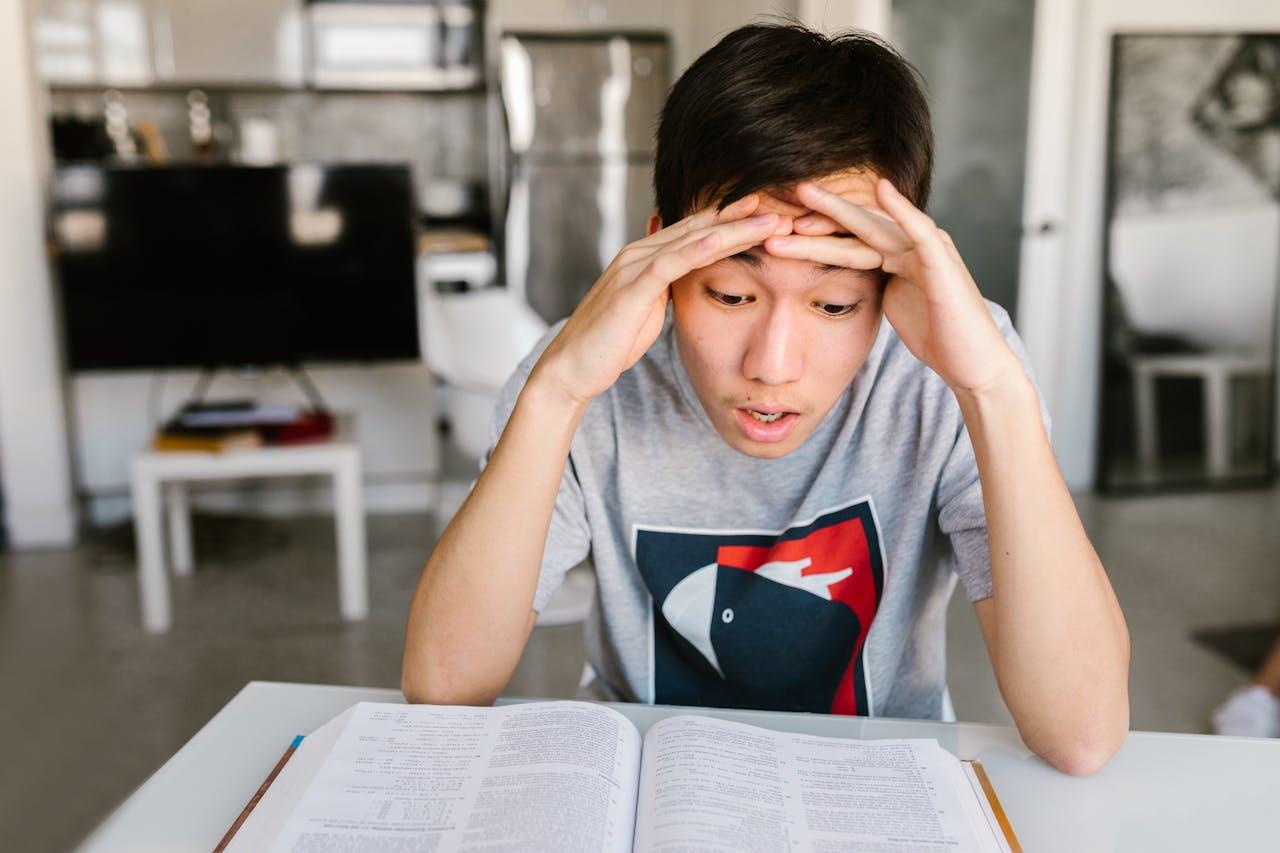
When it comes to the hands-on part of the subject, things can get tricky. Many students have a tough time figuring out how to plan and run experiments, plus collecting and making sense of all that data can be a real challenge. On top of that, having limited time and resources in the lab just makes things harder, leaving students feeling like they don’t have what they need to succeed.
Managing time is a real struggle sometimes. Balancing Chemistry with other tough STPM subjects, after-school activities, and personal stuff can be pretty overwhelming. Slacking off and not having enough study time often leads to not doing well on exams.
The pressure to maintain high standards can hurt students' confidence and motivation. If they don't get enough support, trying to always perform at a top level can get in the way of their learning. To tackle these issues, it’s important to have effective teaching methods, lots of practice, and a supportive learning environment. While there are many challenges to mastering this subject, keep in mind that it is highly beneficial to pursue STPM chemistry.
Are you interested in taking STPM chemistry classes in Malaysia? If so, try searching for "chemistry tutors" on Superprof to find a private tutor who provides customised lessons based on your educational needs.
Every student learns at their own pace, and some may struggle with complex topics more than others. In these situations, personalised sessions with a private tutor can be incredibly beneficial!
Superprof features millions of tutors offering both in-person and online lessons designed just for you. Plus, the first lesson is always free, allowing you to decide whether to stick with that tutor or explore other options.
Summarise with AI:
Did you like this article? Leave a rating!

 Loading...
