
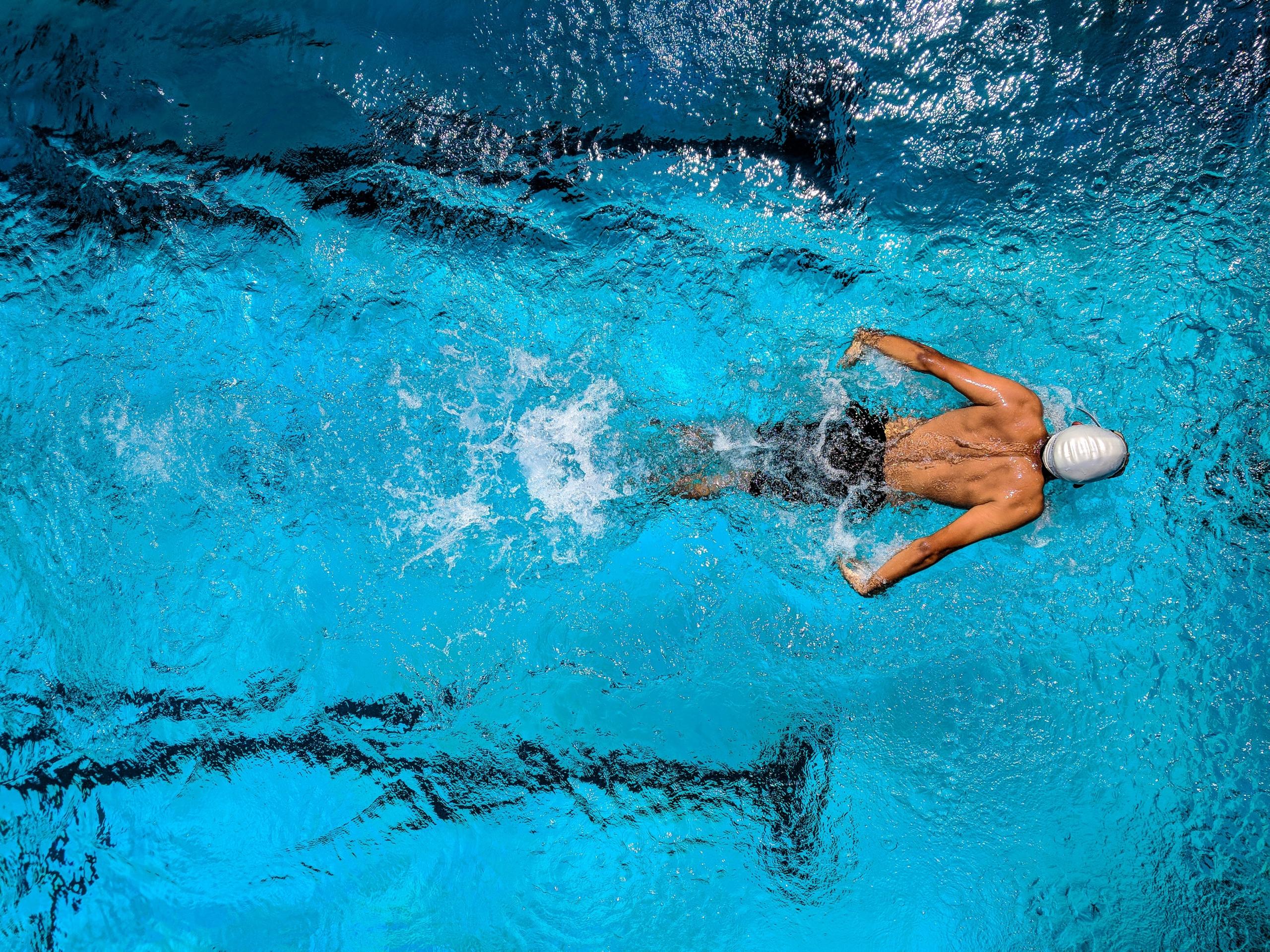

"I question, indeed, if the world ever saw a more peculiar stroke sustained throughout a 160 yards race."
These were the words of British swimming chronicler Robert Watson when he witnessed John Trudgen swim the Lambeth Baths championship in 1873. Drawing inspiration from the sidestroke, while combining arm movements of the front crawl with the frog kick of the breaststroke, this strange, new style was proving itself to be one of the most powerful swimming strokes!
Years later and after countless developments in the swimming world, top swimmers today use the trudgen and many other popular styles when competing at international-level tournaments.
Ever wondered how they do it? Let's dive into all the swimming styles and strokes!


What are the basic swimming skills?
Before learning any of the swimming strokes and styles, there are some basic swimming skills and areas that you should take note of. Whether it is to ensure that you stay safe at the swimming pool or to prevent potential injuries during your first swim, keep these points in mind especially if you are a beginner swimmer.
How to get in and out of the pool
This point doesn't just apply to children! Even if it's not to sit and slowly get into the water as a young learner, adults should also know how to enter and exit the water safely. Think about whether you know how to pull yourself up and out of a swimming pool in areas without steps or ladders.
Use proper breathing technique
Surely you don't want to learn the front crawl only to find yourself taking frequent breaks for air! In styles like the breaststroke and combat sidestroke, you need to be able to take a full breath while your head is out of the water, and then breathe out through your nose and mouth when underwater. With professional swimming instructors in Malaysia, you can learn proper breathing techniques that will help you when actually swimming.
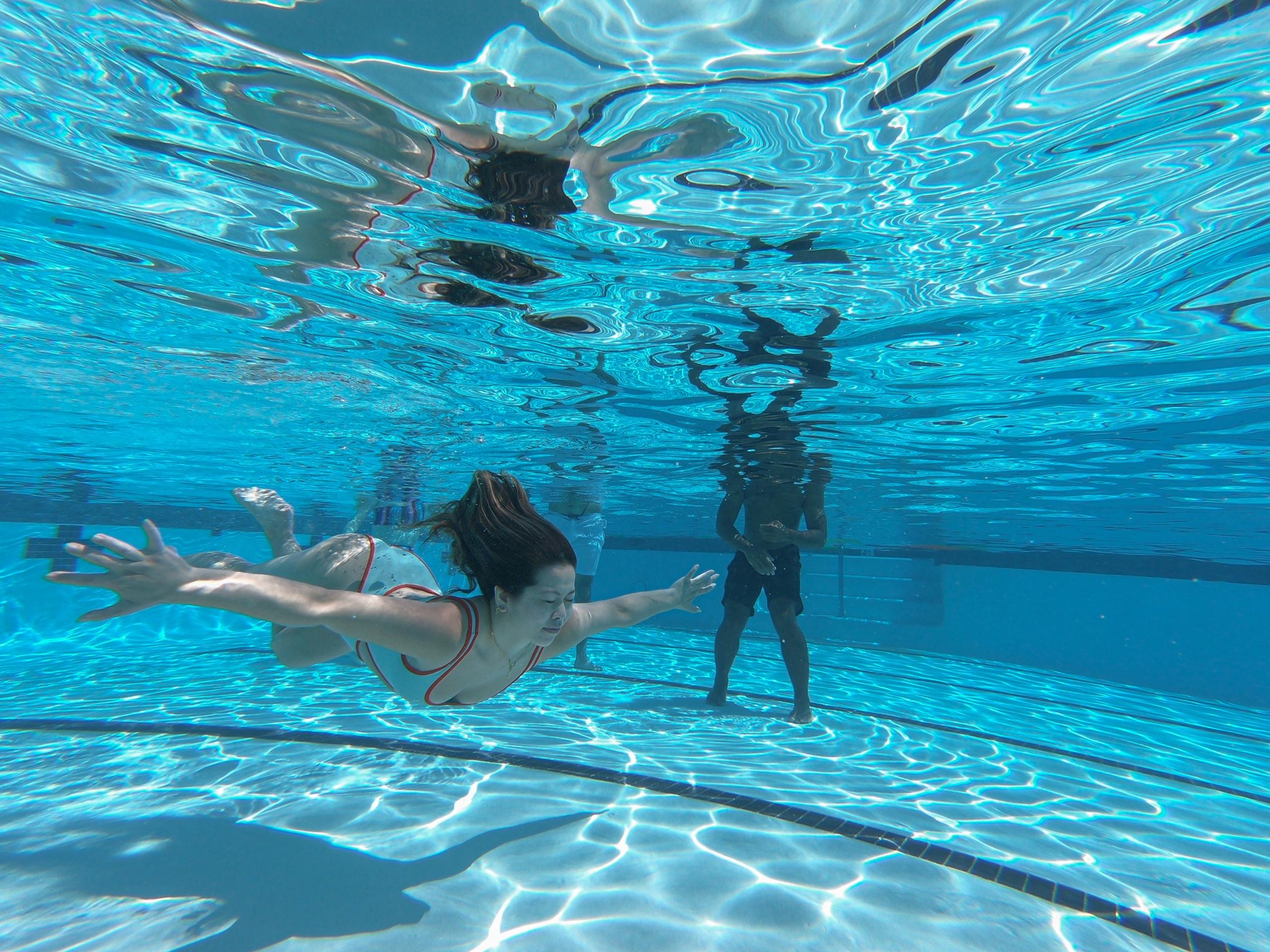
Know how to float
Although this is something you'll work on when you learn to swim, it's one of the most basic swimming skills that will keep you safe if you ever fall into the water by accident. Children often learn to float by standing in waist-deep water and being supported on their backs, while adults usually find this easier in chest-deep water.
Knowing how to float will also increase your confidence in the swimming pool, and that's something you'll need to pull off styles like the elementary backstroke or the butterfly. If you are facing trouble entering the pool or are afraid to be near water, it's possible that you could be experiencing symptoms of aquaphobia.
In this case, speaking to a professional could greatly support you if you'd still like to pick up swimming.
What are the popular swimming strokes?
Now that you've got your basic swimming skills down, we can look at the popular swimming strokes that even non-swimmers may be familiar with. To get a feel of how an individual will look like when performing these strokes, let's identify the different positions of the body and limb placement according to each style.
Breaststroke
Among all the different swimming strokes and styles, the breaststroke is undeniably the most popular. Among the benefits of swimming the breaststroke is that it is one of the easiest styles to learn and beginners can often pull it off as it is the slowest swimming stroke.
Body: Keeping the head constantly aligned to the body, the torso shifts between "horizontal" to "inclined" (at a 45-degree angle above the water) to move the body forward in the water.
Arms: Stretching forward at first, arms are swept outwards with the idea of catching or "scooping" water with the hands. Once "pulled", hands and forearms are swept inwards in front of the body.
Legs: Flexing the feet, heels are brought close to the hips. Then, the legs extend outwards and backwards to "push" water with the soles of the feet.
Freestyle
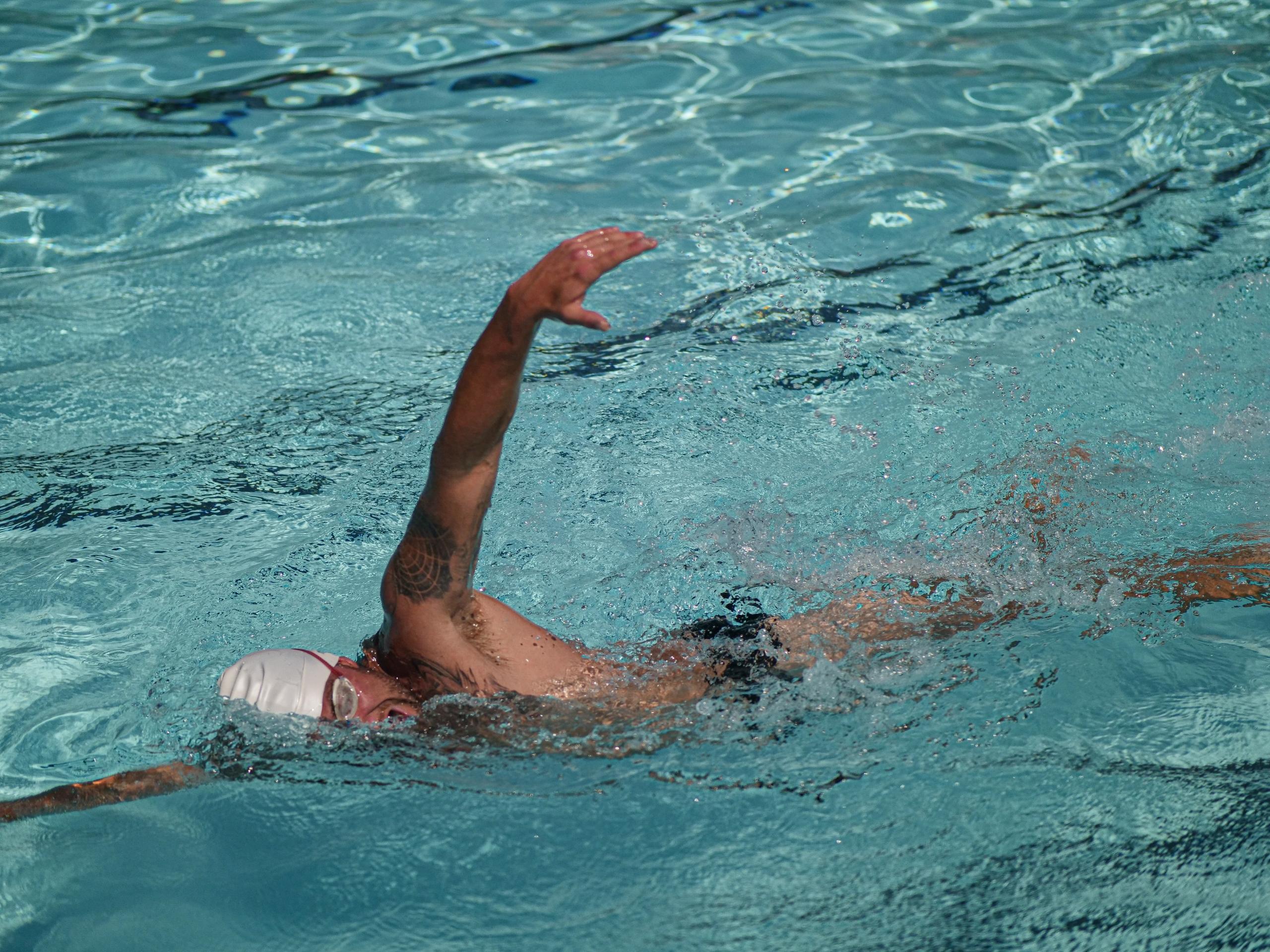
The freestyle, also known as the front crawl, is said to be the most efficient style of swimming. It is also one of the fastest swimming strokes.
Body: Face down and placing the body in a horizontal position, the body moves from side to side when swimming.
Arms: Arms are set in a "windmill motion". Alternating between different arms, one hand "sweeps" underwater by lowering the forearm and raising the elbow, and the arm is extended as it exits the water to "pull" the body past the arms.
Legs: Feet are spread out and legs move in a quick, flutter motion.
Whether it's the breaststroke, front crawl or trudgen that you want to learn to swim, you should check out these awesome places for learning swimming in 2023.
Is butterfly the hardest stroke?
Did you know that the butterfly stroke is the newest of all swimming strokes and styles? Compared to other strokes like the backstroke and breaststroke, it is indeed one of the toughest styles to master. In the swimming pool, the person's head leads the movement of this stroke with the rest of the body following, while making use of the unique "dolphin kick".
So far we've seen the frog kick, flutter kick and dolphin kick, and by now you can obviously tell that swimming takes on many different forms! Try out these swimming strokes below and open yourself up to a world of benefits related to swimming.
Combat sidestroke
The combat sidestroke, or the CSS, is a variation of the sidestroke. It's said that the U.S. Navy Seals were the first to use it, and it is also considered a calming yet efficient swimming style.
Body: Keeping body flat and near the surface, shifting to either side for breathing.
Arms: Starting with both arms fully extended above the head, one arm "pulls" the body forward as it rotates (to breathe) and is then brought close to the body, while the other arm acts as the "lead".
Legs: Starting with a flutter kick, the leg closest to the ground "pulls" the body forward while the other leg extends backwards.
Elementary backstroke
Here's a variation of the backstroke for you to try out. While it may not be as challenging as the combat sidestroke or the butterfly, one of the benefits of swimming the elementary backstroke is that it can come in handy when you need a break during your laps.
Body: Face up and above the water, the body is placed horizontally with the head in a neutral position.
Arms: Keeping hands close to the sides of the body and palms facing down, hands are raised towards the shoulders and used to "push" water to propel the body forward. Hands can be further extended outwards to gain more "power" to move forward.
Legs: Bend knees (below the water surface) and lower feet towards the ground while keeping legs wide. Allow feet and legs to move outwards to create a "sweeping" motion, gliding the body forward.
We encourage you to learn to swim in various swimming styles!
Should I learn breaststroke or freestyle?
Before deciding whether you should learn breaststroke or freestyle, you should think about what purposes or goals you would like to achieve through learning these different swimming strokes.
For instance, you may want to start with the breaststroke if you are a beginner swimmer as it is arguably the easiest stroke to learn. However, as one of the slowest strokes taught to young swimmers, the breaststroke is not going to help you build speed in your swimming (should that be your goal).
Picking up the sidestroke can be great as it can allow you to swim faster and won't be as exhausting as swimming the breaststroke for an entire lap. Swimmers looking to build muscle and stamina can benefit from the freestyle which works the back, core, arms and legs.
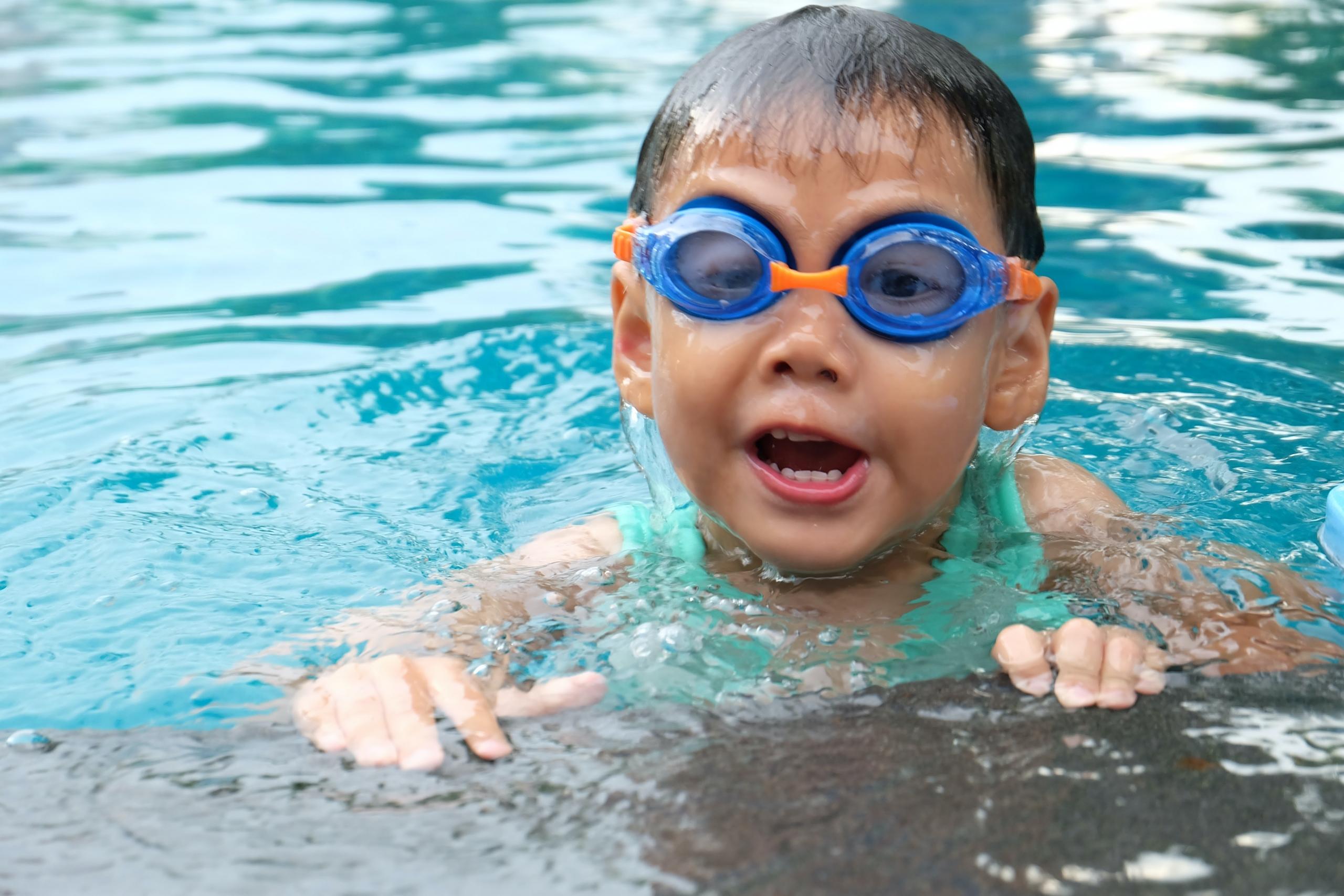
Still, it would help to learn from a swimming instructor who can teach you the essential swimming strokes and styles.
Wouldn't it be great to learn from a swimming instructor who not only has experience in teaching students how to swim but is also a certified coach and competitive swimmer? Well, Superprof has the swimming instructor you are looking for!
Here's how you can narrow down your list of potential swimming instructors on Superprof: after searching for "swimming" on the Superprof Tutors page, use the filters at the top-left of the page to improve your search. Select "Face-to-face" for physical lessons or "Online" to virtually learn with your instructor. The "Distance" feature allows you to find swimming instructors nearest to you (for in-person lessons) and you can also set your preferred budget via "Rate".
After selecting a few swimming instructors on Superprof, what's the next step? Click on your instructors' profiles and look out for their lesson descriptions and student reviews: these will help you determine whether your swimming instructor is the right fit for you!
Found your Superprof swimming instructor? Great! All you have to do now is sign up with Superprof to contact your instructor and set the date for your first lesson. Happy swimming!
Find a swimming class KL on Superprof today!
Summarise with AI:
Did you like this article? Leave a rating!

 Loading...
