
Is there a shortcut to pass Sejarah in SPM? Have you asked yourself this question? If you did, you’re not alone. Many students quietly wonder this, and some even ask it aloud.
Is Sejarah a difficult subject? Do students enjoy studying the history of the country? Why is it made compulsory to pass to obtain the SPM certificate?
Here’s why Sejarah matters. Studying history not only nurtures patriotism among young people but also helps us appreciate the freedoms and prosperity we enjoy today. Without a basic understanding of our past, we risk overlooking the contributions of key national figures, such as Tunku Abdul Rahman, Tun Dato Sri Tan Cheng Lock, and Tun V.T. Sambanthan, who worked tirelessly to achieve independence and build a united nation.
Sejarah also helps students understand the rich diversity of Malaysia and the collaboration of different communities during the nation’s formation. This knowledge is essential today, when misinformation and divisive narratives can easily spread and create division among the people. By understanding history, students are better equipped to recognise the value of unity and to avoid being swayed by false claims that undermine the nation’s peace.
Passing Sejarah is not as difficult as it seems. With the right strategies and consistent practice, you can pass the exam or even achieve your desired grade. Keep reading to discover some of the best tips to score high in SPM Sejarah.
How to Study Sejarah: Tips to Score High in SPM
- How to Score Well in SPM Sejarah?
- Essential Study Techniques to Master SPM Sejarah
- Benefits of Learning Sejarah
- SPM Sejarah Examination Format
- SPM Kertas Sejarah Past-Year Papers
- How is the SPM Sejarah Paper Graded?
- Resources to Master the Sejarah Subject
History is a guide to navigation in perilous times. History is who we are and why we are the way we are.
David McCullough, American historian and author


How to Score Well in SPM Sejarah?
There are many tips and methods to study for SPM Sejarah that can pave the way to scoring a better grade for this subject.
Use the Sejarah Textbook as Your Primary Reference
Students must use the Form 4 and Form 5 Sejarah textbooks as the main reference to study the subject. This is because the SPM questions are taken/processed/drafted from textbooks.
The textbooks are excellent examples of writing essays. While it is true that the writings and style of writing in the textbook are long, with the right studying method, learning history can be interesting and thorough.
Acronyms
One of the most effective and easy ways to remember facts is by using acronyms. What is an acronym? According to the Cambridge Dictionary, an abbreviation consists of the first letters of each word in the name of something, pronounced as a word.
Making notes by incorporating acronyms makes it easier for students to remember and memorise historical facts.
Mind maps
Using mind maps is an effective learning method, especially for the Sejarah subject. Mind maps can attract interest and increase students' understanding of a concept, information, and facts.
Attempt practice questions
Students are encouraged to attempt actual SPM Sejarah past year questions because the questions that come out in the actual exam are often repeated, with a slightly different sentence structure and question presentation.
Attempting trial examination questions and additional practice questions will help students familiarise themselves with the exam format and recall important facts if a similar question is asked during the SPM examination.
Study together with Friends
It is very important to find a committed group of friends to study the subject together. By studying in a group, you get the opportunity to share and exchange opinions with each other. You will also be able to understand the same topic from different angles.
A complete guide to Sejarah can be a huge help for students just started their exam preparation. We’ve written one and we’re confident it will guide you well.

Essential Study Techniques to Master SPM Sejarah
From Pendudukan Jepun, Pembentukan Malaysia, to the rise of Malacca – there are just a lot of high-stakes events, dates and facts to remember. That’s why you need the right techniques to recognise and understand the chapters from Sejarah tingkatan 4 and Sejarah tingkatan 5. Trying to memorise all the chapters is just a waste of time because you will not be able to force yourself to remember all the details. To truly ace the exam, follow these strategies that combine memorisation, understanding, and practical application.
Let’s take a look at them:
1. Treat history as a story
Don’t memorise past events in isolation. Correlate every chapter and visualise them like a movie:
- Who did what?
- When and where did events happen?
- Why was the decision made?
Ask relevant questions like this and remember all the key events like a movie. Creating mental images of wars, negotiations, leaders, and places helps you remember them as a story that you can easily write down, rather than just cramming them. You can apply these techniques to events such as the Malacca defeat, Portuguese story, Kesultanan Melayu Malacca, British Military Admission, and much more.
For example (Japanese Occupation)
"In December 1941, the Japanese army silently approached the coast of Malaya. Civilians in Penang watched in fear as soldiers landed, while British officers hurriedly packed their offices and retreated. Towns like Kuala Lumpur fell quickly. The Japanese, eager for rubber and tin, imposed strict rules and propaganda posters everywhere. Ordinary people worked long hours under forced labour, while whispers of resistance started to spread. This occupation would last until 1945, changing the lives of every Malayan forever."
Disclaimer:
The facts in the story above may not exactly match those in your textbooks, and there might be some discrepancies. Always refer to your KSSM Sejarah textbooks as your primary source. This guide is intended to show you how to create a story from historical events to help you understand, visualise, and remember them more effectively.
2. Read the textbooks as your main source
Avoid relying too much on external reference books – your textbooks are the primary source of truth. If you don't have any nota sejarah tingkatan 4, consider buying the textbook, borrowing from the library, or checking if it’s available online. This is especially important for students who prepare at the last minute – make sure you have access to the Form 4 textbook, as it’s the rightful source for preparing your own notes.
3. Create timelines and mind maps
This is another useful method for students who tend to struggle with remembering events and their timelines. A creative way to go about this is by mapping out the events in chronological order:
- Dates, causes, effects, key figures (Tunku Abdul Rahman, Parameswara,& Laksamana Hang Tuah )
- Helps connect chapters and see history noun concepts as part of a coherent story
- Mind maps turn Sejarah into a visual, memorable narrative
Let’s take a look at an example of a timeline:
Timeline: Perjanjian Julai 1963 & Peristiwa Pengisytiharan Malaysia
9 Julai 1963
Perjanjian Malaysia ditandatangani
Ditandatangani di London antara Kerajaan United Kingdom, Persekutuan Tanah Melayu, Sabah (Borneo Utara), Sarawak, dan Singapura. Intipati perjanjian termasuk jaminan hak negeri Sabah & Sarawak (autonomi), dan struktur perlembagaan baru.
31 Ogos 1963
Tarikh asal “Hari Malaysia” menurut MA63
Dalam MA63, tarikh 31 Ogos 1963 disebut sebagai tarikh “berkuatkuasa” perlembagaan baru. Namun, tarikh ini kemudiannya ditangguhkan. Menurut Laman Web Rasmi BHESS, isu-isu teknikal (misalnya laporan UN) menyumbang kepada penangguhan kepada 16 September.
16 September 1963
Peristiwa Pengisytiharan Malaysia
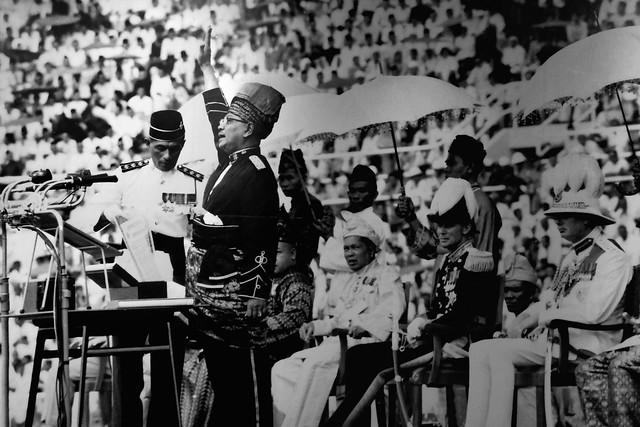
Malaysia secara rasmi diisytiharkan pada 16 September 1963. Upacara di Stadium Merdeka, Kuala Lumpur, dihadiri tokoh-tokoh penting seperti Tunku Abdul Rahman dan pemimpin negeri Sabah & Sarawak.
9 Ogos 1965
Singapura meninggalkan Malaysia
Singapura keluar daripada Persekutuan Malaysia atas sebab perbezaan politik dan pentadbiran, lalu menjadi negara tersendiri.
This demonstrates how you can use this technique to understand what happened, when it happened, and why it happened. Please note that the information above may not accurately reflect what you see in your textbooks. As mentioned earlier, always refer to your textbooks as they are the primary source. We gathered these details through online research, so some discrepancies may exist. Nevertheless, we hope this serves as a helpful guide for creating your own timelines for topics like this.
💡 Tip: Students can also turn this timeline into a mind map with colours, icons, and arrows to make it more visual and memorable. Use colours for causes, events, and effects, and icons to represent key figures or milestones.
4. Practice writing answers and keep it simple
This step is crucial because when you practice writing answers for bahagian A and bahagian B in kertas 2, you will learn how to respond to each section effectively and manage your time during the exam.
Some tips to keep in mind:
Basic techniques:
1. Copy the question heading: Start your answer by repeating the main part of the question. For example, “Jepun menjajah Asia Tenggara disebabkan…”
2. Use penanda wacana: Connect your points using words like seterusnya, di samping itu, or selain itu.
3. Number of points/sentences: Write the number of points and sentences according to the marks allocated. For example, if a question is worth 4 marks, give 4 complete points or sentences. (Please verify this with your Sejarah teacher for the most accurate update.)
4. Focus on fakta: Only include the necessary facts. Avoid kata majmuk, kata hubung like, “dan”, “contohnya”, or ayat huraian/penegas, such as “hal ini kerana” or “oleh itu”. Unless the question requires it, avoid writing more because you’ll not get extra marks for writing more.
5. Write neatly: Make sure your handwriting is neat, clear and easy to read.
6. Write using proper Bahasa Melayu: Even though you’re not assessed for grammar like a Malay essay, you’re still required to write your answers in clear and standard Malay.
7. Answer all questions: Read the exam papers carefully before answering, and double-check at the end to ensure you haven’t missed anything.
For Structuring Your Answers:
1. Use frameworks like
- PEKA (Point (isi)→ Explanation (huraian) → Contoh → Aplikasi),
- FAE (Fact (fakta)→ Analysis (analisis) → Example (contoh), or
- isi → huraian → contoh method.
2. These frameworks help organise your points clearly, ensure your answer is complete, and make it easier for examiners to follow your reasoning.
For KBAT questions:
All the tips shared above apply to KBAT questions as well. However, there are some tips specifically for KBAT questions to help students.
1. Link challenges and solutions: Make sure the solutions you suggest directly address the challenges mentioned in the question.
2. Build paragraphs: Write your answer in paragraphs. Start each point in a new paragraph to provide clarity. Also, keep in mind the lines given in the answer sections, manage your font size and answers so that you’re not exceeding the lines provided. Even if you’re exceeding, ensure your answers look neat and organised.
3. Make an answer outline: Plan your answer first by creating an outline to organise facts in order of importance.
5. Prepare Sejarah Form 4 notes and Sejarah Form 5 notes
Many students swear by this method. Having your own notes helps you a lot to skim through a day or a few hours before the exam. You don’t need to carry both textbooks and flip through the pages outside the exam hall.
6. Don’t rely on hot topics
The goal is to pay more attention to the hot topics, not only to prepare for them and take the exam. That will set you up for failure. As much as we all love some last-minute tips to reduce the burden on revision, it’s always smart to be prepared for any topic.
Also, if you didn’t analyse the past year's papers to spot the most tested topics or questions, it’s always safe to revise all the topics unless your source is trustworthy. There were times before when the predictions went wrong and students who relied on them heavily were disappointed. So, be a smart student!
7. Quick daily revision
If you can’t sit for an hour or two straight, spend at least 10 minutes per day. Skim through one chapter per day, or even better, skim through your notes. This reinforces memory without overwhelming and keeps the facts alive in your mind.
8. Use visual study tools
Sometimes using mahjong papers or a whiteboard works like a charm for some students. You can use either one to write summaries, timelines and keywords. Stick on the walls in your bedroom, doors or mirrors for constant exposure. For example, if you’re revising a topic that has too many details that you find difficult to remember, write them using one of the techniques mentioned above — use colours, drawings, pictures, or post-its. Then, stick it if it’s mahjong paper and look at it every day. This is similar to students having their periodic table up on the wall near their study table for easy reference.
9. Start early
Sejarah is content-heavy. Early revision ensures smooth understanding. However, if you follow these techniques, start preparing months before SPM, and remain consistent, you can still score well.
Your brain actually learns better when you switch between topics. This is called interleaving, and it helps your memory stay flexible. Reviewing a different Sejarah chapter each day trains your brain to recall information more quickly during the exam.
Benefits of Learning Sejarah
Many students tend to focus on passing the Sejarah subject solely to obtain the SPM certificate. There are many other benefits that they can gain by learning history.
Learn from Past Events
By learning history in school, the younger generation that will drive the future of the country can avoid making the same mistakes of the past and create more glorious successes. Without learning from the mistakes of the past, we may repeat the same mistakes that not only harm an individual but may also harm the family, society and country.
Instil Unity Between Races
The Sejarah syllabus reflects the struggles all races went through during the colonisation period and how independence was gained by a joint effort of all races coming together. This will teach the younger generation the importance of respecting all races in Malaysia in order to maintain our country’s peace and prosperity.
Cultivating Patriotic Spirit
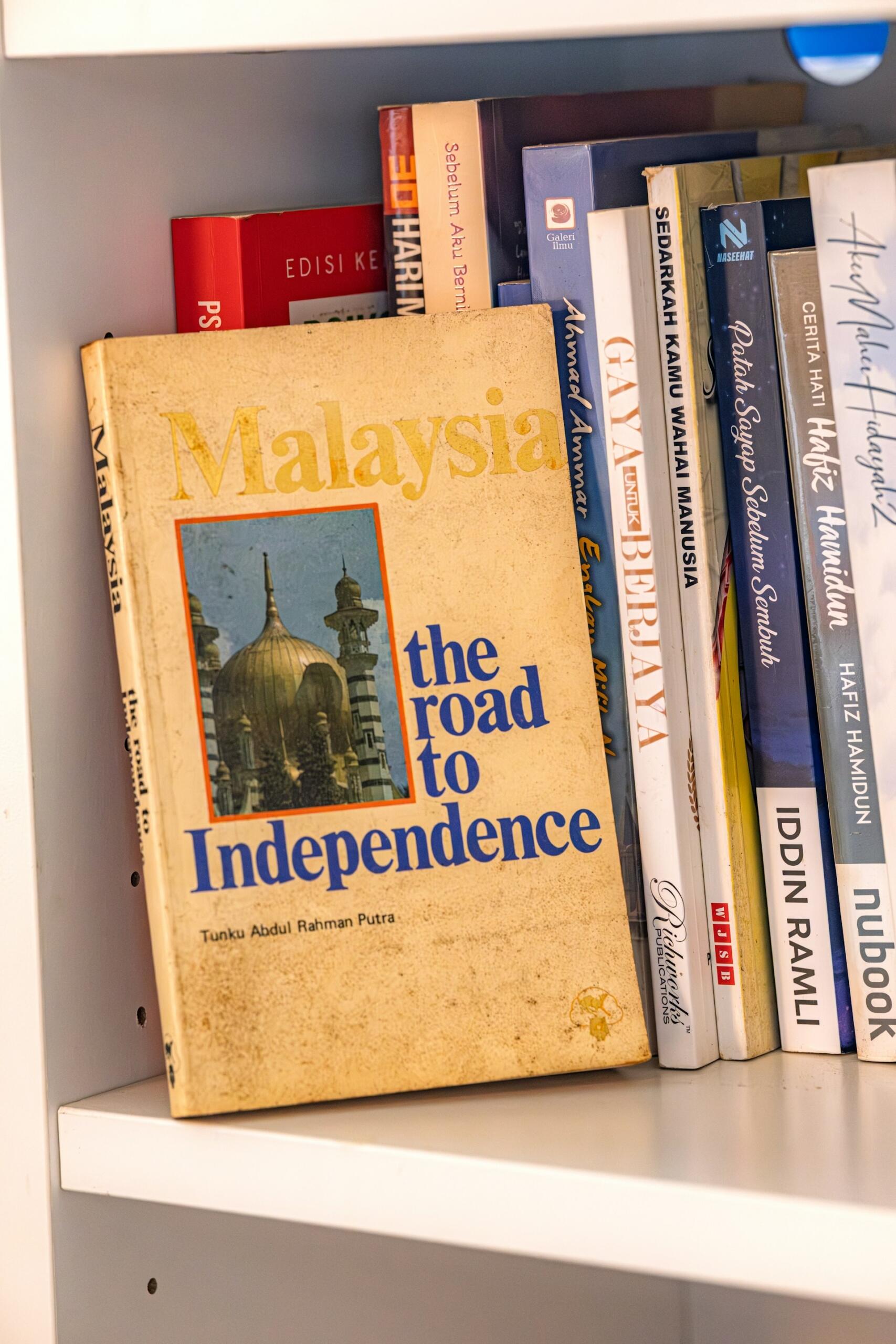
The young generation is reminded of the services and contributions of national figures such as Tunku Abdul Rahman, Tun H.S. Lee and Tun V. T. Sambanthan when they learn Sejarah. These statesmen have struggled to find a way so that we can enjoy prosperity and peace in our beloved country. Therefore, the spirit of patriotism can be nurtured in the souls of the younger generation.
SPM Sejarah Examination Format
Initially, there were three examination papers for the SPM Sejarah subject, but it has been reduced to two papers as per the new format since 2021.
Please refer below for the examination format of the SPM Sejarah for Paper 1 and Paper 2:
Kertas 1 (Paper 1) - Multiple Choice
40 questions | 1 hour | 40 marks
- Each question is followed by four answer options: A, B, C and D
- For each question, choose only one answer
- Each question carries 1 mark
Kertas 2 (Paper 2) - Subjective
2 sections (Part A & Part B) | 2 hours 30 minutes | 100 marks
Part A: Structured Limited Response
4 questions | 40 marks
- Students are required to answer all questions
- Each question is usually further divided into 3 sub-questions: a, b and c
Part B: Open Response
3 out of 5 questions | 60 marks
- Students are required to choose and answer 3 out of 5 questions
- Each question carries 20 marks
- Each question is usually further divided into 3 sub-questions: a, b and c
Success depends on nota sejarah tingkatan 4 and nota sejarah tingkatan 5, as well as consistent practice.
If you would like to view the complete format for each SPM subject, you can download it from the Lembaga Peperiksaan’s (Examination Board) official website.
SPM Kertas Sejarah Past-Year Papers
Candidates who attempt many reference papers, such as the actual SPM examination past year papers, trial examination papers from different states or even practice question papers, will be better prepared, more confident, enthusiastic and be able to predict the shape or format of future questions.
Trial Examination Papers
Trial examination question papers differ according to the state, Sekolah Berasrama Penuh (SBP) or Fully Residential School and Maktab Rendah Sains MARA (MRSM).
Therefore, there are many different trial examination papers that students can study and attempt in order to help them score well in SPM Sejarah. The trial examination is one of the last examinations students sit for before the actual SPM examination.
Actual Past Year SPM Examination Papers
Knowing the examples of previous years' questions is very useful for candidates. It gives an overview of how a question is asked, and the number, distribution and frequency of each topic.
Furthermore, students will be able to better understand the marking scheme for this subject, which will serve as a guide on how to answer questions in order to score maximum marks for each question.
Practice Questions
If you have not finished studying all the chapters for both form four and form five yet and feel that you are not ready to attempt the actual past year SPM papers and the trial exam papers, you can attempt practice questions for each chapter as you study as well.

How is the SPM Sejarah Paper Graded?
In order to better understand the marking scheme of the Sejarah paper, it is best to look at the current grading system for all SPM subjects as shown below:
Score / Grade / Level
90 – 100 : A + : Cemerlang Tertinggi
80 – 89 : A : Cemerlang Tinggi
70 – 79 : A – : Cemerlang
65 – 69 : B + : Kepujian Tertinggi
60 – 64 : B : Kepujian Tinggi
55 – 59 : C + : Kepujian Atas
50 – 54 : C : Kepujian
45 – 49 : D : Lulus Atas
>40 – 44 : E : Lulus
0 – 39 : G : Gagal
TH : TH : Tidak Hadir
Resources to Master the Sejarah Subject
KSSM Sejarah Textbook
The KSSM Form 4 and Form 5 Sejarah textbooks are the best resources available and should be used as the main reference to study for SPM Sejarah. Other reference books published by book companies may be used as a second reference if necessary.
YouTube
Among the many advantages of YouTube, one of the most beneficial ones for students is the availability of various educational channels. These videos have gained so much popularity that many teachers have made SPM Sejarah videos and uploaded them on YouTube to help students pass the subject.
You can find useful tips for scoring an A+ from straight-A students, just like the one below:
Notes
If you are struggling to make your own notes and are unsure what points are important, there are many resources available on the internet that provide short notes. You can refer to them as a reference. Making your own notes will help you remember the subject matter better.
SPM Past Year Papers
Since SPM is the main national exam for students who study under the Malaysian National Curriculum, which determines the future academic path of many Malaysian students, there are ample resources available which make it easy for students to find past year papers and practice questions online.
We’ve created a guide that walks you through how to download free, PDF-format past-year SPM Sejarah papers. Read our guide here to learn more.
Private Tutor
Everyone has their own learning style. Some are visual learners, while others may be auditory learners. If you have a private tutor who will design the lessons according to your learning style, you will be able to progress faster in mastering the subject.
Whatever area needs improvement in the subject for you to score an A+ in the SPM examination, having a private tutor will help you achieve it. If you are looking for a private tutor to help you tackle the subject for the SPM examination, Superprof is the right place. With over 30,000 verified and qualified tutors waiting to assist you, you can find the one that matches your goals and learning styles. Our classes start at an average of RM 51 only. Do not wait until the last minute to get help. Get in touch with a Superprof tutor today!
Summarise with AI:
Did you like this article? Leave a rating!

 Loading...