

The guitar has always been more than just an instrument; it is a storyteller that connects generations through sound and emotion. With its familiar frets, polished body, and six resonant strings, the acoustic guitar remains one of the most recognisable instruments in the world of music. But who truly knows where it all began? When did musicians first learn to play, tune, and create those timeless notes and chords that shaped the songs we love today?
In this exploration of guitar history, we will uncover how it evolved from ancient stringed instruments into the centrepiece of modern music. From the early fret designs and finger placements to the creation of basic guitar chords, every stage of its development tells a story of creativity and innovation. You’ll learn how artists throughout time transformed simple sounds into expressive riffs, memorable solos, and entire genres that still inspire new players every day.
Whether you’re a beginner looking for tips to improve your technique or an enthusiast curious about the world behind every song, this journey through time reveals how the guitar became the instrument that defined emotion, culture, and connection across eras.
Before the modern acoustic and electric guitars we know today, ancient musicians were already experimenting with stringed instruments that laid the foundation for everything to come. Let’s begin by travelling back thousands of years to discover the fascinating origins of the guitar, starting with the instrument of the Egyptian singer Har-Mose, believed by many to be the world’s first guitar. And if this sparks your curiosity to start your own musical journey, check out our complete guide on guitar to learn the basics and begin mastering this timeless instrument.
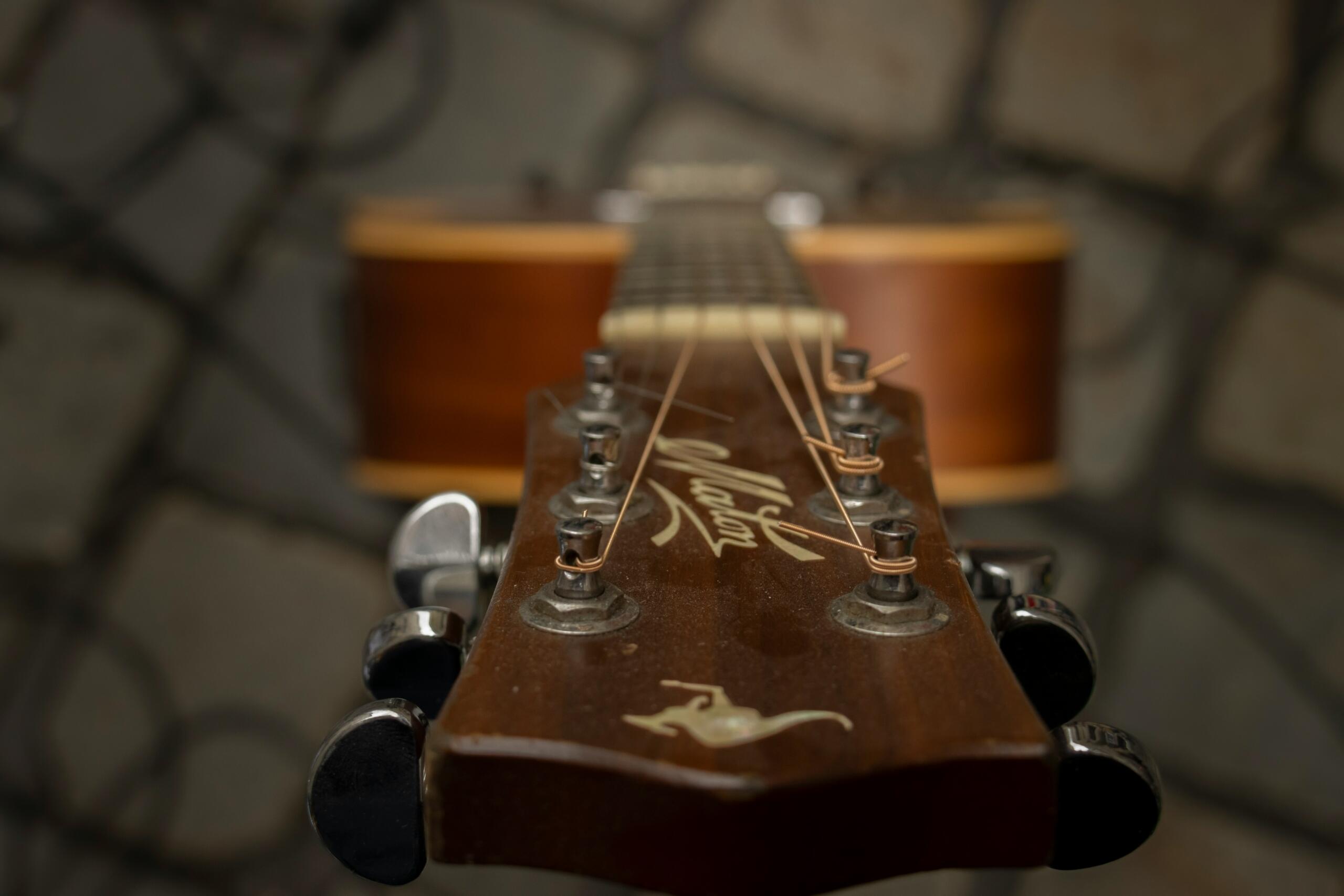


Was the Instrument of the Egyptian Singer Har-Mose the First Guitar in the World?
Around 3,500 years ago, during the reign of Queen Hatshepsut, an Egyptian musician named Har-Mose played a fascinating instrument that many historians now consider an early ancestor of the guitar. Crafted from polished cedar and covered in fine leather, this three-stringed instrument produced a warm, resonant sound that would have accompanied ancient songs and celebrations. Though far simpler than the modern acoustic guitar, it already displayed features we recognise today, such as strings stretched across a wooden body, a neck, and the ability to tune and play using both hands.
As this early design spread through Mesopotamia and into Europe, new strings and techniques were added, allowing musicians to learn more complex chords and express deeper emotions through music. Over time, builders began to refine their structure, adjusting frets, experimenting with different woods, and developing the rich tonal quality that modern players continue to admire.
From Har-Mose’s humble cedar creation to the guitars of today’s legends, the journey of this instrument shows how human creativity and the love of music have evolved together. The simple act of using fingers to press, hold, and shape notes on strings remains one of the most enduring expressions of musical connection, proof that even the earliest players understood the true power of sound. To explore how these traditions have inspired modern techniques, dive into how to play different guitar styles and see how versatility and expression continue to define great guitarists today.

A Very Old Lady: An Ancestor of the Guitar Found in Ancient Rome?
Long before the modern acoustic guitar took shape, ancient civilisations were already exploring the beauty of plucked string instruments. In Ancient Rome, musicians played an instrument known as the cithara, derived from the Greek kithara. It featured a wooden soundboard, several strings of varying thickness, and a simple fret system that allowed players to produce different notes and chords. By using one hand to pluck the strings and the other to press them, Roman performers could create expressive and melodic sounds that echoed through amphitheatres and festivals.
These early designs revealed that music was more than just entertainment; it was a way to communicate emotion and culture. Over time, craftsmen refined these instruments, adding curved bodies, adjustable tuning pegs, and stronger strings to improve tone and tune stability. Although the materials were primitive, the passion to learn, play, and explore new songs remained constant.
From Har-Mose’s humble cedar creation to the guitars of today’s legends, the journey of this instrument shows how human creativity and the love of music have evolved together. The simple act of using fingers to press, hold, and shape notes on strings remains one of the most enduring expressions of musical connection, proof that even the earliest players understood the true power of sound. To explore how these traditions have inspired modern techniques, dive into how to play different guitar styles and see how versatility and expression continue to define great guitarists today.
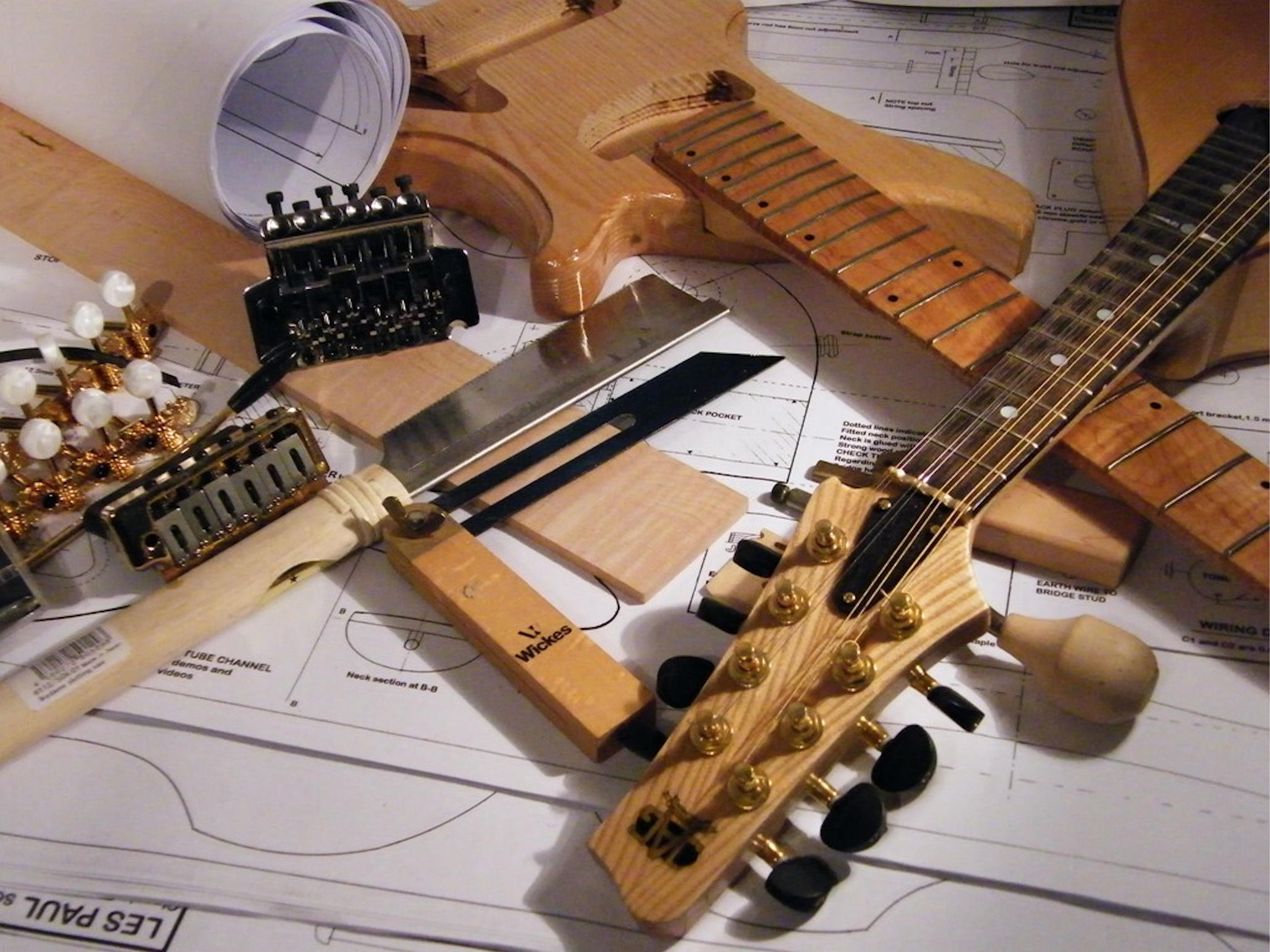
Michael Kasha’s Point of View and His Contributions to the Guitar
Dr Michael Kasha, a renowned molecular physicist and passionate guitarist, offered one of the most detailed scientific perspectives on guitar history. He described the guitar as a “plucked string instrument played with fingers or a plectrum, featuring a long fretted neck, a flat wooden soundboard, a head, and a flat back with gracefully curved sides.” His fascination with how players press, hold, and play strings to produce unique sounds led him to explore not only its design but also the physics behind its tone and resonance.
Kasha questioned traditional beliefs about the instrument’s ancestry. While both the lute and the guitar share early stringed origins, he argued that the guitar was not directly derived from the lute. He also suggested that the ancient Greek term “zither” may have originated from the Persian “seh-tar,” a four-string instrument that laid important foundations for later string designs. This insight reshaped how historians view the evolution of plucked instruments across cultures.
In the 1970s, Kasha collaborated with Gibson Guitars, applying his research on vibrational soundboards to improve the quality and balance of acoustic instruments. His innovations, including the use of an asymmetric bridge and refined internal bracing, helped redefine how guitar makers tune the instrument for clarity and sustain. Though the Gibson Mark Series did not achieve great commercial success, it marked a turning point in scientific guitar design.
Kasha’s work continues to influence how musicians learn, use, and understand the guitar today. His approach connected music, science, and craftsmanship, showing that every note, chord, and riff reflects both human creativity and precise physical design. For anyone seeking tips to master better tone control or sound quality, Kasha’s legacy is a reminder that great guitar playing is as much about curiosity as it is about skill. To see how true mastery shapes musical history, explore the best guitarists of all time and discover how these legends transformed sound into art.

15th–19th Centuries: From the First Old Guitars to the Modern Guitar
Between the 15th and 19th centuries, the guitar evolved dramatically, moving closer to the instrument we recognise and play today. In the late Middle Ages, early guitars were simple in structure, featuring a short neck, a rounded wooden body, and no more than eight frets. Many were built with double strings, creating a fuller sound but making it slightly more challenging to tune and press accurately.
Two main types of guitars were known during this era. The Saracen guitar, with its domed back and double strings, resembled the lute, while the Latin guitar had a flat soundboard and gut strings, much like the acoustic guitars we use now. During the Renaissance, a family of Spanish string instruments called vihuelas appeared, offering players the chance to learn more complex chords and melodic progressions. The Vihuela de Mano, in particular, featured six strings and allowed musicians to explore new songs, riffs, and harmonic textures.
By the 16th century, the vihuela gave way to the Spanish guitar, which introduced a five-string setup tuned to A, D, G, B, and E — the same key layout that would later define the six-string guitar. As musicians searched for more variety in notes and tone, makers began adding more frets, improving precision and expanding the instrument’s range.
In the 17th century, the legendary Italian luthier Antonio Giacomo Stradivari refined the guitar further by adding a sixth string, a development that permanently shaped the instrument’s design. Over the following centuries, guitar makers began using single strings instead of paired ones, improving clarity and tuning stability.
By the 19th century, Spanish craftsman Antonio Torres had revolutionised the acoustic guitar. His redesigned soundbox, lighter bracing, and innovative proportions transformed the instrument’s sound projection and resonance. Torres is often regarded as the creator of the classical guitar, a design that remains the foundation of most guitars today. To deepen your understanding of this iconic instrument, explore some of the most commonly held beliefs about the guitar and uncover fascinating insights that challenge what many players think they know.
Although the guitar was once considered less prestigious within classical music, this perception changed as more trained musicians embraced it. In 1965, John Williams introduced the first college-level guitar course in the UK, bridging the gap between traditional study and popular performance. Many of today’s most respected guitarists, even in rock and modern genres, have roots in classical training — proof that mastering the basics, from chords to fretwork, remains the key to all great music.

By the Way, How Did the Electric Guitar Appear?
After the rise of the classical guitar, a new revolution was about to reshape the way musicians play and create sound with the invention of the electric guitar. This transformation began in the early 1900s, when steel strings replaced the traditional gut versions. These steel strings produced brighter tones and greater resonance, but also added more tension to the neck. This change gave guitarists the ability to press, pick, and strum faster, paving the way for a completely different style of music.
A German craftsman named Christian Friedrich Martin, who had moved to the United States, developed the innovative X-brace design. This internal support system strengthened the guitar body and enhanced its ability to handle the new steel strings. Later, Orville Gibson took inspiration from the cello, designing an arched top where the bridge no longer directly touched the body. This helped the instrument resonate more naturally and project a fuller sound.
Lloyd Loar made further improvements by introducing F-shaped sound holes and a floating vibrato, a feature that gave players the power to bend notes, shape chords, and add expression to their solos.
By the 1920s, innovators began adding pickups to jazz guitars. These devices converted string vibrations into electrical signals that could be amplified, changing how guitarists performed in large venues. In the 1930s, the first commercial electric guitars appeared, thanks to Rickenbacker, which equipped its instruments with magnetic pickups.
The true breakthrough came in 1936, when Gibson released the ES-150 model, widely recognised as the first modern electric guitar. Jazz legend Charlie Christian made it famous with his smooth tone and melodic riffs, setting a new standard for generations to come. To understand why this innovation still matters today, explore the many benefits of playing guitar and discover how mastering this instrument can enhance creativity, confidence, and overall well-being.
Around the same period, other makers such as Audiovox, Rickenbacker, and Epiphone developed solid-body designs to reduce unwanted feedback. This design would soon evolve into the guitars that dominate music today.
In 1950, Leo Fender introduced the Fender Telecaster, the first mass-produced solid-body electric guitar for the public. Its crisp tone and reliable build made it an instant success. Soon after, Les Paul collaborated with Gibson to create his iconic solid-body model featuring two humbucker pickups, offering a warmer and thicker tone. The Fender Stratocaster, with its distinctive double-cutaway design, followed soon after, allowing players to reach higher frets and customise their instruments with ease.
Today, both the Les Paul and Stratocaster remain among the most beloved and recognisable guitars in the world. They symbolise the perfect blend of craftsmanship, creativity, and the never-ending desire to learn, play, and express music in every note.

The Guitar: From Overlooked to Iconic
When the guitar first appeared in the fifteenth century, it was often viewed as a lesser instrument compared to the more esteemed lute. Over time, however, its expressive range and versatility began to capture the imagination of composers and performers alike. What was once considered a modest string instrument gradually evolved into one of the most celebrated tools of musical creativity.
Through the rise of rock, jazz and blues, the guitar became a defining force in modern music, transforming from a background accompaniment into the voice of entire generations. Its ability to bridge melody and rhythm made it accessible to all, from casual learners to world-famous performers.
The value of the guitar is now recognised not only in its sound but also in its legacy. Some of the most famous instruments ever sold include a white Fender Stratocaster signed by 19 iconic musicians, from Mick Jagger to Bryan Adams, which raised $2.7 million in 2005 to aid the victims of the 2004 tsunami. Jimi Hendrix’s legendary Woodstock guitar fetched $2 million, while Bob Marley’s Washburn Custom, gifted to his trusted technician Gary Carlsen, was valued between $1.2 and $2 million. Even Eric Clapton’s 1939 CF Martin & Co acoustic guitar sold for an impressive $791,500, proof that these instruments have become cultural treasures as much as musical ones.
While the lute now resides mostly in museums, the guitar continues to evolve, inspire, and connect people across generations. From concert halls to classrooms, it has secured its place not just in music history but also in education and everyday life. Its enduring presence proves that what was once underestimated has become a universal symbol of creativity and expression. Beyond its cultural influence, you can also discover how playing guitar supports mental health and overall well-being, proving that this timeless instrument nurtures both the mind and the soul.
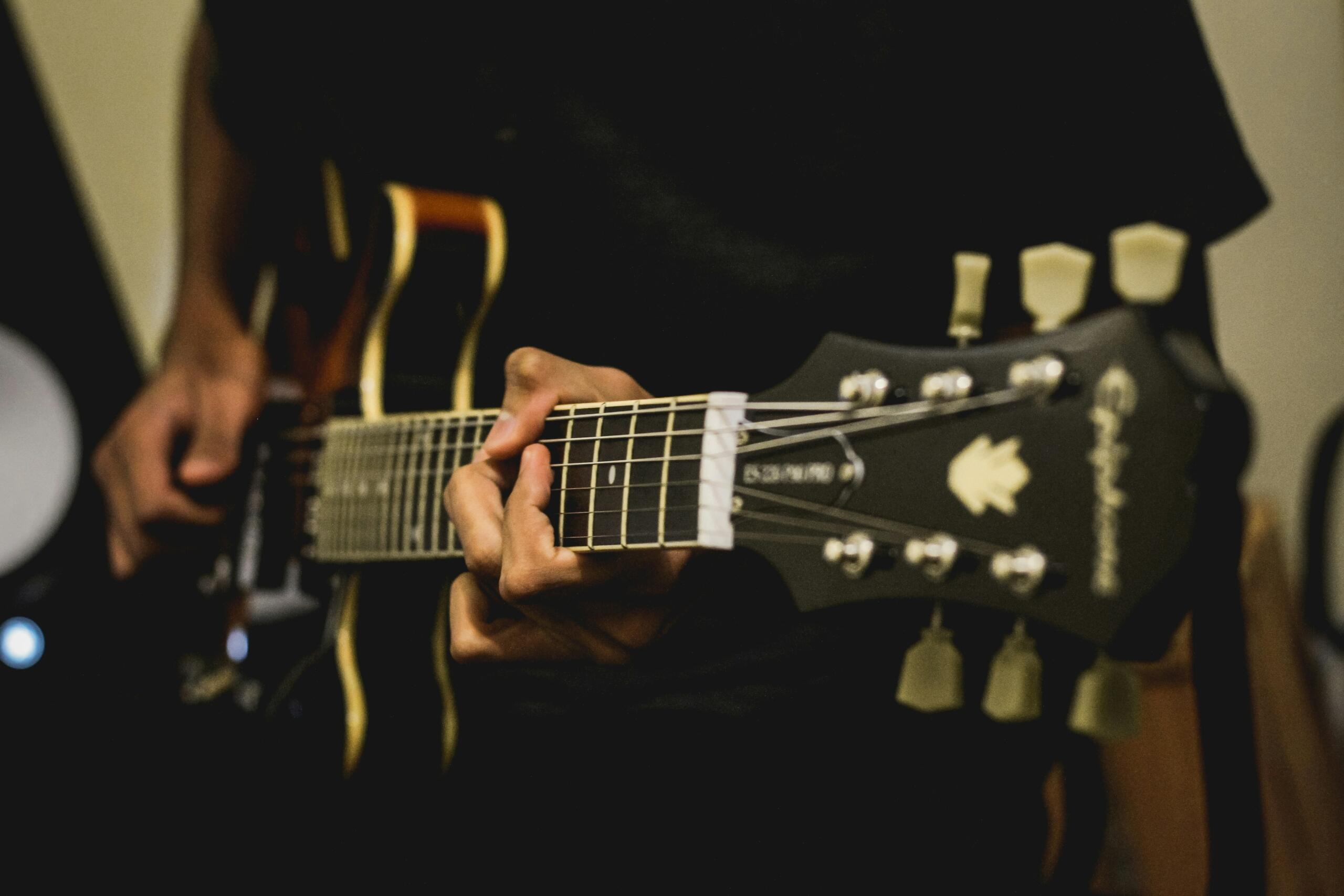
The Role of Guitar Chords in Defining Music Across Eras
Throughout history, guitar chords have shaped how music is written, performed and experienced. Each era introduced new ways of combining notes, altering tone and expressing emotion, which defined entire genres and musical movements. Below is a look at how chords evolved and influenced music across time.
1. The Foundation: Early Chord Structures (15th–17th Centuries)
- Early guitars and their ancestors, such as the vihuela and lute, used simple triads and open chords.
- Musicians often tuned their strings to form resonant intervals, producing fuller and more harmonious sounds.
- These early chords laid the groundwork for harmonic progressions that later became standard in Western music.
2. The Classical and Romantic Periods (18th–19th Centuries)
- Classical composers began incorporating complex chord progressions into compositions for guitar.
- Fernando Sor, Mauro Giuliani and Francisco Tárrega expanded the harmonic range of the instrument.
- The guitar became recognised as both a solo and accompaniment instrument, admired for its melodic richness and expressive tone.
3. The Birth of Modern Harmony (Early 20th Century)
- The transition from classical to popular music saw the guitar move into folk, country and blues traditions.
- Musicians experimented with seventh chords, minor variations and suspended voicings to evoke emotion and tension.
- This period marked the blending of classical technique with contemporary rhythm and storytelling.
4. The Rock and Jazz Revolution (Mid–20th Century)
- The arrival of the electric guitar transformed how chords were played and perceived.
- Power chords became the foundation of rock music, delivering raw energy and drive.
- Jazz guitarists such as Wes Montgomery and Django Reinhardt introduced complex chord extensions and improvisational techniques.
- This era showcased the guitar as both a rhythm and lead instrument, shaping the sound of global popular music.
5. The Modern Age (Late 20th Century–Today)
- Musicians now explore alternative tunings, barre chords and digital effects to create new textures and styles.
- Genres like indie, progressive rock, and neo-soul use unique chord voicings to build atmospheric and layered compositions.
- Technology, including digital modelling and recording tools, allows artists to reinvent traditional chords and experiment with tone.
6. The Enduring Power of Chords
- Chords remain the language of emotion in music.
- Whether a soft acoustic ballad or a roaring electric solo, the structure of chords continues to define mood, movement and style.
- Across centuries, the guitar’s harmonic voice has evolved, but its essence remains the same — an instrument capable of expressing the full spectrum of human feeling. For many modern players, that same passion has also opened doors to creative careers.
Discover how skilled guitarists can turn their talent into income and continue the legacy of making music both meaningful and rewarding.
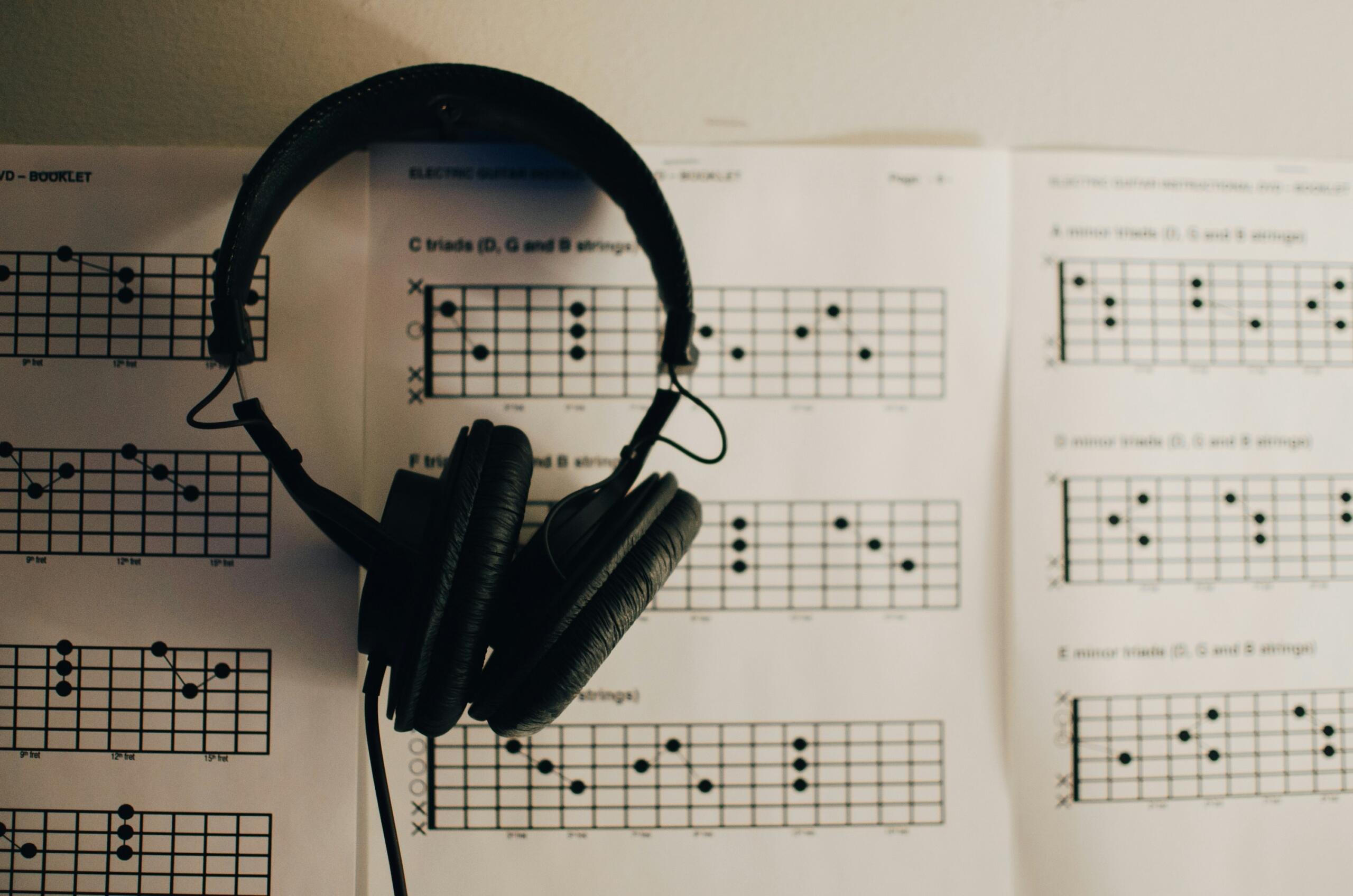
The Evolution of Basic Guitar Chords: From Simple Notes to Complex Sound
The journey of basic guitar chords mirrors the transformation of the instrument itself, moving from simple rhythmic structures to harmonically rich and expressive arrangements. Over time, musicians discovered new ways to shape sound, expand tonal possibilities and redefine what it means to play the guitar.
1. The Birth of Simplicity
- Early players relied on open chords, formed using a mix of fretted and unfretted strings.
- These chords were valued for their resonance and clarity, providing a strong foundation for folk and early dance music.
- Simplicity was essential, as the focus was on melody and rhythm rather than complex harmonic movement.
2. The Introduction of Barre Chords
- As musical compositions became more demanding, players sought ways to change key efficiently.
- Barre chords emerged, allowing guitarists to shift the same chord shape across the fretboard.
- This development transformed the guitar into a more versatile and transposable instrument.
3. The Expansion of Harmonic Colour
- With the rise of classical and jazz influences, musicians began experimenting with minor sevenths, ninths, and diminished chords.
- These additions introduced depth and emotion, helping songs convey feelings of tension, longing and resolution.
- The use of inversions and partial chords also grew, giving players more expressive control.
4. The Electric Era and Creative Voicing
- Amplification in the twentieth century gave chords a new dimension.
- Artists started to focus on voicing — the arrangement of notes within a chord — to achieve distinct tonal identities.
- Power chords became central to rock music, while jazz and funk musicians explored syncopated, rhythm-driven patterns.
5. The Digital Generation
- Modern musicians now experiment with alternate tunings, open string drones and effects pedals to craft unique chord textures.
- Software and recording tools allow players to layer sounds and explore harmonics in innovative ways.
- The evolution of chord structures continues, blending traditional techniques with cutting-edge technology.
6. Beyond Theory: Emotion and Expression
- Today’s players understand that chords are more than combinations of notes; they are the emotional core of music.
- Whether soft and melodic or bold and distorted, every chord carries its own personality and purpose.
- The progression from simple open chords to intricate voicings reflects not only musical growth but also humanity’s evolving relationship with sound.
Conclusion
From ancient strings carved in distant lands to the resonant melodies that echo across today’s stages, the guitar’s journey is one of harmony, craftsmanship and timeless beauty. Each century added its own voice to the instrument’s song, shaping its form, refining its sound and deepening its emotional reach.
Beyond its structure and evolution, the guitar has always been a vessel of expression. It has whispered lullabies, cried out in protest and sung the language of love and hope. Its chords carry the stories of those who played before us, reminding us that music is a bridge between history and the human heart.
To hold a guitar is to hold a piece of that shared legacy, the rhythm of centuries resting gently beneath the fingertips. In its quiet strum lies the echo of everything it has been, and the promise of all it will still become. There’s an undeniable allure to its sound, a charm that transcends time. Discover why guitar music is often considered one of the most impressive and expressive forms of art.
Summarise with AI:
Did you like this article? Leave a rating!

 Loading...