
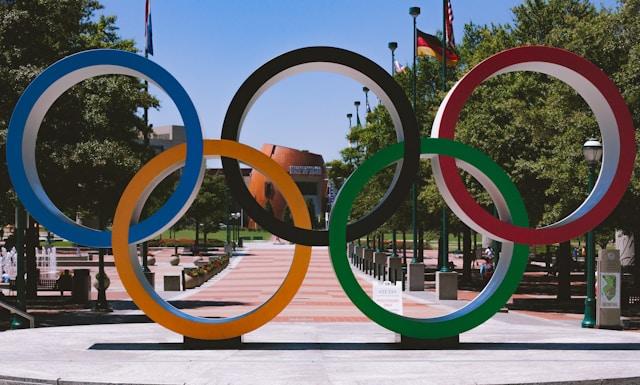

There are a few images that come to mind when we talk about the Olympics.
The Olympic rings which represent the five continents, the Olympic torch, and of course, the Olympic medals.
Every four years, this mega-scale event keeps sports fans across the globe on their toes.
For athletes, however, it's a different story. It's a nerve-wracking event where their greatest dreams stand a chance to come true. Be it for personal or national glory.
In this article, we will look at several important milestones that shaped the Olympic Games into this significant global sports event that we all know today.


Where It All Started: Ancient Olympics in Greece
Have you ever wondered how the name of the Olympics came about?
It was named after the city of Olympia in Greece where the first Ancient Olympic was held (around 776 BC) while the city of Olympia got its name from Mount Olympus, the highest mountain in Greece.
Back then, the Olympics was highly regarded as both a sports and religious event (that took place every four years) featuring several city representatives from the city of Ancient Greece. The city was chosen because Olympia was believed to be the sanctuary of Zeus, the sky and thunder God in Greek mythology.
Some examples of the competition events that were deemed to be displayed include:
- Wrestling
- Boxing
- Running
- Pankration
- Equestrian
- Pentathlon
The significance and influence of the Ancient Olympics slowly diminished after a few centuries when Rome rose to power and began its dominance in Greece. During that period, Rome was the hub of Christianity and the rulers decided to ban pagan-related activities, including the Ancient Olympics.
Greece however returned to host the Summer Athens Olympics in 2004.
In the meantime, reflect on some of the important events that happened during the Olympics.
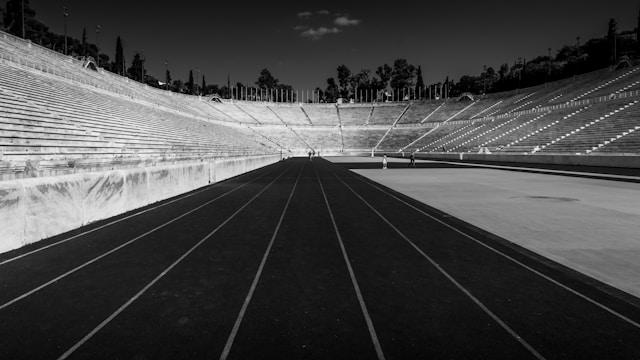
Photo by Chris Karidis on Unsplash
Who Reintroduced The Event: The Birth of Modern Olympics
It's been a long journey coming as we are about to witness the 2024 Summer Olympics in Paris soon.
Coincidentally, it was a Paris aristocrat, Pierre de Coubertin who advanced the initiative to revive the Olympic Games during the late 18th century. Talk about a bizarre French connection, eh?
Coubertin was interested in two things: history and education. Influenced by ancient Greek history and the significance of physical education, he spent many years developing the philosophies of the modern Olympics and also meeting with different congresses to lead a commission on reviving the Olympics. He was also the person behind the design of the Olympic rings, which remains a significant symbol of the modern Olympic movement.
Together with Demetrios Vikelas, a Greek businessman, they went on to be founders of the International Olympic Committee (IOC) in 1894. Vikelas was the first president of the IOC.
Through this committee, they decided that the first modern Olympics — the 1896 Summer Olympics would be held in Athens, followed by the 1900 Summer Olympics in Paris, bringing back the tradition of organising the games every four years.
With regards to the first modern Olympics in 1896, it was relatively a small affair as compared to the mega-scale that we are accustomed to in the present day. In terms of participation, 14 nations joined including the United States of America. While it was considered a successful global sports event at that time, it had several limitations.
Firstly, there were only nine contested events:
- Wrestling
- Weightlifting
- Tennis
- Athletics
- Gymnastics
- Shooting
- Swimming
- Fencing
- Cycling
Secondly, women were not eligible to participate in the 1896 Olympics. Thirdly, all the participating nations were from Europe except the USA.
As a result, the second modern Olympics in 1900 was more organised and more inclusive. Women athletes get to participate for the first time, the number of contested events grew from 9 to 19 events, and a total of 26 nations sent out their contingent to participate in this round, according to records of the IOC.
The 26 nations that participated were:
- France (host)
- Great Britain
- Greece
- Haiti
- Hungary
- Netherlands
- Norway
- Peru
- Romania
- Russian Empire
- Argentina
- Australia
- Austria
- Spain
- Sweden
- Switzerland
- United States
- Belgium
- Bohemia
- Cuba
- Denmark
- Germany
- Italy
- Mexico
- India
- Iran
Malaysia (Malaya at that time) first joined the modern Olympics in 1956. Recap some key highlights of Malaysia's participation in the previous Olympic Games.
Why Are There Two Olympics: The Introduction of Winter Olympics Games
After the success of the Summer Olympics Games, the IOC decided to expand the sports list to include more snow and ice events.
Initially, several ice-related sports like ice hockey and figure skating were organised together with the Summer Olympics.
The first Winter Olympics was the 1924 Olympics, held in Chamonix, France. A total of 16 nations participated — sending more than 250 athletes to compete in 9 major disciplines:
- Ski jumping
- Cross-country skiing
- Bobsleigh
- Curling
- Ice hockey
- Figure skating
- Speed skating
- Nordic combined
- Military patrol (Part of Nordic skiing)
Previously, the tradition of organising the Winter Olympic Games was to have it the same year as the Summer Olympic Games.
However, this practice has since changed after the 1992 Winter Olympics in Albertville, France. After that, the Winter Olympics was held two years after the Summer Olympics.
The upcoming 2026 Winter Olympics will be held in Italy, more specifically in two cities: Milan and Cortina d'Ampezzo.
According to the latest data released by the IOC, athletes will now compete in the following 16 disciplines:
- Ice hockey
- Freestyle skiing
- Figure skating
- Curling
- Luge
- Bobsleigh
- Biathlon
- Alpine skiing
- Speed skating
- Snowboarding
- Nordic combined
- Short track speed skating
- Skeleton
- Ski jumping
- Snowboarding
- Ski mountaineering
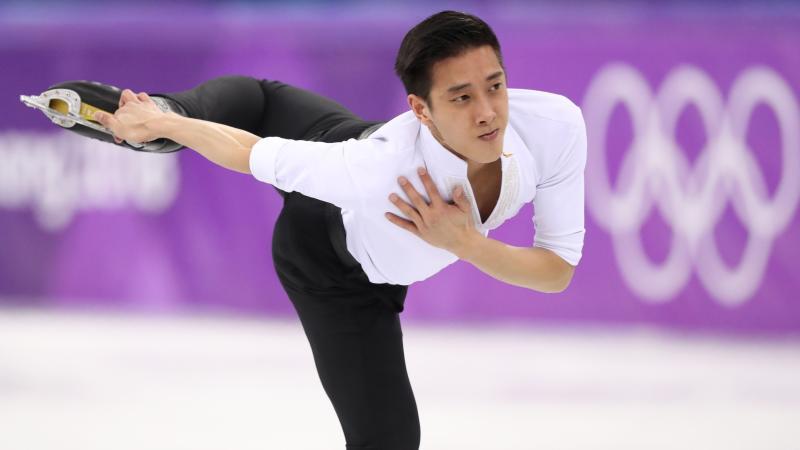
Malaysia's first appearance in the Winter Olympics was in 2018. Two athletes participated in two sports events.
Jeffrey Webb became the first Malaysian to qualify for the alpine skiing event (slalom) whereas Julian Yee became the first Malaysian to qualify for the men's singles figure skating.
In the meantime, let's review some of the Malaysian Olympic medal winners throughout the years.
Source: The Star Online
Which Countries Will Host: The Role of the International Olympic Committee (IOC)
We have mentioned several host cities for different Summer Olympics and Winter Olympics Games.
Now, let's dive deep into the decision-making journey, more specifically the role of the IOC in facilitating the right selection for host cities.
Under the IOC, there will be two Future Host Commissions for both the Summer and the Winter Games.
The IOC will facilitate an informal exchange with different National Olympic Commissions (NOC) from different countries/cities to see which countries are interested in being the host.
If the exchange goes on smoothly, the respective NOC can then progress to a non-committal Continuous Dialogue with the IOC. At this stage, the discussions remain flexible, and research-focused without any financial commitment — the main goal is to determine if it's feasible to host.
After this stage, the interested hosts will enter a targeted dialogue where deeper consultations will be conducted in terms of public opinion, overall cost and expenditure as well as potential environmental impact.
During this process, each interested host has to respond to the Future Host Questionnaire and provide substantial proof of support and guarantees (credibility).
The Executive Board (under IOC) will then call for an election, where every interested host will give a final presentation to the IOC followed by a secret ballot voting. The elected host will then sign an Olympic Host Contract with the IOC.
At this point of writing, there are 106 IOC members. Each member has one vote however they should refrain from voting if they are a national from one of the host countries that is bidding. Currently, there is one IOC member from Malaysia — Oscar-winning actress, Michelle Yeoh.
Here are some of the main requirements/elements that are taken into consideration when choosing an Olympic host:
- Sports event experience, accommodation capacity, transport infrastructure, and safety and security
- Geopolitical, socio-economic, human development and environmental factors
- Vision and venue masterplan
- Envisaged sustainability and legacy impacts
- Political and public support
- Funding strategy
- Alignment with existing long-term development plans
How Has The Olympics Stay Relevant: The Addition and Revision of New Sports
The IOC wears many hats. Choosing the host city is just one of their many many key responsibilities.
Under the IOC, the Olympic Programme Commission (OPC) and Executive Board (EB) also oversee and support the proposal of new sports inclusion/ revision for different Olympics, whether it's to make the Games more popular, more manageable in terms of numbers of athletes and provided facilities.
In the previous Tokyo 2020 Summer Olympics, the organising committee proposed the inclusion of five new sports: baseball/softball, karate, surfing, sports climbing, and skateboarding.
While some sports might make their respective debuts, some sports might be reintroduced in different Olympic Games by different organising committees of the Olympic Games.
In the upcoming Paris 2024 Summer Olympics, break dancing (breaking) will be included for the first time as a medal sports event. However, it will not return for the Los Angeles 2028 Summer Olympics.
For the Los Angeles 2028 Summer Olympics, their organising committee has proposed five sports: cricket, lacrosse, baseball/softball, flag football and squash. Malaysia squash fans can certainly look forward to watching the first-ever Olympic squash tournament on screen soon.
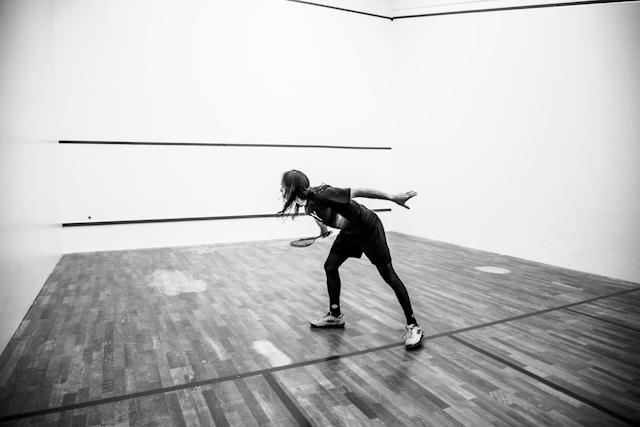
Photo by Sven Mieke on Unsplash
Having said that, if you are interested in picking up a new sport, you can always find an experienced tutor at Superprof.
At Superprof, you can find many sports tutors with different qualifications and teaching experience. Most importantly, you can review their basic information, at one glance via their tutoring profiles in just a few clicks. You can learn about their teaching methodology, current physical location, and hourly rates before making the final pick.
Whether it's athletics, aquatics, or even winter sports, Superprof's got you covered for the best sports learning experience.
We hope this article has offered you some great insights into the rich history of Olympics and its relevance to us today. It won't be too long until the next Olympics, so don't forget to cheer and root for our fellow 2024 Malaysian Olympics contingent in Paris!
Summarise with AI:
Did you like this article? Leave a rating!

 Loading...
