


What are the top three keywords that come to your mind when we talk about Japan?
The answers from you and another reader could be similar or greatly different, depending on the accumulated exposure, personal experience and general impressions that you have towards Japan.
The previous generation (especially our parents) would probably talk about the Japanese economy and technology.
Their top three keywords could sound something like this: Toyota, Sony and Canon.
For the younger generation, it's all about Japanese culture.
For instance, an avid anime fan would talk about their favourite Japanese anime adaptations while a foodie would talk about their favourite Japanese dish.
In this article, we will look at various Japanese cultural exports and why they still remain so popular today.




The Content Tower of Japan— Adaptations of Manga and Anime
If you have ever been to Japan, you might have seen one of the most iconic tall building structures in Tokyo aka the Tokyo Tower.
For those of us who have yet to have that opportunity, we would have probably experienced or "visited" Japan in the context of its rich content tower.
How many of us first learnt a Japanese song by heart through the opening song of an anime?
How many of us had our first Japanese celebrity crush when we watched a Japanese series?
And how many of us picked up random Japanese phrases as we watched them?
Let's dive deep into the world of manga and anime adaptations.
1. Shojo Manga (少女漫画)
One of the most popular manga genres is none other than shojo manga, in which the targeted audience is mainly adolescent females and young female adults.
The content usually revolves around interpersonal relationships — family, friendship, and romantic relationships, usually from the perspective of a female.
Some famous examples of shojo manga adaptations include:
- Boys Over Flowers which is known as Hana Yori Dango [ 花より男子] in Japanese.
The OGs would have read the manga before watching the adaptations.
Among the most famous TV adaptations include the Taiwanese adaptation that came out in 2001 (Meteor Garden- 流星花园) staring Jerry Yan, followed by the Japanese series adaptation in 2005 starring Jun Matsumoto and the 2009 Korean series adaptation starring Lee Min Ho.
The original mango plot centres around the middle-class female lead, Tsukushi Makino who finds herself in a whole new environment where she meets F4, four male students from the wealthiest family in Japan.
It's a typical enemy turn lovers trope where she encounters the leader of F4, Tsukasa Domyoji.

- Playful Kiss which is known as Itazura na Kiss [イタズラなKiss] in Japanese
This is another fan favourite among manga lovers with several TV adaptations.
Itazura na Kiss depicts the story of how a clumsy yet cute student Kotoko Aihara passionately pursues her love for top student, Naoki Irie despite being rejected initially.
The recent Japanese series adaptation in 2013 starring Yuki Furukawa and Honoka Yahagi was a global hit.
2. Shonen Manga (少年漫画)
A total opposite of Shojo Manga, Shonen Manga mostly targets the male audience and is in fact, the most popular manga genre in the Japanese market.
The plot of a Shonen Manga usually has many action-packed adventures with some elements of fighting and battles.
Two of the most well-known Shonen Manga examples include:
- Slam Dunk
To many millennial guys and girls (like Yours Truly), the theme song of Slam Dunk still gives us goosebumps. It was and still is, a legendary sports manga and anime that caused a basketball frenzy worldwide.
- One Piece
Known as one of the Big Four of Shonen Manga (alongside Naruto, Bleach and Dragon Ball), One Piece is a classic among anime lovers.
This manga describes the adventure of Monkey D. Luffy and his crew known as the Straw Hat Pirates in their quest to search for One Piece to become the King of Pirates.
3. Studio Ghibli feature films
There's always been a great divide in the world of animation. There are Disney fans, Pixar fans, and then there's Studio Ghibli fans.
Studio Ghibli feature films are incredibly captivating in terms of cinematography and imagination, rich in emotional depth with lovable characters.
Notable examples include:
- Howl's Moving Castle (The OST by Joe Hisaishi is simply iconic!)
- The Wind Rises
- Spirited Away
- My Neighbour Totoro
The latest feature film by Studio Ghibli, The Boy and the Heron (directed by the legendary Hayao Miyazaki) is officially released in July this year.
Turn The Music On — J-pop Hits
We can't talk about Japanese culture without talking about J-pop.
Long before the Hallyu and K-pop wave swept across Asia, there was J-pop.
Here are some examples of the J-pop genre that are popular:
Songs from Boy Bands
Trust us, the boy band phenomenon is as real in Japan as it is in the West.
Popular Japanese boybands like Arashi, SMAP, and Exile have gained a wide fandom over the years. The styles of the song can range from dance hits to sweet pop, R&B and others.
Some popular J-pop hits from boy bands include:
- Sekai ni Hitotsu Dake no Hana (The One and Only Flower in the World) by SMAP
- Love So Sweet by Arashi
- Michi by EXILE
Ballads
There's just something so enchanting and emotional about ballads, and Japanese singers do them justice!
We guarantee you have heard the following ballads in many series and movie adaptations, and also different translated editions across the globe too.
You should certainly check them out:
- Yuki no Hana (Snow Flowers) by Mika Nakashima
- Mirai e (To The Future) by Kiroro
- Nada Sōsō (Great Tears Are Spilling) by Ryoko Moriyama
If you are a foodie, continue reading to learn more about Japanese cuisine.
It's More Than Just Sushi — Discovering Japanese Cuisine
Talking about sushi is just scratching the surface when you want to explore the world of Japanese cuisine.
We got you covered in the following categories should you plan to indulge in a Japanese feast one day!
Street Food
- Takoyaki
Originating from Osaka, it's a street food that's round in shape. The main ingredients of the batter include tako (diced octopus), green onions, tempura scraps, and others.
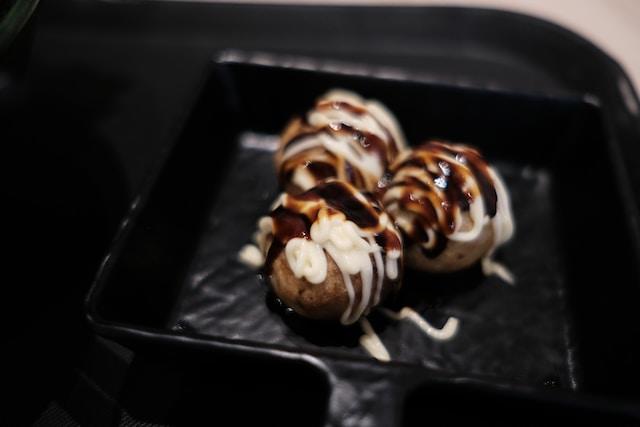
Photo by Capture @Moments on Unsplash
- Okonomiyaki
Known as the Japanese pancake, Okonomiyaki can be cooked with different toppings and seasonings according to different preferences. The usual batter consists of vegetables, sliced pork, seafood and a special sauce.
Dessert
Those with a sweet tooth should pay attention to this.
- Dango
Frequently eaten as a snack with green tea, dango is shaped like a dumpling and usually has a few fillings such as matcha, red bean and other soy flavour.
- Taiyaki
This dessert is a hit during cold weather because it has a warm red bean filling (original). Taiyaki is shaped like a fish bun and you can request other filling like chocolate, custard and even cheese.
Noodles
- Soba
Soba noodles are made from buckwheat flour and it has a thin texture. This dish is usually served hot or cold, or accompanied by a special sauce.
- Udon
Made from wheat flour, udon has a thicker and chewier structure. It is usually served with hot broth, but it can also stir-fried or cooked together with curry.
How Can You Dive Deep Into Japanese Culture In Malaysia?
Now that you have reviewed different Japanese cultural exports, it's time to put them into real practice.
Here are three tips to immerse yourself in Japanese culture without going to Japan.
Tip 1: Join a local Japanese society in a school/learning institution
If you are still studying, you can join a Japanese cultural society at your school or university.
There are many activities that you can even organise with your fellow members such as Japanese singing competitions, Japanese cosplay fashion shows, Japanese anime painting and many more.
Tip 2: Join activities that are organised by the Embassy of Japan
For those who plan to study or work in Japan one day, you should always be on the lookout for any announcements by the Embassy of Japan.
Some of the events that were organised in the past include Japanese speech contest, Tanka poem writing competition, Japanese scholarship seminars and many more.
Tip 3: Be part of a Japanese culture fandom (common passion)
Nothing beats the feeling of being with a group of like-minded individuals that share your passion for Japanese culture!
Whether it is through an online community or a monthly gathering of cosplay lovers, for instance, you can always find ways to immerse yourself in Japanese culture!

Photo by Barry on Unsplash
Master Japanese Language And Japanese Culture With Superprof
For your love towards Japanese culture to come full circle, you do need a certain proficiency in the Japanese language.
That said, Superprof can make your dreams come true!
In just a few clicks, you can find a private tutor that can offer you personalised and flexible Japanese lessons, no matter which city you are from.
Prefer an online tutor who previously studied in Japan? You can find one via Superprof.
Based on your preferences in terms of qualification, experience, hourly rates and teaching modes, Superprof will direct you to a wide selection of tutors' profiles for you to choose from.
Once you have reviewed the basic information on the tutor's profile, you can proceed to contact the tutor and discuss about your lesson arrangements.
Instead of giving you three keywords, we're leaving you with this sentence to motivate you in this journey.
Anata nara yareru!
あなたならやれる
You can do it!
Summarise with AI:
Did you like this article? Leave a rating!

 Loading...
