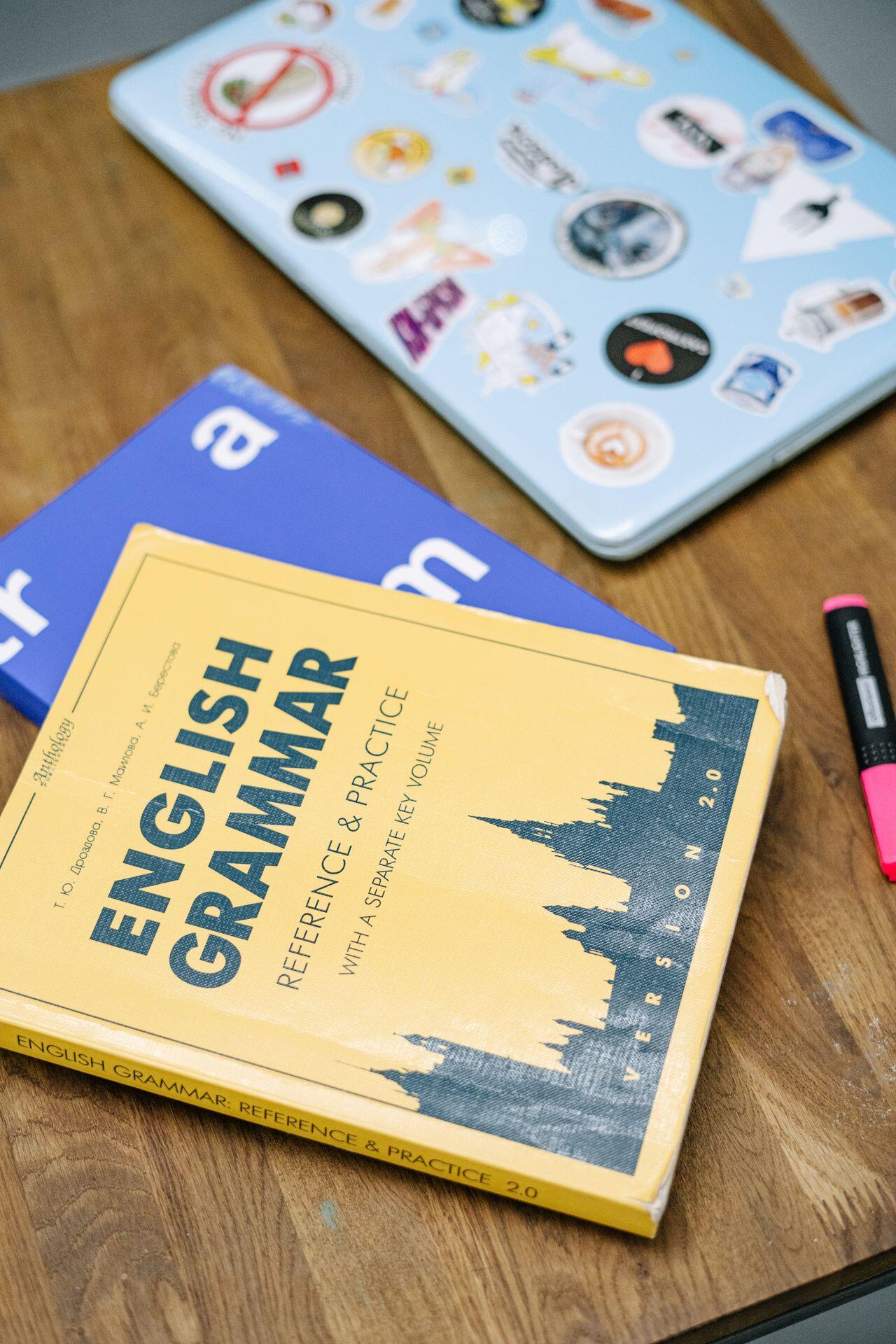

Is IGCSE harder than other secondary school programmes? This is one of the most common questions parents and students ask when considering the qualification.
The answer, however, depends on several factors, including the subjects chosen, a student’s learning style, preparation habits and the support available throughout the learning journey.
Although IGCSE is academically challenging, it is designed to help students build critical thinking, problem-solving and independent learning skills that prepare them for further education.
In this guide, we'll answer the question "Is IGCSE hard?" We'll also explore the hardest and easiest IGCSE subjects, practical IGCSE study tips, and how students can score good marks through effective preparation.
| Question | Quick Answer |
|---|---|
| Is IGCSE hard? | IGCSE is academically challenging, but it is designed to be manageable with consistent revision, effective study habits and the right support. |
| What makes IGCSE difficult? | Subject choices, time management, exam techniques and understanding concepts instead of memorising facts. |
| Which are the hardest IGCSE subjects? | Many students find Additional Mathematics, IGCSE Maths, Chemistry and Physics the most challenging because they require strong analytical and problem-solving skills. |
| Which are the easiest IGCSE subjects? | There is no universal answer. A subject feels easier when it matches your strengths, interests and learning style. |
| How can students score well? | Start revising early, practise with past papers, review mark schemes, track mistakes and maintain healthy study habits. |


🔎What Makes IGCSE Challenging?
Although many students ask, "Is IGCSE hard?", the qualification is designed to challenge students in a way that develops critical thinking, problem-solving and independent learning skills rather than simply testing memorisation1.
Several features make IGCSE different from other national secondary school programmes:
- Some Cambridge IGCSE subjects offer Core and Extended examination tiers, allowing schools to place students in the option that best matches their academic ability.
- Examinations are assessed using international marking standards, with examiners awarding marks based on students' understanding, application of knowledge and exam technique.
- Schools can offer a wide range of subject combinations, allowing students to tailor their studies according to their interests, strengths and future education goals.
- IGCSE is widely recognised internationally, making it a common pathway to qualifications such as A Levels, the International Baccalaureate (IB) and Australian pre-university programmes.
- Cambridge IGCSE examinations are held twice a year (May/June and October/November), providing flexibility for schools and private candidates.

💎What Makes IGCSE Feel Challenging?
Application over memorisation
Students cannot rely on memorising facts alone to succeed in IGCSE. While understanding key information is important, many subjects require students to apply their knowledge to different types of questions, explain concepts clearly and solve problems using appropriate methods.
Understanding How Marks Are Awarded
Knowing the content is only one part of it. Students also need to understand how examiners award marks and what is expected in their answers. Mark schemes highlight the key points examiners look for, such as correct terminology, logical explanations, appropriate working steps and relevant examples in the exam.
Managing a Large Amount of Content
Some subjects may feel challenging because students need to manage a broad syllabus while developing the ability to apply their knowledge. Subjects such as Sciences, English Literature, and Additional Mathematics can require consistent revision to strengthen understanding, practise skills, and prepare for different question styles.
🧗🏻♀️The Hardest IGCSE Subjects
Before we get into it, let us make this clear. There is no official ranking of the hardest IGCSE subjects. Even if there is a list online, it is not applicable to everyone, as every student has different strengths and interests.
However, subjects that require higher levels of analytical thinking, problem-solving, or extensive content are often perceived as more demanding.
Subjects Students Commonly Find Challenging
| Subject | Why students find it challenging |
|---|---|
| Mathematics (Extended) | Requires students to apply concepts, solve multi-step problems and adapt to unfamiliar question formats. |
| Additional Mathematics | Covers more advanced concepts and often requires students to combine multiple mathematical skills in one question. |
| Physics | Requires strong conceptual understanding, mathematical application and the ability to visualise abstract ideas. |
| Chemistry | Combines theoretical concepts, calculations and precise explanations of scientific processes. |
| Biology | Involves a broad syllabus with many processes, terminology and application-based questions. |
| English Literature | Requires students to analyse texts, interpret meanings and develop well-supported essay arguments. |
Rather than focusing on whether a subject is considered "hard" or comparing pass rates, students should consider whether it aligns with their interests, strengths and future academic goals. A challenging subject may still be the right choice if it supports a student's university pathway or career aspirations.
Difficulty is subjective. A student who enjoys solving mathematical problems may find IGCSE Maths more manageable, while another student may perform better in essay-based or creative subjects. Factors such as personal interest, teaching quality, revision habits and consistent practice can all influence how challenging a subject feels.
🧩Easiest IGCSE Subjects: Are They Really Easier?
Just like there is no official ranking of the hardest IGCSE subjects, there is also no single list of the easiest IGCSE subjects. A subject may feel easier depending on a student's strengths, interests and learning style.
Some students may find subjects with more familiar concepts, practical applications or less calculation-based assessments more manageable. However, this does not mean these subjects require less effort or preparation.
| Subject | Why Some Students Find It More Accessible |
|---|---|
| Business Studies | Uses real-world examples and concepts related to marketing, finance and decision-making, which some students find easier to understand and apply. |
| Information and Communication Technology (ICT) | Focuses on practical digital skills and applications, making it suitable for students who enjoy working with technology. |
| Art & Design | May be more enjoyable for students who prefer creative and practical work, although it still requires consistent effort to develop a portfolio. |
| English as a Second Language (ESL) | Students with a strong English foundation may find the subject more manageable as they are already familiar with reading, writing, listening and speaking skills. |
| Geography | Combines factual knowledge with real-world topics, data interpretation and case studies, which may appeal to students who enjoy understanding the world around them. |
However, students should not choose IGCSE subjects simply because they are considered “easy.” A subject that feels manageable for one student may be challenging for another. The best subject choices are those that match a student’s interests, strengths and future education goals.
📝IGCSE Study Tips to Stay Motivated and Avoid Burnout
Even students who enjoy learning can lose motivation. Balancing multiple subjects, revision and exams can feel overwhelming, especially when the exam is around the corner.
Fortunately, small and consistent habits often make a bigger difference than long hours of last-minute studying. The following study tips can help you stay motivated, build discipline and prepare for exams without burning yourself out.
Set Realistic Goals and Track Your Progress
One of the biggest mistakes students make is setting unrealistic revision targets. Planning to study six or seven hours every day may sound productive to some, but it is not sustainable to many in the long run.
Instead, use SMART goals that are:
- Specific – Complete one Maths topic instead of "study Maths."
- Measurable – Finish one past paper or 20 practice questions.
- Achievable – Plan around your school schedule.
- Relevant – Focus on weaker topics first.
- Time-bound – Complete the task within a set period.
Tracking your progress can also keep you motivated. Rather than measuring how motivated you feel, track actions you can control, such as:

- Did I complete today's revision session?
- Did I review my error log?
- Did I practise spaced repetition today?
- Did I finish my planned past paper?
Seeing your progress build over time can boost confidence and help you stay consistent.
Reward Yourself
Studying does not mean you need to sacrifice everything you enjoy.
After completing a revision goal, reward yourself with something small, such as watching an episode of your favourite show, taking a walk, or enjoying a favourite snack. It reinforces positive habits and makes studying feel less like a chore.
Use Different Revision Techniques
Combine different learning techniques depending on the topic you're studying. It can make revision more engaging and improve long-term retention.
Some effective revision methods include:
- Active recall by testing yourself instead of rereading notes.
- Spaced repetition to review topics over increasing intervals.
- Flashcards for definitions, formulas and vocabulary.
- Mind maps to connect related ideas visually.
- The Pomodoro Technique to maintain focus through short study sessions and regular breaks.
- Cornell Notes to organise information and summarise key concepts.
Using a combination of these techniques helps prevent boredom while strengthening your understanding across different subjects.
Recognise Burnout Before It Gets Worse
Feeling tired after a long day of studying is normal. However, prolonged stress and exhaustion can affect your ability to study effectively.
Some common warning signs include:
- Constant exhaustion despite getting enough sleep.
- Difficulty concentrating during revision.
- Losing motivation to study subjects you usually enjoy.
- Feeling anxious whenever you think about exams.
- Procrastinating because revision feels overwhelming.
If you notice these signs, take a step back and review your study routine. Regular breaks, enough sleep, physical activity and realistic expectations can improve both your well-being and academic performance.
Ask for Help When You Need It
If you’re struggling with a topic, speak to your parents or teachers to explore different support options, such as additional guidance or tuition.
Online tuition platforms like Superprof offer IGCSE subjects with tutors from different backgrounds, allowing students to find support that matches their learning needs.

🎯How to Score Good Marks in IGCSE
Scoring good marks is all about studying smarter, understanding how the exam works, and using revision techniques consistently.
Understand How Your Exams Are Assessed
Each exam board publishes a syllabus explaining what students need to know and how each paper is assessed.
It is also important to review grade boundaries and marking criteria. Understanding how marks are awarded allows you to focus your revision on the areas that carry the greatest weight2 and improve your exam technique.
Build a Revision Plan That Works
One of the best ways to reduce stress is to spread your revision over several months instead of trying to learn everything in the final few weeks before your exams.
Create a weekly timetable that includes every subject, but spend more time on topics you find difficult. Aim for short, focused study sessions instead of studying for long hours at once. Check your progress regularly and adjust your timetable when needed.
Use Past Papers Strategically
Working on past papers is one of the most effective ways to prepare for IGCSE examinations. They familiarise you with the format of each exam, improve your time management and expose you to commonly tested topics and question styles.
🤔Is IGCSE Hard? Yes, but it is Absolutely Manageable
So, is IGCSE hard? The answer is it can be challenging, but it is not impossible to manage with the right preparation. Similar to SPM and other secondary qualifications, IGCSE requires consistency, understanding of exam requirements and effective study techniques to achieve strong results.
For many students, the difficulty comes from managing multiple subjects, understanding unfamiliar question styles and maintaining consistency throughout the preparation period.
Remember, every student’s journey is different. What feels challenging today can become easier with practice, support and the right study approach.
It always seems impossible until it's done.
Nelson Mandela
References
- Cambridge. (n.d.-c). Cambridge IGCSE curriculum. https://www.cambridgeinternational.org/programmes-and-qualifications/cambridge-upper-secondary/cambridge-igcse/curriculum/
- Cambridge. (n.d.-i). Grade threshold tables for IGCSE. https://www.cambridgeinternational.org/programmes-and-qualifications/cambridge-upper-secondary/cambridge-igcse/grade-threshold-tables/
Summarise with AI:
Did you like this article? Leave a rating!

 Loading...