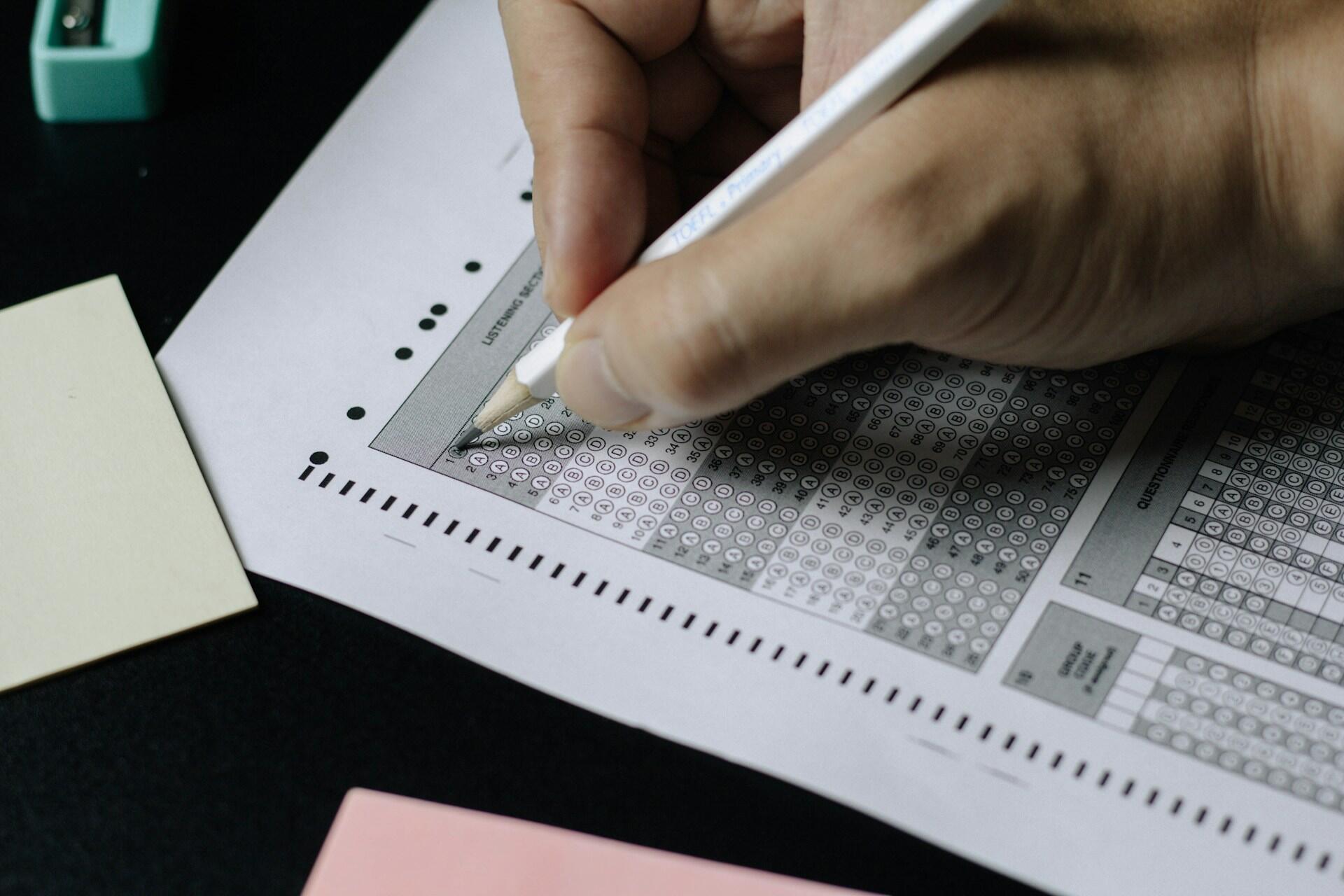

If you are preparing for SPM, Bahasa Melayu (Malay Language) is a subject to take seriously from the start.
Besides being a compulsory SPM subject, Bahasa Melayu is one of the two subjects you must pass to be awarded the full SPM certificate, alongside Sejarah. It also shapes which study options are open to you afterwards. If you plan to enter a public university, take up a foundation programme, or continue to Tingkatan Enam (Form 6), a pass in Bahasa Melayu is generally an important admission requirement.
In this guide, we'll break down the SPM Bahasa Melayu (1103) format in detail. We'll cover all four papers, what to expect in each section, how the marks and time are divided, and how to prepare more effectively. Here they are at a glance:
| Paper | Skill Assessed | Marks | Duration |
|---|---|---|---|
| Kertas 1 (1103/1) | Kemahiran Menulis (Writing) | 00 | 2 hours |
| Kertas 2 (1103/2) | Kemahiran Membaca (Reading) | 00 | 2 hours 30 minutes |
| Kertas 3 (1103/3) | Kemahiran Bertutur (Speaking) | 0 | 3 to 5 minutes (individual), 12 to 15 minutes (group) |
| Kertas 4 (1103/4) | Kemahiran Mendengar (Listening) | 0 | About 30 minutes |




SPM Bahasa Melayu (1103) Format
The SPM Bahasa Melayu (1103) exam1 is divided into four papers2, and each paper tests a different language skill.
Here's a straightforward guide to each paper, including its sections, marks, duration, and what you'll be assessed on.
Kertas 1: Penulisan (Writing)
| Format | Details |
|---|---|
| Paper code | 2 January 1900 |
| Skill assessed | Kemahiran Menulis (Writing Skills) |
| Components | Bahagian A: Karangan Berdasarkan Bahan Rangsangan (essay based on stimulus material). Bahagian B: Karangan Respons Terbuka (open-response essay) |
| Duration | 2 hours |
| Marks | 00 |
Kertas 1 tests your ability to express and develop ideas in writing. You need to complete both Bahagian A and Bahagian B (Section A and Section B) within the two-hour paper.
Bahagian A: Karangan Berdasarkan Bahan Rangsangan
In this section, you'll be given bahan rangsangan (stimulus material) alongside a question, and you need to use the material to help you answer it. This section is worth 30 marks, and your answer needs to be between 150 and 200 words.
The stimulus could be a poster, an advertisement, a graphic, a quotation, or another piece of written material. The question will tell you what to do with it. For example, you might be given a poster about reducing food waste and asked to suggest ways students can take part.
Bahagian B: Karangan Respons Terbuka
Bahagian B is worth 70 marks. You'll be given four essay questions and you'll need to choose one. Your answer should run to more than 350 words, and many teachers recommend working towards roughly 500 words so you have room to develop each point.
Read all four questions before choosing your prompt. You might understand more than one topic, but choose the question for which you'll be able to develop the strongest points. You can even jot down a few possible points beside each question before deciding.
How to Score Well in Karangan (Essay Writing)
In this section, you'll be judged on your ability to generate ideas, apply language creatively, and produce a complete, coherent piece of writing.
As you write:
- Make every point answer the question. Don't include a memorised point just because it happens to fit the general topic.
- Develop your points. After introducing an idea, explain why it matters, how it works, or what its effect is. Add a relevant example where it helps make the point clearer.
- Use penanda wacana (discourse markers). These show how your ideas connect, so don't start every paragraph the same way.
- Use ungkapan menarik (interesting expressions) sparingly. A suitable simpulan bahasa (idiomatic expression) or peribahasa (proverb) works well when it genuinely fits your point, but don't force one into every paragraph.
- Keep your introduction short. You have a limited word count, so get to the main point of your essay and end with a brief, relevant conclusion.
- Leave a few minutes to check your work. Look specifically for spelling, grammar, sentence structure, and words you've used incorrectly.
Don't confuse a long essay with a good essay. Stay within the word count and resist filling space by repeating the same point in different words. Examiners score you on content, language, and coherence, not on how many pages you hand in.
Kertas 2: Sistem dan Aplikasi Bahasa, Pemahaman & Rumusan
| Format | Details |
|---|---|
| Paper code | 2 January 1900 |
| Skill assessed | Kemahiran Membaca (Reading Skills) |
| Components | Bahagian A: Sistem dan Aplikasi Bahasa (Language Systems and Applications). Bahagian B: Pemahaman (Comprehension). Bahagian C: Rumusan (Summary) |
| Duration | 2 hours 30 minutes |
| Marks | 00 |
| Questions | 9 questions, answer all |
Kertas 2 has nine questions across three sections. Each section tests a different part of your ability to understand and use Bahasa Melayu.
Bahagian A: Sistem dan Aplikasi Bahasa
You'll answer five questions worth 35 marks. The suggested time for this section is about 45 minutes. The questions cover five areas of language knowledge:
- Morfologi (morphology)
- Sintaksis (syntax)
- Penyuntingan (editing)
- Bahasa Melayu Standard (standard Malay)
- Peribahasa (proverbs)
When revising this section, practise each area separately first. Once you're comfortable with them, mix the questions together so you have to identify the question type yourself. Your practice should include tasks like:
- Identifying or changing word forms for morfologi
- Identifying sentence structures for sintaksis
- Finding and correcting language errors in a passage
- Converting classical or old Malay into standard Malay
- Choosing a peribahasa that matches the meaning or situation given
By the end of your revision, you should be able to look at a question and identify the grammatical task you are being asked to do.
Bahagian B: Pemahaman (Comprehension)
Bahagian B is worth 35 marks and contains three questions. You'll work with:
- A general passage (petikan umum)
- A literary passage, which may be drawn from drama, cerpen, traditional prose, traditional poetry, or a sajak
- The novel component, based on your Form 4 and Form 5 texts
Questions may ask you to identify information, explain the meaning of a phrase, interpret an idea, make connections between pieces of information, or give an appropriate response based on the text.
For the novel component, make sure you know the prescribed Form 4 and Form 5 texts. Revise the themes, characters, important events, and values so you are ready for questions that ask you to apply what you've learnt to the novel.
Bahagian C: Rumusan (Summary)
Bahagian C is worth 30 marks, and the suggested time is about 45 minutes.
You'll be given the materials and asked to write a rumusan (summary) of no more than 120 words. You need to identify every fokus in the materials and set out the points the question asks for, usually around eight complete points. Content is worth 20 marks, while language is worth 10 marks.
A useful way to approach it is:
- Read all the materials carefully. Work through the passage and the accompanying graphic or poem before you write anything.
- Identify the tema (theme). This is the overall subject that ties the materials together.
- Find the fokus (focus) the question asks about. It might be causes, effects, benefits, or measures.
- Underline only the points that answer those focuses. Anything else is padding that eats into your word count.
- Sketch a quick rangka rumusan (summary outline). A short plan keeps your points in order and stops you repeating yourself.
- Put the points into your own words. Copying whole sentences from the passage costs you language marks.
- Check the final word count. Going past 120 words can cost you marks, so leave time to trim.
Need more help with rumusan? Read Superprof’s guide on how to write Malay summaries.
Kertas 3: Ujian Bertutur (Speaking Test
| Format | Details |
|---|---|
| Paper code | 2 January 1900 |
| Skill assessed | Kemahiran Bertutur (Speaking Skills) |
| Components | Bahagian A: Individu (Individual). Bahagian B: Kumpulan (Group) |
| Duration | 3 to 5 minutes (individual), 12 to 15 minutes (group) |
| Marks | 70 |
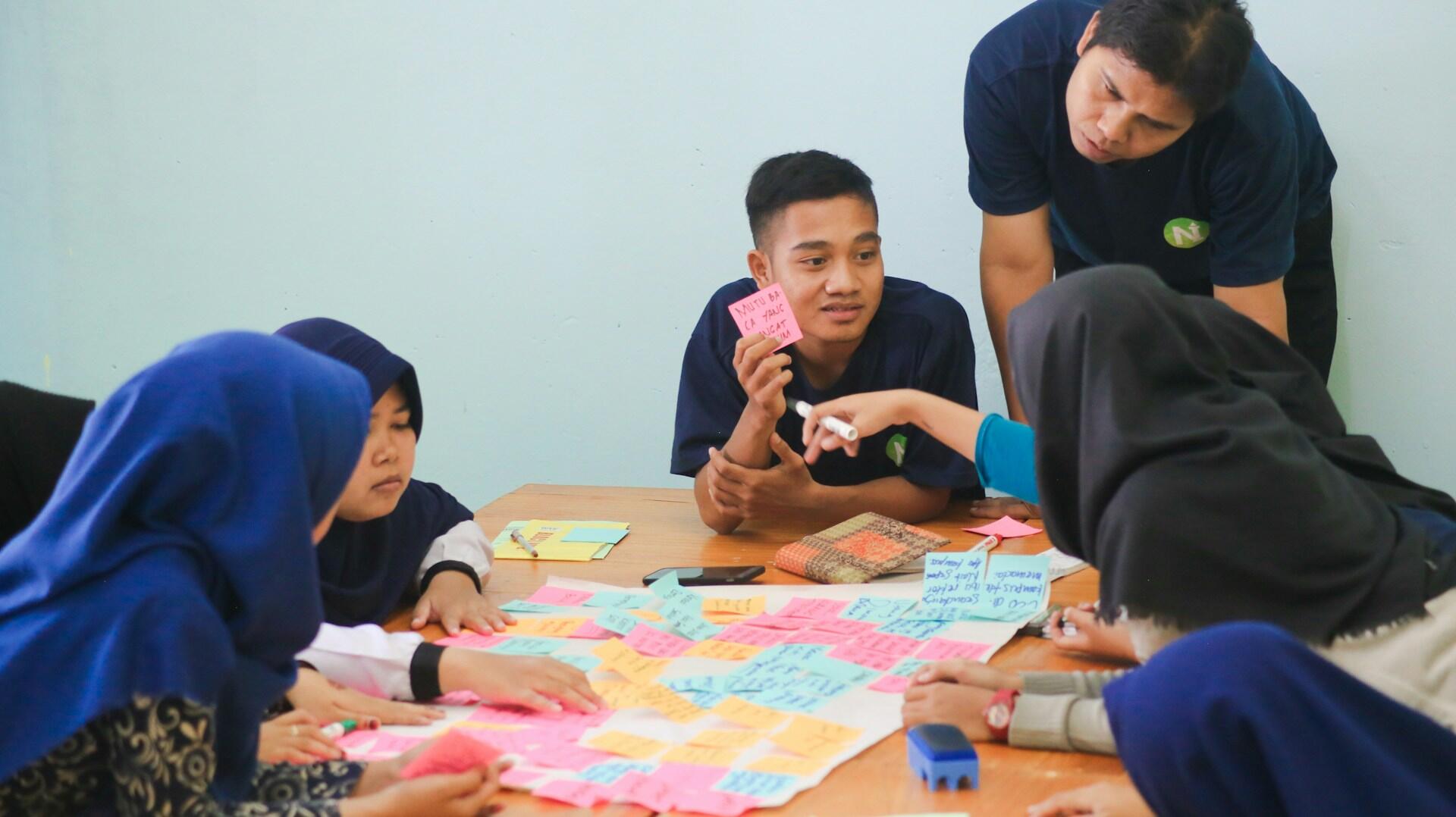
Kertas 3 is the Ujian Bertutur (Speaking Test), where you speak directly as part of two assessments: an individual task and a group discussion.
Bahagian A: Individu (Individual)
For this part, you'll be given one passage or piece of stimulus material. You'll read it aloud before having a question and answer session with the assessor. The individual assessment lasts 3 to 5 minutes and is worth 40 marks.
Your performance is assessed on:
- Tatabahasa dan kosa kata (grammar and vocabulary)
- Sebutan, intonasi dan nada (pronunciation, intonation, and tone)
- Fasih dan bertatasusila (fluency and courtesy)
- Idea dan bermakna (ideas and meaning)
For this section, you need to be comfortable reading aloud clearly and responding to questions about the material.
Bahagian B: Kumpulan (Group)
For Bahagian B, you'll join a group of three to five candidates. You'll be given a topic or theme for discussion, and you'll discuss it together for 12 to 15 minutes. This section carries 30 marks.
Rather than speaking on your own, you'll need to respond to the other candidates and contribute to the discussion. For example, you could agree with someone's point and add an example, disagree and explain why, or introduce another relevant point.
You'll still be assessed on grammar and vocabulary, pronunciation, intonation and tone, fluency, and ideas and meaning. Practise those elements rather than simply trying to speak the most.
Kertas 4: Ujian Mendengar (Listening Test)
| Format | Details |
|---|---|
| Paper code | 2 January 1900 |
| Skill assessed | Kemahiran Mendengar (Listening Skills) |
| Components | 4 to 6 listening passages, 20 to 25 questions |
| Duration | About 30 minutes |
| Marks | 30 |
Kertas 4 tests listening comprehension, not speaking. The paper contains 4 to 6 passages and 20 to 25 questions, and all questions must be answered.
It assesses memahami (understanding), mengaplikasi (applying), and menganalisis (analysing) information that you hear.

Practising the Way You Will Be Tested
Each recording is played twice, with a short checking period in between, and that structure is worth planning around. Your first listen is for grasping the passage as a whole and catching the answers you are confident about. Your second listen is for the gaps you deliberately left behind.
The habit that makes the biggest difference is listening to real spoken Bahasa Melayu without stopping. News bulletins, podcasts, and documentaries all work. Reading a transcript trains your eyes, not your ears, and Kertas 4 only tests the second one.
How to Approach Ujian Mendengar
- Read the questions before the recording starts. Work out what information you need to listen for.
- Look for keywords in the questions. If you're asked for a reason, don't spend your attention trying to remember every other detail.
- Concentrate on understanding the passage during the first listening. That is when most of your answers will come.
- Use the short checking period to fill in anything you missed. A few seconds of tidying up can rescue several marks.
- Listen for the answers you were unsure about during the second listening. You already know the passage, so you can target the gaps.
- Move on if you miss one answer. You will get another opportunity to hear the passage, and losing concentration over one question can cost you the next one too.
For revision, practise listening to Bahasa Melayu without pausing after every sentence. After listening, try to identify the main idea and a few specific details. That is much closer to what you'll need to do in the actual paper.
Bahasa jiwa bangsa.
Motto of Dewan Bahasa dan Pustaka, Malaysia’s national institute of language and literature
Written Papers vs Oral Papers: What Changes
The four papers do not reward the same habits. Seeing them in two groups makes it easier to plan your revision time.
Kertas 1 and Kertas 2 (Written)
- Worth 200 marks combined, the bulk of your grade
- Sat in the exam hall across 2 hours and 2 hours 30 minutes
- Rewards planning, structure, and accurate written grammar
- You set your own pace and can go back to check answers
- Best prepared through timed writing and past-paper practice
Kertas 3 and Kertas 4 (Oral)
- Worth 100 marks combined across speaking and listening
- Held separately from the written papers, usually earlier in the exam season
- Rewards clear pronunciation, fluency, and responding to other people
- The pace is set by the assessor or the recording, not by you
- Best prepared through speaking aloud and regular listening practice
Watch
SPM Bahasa Melayu Pre-Exam Checklist
Before exam day, make sure you can tick these off:
- I know the format and paper code for all four papers.
- I know the marks and duration for each paper.
- I have practised both sections of Kertas 1.
- I have revised all five Sistem dan Aplikasi Bahasa areas.
- I have revised my prescribed KOMSAS texts and the Form 4 and Form 5 novels.
- I can identify the fokus and the points needed for rumusan.
- I have practised individual speaking and group discussion.
- I have done listening practice using spoken Bahasa Melayu.
- I have completed timed practice for all four papers.
If you need some extra help cracking the SPM Bahasa Melayu paper, find a Bahasa Melayu tutor on Superprof and get started with your prep today!
References
- Lembaga Peperiksaan. (2020). SPM: Format pentaksiran Bahasa Melayu (kod 1103) Sijil Pelajaran Malaysia mulai 2021. Kementerian Pendidikan Malaysia. Retrieved 19 August 2026, from https://lp.moe.gov.my/index.php/makluman-spm/955-spm-format-pentaksiran-bahasa-melayu-kod-1103-sijil-pelajaran-malaysia-mulai-2021
- Lembaga Peperiksaan. (2020). Bahasa Melayu (kod: 1103): Kurikulum Standard Sekolah Menengah (KSSM), Sijil Pelajaran Malaysia mulai tahun 2021 [Buku format pentaksiran]. Kementerian Pendidikan Malaysia. Retrieved 19 August 2026, from https://lp.moe.gov.my/images/bahan/spm/2021/BukuFormatSPM2021/BAHASA%20MELAYU%20(1103).pdf
Summarise with AI:
Did you like this article? Leave a rating!

 Loading...