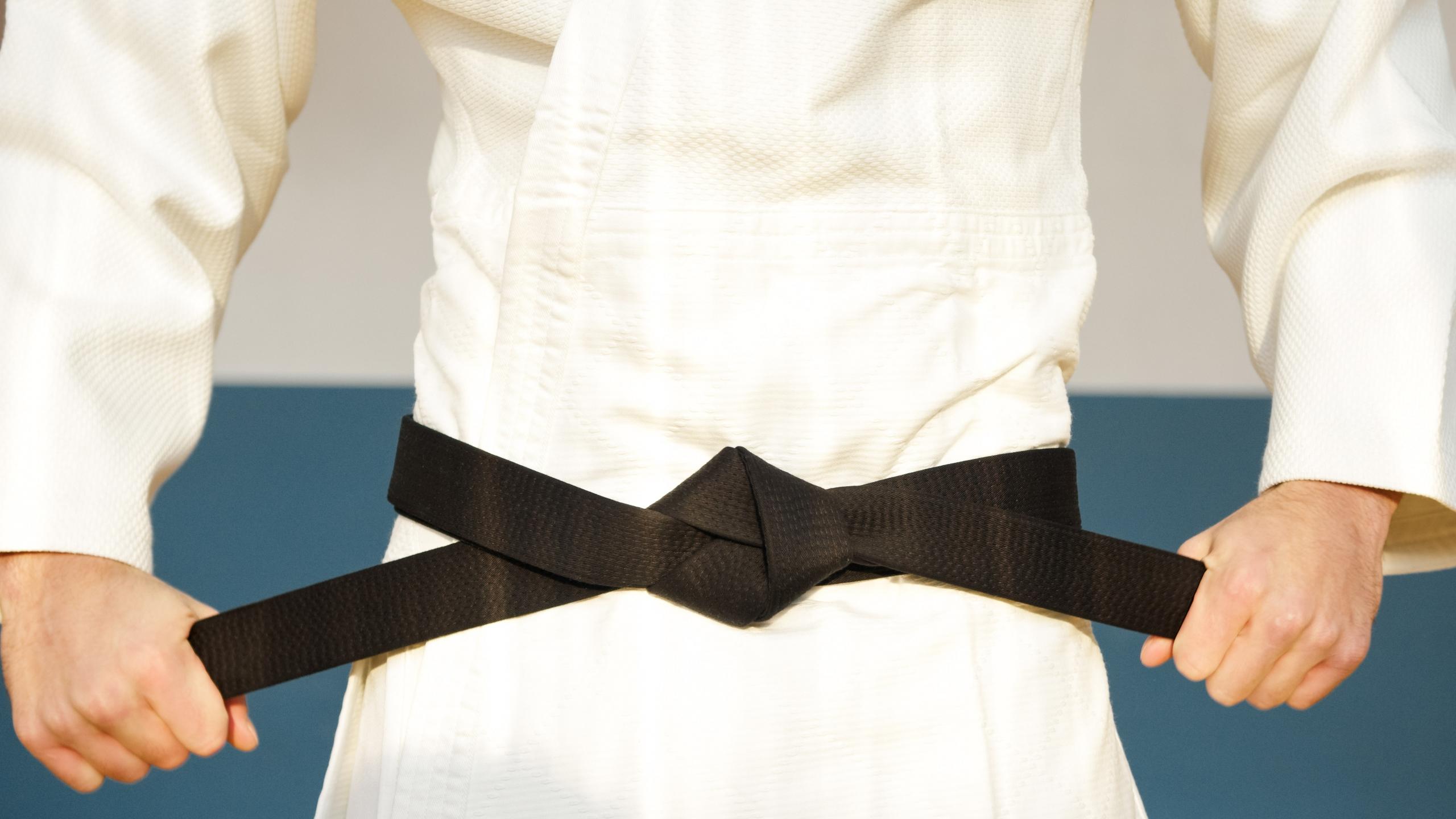

Did you know taekwondo belts do more than show colours? They represent learners’ progression in skills, discipline and knowledge. In taekwondo, the belt system serves as a visual roadmap of a practitioner’s journey, marking their progress from novice to expert.
Even if you have never set foot into a local Dojang, you are likely aware of the different belt colours or have heard others praising athletes for making it to the black belt level. What do all these various belt colours mean anyway, and how is it significant to taekwondo?
For a martial art that is relatively young in its history, it's amazing that taekwondo is one of the martial arts widely practised around the world today and also right here in Malaysia. If you’re thinking about taking your first steps into this dynamic sport, let’s explore what lies ahead, starting with the journey from your very first white belt.
Taekwondo Belts Ranking
- Progress in this sport reflects more than just achievement. Each stage represents a participant’s growth in skill, discipline, and understanding of the practice.
- The advancement system is divided into Geup and Dan stages. Beginner stages track learners from novice to advanced, while the highest stages indicate expertise and teaching capability.
- Most Malaysian schools follow the WT system.
- Progression requires time, training, and discipline. Moving up each taekwondo belt level involves mastering skills like poomsae, sparring, and breaking, along with consistent practice and commitment.


📈🥋The Evolution of Taekwondo Belt Colours
Origins of the Belt System
The early years of taekwondodidn't have any ranking system or belts that practitioners could earn.
It was actually the creator of judo, Kanō Jigorō, who introduced belts into the modern combat sports system. Kanō was inspired by Igo, a Japanese board game, when he created his belt system in the early 20th century.
At the start, only the colours white and black were used: they represented a practitioner who was in the process of learning the basics of judo. A black belt meant that the individual had mastered the basics and was ready to pursue an advanced level.
Other colours like blue and brown were later introduced into the system, and soon other martial art forms favoured the idea of being able to easily identify practitioners' level of mastery, alongside helping these learners progress in the sport. Following the evolution, standardised belts were introduced in South Korea around the middle of the 20th century, before spreading worldwide.
Standardisation Across Organisations
Today, several governing bodies regulate this sport worldwide. The two most influential organisations are:
- International Taekwon-Do Federation (ITF) - A separate taekwondo style with its own forms and grading system.
- World Taekwondo (WT) - Governs international sport competition (Olympics, world championships)
- Kukkiwon – The World Taekwondo Headquarters that standardises dan ranks, coaching certification, and technical curriculum for WT-style taekwondo.
Both the ITF and WT follow a similar progression of taekwondo belt orders from beginner to black-level rank. However, the exact colours, intermediate ranks, testing requirements, and forms may vary between organisations and schools. Despite these variations, the underlying philosophy, gradual development of skill, discipline, and character, remains consistent across organisations.
🌈🥋Taekwondo Belt Colours and Their Meanings
The coloured belts represent practitioners who are at the beginner to advanced phase of the sport. The colours of these junior-level ranks vary from organisation to organisation, as well as the requirements for advancing in this sport.
This article primarily focuses on the WT system, as it is used globally and recognised by the Olympics. In contrast, ITF uses the Chang Hon (tuls) forms, each named after Korean historical figures and designed to convey specific moral lessons. WT follows the Taegeuk series, emphasising yin-yang balance and elemental philosophy.
We're going to introduce some colours you may have seen if your institution is following the WT system, and not the ITF system. This is not an exhaustive list of items you should check off at each stage, but it should give you an idea of the level of skill that is expected!
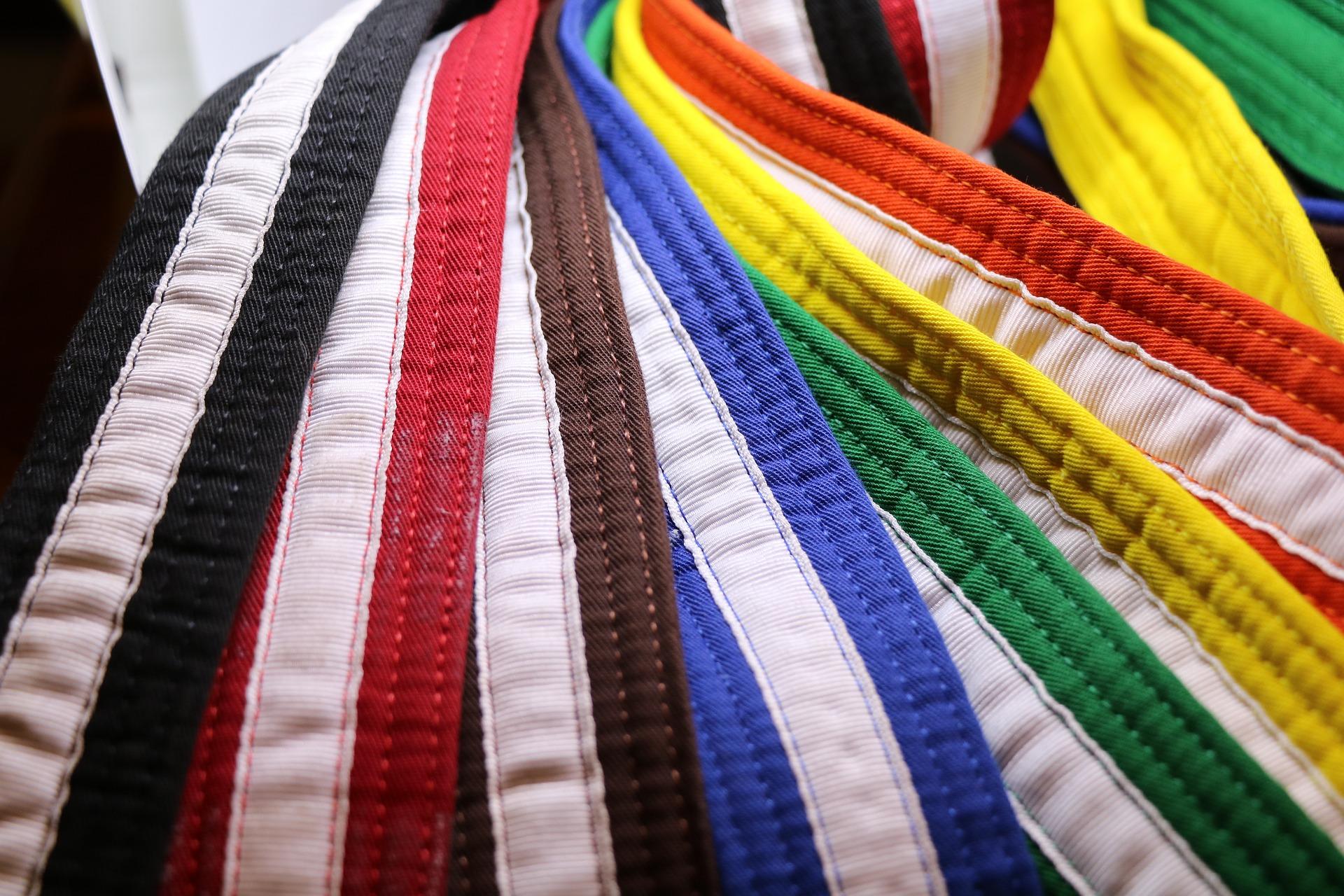
Taekwondo Belts in Order
◻️White
Beginners start out by wearing a white belt. It traditionally means “empty” or “blank”, signifying purity and the beginning of the practice journey.
🟨Yellow
The yellow represents the earth from which the plants grow. It symbolises that the foundation of the sport is being laid out, where practitioners begin developing basic kicks and blocks.
🟧Orange
At this phase, you will learn the Taeguk Ee Jang form, the second of eight forms practised by WT. You will learn to develop skills such as the trap back kick, high punch and middle block.
🟦Blue
Blue symbolises the sky, representing the plant (practitioner) growing into a towering tree as practice progresses. It signifies that the learner has moved beyond the beginner stages and has developed a solid intermediate foundation in skills and theory.
🟩Green
Green symbolises that the plant is growing, showing that the practitioners’ skills are developing and beginning to mature. At this phase, learners demonstrate noticeably improved power and control. Sparring fundamentals are introduced, and movements become precise and controlled.
They also learn more complex poomsae (Taegeuk Sam Jang) along with combination kicks.

🟪Purple
At this phase, you would have acquired the foundational knowledge of the combat sport by this point, and the form you will work on is known as the Taeguk Sa Jang, representing a pious yet dignified mental state.
The roundhouse kick, hook punch and single knife-hand block are some skills you will develop.
🟫Brown
Taeguk Yuk Jang is the form to be practised at this stage, and you are now two ranks away from the black belt level. You will begin combining some of the skills you have learned in previous phases, as well as build on intermediate and advanced skills.
🟥Red
Red symbolises danger and warning, reminding learners to exercise control and respect their practice. At this level, learners demonstrate advanced skills, perform higher-level poomsae such as Taegeuk Chil Jang, spar with more power, and strengthen their mental discipline.
⬛Black
In both the WT and ITF systems, achieving 1st Dan marks the transition from a coloured belt to a black belt. It represents the beginning of advanced practice and a deeper level of technical development, rather than signifying complete mastery.
In the ITF tradition, 1st Dan is often described as the “beginner stage” Higher stages, such as 4th Dan, are commonly associated with master-level recognition. In WT-style taekwondo, the teacher status typically requires additional certification beyond simply holding a Dan rank.
Think of the numerous benefits you can get from learning taekwondo!
Taekwondo is not about being better than someone else; it’s about being better than you used to be.
— Unknown (commonly shared in dojangs worldwide)
🎖️🥋The Taekwondo Belt Levels
This particular combat sport ranks are divided into two categories, namely "junior" and "senior" stages. There are generally ten of these junior ranks, although the number may vary between eight and 12 phases depending on the governing organisation.
The progression system is divided into two main categories: Geup (Gup) ranks and Dan ranks. Junior levels in taekwondo are called Geup, whereas senior levels are called Dan.
Geup (Gup) Ranks
Typically, the progression in this sport is as follows:
White ◻️ → Yellow 🟨 → Green 🟩 → Blue 🟦 → Red 🟥
These ranks usually run from 10th Geup to 1st Geup. Some schools may include intermediate stages to mark incremental progress between the main phases.
The junior stages serve primarily to track learning and readiness for more advanced practice skills.
How well do you know the famous practitioners of taekwondo?
Dan Ranks
Once a practitioner reaches the black belt, they enter the Dan ranks, ranging from 1st to 9th Dan. It signifies mastery and the ability to teach others:
- 1st–3rd : Black belt practitioner; may teach after completing coaching certification.
- 4th–6th : Senior practitioner / master; may oversee instruction and guide other teachers.
- 7th–9th : Grandmaster; recognised for contribution to the art, preserving tradition, and leadership.
To reach the highest rank, a practitioner progresses through nine levels, starting at 1st and culminating at 9th. Achieving this level signifies technical skill and maturity in this sport, and with certification, a black belt holder may teach others.
🏛️🥋Belt Ranking Variations in Different Taekwondo Organisations
By now, you should know that the World Taekwondo (governed technically by Kukkiwon1) and the International Taekwondo Federation (ITF) have slightly different belt systems.
- 10 Geup ranks
- 9 Dan ranks
However, the exact colours for Geup ranks are not universally standardised. As mentioned earlier, each dojang (training school) may adopt its own colour progression.
Official Kukkiwon documents even state that each school has its own belt ranking system, and sample guides are not intended as universal standards2.
A typical colour belt progression used in many schools practising Kukki-style taekwondo under World Taekwondo begins with a white belt and progresses through yellow, green, blue, and red before reaching black belt.
Many schools affiliated with the International Taekwon-Do Federation also follow a very similar colour progression, although individual academies may include additional stages or stripes between ranks.
The chart below shows one commonly used progression, although individual schools may modify colours or stripe systems.
| Name of Taekwondo Belt | Belt Colour | Level of Mastery |
|---|---|---|
| 10th Geup | White | Beginner |
| 9th Geup | White with yellow stripe | Beginner |
| 8th Geup | Yellow | Beginner |
| 7th Geup | Yellow with green stripe | Beginner |
| 6th Geup | Green | Intermediate |
| 5th Geup | Green with blue stripe | Intermediate |
| 4th Geup | Blue | Intermediate |
| 3rd Geup | Blue with red stripe | Advanced |
| 2nd Geup | Red | Advanced |
| 1st Geup | Red with black stripe | Pre-black belt |
| 1st Dan | Black belt | Student-level black belt |
| 2nd Dan | Black belt | Often an assistant instructor |
| 3rd Dan | Black belt | Assistant instructor |
| 4th Dan | Black belt | Instructor |
| 5th - 6th Dan | Black belt | Advanced master-level |
| 7th - 8th Dan | Black belt | High-ranking Master level |
| 9th Dan | Black belt | Grandmaster - highest rank |
A few of the world’s earliest organisations for this Korean combat discipline included Malaysia among the original nine countries when it was formalised in the mid‑20th century.
While colour progressions can look similar between organisations, the black belt ranking systems differ slightly. The table below compares how Dan ranks are represented in World Taekwondo and the International Taekwon-Do Federation3.
| Rank | WT / Kukki-style | ITF |
|---|---|---|
| 1st Dan | Black belt | Black belt with Roman numeral I |
| 2nd Dan | Black belt | Black belt with II |
| 3rd Dan | Black belt | Black belt with III |
| 4th Dan | Black belt | Black belt with IV |
| 5th Dan | Black belt | Black belt with V |
| 6th Dan | Black belt | Black belt with VI |
| 7th Dan | Black belt | Black belt with VII |
| 8th Dan | Black belt | Black belt with VIII |
| 9th Dan | Black belt | Black belt with IX |
In Kukki-style, the Dan rank is usually indicated through certification issued by Kukkiwon rather than markings on the belt itself.
The 9th Dan is considered the highest active rank in both WT and ITF systems. Promotions to 7th, 8th, and 9th Dan typically involve strict oversight.
In WT/Kukki-styles, promotions to these high Dans are generally approved by national federations or special committees in accordance with Kukkiwon regulations. In ITF, 9th Dan is usually awarded only by the federation president or designated high-level committees.
Taekwondo Belt Level in Malaysia
In Malaysia, most taekwondo belt level systems follow the WT format. However, individual academies may include intermediate belts or stripes to motivate learners who benefit from more frequent recognition.
🏆🥋Advancing Through the Ranks: Testing and Promotion
It's a common goal to improve your status as a taekwondo athlete and move up the ranking system. So, how do you get yourself promoted?
Generally, a learner will be invited by their teacher to participate in a belt promotion test. This invitation is usually given ahead of the actual test so that the learner will have time to prepare or focus on specific moves and tasks that will be assessed.
You will spend most of your time enhancing certain areas of the combat sport before your test.
Testing Requirements
During a belt promotion test, learners are evaluated on several key areas:
- Poomsae (forms): Performing the correct sequences of movements with precision, balance, and control.
- Sparring: Demonstrating self-defence skills, strategy, and controlled application of skills.
- Board-breaking: Using proper form and power to break boards or other materials, showcasing strength and focus.
- Physical fitness: Strength, flexibility, and endurance are tested to ensure readiness for higher stages.
- Taekwondo knowledge: Understanding the art’s traditions, terminology, and the fascinating history of taekwondo.
If your progress has been approved by your teacher, then congratulations on moving up the belts! If you didn't get the highest belt this time around, know that you have room to improve and can still take the test another time.
In WT schools, learners must usually be at least 15 years old to test for a black belt, while younger practitioners are graded under the Poom system.
Time and Training Commitments
Advancing through stages in order requires consistent practice and dedication:
- Progressing through Geup can take several months at each stage with regular practice.
- Achieving 1st Dan typically takes two or more years of regular practice, depending on frequency and commitment.
- Most schools require a minimum number of practice hours between tests to ensure mastery of skills and physical conditioning.
Time and training commitments can vary from one person to another. It is truly an individual journey. Learners should focus on growth and skill development at each level, rather than solely aiming for the next belt or its colour.
The progress can be seen through dedication and regular practice, and having a coach to guide your practice helps set realistic goals and achieve them effectively.
⬛The Significance of Black Belt Levels
You may be wondering why black is the chosen colour for the highest beltin this sport.
It is considered the opposite of white, so it represents an individual's maturity and proficiency in the combat sport. However, it can also be considered a combination of all the coloured belts mixed together, which goes to show one's mastery of all previously learned forms and techniques.
It also represents one's immunity to fear.
You cannot take a test for a black belt if you have not yet reached the age of 15.
At least, that's what will happen if you are following the WT system. Instead of the Dan level, the black beltranks for children are known as Poom, which are further broken down into four grades. Upon reaching 15 years of age, the learner who is in the Poom grade can be changed to a Dan grade without any additional testing.
To achieve the highest belt in South Korea, or any part of the world where you are learning, you will need skill, discipline, perseverance and dedication to this sport. Getting the 1st Dan will take you a minimum of 2 years, and moving up to the next black belt will take you several years as well.
Here's a summary of the black belt levels and the minimum age requirements:
| Taekwondo Black Belt | What It Means | Minimum Age to Test |
|---|---|---|
| 1st Dan | You can teach younger students and those at the white belt level as you are now considered a senior. | 15 years |
| 2nd Dan | As an assistant instructor, you will teach older and more advanced students under the guidance of a Master. | 18 years |
| 3rd Dan | You are a senior assistant instructor with advanced black belt level training. | 21 years |
| 4th Dan | You are an instructor at the level of Associate Master, having qualifications to lead black belts up until the 1st Dan and you can also start your own school. | 25 years |
| 5th Dan | You have made multiple contributions to taekwondo and your organisation. You can also promote black belts to higher levels. | 30 years |
| 6th Dan | In addition to your own training, your focus is to teach other instructors. | 30 years |
| 7th Dan | You are considered a Master of the martial arts at this level. You will also be under constant supervision of an 8th or 9th Dan Master. | 30 years |
| 8th Dan | As one of highest belts, you will have taken an average of 40 years to reach this level, with strong devotion to the martial arts. | 53 years |
| 9th Dan | As the highest black belt rank, you have shown incredible devotion to the arts, demonstrated consistent training and in service to the board of organisations in taekwondo. | 53 years |
Disclaimer: Minimum ages listed below are typical in WT/Kukki-style schools, though exact requirements may vary by country or organisation.

🤔🥋Common Misconceptions about Taekwondo Belts
Just like any other sport, there are some misconceptions around this sport as well. We’d like to clear some of the common misconceptions.
Many think that this stage means the person is a master. The truth is, a first-degree black belt is actually a beginner in the advanced stages. It signifies dedication and technical proficiency in the sport. Learning still continues even at this phase.
Some people may fall for the false claims made by certain academies that promise a fast route to a black belt. True taekwondo emphasises consistent practice over the years, rather than rapid belt acquisition. Each step is a step in a gradual, structured learning process. Your favourite taekwondo champion didn’t reach where they are today within just a few months.
It demonstrates technique and focus, but the sport itself is not centred around breaking objects. Practice sessions emphasise discipline, self-defence, physical fitness, and mental growth.
It indicates progression, but the true value lies in training, skills, and character development. Each phase is a step toward personal growth, not a symbol of superiority.
Sparring is controlled and regulated, teaching timing, accuracy and strategy. It develops fitness, resilience, and sportsmanship, not street-fighting skills.
Contrary to what some may think, children and adults don’t hold the same Dan ranks in WT/Kukkiwon style. WT/Kukkiwon offers separate junior Dan stages, called Poom, for under-15. When a Poom holder reaches the appropriate age, they typically take a conversion test to transition to the corresponding Dan rank, ensuring that physical and cognitive maturity align with the responsibilities of a black belt.
💡🥋Tips for Learners on their Learning Journey
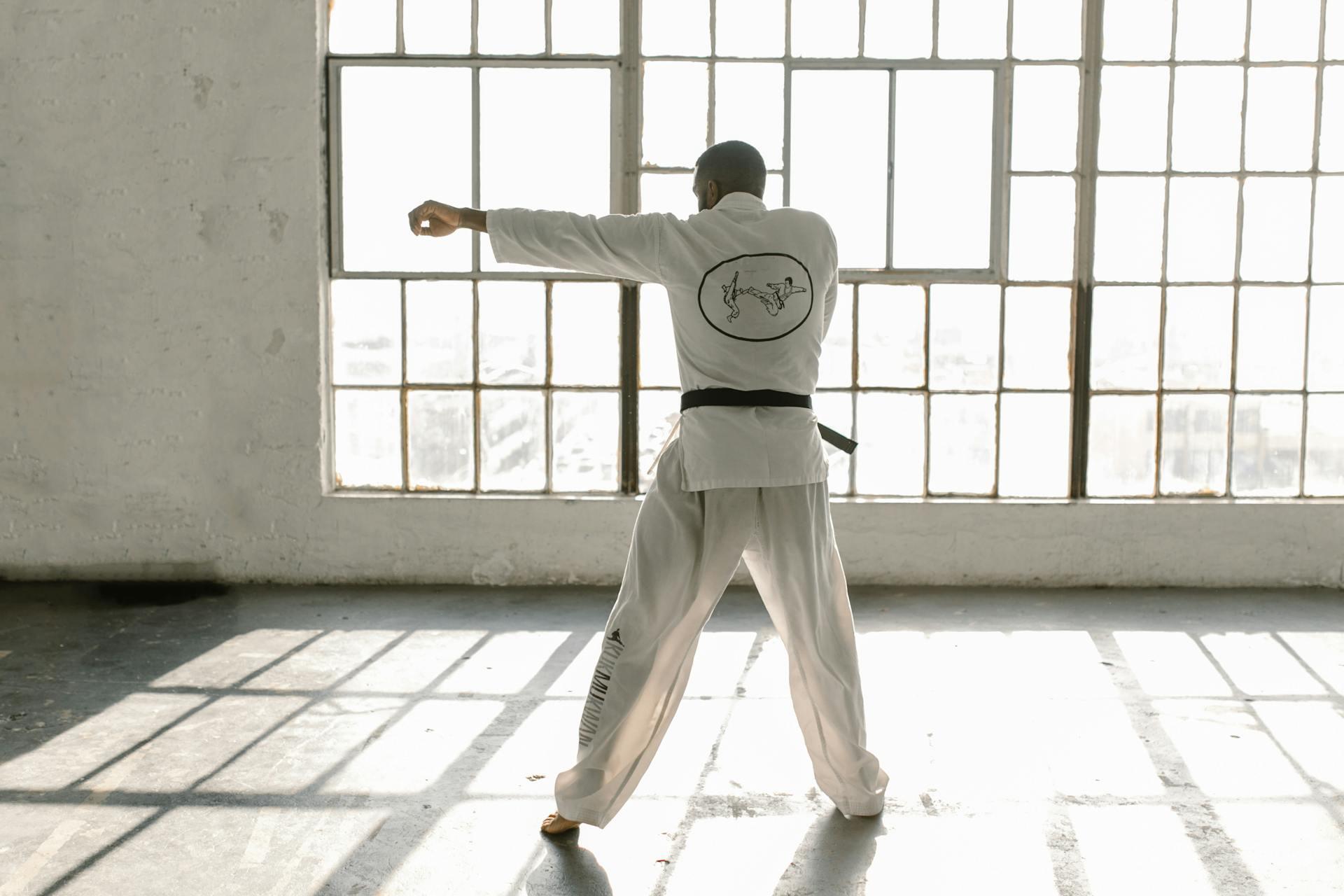
- Set Realistic Goals: Focus on improving your skills and techniques, not just the next stage. Progress comes from consistent effort and practice.
- Embrace Learning: Every phase teaches discipline, confidence, and self-defence. Appreciate each stage as a chance to grow physically and mentally.
3. Learn from a certified coach on Superprof: Learning from a certified coach can be expensive, but you can take quality lessons for under RM 100 when you sign up with Superprof. Working with an experienced coach can accelerate your learning and provide personalised guidance.
✅Conclusion
The taekwondo belt system is more than coloured belts; it represents a lifelong journey of discipline, growth and mastery. Every stage teaches both technical skills and mental resilience.
Understanding the meaning behind the belts and what each colour represents allows learners to appreciate the deeper philosophy of this widely practised martial art.
If you’re unsure where to begin or want to improve your skills, consider learning with a Superprof coach who can guide you through your practice journey. You can browse through a pool of qualified coaches, book a free session (offered by some teachers), and try a class before committing.
You can also take lessons via webcam, which means you can improve your skills from the comfort of your home. Whether you want to learn one-to-one or take group classes with your friends who are also interested in this sport, the choice is yours to create your preferred learning environment.
The true meaning of a black belt is knowing how to fight, and when not to.”
Randy Couture (Mixed Martial Artist, often referenced in martial arts philosophy)
References
- 국기원. (n.d.). 국기원. https://www.kukkiwon.or.kr/base/main/view#none
- World Taekwondo Hanmadang. (2025). 2025 KUKKIWON WORLD TAEKWONDO HANMADANG RULES. In 2025 KUKKIWON WORLD TAEKWONDO HANMADANG RULES. https://www.worldhanmadang.com
- International Taekwon-Do Federation. (2022). Official ITF rules of competition. In World Championships and World Cup Events (pp. 1–6). ITF Tournament Committee, Umpire Committee & IT Committee. https://itftkd.sport/wp-content/uploads/2022/04/Official-ITF-Rules-of-Competition-Version-2022v1.pdf
Summarise with AI:
Did you like this article? Leave a rating!


 Loading...