


To improve your Tamil language skills effectively, focus on mastering the script, building vocabulary, understanding grammar, and practising listening, speaking, reading, and writing regularly. Exploring Tamil culture through music, films, literature, and conversations can also make the learning process more engaging while helping you develop confidence and fluency over time.
| Article Section | What You Focus On | Learning Outcome |
|---|---|---|
| 📘 Grammar Rules | Sentence structure, verb conjugation, noun cases | Builds strong grammatical foundation |
| ✍️ Writing Practice | Daily essays, journals, letters | Improves clarity, accuracy, and expression in Tamil |
| 🎧 Listening Practice | Songs, movies, podcasts, news | Enhances pronunciation and understanding of real usage |
| 🗣️ Speaking Practice | Conversations with native speakers | Builds confidence and natural fluency |
| 🎉 Community Events | Cultural programs and Tamil gatherings | Provides real-life exposure and cultural understanding |
| 👨🏫 Private Tutoring | One-on-one guided learning | Offers personalised feedback and faster improvement |
| 🔁 Consistent Practice | Combining all methods daily | Ensures balanced skill development and fluency growth 🚀 |


1) Understanding the Tamil Alphabet 🏛️
The Tamil script is made up of different groups of letters that one should understand step by step. Tamil has 12 vowels, known as Uyir Ezhuthukkal, which represent independent vowel sounds. It also has 18 consonants, called Mei Ezhuthukkal, which form the basic consonant sounds of the language. When these vowels and consonants combine, they create 216 compound letters, known as Uyirmei Ezhuthukkal.
In addition to these, Tamil includes one special letter called Aytam. Altogether, the Tamil alphabet is commonly counted as 247 letters: 12 vowels + 18 consonants + 216 combined forms + 1 Aytam. Learning these categories helps beginners recognise Tamil letters more clearly, improve pronunciation, and build a strong foundation for reading and writing Tamil.

Learning Tamil is a meaningful journey that helps learners connect with one of the world’s oldest living languages and its rich history.
Learn the Structure of Letters
The foundation of the Tamil alphabet is built around how Mei (consonants) combine with Uyir (vowels) to form Uyirmei (combined syllable letters). In simple terms, Tamil letters work by joining a consonant sound with a vowel sound to create complete syllables that are used in words. Each consonant can produce different sounds depending on which vowel is attached to it.
For example, a single consonant can sound completely different when paired with short or long vowels. Understanding how these combinations work makes it much easier for beginners to recognise Tamil words, improve pronunciation, and develop stronger reading and writing skills.
How to Practise Tamil Words?
Consistent practice and a strong foundation in basics will help you improve Tamil and speak confidently over time.
2) Practise Proper Stroke Order and Handwriting✍️
To develop an efficient, accurate, and self-assured understanding of your Tamil composition, rehearse forming letters in the correct stroke order, as this will lead to a polished outcome. Each letter of Tamil has a fixed sequence that will strengthen both speed and precision if you become familiar with applying that sequence correctly to produce neatly formed characters. This, in turn, will make it easier for you to interpret and recognise Tamil letters with greater ease when applying them for comprehension proficiency.
Benefits of learning Tamil include improved communication abilities, deeper cultural appreciation, stronger cognitive development, and greater confidence when using Tamil in academic and everyday situations.
Importance of Correct Stroke Order
Following the correct stroke order ensures that your handwriting is consistent, clear, and visually structured. It reduces confusion between similar-looking characters and makes your penmanship appear more natural.
Proper stroke order also develops muscle memory, allowing you to form letters smoothly without concentrating on every stage. Gradually, this enhances your composition speed and strengthens overall confidence when using the Tamil alphabet.
How To Practise Tamil Writing: Key Aspects
| Aspect | What to Do | Why It Matters |
|---|---|---|
| Stroke Order | Follow the correct sequence of strokes for each letter | Improves clarity and consistency |
| Direction of Writing | Write in the proper flow (curves, loops, starting points) | Prevents incorrect letter formation |
| Tracing Practice | Start by tracing letters before writing independently | Builds control and confidence |
| Daily Practice | Practice writing for 10–15 minutes every day | Strengthens memory and fluency |
| Use of Worksheets | Practice with lined sheets or guided materials | Maintains proper spacing and alignment |
| Gradual Improvement | Start with large letters, then move to smaller, precise writing | Enhances neatness and speed over time |
3) Build a Strong Vocabulary Base With Everyday Words and Phrases 🖋️
Step-by-step vocabulary expansion can strengthen your ability to communicate more confidently in Tamil. Through a structured and consistent approach, you can absorb new terminology naturally and gradually apply it during interactions with others. Here is a helpful process to build Tamil vocabulary effectively:
How to Improve Tamil Reading Skills Effectively
- Begin with fundamentals → Study common Tamil expressions and everyday phrases
- Study regularly → Focus on one unfamiliar term or expression each day
- Apply in phrases → Use newly learned terms in short examples for stronger memory retention
- Avoid overloading → Do not attempt to memorise large groups of terms all at once
- Revise frequently → Review and reuse previously learned expressions consistently
- Interact with media → Watch Tamil programmes and listen to fluent Tamil communicators
- Apply in discussions → Engage in real-life Tamil interactions whenever possible
Using newly learned expressions regularly in practical situations will gradually strengthen your word bank, improve fluency, and build greater confidence as you continue progressing in Tamil.
“Preserving one’s own culture does not require contempt or disrespect for other cultures.”
- Cesar Chavez
Common Tamil Expressions, Meanings & Pronunciation
| Tamil Expression | Meaning (English) | Usage Context | Audio |
|---|---|---|---|
| Saptiya? | Have you eaten? | Casual greeting / care | |
| Eppadi irukeenga? | How are you? | Polite conversation | |
| Nandri | Thank you | Showing gratitude | |
| Seri | Okay / Alright | Agreement / response | |
| Vaanga | Welcome / Please come | Inviting respectfully | |
| Poitu varen | I will leave now | Ending conversation politely |
4) Contextual Learning through Reading 📖
Reading is one of the most effective methods for understanding how Tamil expressions are naturally applied in everyday communication. Rather than memorising individual terms separately, readers can observe how vocabulary fits into phrases, conversations, and storytelling contexts.
This approach not only supports the acquisition of new terminology but also strengthens your understanding of how to apply those expressions accurately when constructing phrases and communicating ideas in Tamil.
It is beneficial to begin with children’s literature, short narratives, and beginner-friendly Tamil texts. These materials are usually written using clear structures and commonly used terminology, making them easier for beginners to follow. As your understanding gradually develops, you can progress to more advanced resources such as newspapers, magazines, or Tamil novels to further strengthen your language proficiency and comprehension abilities.
When you read often, you become familiar with the ways in which Tamil vocabulary is used within everyday contexts. As such, reading regularly will indeed help you improve your fluency, grammar, confidence, and ultimately provide you with a natural and easy manner of communicating when speaking or receiving messages.
Read Tamil texts alongside their English translations to quickly understand meanings, grasp sentence structure, and connect new words effectively.
5) Understand the Fundamental Grammar Rules📜
If you want to become successful in studying a language, it is important to develop a strong understanding of how its grammatical structures operate. Just as mastering English requires knowledge of grammar, the same principle applies to Tamil and any other language you wish to become proficient in.
Grammar provides the framework that allows learners to organise vocabulary into meaningful phrases and complete statements. By understanding these structural patterns, learners can communicate ideas more accurately, improve comprehension, and form clearer Tamil expressions with greater confidence.
Sentence Structures
Sentence structure refers to how words are arranged to form a complete idea. Most basic sentences follow a Subject–Verb–Object (SVO) order in English (e.g., She eats food). However, other languages like Tamil often follow a Subject–Object–Verb (SOV) pattern.
Learning sentence patterns helps you:
- Construct clear and logical sentences
- Avoid confusion in communication
- Improve both speaking and writing skills
Start with simple sentences and gradually move to complex ones involving clauses and connectors.

Verb Conjugations in Tamil
In Tamil, verbs change form depending on the tense, person, number, and sometimes the level of respect used in a conversation. This process is known as verb conjugation. Learning Tamil verb conjugations is important because it helps learners form grammatically correct sentences and communicate more naturally in everyday situations.
For example, the Tamil verb “Sapidu” (to eat) changes based on time:
- Present Tense:Naan saapidugiren — “I am eating”
- Past Tense:Naan saapitten — “I ate”
- Future Tense:Naan saapiduven — “I will eat”
Tamil verbs can also change depending on who is speaking and whom they are addressing. Formal and respectful speech is very important in Tamil culture, so verb endings may differ when speaking to elders, teachers, or strangers.
Mastering Tamil verb conjugations allows learners to:
- Express past, present, and future actions correctly
- Speak Tamil more fluently and naturally
- Show proper respect in conversations
- Avoid common grammatical mistakes
- Build stronger sentence formation skills
A helpful way to practise is by using the same Tamil verb in different tenses and creating simple daily-life sentences. Regular speaking and writing practice can make Tamil verb patterns easier to remember over time.
Noun Cases in Tamil
In Tamil grammar, noun cases are very important because they show the relationship between a noun and the rest of the sentence. Instead of relying mainly on word order, Tamil often uses case markers, which are suffixes added to nouns to indicate meanings such as location, possession, direction, or the object of an action.
For example:
- Subject Form:Ravi odaraan — “Ravi runs”
- Object Form:Naan Raviyai paarkiren — “I see Ravi”
- Possessive Form:Raviyin pusthagam — “Ravi’s book”
Tamil also uses additional noun case endings to express different meanings:
- Location:Veetil — “In the house”
- Direction:Pallikku — “To school”
- Possession:Avaludaiya pai — “Her bag”
Understanding Tamil noun cases enables learners to:
- Apply Tamil nouns accurately in different contexts
- Construct clearer and more precise statements
- Interpret sentence meaning more effectively
- Reduce misunderstandings and grammatical errors
- Communicate in Tamil more fluently and naturally
An effective method for strengthening Tamil noun case knowledge is to take a single noun and apply it across different phrase structures using various suffixes. With regular exposure and repetition, learners gradually become more confident in identifying how Tamil case endings influence the meaning and function of a statement.
Fundamental Grammar Rules to Follow
| Grammar Aspect | Key Concept | Why It Matters | Example |
|---|---|---|---|
| Sentence Structure | Order of words in a sentence | Ensures clarity and meaning | She reads a book |
| Verb Conjugation | Changing verbs based on tense/person | Shows time and action correctly | He is running / He ran |
| Noun Cases | Role of nouns in a sentence | Defines relationships between words | Rahul’s pen / Give Rahul a pen |
| Tense Usage | Past, present, future forms | Helps express timing of actions | I will go tomorrow |
| Agreement Rules | Subject-verb agreement | Maintains grammatical correctness | She goes (not *go*) |

6) How to Improve Tamil Writing Skills Through Practical Writing Exercises 📝
To truly become proficient in Tamil grammar, consistent writing practice should be approached as a step-by-step process rather than a one-time effort. Writing every day helps transform theoretical knowledge into practical skill, gradually improving your clarity, fluency, and confidence in the language.
Process to Improve Through Writing:
Step 1: Start out small and easy
By writing several simple sentences each day about topics that are familiar to you, such as what you do every day or what is around you. This way, you can practise writing with basic grammar rules, while making sure that you are not becoming overwhelmed from doing so.
Step 2: Build Up to Write Structurally
Once you have written several sentences, you can start to work on writing short paragraphs/small essays. This will be about how you form correct sentences, logical order or flow, and how to write with grammatical structure.
Step 3: Write Using Different Formats
To develop additional skills related to writing, include letter writing (both formal and informal) and personal journals in your daily writing routine. By doing this, you will be exposed to different tones, formats, styles of writing, and different ways to use vocabulary while writing in Tamil.
Step 4: Consistency is More Important Than Perfection
Try to write at least 5-10 sentences every day. Writing every day is the goal. The goal is to create a habit and get progressively better each time you write, rather than starting out writing perfectly.
Step 5: Review Your Writing and Make Corrections
Take the time to look back at what you have written, find errors, and try rewriting any incorrect sentences with the correct grammatically correct sentence structure. By doing this, you will reinforce learning and will have fewer problems repeating the same errors each time you are writing.
Getting your written work reviewed by someone proficient in Tamil, such as a teacher or native speaker, is extremely important. Their feedback can help you identify mistakes you might miss, understand correct sentence patterns, and improve faster by learning from your errors.
7) Indulge in Tamil Media to Improve Listening Skills 🎵
One of the most enjoyable and effective methods for strengthening your Tamil language abilities is to immerse yourself in the language through active listening. Regular exposure to spoken Tamil helps learners become more familiar with pronunciation patterns, tone, rhythm, and the natural flow of communication used in everyday interactions.
Consistent listening also allows learners to connect the concepts they study with how Tamil is genuinely expressed in real-life situations. Over time, this approach can strengthen comprehension, improve fluency, and increase confidence when understanding spoken Tamil.
Tune Into Tamil: Learning Through Songs

Explore Real-World Tamil: News, Films, and Cultural Media 📰
- Provides exposure to how Tamil is applied in different practical situations
- News content supports understanding of formal communication and contemporary terminology related to current events
- Films and television programmes introduce conversational Tamil, informal expressions, and commonly spoken phrases
- Interviews and discussions strengthen comprehension of natural communication patterns
- Strengthens auditory comprehension through exposure to varied tones, accents, and communication styles
- Offers a deeper understanding of Tamil traditions, heritage, and social customs
- Makes language acquisition more meaningful by connecting Tamil with practical, real-world communication
When choosing Tamil media, pick a genre you already enjoy, such as comedy, action, or drama. This keeps you engaged and makes the learning process feel entertaining rather than overwhelming.
8) Active Tamil Speaking Engagements
Communicating is an important part of studying Tamil because it allows learners to apply the understanding they gain through comprehension and auditory exposure in practical situations. It reinforces grammatical understanding and enhances the ability to articulate Tamil expressions accurately while gradually building greater confidence during interactions with other people.
Tamil originates from the ancient Dravidian civilisation of South India and is recognised as one of the world’s oldest living languages. Its rich history, unique script, and deep cultural heritage make studying Tamil both intellectually rewarding and culturally meaningful.
If you interact with native Tamil speakers from the beginning, you will become familiar with applying the tongue naturally, avoid making errors, and grow comfortable with expressing yourself more fluently.
🗣️ Practice Through Real Conversations :
- Participate in language exchange opportunities with fluent Tamil communicators whenever possible
- Begin communicating in Tamil early in your language journey, even if errors occur initially
- Prioritise effective communication instead of aiming for flawless grammatical accuracy
- Become familiar with natural expressions, articulation patterns, and conversational rhythm
- Build greater confidence through consistent interaction and continuous rehearsal
9) Participating in Community Events 🎉
Participating in Tamil community events provides opportunities to apply the language in real-life environments while building stronger connections with Tamil heritage and Tamil-speaking communities. Engaging in conversations during these gatherings is an effective way to become more confident when interacting with fluent Tamil communicators, listening to authentic discussions, and observing how the language is naturally expressed in everyday situations.
Additionally, there are many digital communities and discussion groups available through social platforms and community-based websites where Tamil communicators share ideas about topics of common interest in a relaxed and informal manner. Regular participation in these spaces can gradually strengthen your interaction abilities and improve overall confidence in communicating in Tamil.
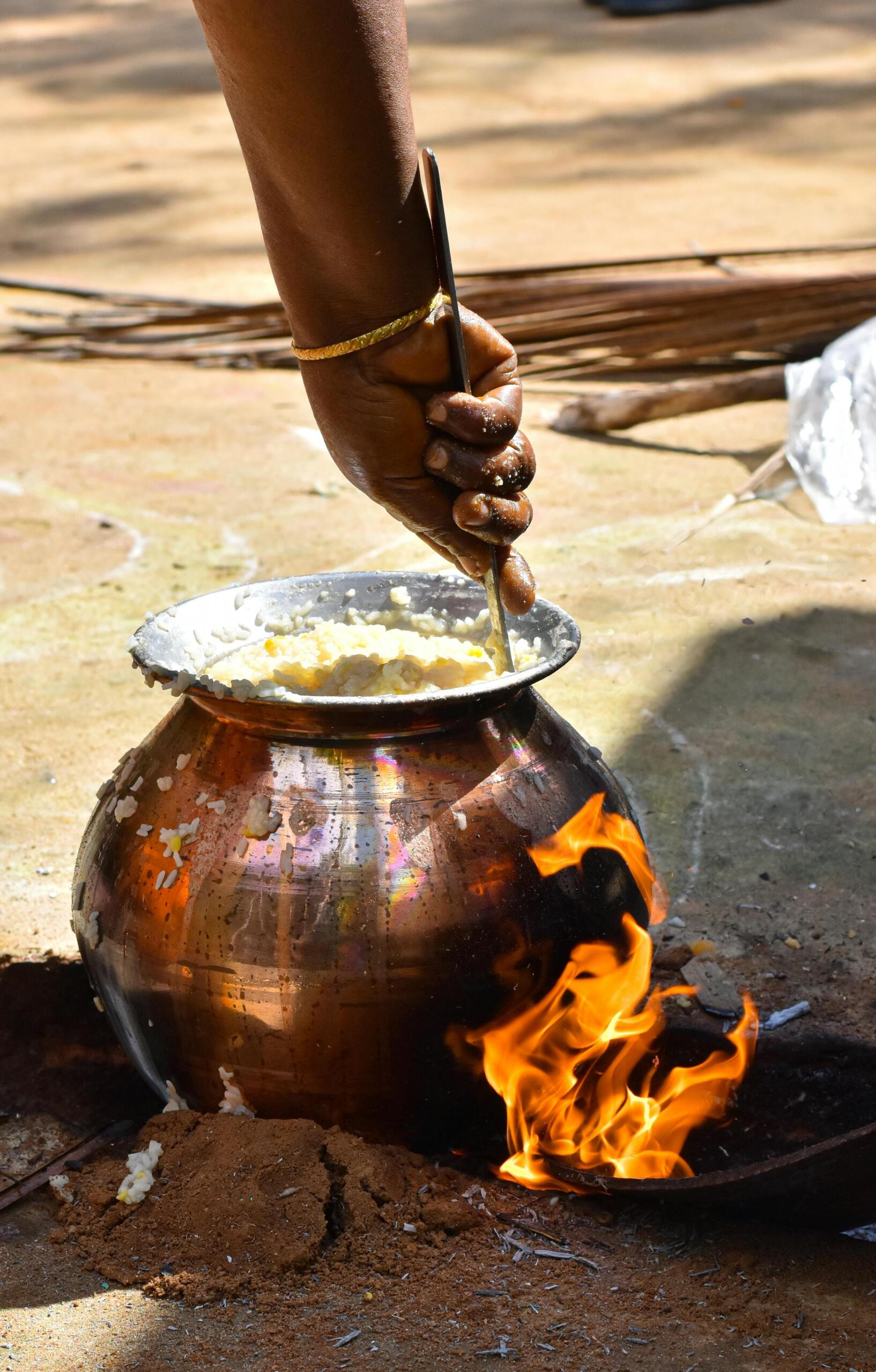
Tamil Cultural Events in Malaysia :
- Thaipusam celebrations (major festival with cultural and religious significance)
- Pongal festivals organized by Tamil communities and temples
- Tamil language and cultural workshops hosted by local organisations
- University and community Tamil events, including debates, performances, and literary meets
- Cultural exhibitions showcasing Tamil history, art, and traditional crafts
- Tamil theatre and drama shows organised by community groups and cultural associations
10) Hire a Private Tamil Language Tutor 👨🏫
Studying Tamil with a private tutor is one of the most effective approaches to accelerate your progress, especially if you want structured education and personalised attention:
- Provides customised guidance based on your current Tamil proficiency level
- Strengthens confidence when applying Tamil in practical daily interactions
- Supplies organised study resources for steady and structured progression
- Recognises weaker areas and focuses on them for more effective advancement
- Delivers immediate correction on grammatical structure, articulation, and phrase construction
- Supports consistency and accountability throughout your study routine
- Encourages frequent conversational rehearsal in a comfortable and supportive setting
- Strengthens fluency through real-time interaction and communication activities
- Demonstrates practical Tamil usage beyond traditional academic materials
Superprof operates in more than 77 countries and provides access to over 36 million teachers worldwide. The platform offers transparent pricing, personalised tuition, verified reviews from past students, and easy tutor navigation through its search system.
Students may quickly find Tamil tutors near their location according to subject level, availability, teaching experience, or lesson preferences. Most tutors on Superprof also provide the first lesson free, allowing students to assess the teacher’s teaching style and support before committing to regular classes.
Hiring a private Tamil tutor will help you learn Tamil at a faster rate by providing structure, support, and consistent practice. You will also be able to get feedback from an expert and receive personalised attention, which will help you navigate any obstacles and build a powerful set of skills to develop excellent communication abilities in Tamil.
What’s the Best Way to Improve Your Tamil?
Wrapping Up Your Tamil Learning Journey
To improve your ability to study Tamil, you need to have effective Tamil learning tools for mastering Tamil and rehearsing it frequently (especially through activities such as repetition). Grasping Tamil grammar, composing regularly, and immersing yourself in Tamil through music, television, movies, and news will strengthen your fluency and your overall level of competence in Tamil.
Engaging with fluent Tamil communicators and participating in Tamil cultural events provides valuable opportunities to communicate more confidently in practical situations. These experiences also help learners better understand the Hindi versus Tamil difference, particularly in areas such as pronunciation patterns, grammatical structure, sentence formation, and conversational style.
While independent exposure can strengthen your understanding gradually, guidance from a private instructor can accelerate your progress by offering constructive support, personalised direction, and timely feedback on your development. Combining these two approaches creates a balanced and engaging environment that can strengthen your comprehension, composition, auditory understanding, and conversational abilities more effectively over time.
References
- Ministry of Culture, Government of India. “Criteria for Languages to be Considered for Declaration as Classical Language.” Press Information Bureau, 17 July 2014, https://pib.gov.in/newsite/PrintRelease.aspx?relid=107013.
- “Tamil Language.” Encyclopaedia Britannica, Encyclopaedia Britannica, Inc., https://www.britannica.com/topic/Tamil-language.
- “Dravidian Languages.” Encyclopaedia Britannica, Encyclopaedia Britannica, Inc., https://www.britannica.com/topic/Dravidian-languages.
- Tamil Virtual Academy. “Tamil Grammar and Script Learning Resource.” Government of Tamil Nadu, https://www.tamilvu.org/ta/courses-degree-p201-p2013-html-p20132et-27607.
- University of Pennsylvania. “Tamil Language Resources.” Penn Language Center, https://ccat.sas.upenn.edu/plc/tamilweb/.
- Government of India, Official Language Wing. “Constitutional Provisions Relating to Official Language.” Ministry of Home Affairs, https://www.officiallanguage.gov.in/en/constitutional-provisions-relating-official-language.
Summarise with AI:
Did you like this article? Leave a rating!

 Loading...
