


STPM Mathematics has a reputation for being one of the most demanding subjects in pre-university studies. Many students struggle not because they lack ability, but because the subject requires strong fundamentals, continuous practice.
The good news is that success in STPM Mathematics is achievable with the right strategy. Whether you're taking Mathematics T or Mathematics M, this guide covers practical STPM math tips that will help you strengthen your understanding.
✅ Follow the latest official syllabus
✅ Understand concepts before memorising formulas
✅ Practise mathematics weekly, not only before exams
✅ Review mistakes until you can solve similar questions independently
✅ Time yourself while completing past-year papers


How Hard is STPM Math?
One of the most common questions students ask is: how hard is STPM math?
The honest answer is that STPM Mathematics is challenging mainly because its topics are cumulative, involving much algebra, calculus, functions, graphs, and other areas of mathematics. How difficult STPM math feels really depends on one's foundation of mathematics. It is more accurate to say that a strong foundation and regular practice make a big difference!
Multi-step problem-solving questions
More abstract mathematical concepts
Greater emphasis on logical reasoning
Stricter marking for mathematical working
A wider syllabus that needs continuous revision
In SPM Maths, you can often pass or score well with the help of formulas and repeating pattern from past years. On the other hand, STPM Maths tests deep conceptual understanding, requiring you to apply knowledge to different, multi-step problems that students often find challenging.
Still, you can watch out for some signs that you need to rebuild your foundation in mathematics. You may need additional support if:
- Algebraic manipulation feels difficult.
- You find it hard to start unfamiliar questions, but can follow worked examples.
- You make simple errors with indices, fractions, or logarithms.
- You regularly forget prerequisite maths concepts when advancing to new topics.
Building a stronger foundation in STPM math from the get-go often leads to faster improvement, rather than repeatedly attempting difficult questions! 💡
Which part of STPM Mathematics challenges you the most?
How to Start Your Maths STPM Preparation
Effective math STPM preparation should begin with the official syllabus rather than a long list of topics. The syllabus shows exactly what you are expected to learn, how the subject is assessed and which learning outcomes you should be able to demonstrate in each semester.
🔖 Familiarise Yourself With Mathematics T or Mathematics M
Before beginning your maths STPM preparation, you must be familiar with the mathematics paper you are taking. Let's start with the differences in the two mathematics papers being offered in STPM: Mathematics M (Management) and Mathematics T (Technology).
📘 Mathematics (T)
What is covered:
Algebra, Geometry, Calculus and Statistics
What to focus on:
Understanding concepts and solving multi-step problems.
Revision tip:
Practise different question types instead of doing the same type repeatedly.
📊 Mathematics (M)
What is covered:
Algebra and Calculus, Statistics, Financial and Decision Mathematics
What to focus on:
Applying maths to different situations and interpreting information.
Revision tip:
Read the question carefully before deciding which method to use
Before planning your revision, confirm:
- The correct subject and paper codes
- The examination and assessment structure
- The topics covered in each semester
- The stated learning outcomes
- Any amendments or syllabus updates
- Whether coursework or other assessment requirements apply
Mathematics (T) and Mathematics (M) each have three written papers worth 60 marks each.
🔖 Download and Use the Latest Math STPM Syllabus
One of the most important tips to study math STPM is to check the latest STPM Mathematics syllabus from Majlis Peperiksaan Malaysia (MPM). Make sure you are using the correct syllabus and correct paper code for Mathematics T or Mathematics M.
The current MPM pages show updated Mathematics (M)1 950 and Mathematics (T) 954 syllabus documents, both updated in May 20262. Your syllabus should provide:
- Topic coverage
- Learning outcomes
- Assessment structure
- Examination requirements
- Weightage of content
One simple way to make the syllabus easier to manage is to turn it into your own revision checklist.
🔖 Build a Checklist by Topic
Label every topic according to your current ability:
| Topic Checklist Status | Meaning |
|---|---|
| ❌ Not started | No understanding yet |
| ❎ Need help | Can be attempted but struggling to comprehend |
| ✅ Basic understanding | Can complete straightforward questions |
| ⭐ Exam-ready | Can solve timed exam questions independently |
This approach helps you allocate revision time objectively rather than revising only favourite topics.
🔖 Prioritise Core Mathematical Skills
Before moving into advanced topics, ensure you are comfortable with and know how to score maths questions in:
- Algebraic manipulation
- Functions and graphs
- Logarithms
- Indices
- Differentiation basics
- Integration basics
- Probability fundamentals
- Statistical interpretation
How to Learn STPM Mathematics Concepts Properly
Now that you're clear on the current examination requirements3 and have an idea of which topics to begin with, let's identify the STPM Maths study tips that will actually benefit you.
Some revision habits might look productive, but are actually common revision traps that don't help much in studying STPM Maths. Here are a few things to watch out for:
- Having beautifully organised notes might make you feel like you've done a lot of revision, but won't help unless you know how to solve mathematical problems.
- Staying on the same basic questions for a long period will make it look like you've mastered the concept. However, progressing to harder questions on the same concept or topic will allow you to improve your understanding better.
- Getting a question wrong isn't necessarily a bad thing; understanding why you got it wrong is where real growth happens.
- Mixing Mathematics T and M materials without checking! This is especially important when working with STPM Maths past-year papers, as you should make sure the paper matches the subject you are taking. If you are unsure, check it against the current MPM syllabus or ask your teacher.
STPM Mathematics is a subject in which you have to address understanding before speed, and understanding concepts is more important than memorising formulas. Using a conceptual approach helps in flexibility when facing different and various problems. Now, let's look at how to effectively study the topics in your checklist, while building on core mathematical skills.
1. Understand the "Why" Behind Every Formula
Whenever you learn an STPM maths formula, ask:
- What does it represent?
- When should I not use it?
- What assumptions are involved?
Avoid memorising a formula without practising because you cannot approach various kind of problems if the concepts weren't understood beforehand. Additionally, to approach similar questions more effectively, write down the conditions or triggers beside the key formulas.
2. Use Worked Examples Actively
Do not simply read solutions! Instead:
- Cover the next step of the question, and predict what comes next.
- Compare your thinking with the correct solution provided.
- Reattempt the question later without assistance.
You also need to know when to use the formulas and how to approach a question you haven't seen before. Understanding the topics covered in the STPM Mathematics syllabus can help you identify which concepts and methods to apply, which is why practising strategically matters more than simply counting the number of questions you complete.
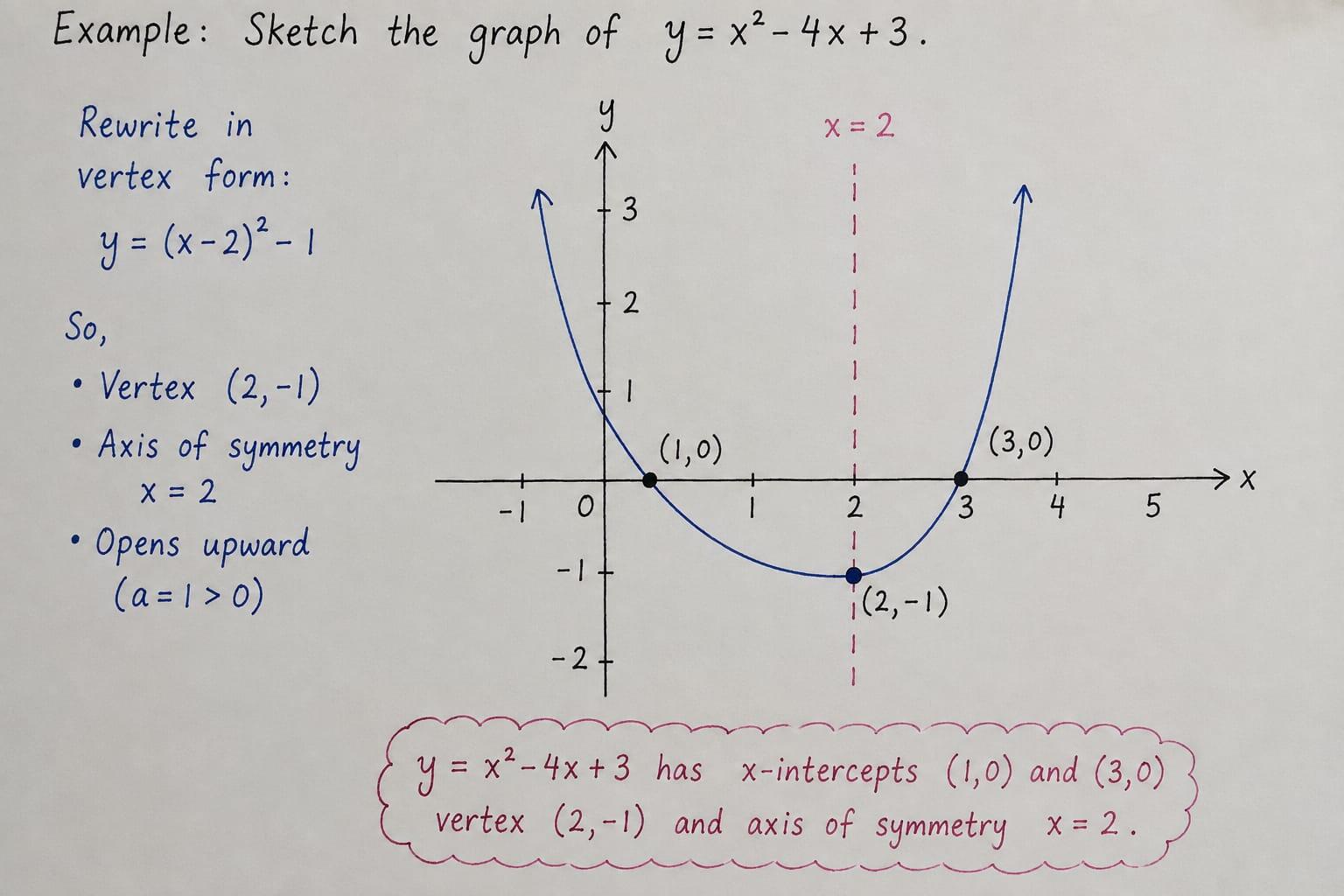
3. Draw Graphs, Tables and Diagrams Where Useful
The aim isn't to make your working look complicated. Use a graph, table or diagram when it makes the problem easier to understand, solve or check.
You can also use a table to keep values or data organised, or draw a simple diagram when it helps you see how different parts of the question are connected.
4. Practise STPM Exam Questions Strategically
Consistently practising math problems will definitely improve your understanding of questions, however, it is also important to arrange questions and topics by stage. For example, you can use a three-stage practice model:
- Stage 1: Skill drills — practise one operation or formula.
- Stage 2: Topic questions — combine skills within one topic.
- Stage 3: Mixed and past-paper questions — identify the method yourself under pressure.
Past-year STPM Maths papers are useful throughout the whole preparation, not just in the final month of examination. When you're early in the revision, though: sort questions by topic.
5. Keep an Error Log
An error log is basically a place where you keep track of the questions you got wrong, what happened during the process, and what can be improved in the future. Here are some common mistakes that students make across STPM maths topics, and what can be done to avoid these errrors.
| STPM math topic | What went wrong | Error type | Correct approach | Remember this |
|---|---|---|---|---|
| Differentiation | Missed the chain rule | Concept | Identify the inner function | Check for composite functions |
| Integration | Forgot "+c" | Misstep | Add the constants for indefinite integrals | Check your final answer |
| Algebra | Lost a negative symbol | Calculation | Expand brackets one step at a time | Recheck symbols |
| Probability | Used the wrong rule | Method | Decide whether the question needs "and" or "or" | Read the question carefully |
| Graphs | Plotted a point incorrectly | Graphing | Recheck coordinates and scale | Check points before drawing |
6. Consider Studying in a Group
One of most helpful tips to study math STPM for students who are struggling is to join a study group, be it with classmates or even via online forums.

It's useful for the following reasons:
- Explaining difficult methods.
- Comparing different solutions.
- Asking questions.
- Teaching a concept to someone else.
It becomes less useful when everyone is simply copying answers or chatting, or if the group turns into a social hangout instead of a focused study session. A good rule to stay disciplined is to try the question yourself first, and then discuss it afterwards with your study group.
The Best Study Plan For STPM Math
With the right steps for studying mathematical concepts in place, how should we proceed with the revision plan? Beyond simply completing questions or focusing on any one concept, it's important to plan out a weekly study schedule. For additional practice materials and study support, explore our STPM Maths resources guide.
Weekly Maths STPM Preparation: Revision Timeline
Rather than focusing an entire day on STPM maths study tips, it is more effective in the long run to break down your study into regular periods over the week. Here's a sample timeline for how to revise maths STPM topics during the week, and we encourage you to apply the concepts mentioned previously while studying!
Monday
Learn a New Concept
Learn one topic and focus on understanding the main formulas and methods, and try approaching the problems.
Tuesday
Practise the Topic
Work on the exercises and problems on the basis of Monday's work.
Wednesday
Review Your Mistakes
Go through the questions you got wrong. Identify what mistakes were made, which would often be a calculation error or misunderstanding how to approach the problem.
Thursday
Mixed Practice
Mix questions from various topics today. Without referring to your notes, try completing questions with a time limit, so you get familiar working under timed pressure.
Friday
Review Your Topics
Check the topics you found difficult this week. You can review topics by rereading concepts, working on related problems, and revising your notes.
Saturday
Do Past Year Questions
Attempt one section of a past-year maths STPM paper under timed conditions. After finishing, check your answers and study the questions.
Sunday
Self-Assessment and Review
Review the week's topics, formulas and mistakes. Test yourself without relying on your notes, and decide which topics need more attention next week.
Throughout your week, you still need to remember to spend more time on areas where you often get stuck or lose marks. If you really want to improve, your weaker topics need more attention.
A simple approach is:
- Weak topics: Spend more time learning and practising.
- Strong topics: Use short sessions to keep them fresh.
- Mistakes: Set aside time each week to review your error log.
- New topics: Balance them with regular practice of older ones.
✅ 45–60 minute study blocks
✅ Limit distractions (quiet room, no devices)
✅ Set clear goals, e.g.: "Complete 12 differentiation questions & review every incorrect answer."
STPM Math Study Tips: Your 30-Day Action Plan
Do you have 30 days left until exam day, but still need tips to study math STPM topics that are challenging? The goal here isn't for you to “master STPM Math in 30 days”, but more of a "30-day reset" or preparation plan that can help you get organised, identify personal weaknesses in STPM Maths, and build better habits.
During the first week, focus on figuring out where you stand by finding the correct MPM syllabus and creating a topic checklist. Then, attempt some miscellaneous problems. Your goal this week is diagnosis, not perfection.
Time to move into focused practice! Work through priority topics, but keep in mind that you should practise basic questions first before progressing to harder questions. After this, you can start practising with relevant past-year questions.
To prepare for your exam, your maths STPM preparation should include reviewing each mistake after attempting questions, revisiting weak topics and revising relevant math formulas. Remember that your goal isn't to get more questions right: it's to become comfortable solving questions without notes and with fewer mistakes during the time limit.
STPM Math Exam Strategies That Protect Your Marks
You've now made it to your STPM Mathematics exam! In addition to re-checking your final answers, we've listed these final tips to help you on exam day.
1. Read the Question Properly & Identify What is Required
When you're under exam pressure, it's easy to rush through a question, miss a negative sign or give an answer without properly reading the question. You should always take a few seconds to work out what the exam question actually requires, which can help you avoid using the wrong method or missing an important detail.
Before calculating, apply these key steps:
- Highlight key data, variables, restrictions and command words.
- Determine whether the question asks for calculation, proof, interpretation, explanation, graphing or a conclusion.
- Check if answers need exact forms, decimal approximations, units or context-based interpretation.
For example, words such as "calculate, show, determine, explain, hence, sketch, interpret" can tell you what kind of answer is expected.
2. Show Clear Working Steps
Try not to turn your answer into a guessing game for the examiner! Showing your formula, substitutions and main calculations clearly makes your method easier to follow, and helps you identify mistakes when the final answer does not look right.
Where necessary, indicate symbols, brackets, fractions, decimal places, units, mathematical notation, and final answers. For more guidance on how responses are assessed, refer to our STPM Mathematics format and marking scheme guide.
3. Don't Spend Too Long on One Question
Getting stuck on one difficult question can eat into the time you need for the rest of the paper. Remember that a difficult question shouldn't stop you from picking up marks elsewhere.
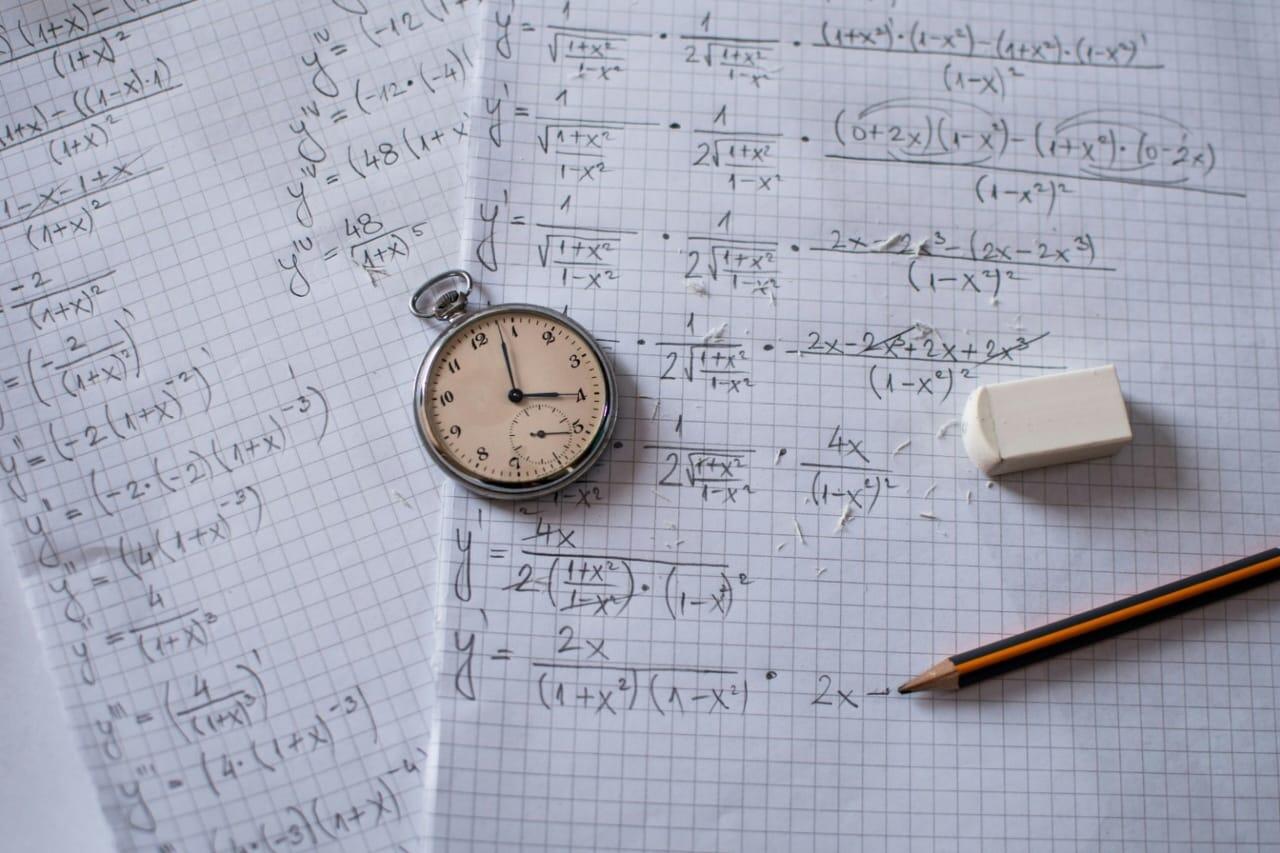
One way to overcome this timing issue is, before the exam, to look at the total marks and the total time available. Use that to get a rough idea of how much time you can afford to spend on each mark. Then, during the paper, use the marks as a guide.
For example, if a question is worth only a few marks but you're still stuck after several minutes, it's probably better to move on and come back to it later.
4. Use Your Calculator Carefully
A calculator can save time, but it can also create avoidable mistakes. Before starting, make sure you're using the appropriate settings and is in the correct mode, especially when working with angles.
Another tip is to check whether the question requires degrees or radians before calculating, and if the question expects an exact answer or a decimal approximation.
5. Give Your Paper a Final Check
For our final STPM math tips, this will surely help you gain more marks that you might lose otherwise!
Did I answer every part of the question?
Did I lose a negative sign somewhere?
Did I use the right formula?
Did I copy the numbers correctly?
Are my units or decimal places appropriate?
Does my final answer actually make sense?
"Success is the sum of small efforts, repeated day in and day out.
Robert Collier
References
- 950 Mathematics (M) - Portal Rasmi Majlis Peperiksaan Malaysia (MPM). (n.d.). https://mpmweb.mpm.edu.my/stpm/bahan-kerja-kursus-stpm/item/950-mathematics-m
- STPM Syllabus - Official portal Malaysian Examinations Council. (n.d.). https://portal.mpm.edu.my/en/stpm/stpm-syllabus
- Instructions and Guidelines - Official portal Malaysian Examinations Council. (2023, November 23). https://portal.mpm.edu.my/en/edexcel-isecondary/instructions-and-guidelines?highlight=WyJleGFtIl0=
- Purified STPM Exam Syllabus - Official portal Malaysian Examinations Council. (n.d.). https://portal.mpm.edu.my/en/stpm/sukatan-pelajaran-peperiksaan-stpm-yang-dimurnikan
- Regulation and scheme of examination - Official portal Malaysian Examinations Council. (2026, August 21). https://portal.mpm.edu.my/en/stpm/peraturan-dan-skema-peperiksaan
- STPM - Portal Rasmi Majlis Peperiksaan Malaysia (MPM). (n.d.). https://portal.mpm.edu.my/kegunaan-jpn/kegunaan-jpn-stpm
Summarise with AI:
Did you like this article? Leave a rating!

 Loading...

