


To do well in SPM Add Maths Paper 2, practise completing full past-year and trial papers under timed conditions. Show every essential step of your working clearly, check that your calculator settings are correct and confirm that your final answers make sense.
Begin by understanding the latest official SPM paper format, then use past-year papers and state trial papers to recognise recurring question styles, review mistakes by topic and improve your speed.
Know the format, practise full papers, show your working clearly, check your answers and correct recurring mistakes.


📘 What Is SPM Additional Mathematics Paper 2?
SPM Additional Mathematics Paper 2 is one of the two written papers in the SPM Additional Mathematics examination. Identified by the code 3472/2, it assesses candidates through limited-response and structured subjective questions based on the Form 4 and Form 5 KSSM Additional Mathematics curriculum.
Paper 2 generally involves longer, multi-part questions in which students may need to select a formula, form an equation, substitute values, perform several calculations and interpret the result. Some questions also combine knowledge from more than one topic or place mathematics within an applied context.

Students should therefore show their working clearly. The official assessment format uses analytic scoring, meaning marks may be allocated to different stages of a solution.
Depending on the question, credit may be given for choosing an appropriate method, using the correct formula, substituting values accurately, presenting a required mathematical statement and obtaining the final answer.
Always follow the instructions on your examination paper, as requirements may change.
A final numerical answer without supporting working may not receive all the available marks. Official examiner reports also highlight the importance of writing formulae, showing substitution and following the method requested in the question.
Important for SPM 2026: Check the latest official examination timetable, instructions and the front page of your examination paper for the confirmed duration, marks, question structure and permitted materials. Always follow the instructions printed on your actual examination paper, as requirements may be updated. For broader preparation guidance, refer to our complete guide to SPM Additional Mathematics.
📋 SPM Add Maths Paper 2 Format at a Glance
| Detail | Published examination format |
|---|---|
| Paper name and code | SPM Additional Mathematics Paper 2 (Matematik Tambahan Kertas 2), 3472/2 |
| Type of paper | Written paper containing limited-response and structured subjective questions |
| Duration | 2 hours 30 minutes, as confirmed in the official SPM 2026 timetable |
| Total marks | 100 marks |
| Number and type of questions | 15 questions are offered: Section A has 7 questions worth 50 marks; Section B has 4 questions worth 30 marks; Section C has 4 questions worth 20 marks |
| Compulsory and choice questions | Answer all 7 questions in Section A, 3 of 4 questions in Section B and 2 of 4 questions in Section C. Candidates answer 12 questions altogether |
| Calculator requirement | The published format permits a non-programmable scientific calculator. Candidates should confirm the current rule from their examination instructions |
| Answers, graphs and diagrams | Write answers in the spaces or examination materials provided and show the necessary working. Use graph paper or designated spaces when instructed. Do not assume a printed diagram is drawn to scale unless stated otherwise |
| Official current-year sources | Lembaga Peperiksaan SPM 2026 timetable and official SPM assessment format |
🧮 Topics Commonly Tested in Paper 2
The following are broad, syllabus-based revision areas rather than predictions. The official examination format covers the content and learning standards in the KSSM Additional Mathematics DSKP, but it does not guarantee that every topic will appear in Paper 2 every year.
- Functions, equations and inequalities: Functions, composite and inverse functions, systems of equations and the formation or solution of mathematical relationships.
- Quadratic functions and simultaneous equations: Quadratic equations, graphs, maximum and minimum values, roots and simultaneous equations involving linear and non-linear equations.
- Indices, logarithms and surds: Laws of indices and logarithms, simplification of surds, changing logarithmic bases and applied problems.
- Coordinate geometry: Division of line segments, equations of straight lines and loci, and the areas of polygons using coordinates.
- Differentiation and its applications: Gradients, tangents and normals, turning points, rates of change, optimisation and related problem-solving.
- Integration and its applications: Indefinite and definite integration, equations of curves, areas under or between curves and volumes of revolution.
- Circular measure and trigonometry: Radian measure, arc length, sector area, trigonometric functions, identities, equations and graphs.
- Permutations, combinations and probability: Counting techniques, arrangements, selections and probability-based applications.
- Data-based and mathematical-modelling applications: Questions may draw on probability distributions, linear law, index numbers, linear programming or other real-life mathematical contexts included in the current curriculum.
Other examinable KSSM areas include progressions, vectors, solution of triangles and kinematics of linear motion. Students should therefore revise the complete Form 4 and Form 5 syllabus rather than preparing only selected topics. The official curriculum documents are available from the KPM Bahagian Pembangunan Kurikulum.

📚SPM Add Maths Paper 2 Past Papers And Trial Papers
Practising with Previous years' papers and Trial Papers has always been one of the most effective route to acing any exam. Past Papers and Trial papers help in understanding the types of questions and getting
you exposed to different type of problems. It can also help in practising the paper to complete it within the time limit.
You can find every years' previous year questions on the sites mentioned below. Once you are done solving past-year papers, you should move onto working on Trial papers from different states, schools and Educational providers. You can find few useful Trial paper year wise.
After you are done with it, check you scores, review your mistakes, analyse your weak points and target the areas that need more practice.1
Here are previous 5 years question papers:
YEAR
- 2024
- 2023
- 2020
PREVIOUS-YEAR QUESTION
Most repetitive question frameworks
I analysed all 75 numbered questions across the five papers. I did not find questions repeated word for word. However, several question frameworks appeared in every paper.
| Question framework | 2020 | 2021 | 2022 | 2023 | 2024 | |
|---|---|---|---|---|---|---|
| Linear programming | Q14 | Q15 | Q13 | Q14 | Q13 | |
| Price indices and composite index | Q15 | Q13 | Q14 | Q15 | Q15 | |
| Linear law | Q8 | Q10 | Q11 | Q11 | Q9 | |
| Motion along a straight line | Q12 | Q12 | Q15 | Q13 | Q14 | |
| Volume of revolution | Q9 | Q7 | Q10 | Q8 | Q10 | |
| Normal distribution | Q7 | Q11 | Q9 | Q9 | Q6 | |
| Trigonometric graph | Q10 | Q5 | Q6 | Q4 | Q8 | |
| Vector expressions and relationships | Q4 | Q6 | Q8 | Q2 | Q4 |
These are the most predictable structures:
- Linear programming: form inequalities, shade feasible region R, draw an objective-function line and determine a maximum or minimum.
- Index numbers: calculate missing prices or indices, find a composite index and estimate a later price or cost.
- Linear law: transform an equation, plot a straight-line graph, draw the best-fit line and calculate constants from its gradient and intercept.
- Motion: connect displacement, velocity and acceleration to stopping, direction, collision, meeting time or distance.
- Integration: determine an equation or boundary and calculate a volume of revolution.
- Normal distribution: standardise the variable and find a probability, boundary or unknown parameter.
- Trigonometry: sketch a transformed graph and use it to solve an equation or determine a parameter range.
- Vectors: express vectors using base vectors and establish parallelism, collinearity, ratios or lengths.
Daily Focused Practice
Find your weak chapters
Practice real exam format
Try not to repeat the same mistakes
Other highly repetitive questions
These exact task patterns occurred in four of the five papers:
- Completing the square and sketching a quadratic: 2020 Q2, 2021 Q4, 2023 Q5 and 2024 Q2.
- Finding a coordinate locus: 2020 Q11, 2021 Q9, 2023 Q10 and 2024 Q11.
- Binomial probability: 2020 Q7, 2021 Q11, 2022 Q9 and 2023 Q9.
- Sketching an alternative triangle or ambiguous case: 2020 Q13, 2021 Q14, 2022 Q12 and 2024 Q12.
- Differentiation involving optimisation, rates or approximate changes: 2020 Q5, 2021 Q8, 2022 Q7 and 2023 Q3.
- Circular measure involving sectors, arcs and radians: 2020 Q6, 2022 Q5, 2023 Q7 and 2024 Q1.
The strongest revision priorities are therefore linear programming, index numbers, linear law, motion, integration, probability distributions, trigonometric graphs and vectors. These topics should be studied thoroughly rather than treated as likely questions to memorise.
For the more previous year question paper, refer to these resources:
- trial.spmpaper.me-Offers a variety of trial papers for different years and different schools
- edukaji.my- You cab find year wise trial paper for every subject
- Scribd.com- Find previous year question papers and trial papers
- danielllimjj.com - find drive links for previous year questions up till 2011
📝 SPM Add Maths Paper 2 trial papers
Trial papers expose students to different wording, unfamiliar applications and multi-step questions designed by different setters. State, district, school and authorised tuition-provider papers can broaden practice, but they should be treated as supplementary material rather than predictions of the actual SPM paper.
The following files are publicly linked through BPeduMall, Unit STP, Sektor Pembelajaran, PPD Batu Pahat. Because these 2020 papers predate the current examination format, use them mainly for selected-question practice rather than full mock examinations.
More recent papers from anonymous repositories have not been included because their provenance and publication permission could not be verified.
| Year | Source/state/school | Paper type | PDF link | Answer scheme / solution availability | Recommended use |
|---|---|---|---|---|---|
| 2020 | Kelantan — public link curated by BPeduMall, PPD Batu Pahat https://sites.google.com/moe-dl.edu.my/malledubp/pdp-sekolah-menengah/addmath | State trial, Paper 2 (legacy format) | View Past Paper | Available Correction for Question 7 | Topic drilling and revision; check the published Question 7 correction when reviewing. |
| 2020 | Pahang (Temerloh) — public link curated by BPeduMall, PPD Batu Pahat https://sites.google.com/moe-dl.edu.my/malledubp/pdp-sekolah-menengah/addmath | District trial, Paper 2 (legacy format) | View Past Paper | Available | Timed practice for selected questions, followed by topic-based review; not a current-format mock. |
| 2020 | Perlis — public link curated by BPeduMall, PPD Batu Pahat https://sites.google.com/moe-dl.edu.my/malledubp/pdp-sekolah-menengah/addmath | State trial, Paper 2 (legacy format) | View Past Paper | Available | Revision after completing current-format practice; use individual questions to test transfer. |
| 2020 | Johor (Batu Pahat) — public link curated by BPeduMall, PPD Batu Pahat https://sites.google.com/moe-dl.edu.my/malledubp/pdp-sekolah-menengah/addmath | District trial, Paper 2 (legacy format) | View Past Paper | Available | Topic drilling and revision; compare alternative working with teacher guidance where needed. |
✅ How to use a past paper properly
- Check the current format: Compare the paper’s structure and choice rules with the current LP specification. If it follows an older format, use individual questions instead of treating it as a complete mock paper.
- Attempt it without notes: Work independently and record every calculation, substitution and mathematical statement.
- Set a realistic time limit: Use the official duration for a current-format paper or allocate time proportionately when attempting selected questions.
- Mark it carefully: Use a verified answer scheme. Ask a teacher to review alternative methods, unclear solutions or questions without a dependable scheme.
- Categorise every error: Record the topic and classify the mistake as conceptual, method-selection, algebraic, computational, calculator-related, notation-related or time-management.
- Redo incorrect questions: Attempt them again without looking at the solution after 24–72 hours. This is a practical review interval rather than a universal rule.
- Maintain an error log: Record the paper, question, topic, mistake, corrected method, retest date and whether the second attempt was successful.
Attempting questions from memory and revisiting them after a delay are consistent with research on retrieval practice and distributed practice.
Past Papers
Purpose: Practise questions based on actual previous SPM examinations and become familiar with the expected exam style.
Difficulty: Reflects the level and question style used in the actual examination for that particular year.
Best use: Use for timed practice, understanding question structure and checking your ability to complete a full paper under exam conditions.
Trial Papers
Purpose: Gain additional practice with questions prepared by schools, states or other educational bodies for trial examinations.
Difficulty: Can vary considerably between papers; some may be more challenging or use less familiar applications.
Best use: Use after building familiarity with SPM-style questions to broaden practice, strengthen weaker topics and tackle unfamiliar problems.
📖Highly Covered Topics: SPM 2026 Add Maths Paper 2
These are the topics that you can expect your questions to come from and practice chapters accordingly.
| SECTION | TOPIC | DETAILS |
|---|---|---|
| Section A | Equations systems, Function integration/differentiation, Progressions, Trigonometric Functions, Vectors and Statistics/Quadratic equation | Covers core concepts and structured questions that require applying formulas and solving mathematical problems. |
| Section B | Linear Law, Coordinate Geometry, Circular Measures, Differentiation, Integration, and Probability Distributions | Focuses on calculus concepts and their applications, often requiring several steps to reach the answer |
| Section C | Solutions of Triangles, Index Numbers, Linear Programming, and Kinematic Linear Motion. | Tests student's ability to understand information and carry out calculations using that information. |
Note: Section C, questions will only come from the topic listen above. To know more about Paper 1 and 2, read here for the marking scheme of SPM Add Maths 2026.
✍️ How to answer Paper 2 Add Math SPM questions for method marks
The official Lembaga Peperiksaan assessment format identifies analytic scoring for Additional Mathematics. This means students should make each important stage of their reasoning visible instead of presenting only calculator output.
A correct final answer with incomplete working may not receive full credit.
📖 Read the command word and identify what is required
Before calculating, underline the command word and identify exactly what the question expects.
- Solve: Obtain every valid solution within the stated interval or domain.
- Hence: Use the result or method established in the preceding part. Starting again with an unrelated method may not satisfy the intended instruction.
- Show that: Present a logical sequence that reaches the stated result. Do not simply copy the required result or assume it is already true.
- Find: Calculate the requested value, expression, coordinate or quantity.
- Sketch: Draw the essential shape and label relevant features, such as intercepts, turning points, asymptotes or intersections.
- Prove: Give a logically justified argument that applies throughout the specified conditions. Checking one numerical example is not a proof.
- Determine: Work out the required result and provide sufficient justification where the answer is not immediately evident.
- State: Give the requested fact, value or conclusion concisely. Extended working is generally unnecessary unless the question requests it.
For multi-part questions, read the earlier results before starting the next part. Values or expressions obtained in one part may be intended for use later.
🧮 Show complete and logical working
Arrange the solution in a sequence that an examiner can follow. Depending on the question, complete working may include:
- The relevant formula, identity, theorem or mathematical principle
- Correct substitution of the given values
- Algebraic manipulation written in a valid order
- Important intermediate values
- Units where they are required
- A clearly labelled final answer or conclusion
A reliable presentation pattern is:
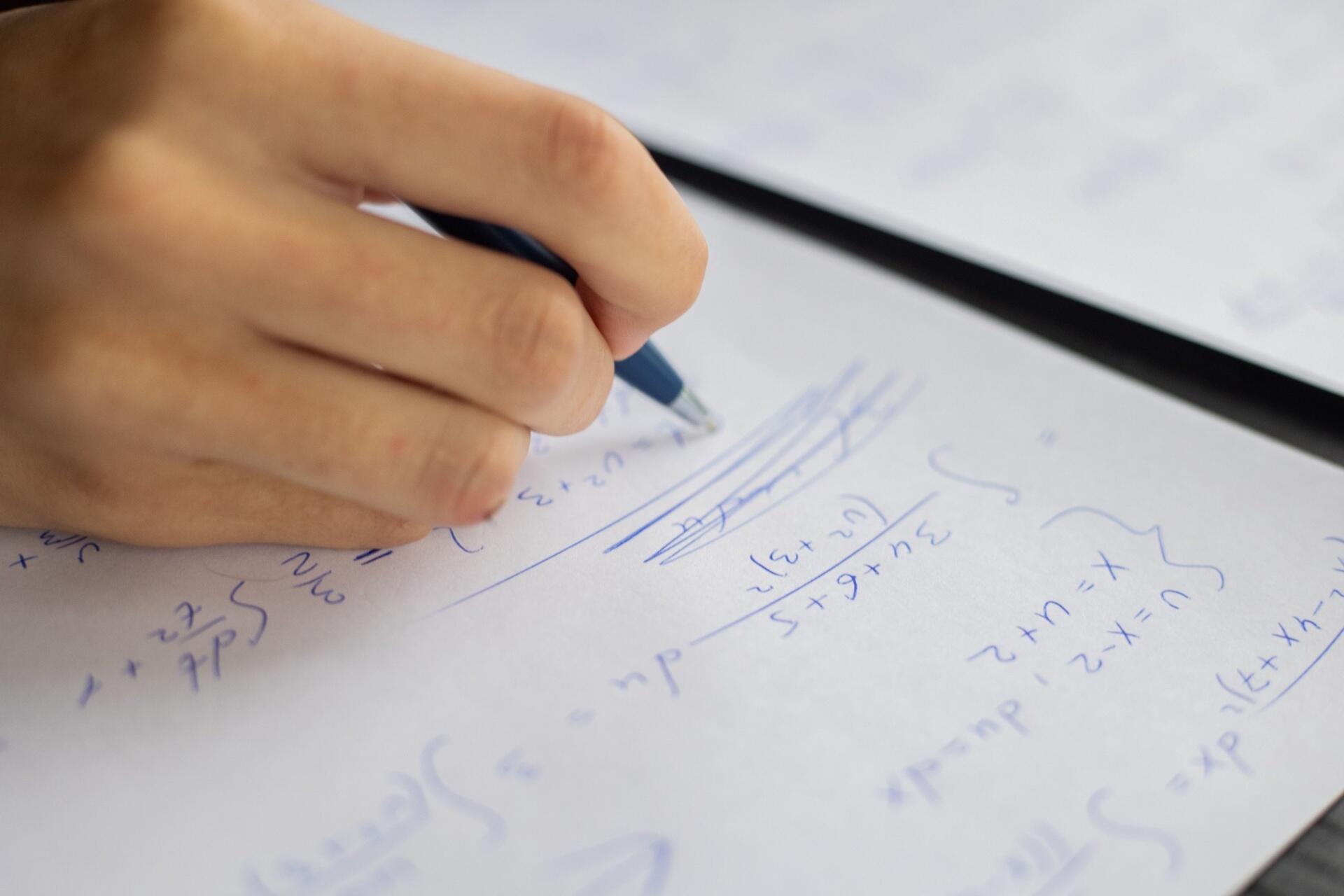
Formula → substitution → working → final answer
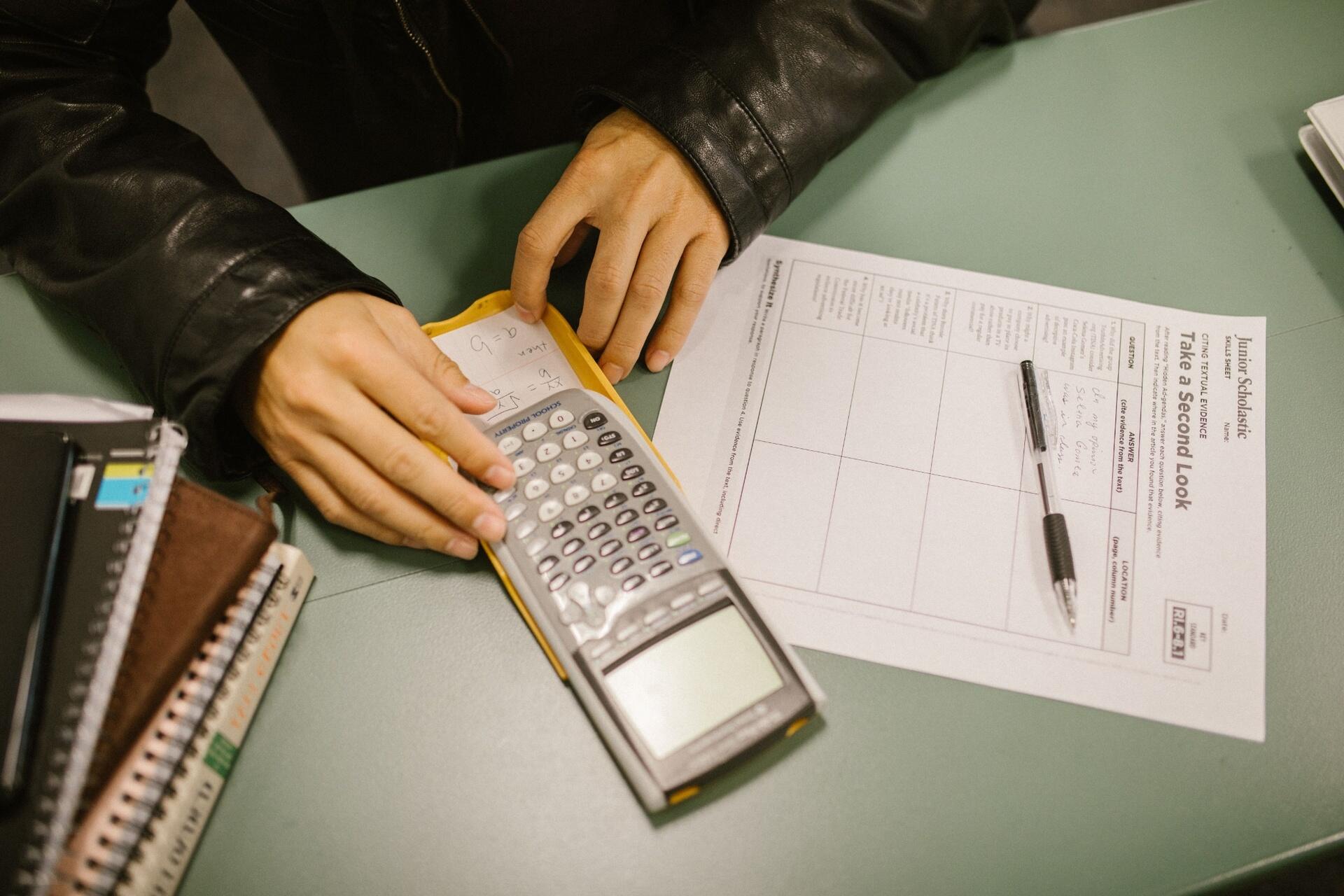
Write one meaningful stage per line and label each question part correctly. If a calculator is used, first show the equation, expression or model from which the calculator result was obtained. Keep exact values or additional decimal places during the working and round only the final answer according to the question’s instructions. For further guidance, review the current SPM Additional Mathematics format.
🔣 Use mathematical notation carefully
Careless notation can make a correct idea appear invalid or ambiguous. Watch for these common presentation errors:
- Missing brackets: Use brackets when substituting negative values or compound expressions.
- Incorrect equality signs: Every expression connected by an equals sign must have the same value. For example, write x^2 = 9, followed by x=±3—not x^2=9=±3.
- Premature rounding: Retain exact values or sufficient decimal places until the final stage.
- Missing (±): Include both signs when taking a square root if both solutions are permitted.
- Incorrect calculus notation: Use (\frac{dy}{dx}), (\frac{d^2y}{dx^2}) and (\int f(x),dx) correctly. Include (+C) for an indefinite integral, but not for a definite integral.
- Unsupported calculator answers: Do not present an unexplained decimal without showing the equation or expression that produced it.
Notation should also remain consistent. Do not change variables midway, omit differentials or use an approximate sign ((\approx)) as though it were an exact equality.
✅ Check your answer before moving on
Use the checking method that suits the question:
- Equations: Substitute each solution into the original equation.
- Numerical answers: Estimate whether the size and direction of the answer are plausible.
- Applied questions: Check signs, units, required accuracy and domain restrictions.
- Calculus: Differentiate an indefinite integral to see whether it returns the original function.
- Graphs and intersections: Compare calculated coordinates with the sketch and check that they lie in the required interval.
- Trigonometry, logarithms and surds: Confirm the calculator mode and reject values that violate stated intervals or mathematical restrictions.
A brief check can identify a missing negative sign, invalid root or calculator-mode error before marks are lost.
The study of mathematics, like the Nile, begins in minuteness but ends in magnificence.
- Charles Caleb Colton
🧠 SPM Add Maths Paper 2 solutions: How to learn from them
SPM Add Maths Paper 2 solutions should be used to understand why a method works—not simply to copy an answer. A reliable solution can reveal the point at which your reasoning changed direction and help you choose a more suitable revision task.
🔎 Where to find reliable solutions
Use the following order of trust:
- Official marking schemes or published solutions: Prioritise materials released by the Ministry of Education Malaysia or Lembaga Peperiksaan for the exact paper and year. The official KMJ SPM 2024 includes examiner commentary for Additional Mathematics Paper 2 (3472/2). However, it should not be labelled a complete marking scheme unless the authority describes it as one.
- Teacher-verified solutions: Next, use answers checked by an identifiable Additional Mathematics teacher, school or tuition centre. Confirm that the paper code and year match your question and check whether corrections or updated versions have been issued. These remain independently produced solutions unless published by KPM or Lembaga Peperiksaan.
- Peer or community solutions: Use forum posts, shared notes and student-created answers only as secondary references. They may contain valid alternative methods, but they can also include unsupported steps or transcription errors.
If two solutions disagree, compare them with the original question and consult a qualified teacher. Do not assume that the most widely shared answer is necessarily correct. For additional practice, explore our collection of SPM Add Maths past papers.
⏳ Do not read the solution too early
Before opening the solution, set a fixed attempt period—such as 5–10 focused minutes for one difficult sub-question. This is a revision technique rather than an official examination timing rule.
Write your best method and identify the exact line where you became stuck. Then reveal only the next step or a small hint. Cover the solution and complete the remaining work yourself. Finally, begin again on a blank page and solve the entire question without assistance.
This approach is consistent with the Institute of Education Sciences practice guide, which recommends alternating worked solutions with independent problem-solving and using active retrieval to strengthen learning.
🛠️ Turn every wrong answer into a revision task
The following framework converts each error into a specific action. These are practical revision categories, not official Lembaga Peperiksaan marking labels.
| Mistake type | What it means | What to do next |
|---|---|---|
| Concept gap | The underlying idea is not understood or is applied in the wrong situation. | Review the concept and one worked example. Explain why the method applies, then complete two similar questions without notes. |
| Formula gap | The correct formula cannot be recalled, or the wrong relationship is selected. | Record the formula with its conditions and units. Practise recognising when it applies before attempting a fresh question. |
| Algebra/calculation error | The method is suitable, but the manipulation or arithmetic becomes incorrect. | Locate the first incorrect line, redo it carefully and verify the result independently. |
| Misread question | Important information, a restriction or the required answer form has been misunderstood. | Paraphrase the task in one sentence, list its constraints and attempt it again. |
| Poor time management | Too much time is spent on one part, leaving accessible marks elsewhere unfinished. | Repeat the question with a pre-set time limit and establish a clear point at which to move on. |
| Incomplete working | Important reasoning or intermediate steps are missing. | Compare your work with a verified solution, identify the first missing step and redo the question without reference. |
| Careless sign/rounding error | A sign, bracket, calculator setting or early approximation changes the result. | Retain exact values until the final stage and apply a short accuracy check before submitting the answer. |
📝 Paper 2 SPM Add Math Tips in Stages
Good preparation should lead to a clear plan for using your knowledge inside the examination hall. The following stages focus on practical decisions before and during Paper 2, rather than repeating general revision methods. Always follow the instructions printed on your examination paper and any directions given by the invigilator.
🧮 Before the exam
Treat your calculator and stationery check as part of your examination preparation. Confirm with your school that your calculator model complies with the latest rules, test its keys and display, and check the battery condition.
KPM’s published scientific-calculator specification includes a non-programmable design and the ability to switch between degrees and radians, but candidates should still verify the requirements for their own examination sitting.
Pack working pens, pencils, an eraser, a ruler and any other permitted mathematical instruments in advance.
Use your final full-paper practice as an examination rehearsal. Work without pauses, notes or outside help, using only the equipment you expect to have at your desk.
Afterwards, review only the formulae or standard solution methods that you could not recall quickly. This produces a focused final checklist instead of another broad review of the syllabus.
Which Paper 2 area costs you the most marks?
✍️ During the exam
Read the instructions carefully, make sure the paper is complete and scan the questions before committing to an answering order.
Build a rough time budget from the marks available while reserving time for checking. Beginning with questions you understand can help you establish momentum, provided every answer and subpart is numbered unmistakably.
Write enough algebra, substitution and transformation for your reasoning to be followed. If a solution is uncertain, leave sufficient space for additions or corrections instead of crowding later working into the margin.
When a difficult part stops producing progress, record any valid method you know, flag the item and continue elsewhere. Return to it after securing marks from questions you can complete more efficiently.
✅ In the final 10 minutes
Use the closing minutes for a systematic audit rather than reading the paper randomly. Match every answer to its question number and confirm that no subpart has been overlooked.
Trace negative signs, brackets, copied values and calculator entries, then make each final answer easy to identify. Check required units, stated rounding accuracy and labels on diagrams; where a diagram is not drawn to scale, rely on the supplied measurements and mathematical relationships rather than its appearance.
Paper 2 exam plan
First 5 minutes
Read the paper instructions, check that all pages are present, identify suitable starting points and establish time checkpoints.
Main answering period
Follow your chosen order, keep the mathematical method visible and flag incomplete parts for a later return.
Final 10 minutes
Complete any short recoverable steps, then audit numbering, omitted parts, arithmetic, signs, units, rounding and final answers.
📘 How to study for SPM Add Maths Paper 2 effectively
Effective Paper 2 preparation should progress from mastering individual topics to solving mixed, multi-step questions under examination conditions. Use the following approach after familiarising yourself with the current format, available papers and answer-writing requirements.
🧱 Build topic mastery before full papers
Use topical practice when a concept is weak, when your score shows that a particular topic needs attention or when you are not yet ready for a complete paper. It allows you to concentrate on applying one method correctly before deciding between several possible approaches.
Follow this progression:
- Learn the method: Understand what the method does and when it applies.
- Attempt guided examples: Complete questions containing prompts or partially demonstrated steps.
- Complete topical questions: Apply the same idea independently in different forms.
- Attempt mixed questions: Identify the relevant topic and method without being told.
- Complete full papers: Combine topic recognition, multi-step reasoning and time control.
The Institute of Education Sciences study guide supports spacing learning over time and alternating worked examples with independent problem-solving.
⏱️ Complete model papers under timed conditions
Start with the most recent official papers that you have obtained lawfully through your school or another authorised source. Once you have worked through these, progress to suitable state trial papers for exposure to different applications and question styles.
Follow the current time limit, examination instructions and rules concerning permitted materials. Do not copy the structure or instructions of an older trial paper without checking them against the latest Lembaga Peperiksaan assessment information and the instructions printed on the actual paper.
Set aside at least the same amount of time for reviewing the paper as you spent attempting it. This is a practical study recommendation rather than an official examination rule. Use the review period to decide what your next revision session should address.

🕧 Use a 30-minute Paper 2 revision session
When you cannot complete a full paper, use one focused 30-minute session:
- 5 minutes: Recall and review one formula, principle or standard method.
- 15 minutes: Attempt one or two Paper 2-style questions without notes.
- 5 minutes: Mark the answers and identify the first error or uncertain step.
- 5 minutes: Write the corrected working or one precise takeaway for your next attempt.
Keep the session focused on a small number of questions. The objective is to produce evidence of improvement, rather than accumulate unfinished exercises.
🙋 Ask for targeted help
Before approaching a teacher, bring:
- The original question
- Your attempted working
- The exact step where you became stuck
- The method you intended to use
This gives the teacher enough information to diagnose the difficulty without solving the entire question from the beginning. For example, ask: “I planned to use this method, but I became stuck at this step. Is my proposed approach suitable?”
The IES mathematical problem-solving guide recommends helping students monitor and reflect on their problem-solving process and recognise alternative strategies.
Weekly SPM Add Maths Paper 2 study plan
| Day/session | Primary focus | Paper 2 task | Suggested time | Evidence of completion |
|---|---|---|---|---|
| Monday | Repair one weak topic | Study one modelled method, complete two guided examples and then answer two topical questions independently. | 45 minutes | A short method summary and marked answers |
| Tuesday | Mixed-topic decisions | Attempt three structured questions from different topics without notes; record which method you selected for each. | 45 minutes | Completed questions and method-choice notes |
| Wednesday | Compact revision | Use the 30-minute sequence: 5 minutes review, 15 minutes questions, 5 minutes marking and 5 minutes correction. | 30 minutes | One corrected solution or key takeaway |
| Thursday | Longer multi-step problem | Complete one unfamiliar Paper 2-style problem, annotate the reasoning and repeat it independently if support was needed. | 45 minutes | An independent final solution |
| Friday | Targeted teacher support | Prepare the original question, attempted working, precise sticking point and proposed method; redo the question after feedback. | 30 minutes | Feedback note and revised attempt |
| Saturday | Timed paper | Use a recent official paper obtained lawfully; then move to a suitable state trial or model paper. Follow current timing and examination rules. | Current official time limit | A completed paper with start and finish times |
| Sunday | Deep review and next-step planning | Review the timed paper for at least as long as the attempt took, then choose one concrete objective for the following week. | At least the attempt time | Checked paper, corrections and next-week objective |
This is a sample revision plan, not an official schedule. Students should adjust it according to their current level and available study time.
🧮How can I study additional mathematics effectively?
Nevertheless, the best time to start studying is now.
Even if you are down to the last few months (or even weeks!) before your SPM Add Maths exam, an experienced tutor can help you identify areas in Add Maths that you should focus on, as well as guide you on how to improve in those areas. At Superprof, you can choose from our list of over 300 Add Maths tutors who can walk you through those necessary skills.
To study additional mathematics effectively, an important component is creating an ideal learning environment. You may realise that you learn better in class settings, or perhaps on your own - thankfully, Superprof tutors are ready to have both one-on-one and group lessons with you. Apart from learning Add Maths with other students, are you interested in having virtual lessons?
Yes, Superprof indeed provides both online and physical classes for additional mathematics. Before opting for either of those choices, remember to check with your tutor first. Look out for details such as their availability for virtual lessons, hourly rates and student recommendations. Take it a step further by signing up with Superprof, and you can immediately schedule your first lesson!
You don't have to worry about any additional fees because you can sign up with Superprof for free! Come and experience quality learning with us.
Your Final Revision Checklist
Before you head into your examination hall, do not forget to ask yourself these questions
✏️REVISE
- Review formulas
- Review difficult topics
- Review Mistakes
📚PRACTICE
- Past-year questions solved
- Trial Papers solved
- Timed Practice
⏰PREPARE
- Plan your time
- Know what to do when stuck
- Check calculations
With these checks in place, you can approach SPM ADD MATHS PAPER 2 with absolute confidence and a greater strategy. Remember to stay calm and trust your preparations and give solution to every questions with your best mind.
Success in SPM Add Maths Paper 2 comes from understanding the current format, showing clear mathematical reasoning and using practice papers purposefully.
Build weaker topics before attempting complete papers, review solutions only after making a genuine attempt and turn each mistake into a focused revision task. With consistent timed practice and targeted support when needed, unfamiliar multi-step questions can become more manageable.
References
- SPMpaper. (n.d.). SPM Add Maths previous year and trial question papers. SPM Trial Paper. SPM Add Maths Previous Year and Trial Question Papers
- Lim, D. (n.d.). SPM 2011 to 2024 question papers. Daniel Lim's Blogspot. SPM 2011–2024 Question Papers
- EduKaji. (2025). SPM trial paper download: Mathematics. SPM Mathematics Trial Papers 2025
- Kementerian Pendidikan Malaysia (KPM).Jadual Waktu Peperiksaan Sijil Pelajaran Malaysia (SPM) 2025. 2025. KPM Official Website
- Kementerian Pendidikan Malaysia. Jadual Waktu Peperiksaan Sijil Pelajaran Malaysia (SPM) 2025. Lembaga Peperiksaan. https://www.moe.gov.my/
- Kementerian Pendidikan Malaysia. Garis Panduan Pelaksanaan Dual Language Programme Kementerian Pendidikan Malaysia Tahun 2024. https://www.moe.gov.my/storage/files/shares/pekeliling_dan_garis_panduan/ikhtisas/2024/SPI%20KPM%20Bil.%205%20Tahun%202024%20Garis%20Panduan%20Pelaksanaan%20Dual%20Language%20Programme%20Kementerian%20Pendidikan%20Malaysia%20Tahun%202024..pdf
- Kementerian Pendidikan Malaysia. Pakej Mata Pelajaran bagi Setiap Bidang. https://www.moe.gov.my/index.php/pakej-mata-pelajaran-bagi-setiap-bidang-2
- Kementerian Pendidikan Malaysia. Surat Pekeliling Ikhtisas Bil. 3 Tahun 2002: Pelaksanaan Kalkulator Saintifik. https://www.moe.gov.my/index.php/spi-bil-3-tahun-2002-pelaksanaan-kalkulator-saintifik
- Bumi Gemilang. Soalan Percubaan SPM 2026 2025 Matematik Tambahan + Jawapan. Bumi Gemilang. https://www.bumigemilang.com/soalan-percubaan-matematik-tambahan/
Summarise with AI:
Did you like this article? Leave a rating!

 Loading...

I want to learn add math