SPM Additional Math, or SPM Additional Mathematics, is a secondary-school mathematics subject that builds on core Math and other higher-level problem-solving topics. Although many students find Additional Math challenging at first, it becomes manageable when you understand the fundamentals, practise consistently and review mistakes topic by topic.
This guide covers the SPM Additional Math syllabus, key topics, revision methods and practice resources to aid you prepare confidently.
SPM Additional Math is an advanced secondary-school Mathematics subject covering topics such as algebra, functions, calculus, trigonometry and probability. Strong conceptual understanding and regular practice are key to doing well.


📝What Is Add Maths SPM?
SPM Additional Mathematics builds on core Mathematics by introducing more advanced concepts and problem-solving techniques. It helps students develop the mathematical foundation needed for further study in science, engineering, technology, business and related fields.
How Is Add Maths Different From Mathematics?
Although Mathematics and Additional Mathematics share the same foundation, Additional Math takes students further into advanced concepts and more demanding problem-solving.
Students work with more algebraic manipulation and abstract concepts, requiring a stronger understanding of equations, expressions and mathematical relationships.
Answers often require several steps. Students must identify what is being asked, select the correct method and connect different concepts to reach the solution.
Additional Math places greater emphasis on formulas, graphs, functions and mathematical reasoning, so understanding when and how to apply a method is essential.
Getting the final answer is not enough. Students need to show clear, accurate and logical working, as each step demonstrates how the solution was reached.
🧑🔬Who Should Take SPM Additional Mathematics?
Wondering whether SPM Additional Math is the right subject for you? It can be a valuable choice if your interests and future study plans involve mathematics or analytical problem-solving.
Additional Math is particularly relevant for students considering science, technology, engineering, mathematics, computing, economics or other quantitative fields.
If you enjoy working through challenging sums, recognising patterns and finding logical solutions, Additional Math can aid you develop those abilities further.
The subject can provide useful preparation for studying more advanced mathematics and mathematics-based subjects later.
Additional Math is not automatically the best option for every student. Its suitability depends on your academic goals, your school’s subject package and your current confidence level in Mathematics.
Who Should Take SPM Additional Mathematics?
Additional Mathematics is also included in several upper-secondary subject packages offered by Malaysian schools.

✏️SPM Mathematics vs Additional Mathematics: Key Differences
Mathematics
- 🔢 Focuses on core numerical and mathematical skills
- ➗ Uses relatively straightforward calculations and methods
- 📝 Problems are often shorter and more direct
- 📊 Covers fundamental graphs and mathematical relationships
- 🎯 Focuses on applying standard mathematical methods correctly
- ✅ Correct final answers are important
Additional Mathematics
- 🧠 Covers more advanced and abstract mathematical concepts
- 🧩 Requires more complex algebraic manipulation
- 🔗 Greater emphasis on multi-step problems.
- 📈 Makes greater use of functions, formulas and advanced graphs
- 💡 Requires deeper mathematical reasoning and selecting suitable methods
- ✍️ Clearly shown working is especially important
😰Is SPM Add Maths Hard?
SPM Additional Math can be challenging, but how difficult it feels often depends on a student’s mathematical foundation and practice habits. Since topics build on one another, small algebra mistakes or gaps in earlier concepts can make later sums harder. Regular practice and reviewing weak areas are therefore more effective than relying on last-minute revision.
🤔Why Students Find Additional Maths Difficult: How Hard Is Add Maths SPM?
Thinking about whether “Is SPM Additional Math difficult?” or “How difficult is Additional Math SPM?”, usually it is not a certain topic that creates difficulties for students, but rather the gaps in the knowledge as well as revision habits that hinders students learning.
🧮 Weak mathematical foundations
Students who have not fully mastered algebra, fractions, indices, surds or logarithms may struggle when these skills appear within more advanced sums. Since many Additional Math topics depend on these fundamentals, even a small knowledge gap can affect several areas of the syllabus.
🧠 Memorising methods without understanding them
Simply memorising formulas or solution steps is rarely enough. Students need to understand why a method works and when to use it, particularly when a sum is presented differently from examples they have practised.
✍️ Not showing full workings
Additional Maths often involves multi-step solutions. Skipping steps can make it harder to identify mistakes and may prevent students from demonstrating the correct method. Writing complete, organised workings also makes checking an answer much easier.
🔍 Skipping corrections and error review
Completing practice sums without reviewing incorrect answers limits improvement. Students should revisit mistakes, understand what went wrong and attempt alike sums again so that the same errors are less likely to recur.
⭐ Practising only favourite topics
It can be tempting to spend most revision time on topics that already feel comfortable. However, repeatedly practising strengths while avoiding weaker areas can leave major gaps. A balanced revision plan should give additional attention to difficult topics while maintaining stronger ones.
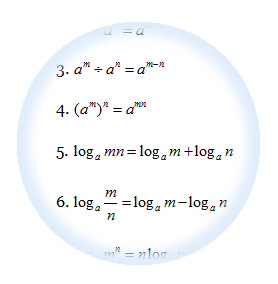
😰Is SPM Add Maths Hard?
🔨Can You Improve in Additional Maths?
Yes. Improvement in SPM Additional Math is realistic, but it usually requires consistent, targeted practice rather than trying to cover everything at once. If you are concerned about how hard Additional Math SPM can be, focusing on the right study habits can make difficult topics progressively more manageable.
📊 Which Part of Additional Math Do You Find Most Challenging?
📖SPM Add Maths Syllabus and Topics
The SPM Add Maths syllabus covers a range of interconnected topics designed to strengthen algebraic thinking, mathematical reasoning and problem-solving skills. Understanding the main SPM Additional Math topics helps students organise revision, identify weaker areas and build a more focused study plan for the examination.
Topic wording, assessment formats and curriculum requirements may change. Always verify this overview against your school’s latest KSSM/DSKP documents and current official examination guidance.
Form 4 Additional Math Topics
Form 4 introduces many of the foundational SPM Additional Math topics that students will continue using in more advanced sums. Building a strong understanding of these areas early can make the transition to Form 5 topics considerably smoother.
| 📚 Topic | 🎯 What Students Focus On |
|---|---|
| Functions and graphs | Understanding functions, their representations and relationships through equations and graphs. |
| Quadratic functions and equations | Working with quadratic expressions, equations, graphs and related problem-solving methods. |
| Simultaneous equations | Solving problems involving two or more equations and interpreting their solutions. |
| Indices, surds and logarithms | Applying index laws and working accurately with surds and logarithmic expressions. |
| Progressions | Recognising patterns and working with mathematical sequences and progressions. |
| Linear law | Transforming relationships into linear forms and interpreting straight-line graphs. |
| Coordinate geometry | Using algebra and coordinates to investigate points, lines and geometric relationships. |
| Vectors | Working with vector quantities, operations and their applications in mathematical problems. |
Form 5 Additional Maths Topics
Form 5 builds on the mathematical foundations developed in Form 4 and introduces topics requiring more advanced reasoning and multi-step calculations. Students should continue revisiting earlier concepts while learning these newer areas.
| 📘 Topic | 🎯 What Students Focus On |
|---|---|
| Circular measure | Working with angles, arcs, sectors and measurements involving circles. |
| Differentiation | Understanding rates of change, gradients and applications of derivatives. |
| Integration | Working with integration techniques and applying them to mathematical problems. |
| Permutations and combinations | Counting and determining possible arrangements or selections under different conditions. |
| Probability distributions | Understanding probability models and interpreting distributions in different situations. |
| Trigonometric functions | Applying and interpreting trigonometric functions, relationships and equations. |
| Solutions of triangles | Using appropriate trigonometric methods to determine unknown sides, angles and other measurements. |
| Other current KSSM Form 5 topics | Additional topics and requirements specified in the latest official syllabus should also be included in the student's revision plan. |
How Form 4 Topics Support Form 5 Add Maths
SPM Additional Math is designed as a progressive subject, which means many Form 5 topics depend on skills developed during Form 4. Instead of treating each chapter separately, students should understand how earlier concepts connect with more advanced topics. Strengthening Form 4 foundations can therefore make Form 5 Additional Math easier to approach.
Form 4 vs Form 5 SPM Add Maths Topics
| Form 4 Foundation | How It Supports Form 5 |
|---|---|
| 🔢 Algebra | Supports functions, differentiation and integration |
| 📈 Functions & graphs | Helps students understand functions and calculus concepts |
| 📐 Trigonometry foundations | Supports trigonometric functions, solutions of triangles and application questions |
| 🎲 Probability concepts | Supports counting methods and probability distribution questions |
🔗 See How the Topics Connect
👩🎓How to Study Add Math Effectively
Start with official KPM curriculum and textbook resources, then use supplementary explanations and practice materials to reinforce your understanding1. Knowing how to study Additional Math the right way requires more than just devoting countless hours to memorising formulas alongside understanding the SPM add math exam's format.
The process needs to begin with learning the basics before going on to study each unit individually, practising fully worked problems, figuring out what mistakes are made, and only then introducing timed problems into the mix.
Step 1: Strengthen Your Math Foundations
Before attempting difficult SPM-level sums, make sure your basic mathematical skills are reliable. Weak foundations can turn an otherwise manageable Additional Math sum into a frustrating one.
Simplifying, expanding and factorising expressions.
Calculating accurately with signs and fractions.
Understanding and applying index laws correctly.
Making a required variable the subject.
Working logically through equations to find unknown values.
Understanding coordinates, gradients, intercepts and graph behaviour.
Step 2: Learn One Topic Before Doing Mixed Questions
Avoid jumping immediately into mixed examination papers when you have only just started learning a topic. Instead, use the same topic-by-topic learning process each time.
- 📖 Learn the concept and formulas: Understand what the topic is about, what each formula means and when it should be applied.
- 👀 Review worked examples: Study complete solutions and pay attention to how each step leads to the next.
- ✏️ Complete basic sums: Start with straightforward sums to check whether you understand the concept.
- 🧩 Progress to structured and exam-style sums: Once the basics feel comfortable, attempt sums that require several steps or combine different skills.
- 🔄 Mark, correct and repeat: Check your answers, identify weak sum types and practise alike problems until you can solve them independently.
Step 3: Practise With Full Working
Avoid rushing from the sum to the solution. When practising Additional Math effectively, clearly outline every step of your calculations.
This will aid you pinpoint where the mistake was made. Instead of simply knowing that you made an error, you will be able to see whether the mistake was in the calculations, formulas, or algebra.
Furthermore, having detailed workings may also enable students to get method marks even if their final answer does not match the correct answer. Most importantly, detailed workings allow for corrections to be made at ease since one can follow the steps in reaching the correct answer.
Write enough working that you can understand your own solution when you return to the sum several days later.
Step 4: Keep an Additional Math Mistake Book
One of the most useful ways to improve is to keep a dedicated Additional Math mistake book or error log. Instead of completing a sum and forgetting about it, record mistakes that reveal something you need to improve.
| Record | What to Write |
|---|---|
| 📚 Topic | The Add Maths topic being tested |
| 🧩 Question type | The specific type of problem |
| ❌ Incorrect step | Where your solution went wrong |
| ✅ Correct method | The correct approach or calculation |
| 🔁 Retry question | A similar question to attempt later |
Review the mistake book regularly. If the same error keeps appearing, it is a clear sign that the underlying concept needs additional revision.
Step 5: Revise With Timed Practice
Once you can solve sums accurately, start working on speed and examination readiness. Timed practice should be introduced gradually rather than from the beginning.
📢A Simple Additional Math Revision Cycle
Use this repeatable cycle whenever you study a new topic:
📖 LEARN
Understand the concept, formulas and when to use them.
✏️ PRACTISE
Start with basic sums before progressing to harder ones.
✅ MARK
Check your answers carefully against reliable solutions or marking guidance.
🔍 CORRECT
Find the exact step where you went wrong and understand why.
🔁 RETRY
Attempt the question- or the same one- again without looking at the solution.
⏱️ TEST YOURSELF
Use timed topical sums or exam-style practice to check whether you can apply the skill independently.
📐A Weekly SPM Additional Math Study Plan
A structured SPM Additional Math study plan can make revision easier to manage and aid students practise consistently throughout the week. The schedules below are flexible examples rather than fixed rules; you can adjust the number, length and difficulty of sessions according to your current ability, school workload and time available.
💠Sample Weekly Plan for Beginners
If you are still building confidence in Additional Math, focus first on understanding individual topics and developing accurate problem-solving habits.
💠Sample Weekly Plan for Students Closer to SPM
As the examination approaches, revision can gradually shift towards timed practice, mixed-topic questions and exam-style papers.
| Revision Activity | Suggested Frequency | Main Goal |
|---|---|---|
| ⏱️ Timed topical sets | 2 sessions | Improve speed and accuracy within individual topics |
| 🔀 Mixed-topic set | 1 session | Practise identifying which methods and formulas to use |
| 📝 Trial-paper section | 1 session | Build familiarity with exam-style questions and pacing |
| 🔍 Error correction | 1 session | Review mistakes and strengthen recurring weak areas |
| 🧠 Formula & strategy review | 1 session | Refresh formulas, concepts and problem-solving strategies |
Do not simply complete more questions. Spend time understanding why you lost marks and how you can avoid repeating the same mistakes.
Beginner vs Exam-Period Additional Math Schedule
| Beginner Schedule | Closer to SPM |
|---|---|
| 📖 Learn and revise individual topics | ⏱️ Complete timed topical sets |
| ✏️ Practise topic-specific exercises | 🔀 Practise mixed-topic questions |
| 🧱 Strengthen mathematical foundations | 📝 Attempt trial-paper sections |
| 🔍 Correct mistakes carefully | 🔍 Analyse errors and recurring weaknesses |
| 🧠 Review formulas and concepts | 🧠 Review formulas and exam strategies |
| 🎯 Focus on understanding and accuracy | 🎯 Focus on accuracy, speed and exam readiness |

How Long Should You Study Additional Math?
- ⏱️ Focus on consistency: Regular study sessions are generally more useful than occasional study marathons.
- 🎯 Prioritise focused practice: Spend your study time actively solving, marking and correcting sums.
- 📚 Keep sessions manageable: Break revision into shorter, focused sessions with regular breaks.
- ⚖️ Balance your subjects: Leave enough time for schoolwork, other SPM subjects and rest.
🚨SPM Add Math Practice Sums, Trial Papers and Past-Year Revision
At each stage of revision, using the appropriate SPM Additional Math practice sums and learning about the marking scheme has an impact. The subject exercises, practice sums, school trial tests, and previous years' papers are all used for various reasons; hence, effectively studying for an examination involves gradually progressing from learning each concept to practising under examination conditions rather than rushing into comprehensive papers.
❓Which Additional Maths Practice Resource Should You Use?
| Resource Type | Best For | When to Use | Access / Link |
|---|---|---|---|
| 📘 Textbook exercises | Understanding concepts and practising fundamental methods | When learning or revising a new topic | Official digital textbook access may be available through KPM/DELIMa |
| ✏️ Topical questions | Strengthening individual topics and specific question types | After learning a topic and before attempting mixed papers | Use school-provided or legally published practice materials |
| 📝 School trial papers | Finding weak areas and practising exam-style questions | Once most of the syllabus has been covered | Availability varies by school/state; use authorised copies |
| ⏱️ Past-year papers | Exam technique, pacing and familiarity with question styles | During later-stage SPM revision | Use official or legally distributed papers where available |
✏️Start With Topical Practice Sums
If you are still learning the syllabus, begin with SPM Additional Math topical sums instead of attempting complete papers immediately.
Choose one topic, review its concepts and formulas, and then complete several sums focusing specifically on that area. For example, if you are revising differentiation, practise basic differentiation before progressing to more complicated applications.
A useful progression is:
Learn the concept → Basic sums → Structured sums→ Exam-style sums → Mixed practice
“The only way to learn mathematics is to do mathematics.”
- Paul Halmos
✏️Use Trial Papers to Find Weak Areas
SPM Additional Math trial papers can be useful once you have covered most of the syllabus. Because they combine different topics, they test whether you can recognise the appropriate method without being told which chapter a sum belongs to.
After completing a trial paper, look for patterns:
- 🔍 Which topics repeatedly cost you marks?
- ⏱️ Which sums take too long?
- 🧮 Are algebra mistakes affecting otherwise correct methods?
- ❓ Are there sum types you regularly misunderstand?
- ✍️ Are you losing marks because your work is incomplete?
Treat trial papers as diagnostic tools, not predictions of exactly what will appear in SPM. A sum appearing frequently in trial papers does not guarantee that the same topic or sum style will appear in the actual examination.
✏️Use Past-Year Papers for Examination Technique
Once you are comfortable with most individual topics, past-year practice can aid in shifting your focus from learning Additional Math to performing under examination conditions.
Complete papers or sections within realistic time limits. Track where you spend too long and practise making decisions about when to continue with a sum and when to move on.
Pay attention to how sums present mathematical information. Learning to identify what a sum is actually asking is an important part of examination preparation.
Notice common instructions and command words in sums. Make sure your response actually provides what the sum requests rather than simply performing a familiar calculation.
Where an authorised marking scheme is available, compare the expected method with your own working. Do not check only the final answer, look at the sequence of mathematical steps as well.
As SPM approaches, attempt complete papers without notes, unnecessary interruptions or checking solutions midway through the session. This helps build concentration, pacing and examination endurance.
Topical sums build skills → trial papers reveal weaknesses → past-year practice develops examination technique.
How to Review a Completed Paper
Finishing a paper is only half of the revision process. The biggest improvement often comes from what you do after marking it.
- ⏳ Retake the paper or a alike set later: Return to the sums after some time has passed. This tests whether you have actually corrected the weakness rather than simply remembered the solution.
- ✅ Mark the paper: Check every answer carefully using an authorised marking scheme or reliable solution where available.
- 📚 Categorise errors by topic: Label each mistake- for example, algebra, differentiation, integration, trigonometry or probability.
- 🔄 Redo incorrect sums without notes: After reviewing the correct method, close your notes and attempt the sum independently again.
- 🧩 Repeat the same type of sums: Find sums testing the same skill and check whether you can now apply the method without assistance.
⚠️ Common SPM Additional Math Mistakes to Avoid
Small mistakes can cost valuable marks in SPM Additional Mathematics, even when you understand the topic. Keep these common errors in mind while practising:
- Skipping algebra steps: Show enough working to keep your method clear and avoid careless errors.
- Using formulas incorrectly: Check what the sum requires before applying a formula.
- Forgetting restrictions, units or signs: Pay close attention to negative signs, valid values and required units.
- Rounding too early: Keep sufficient accuracy during calculations and round only when necessary.
- Not checking your answer: Make sure the final value is reasonable for the question.
- Spending too long on one question: If you're stuck, move on and return to it later.
- Leaving sums blank: Attempt a relevant formula or method and show your working where possible.
- Studying only familiar topics: Spend time strengthening weaker topics too.
✅ A Quick Answer-Checking Routine
Before moving to the next question, take a few seconds to check your answer. This simple routine can aid you in catching small mistakes that may cost marks:

- Check units and accuracy: Confirm the correct units and decimal places.
- Check signs: Look carefully for negative values and missing + or − signs.
- Check calculator settings: Make sure your calculator is in the correct mode, such as degrees or radians, where relevant.3.
- Check by substitution: Substitute your answer back into the equation.
- Check your result: Make sure the answer or graph makes mathematical sense.
To understand the examination format, sum structure, and effective answering strategies in more detail, refer to our guide on Tips to Succeed Add Mathematics Paper 2026.
Before moving to the next question, quickly check that all positive and negative signs are correct and your calculator is in the right mode. Where possible, substitute your answer back into the original equation to check it. Make sure your final answer or graph looks reasonable, and finally check that you have used the correct units, decimal places and required accuracy.
Useful Resources for SPM Additional Maths Students
Aid in SPM Additional Mathematics does not always mean that you need to hire a tutor right away. There are times when a single explanation from a teacher, a chat with a peer, or a good site is all that you need to understand a tricky concept. At the same time, extra assistance could be beneficial when you deal with recurring basic algebra issues, require support to begin solving sums, do not learn from your mistakes, or find yourself behind after missing lessons.
👩🏫 Which Type of Support Is Right for You?
| Type of Support | Best For | How It Can Help |
|---|---|---|
| Ask your teacher | Specific questions or concepts you do not understand | Your teacher can clarify methods, explain mistakes and help you understand what went wrong. |
| Study with classmates | Revision, discussion and practice | Working together allows you to compare methods, explain concepts to each other and practise regularly. |
| Use online resources | Reviewing topics at your own pace | Videos, worked examples and practice resources can help you revisit concepts whenever you need them. |
| Work with an Add Maths tutor | Persistent difficulties or more personalised support | A tutor can identify weaker areas, provide targeted practice and explain difficult concepts at your pace. |
What to Look for in an Additional Math Tutor
If you have decided to hire a tutor, you should avoid finding someone who simply gives correct answers. A good Additional Math tutor must be able to thoroughly explain the reasons why any method is efficient.
As your intelligence level rises over time, the controller must monitor progress in teaching so that lessons can be adapted. All the same, the role of a tutor is to foster independent learning rather than replace it.
✅ Final SPM Additional Maths Revision Checklist
Make use of this checklist before the SPM Additional Mathematics examination to check your preparation. You should not try to learn everything at once but rather control your weak spots while doing activities to reduce the number of faults committed in the exam.
📋 Are You Ready for SPM Additional Math?
☐ I know which Additional Math topics I still need to revise.
☐ I have identified my three weakest topics.
☐ I practise Additional Mathematics every week.
☐ I correct my mistakes and understand why my answers were wrong.
☐ I have practised sums under timed conditions.
☐ I have attempted trial or past-year SPM sums.
☐ I know which teacher, study resource, study group or tutor to turn to when I get stuck.
Don't measure your progress only by how many sums you complete. Pay attention to whether you can choose the right method, show your working clearly and solve the same type of sums independently.
Improving your SPM Additional Math results takes consistent practice, clear understanding and smart revision. Focus on your weaker areas, practise different sum types, correct your mistakes and use the right support when you need it. With steady preparation, even difficult Additional Math topics can become more manageable.
🔑 Key Takeaways
| Key Takeaway | What You Should Do |
|---|---|
| Know the SPM Add Maths syllabus | Identify the Form 4 and Form 5 topics you need to revise and plan your preparation accordingly. |
| Strengthen your fundamentals | Build a strong foundation in algebra, equations, functions and mathematical manipulation. |
| Practise consistently | Solve Add Maths questions every week instead of relying on last-minute revision. |
| Learn from your mistakes | Review incorrect answers, understand what went wrong and practise similar questions again. |
| Practise exam-style questions | Attempt trial and past-year questions and gradually introduce timed practice. |
| Check your answers carefully | Review signs, calculator settings, units, rounding and whether your final answer is reasonable. |
| Use reliable resources | Combine school materials, credible learning resources and guidance from teachers. |
| Get help when needed | Ask a teacher, join a study group, use online resources or work with a tutor if you continue to struggle. |
References
- Kementerian Pendidikan Malaysia. E-Katalog Buku Teks Kementerian Pendidikan Malaysia. Kementerian Pendidikan Malaysia, E-Katalog Buku Teks KPM.
- Kementerian Pendidikan Malaysia. “Permohonan/Kelayakan Permohonan Sekolah.” Portal Rasmi Kementerian Pendidikan Malaysia, Kementerian Pendidikan Malaysia, Permohonan/Kelayakan Permohonan Sekolah.
- Kementerian Pendidikan Malaysia. Surat Pekeliling Ikhtisas Bil. 3/2002: Pelaksanaan Kalkulator Saintifik di Sekolah Menengah bagi Pengajaran dan Pembelajaran Mata-mata Pelajaran Matematik dan Matematik Tambahan. 24 Jan. 2002, Official KPM PDF.
Summarise with AI:
Did you like this article? Leave a rating!

 Loading...