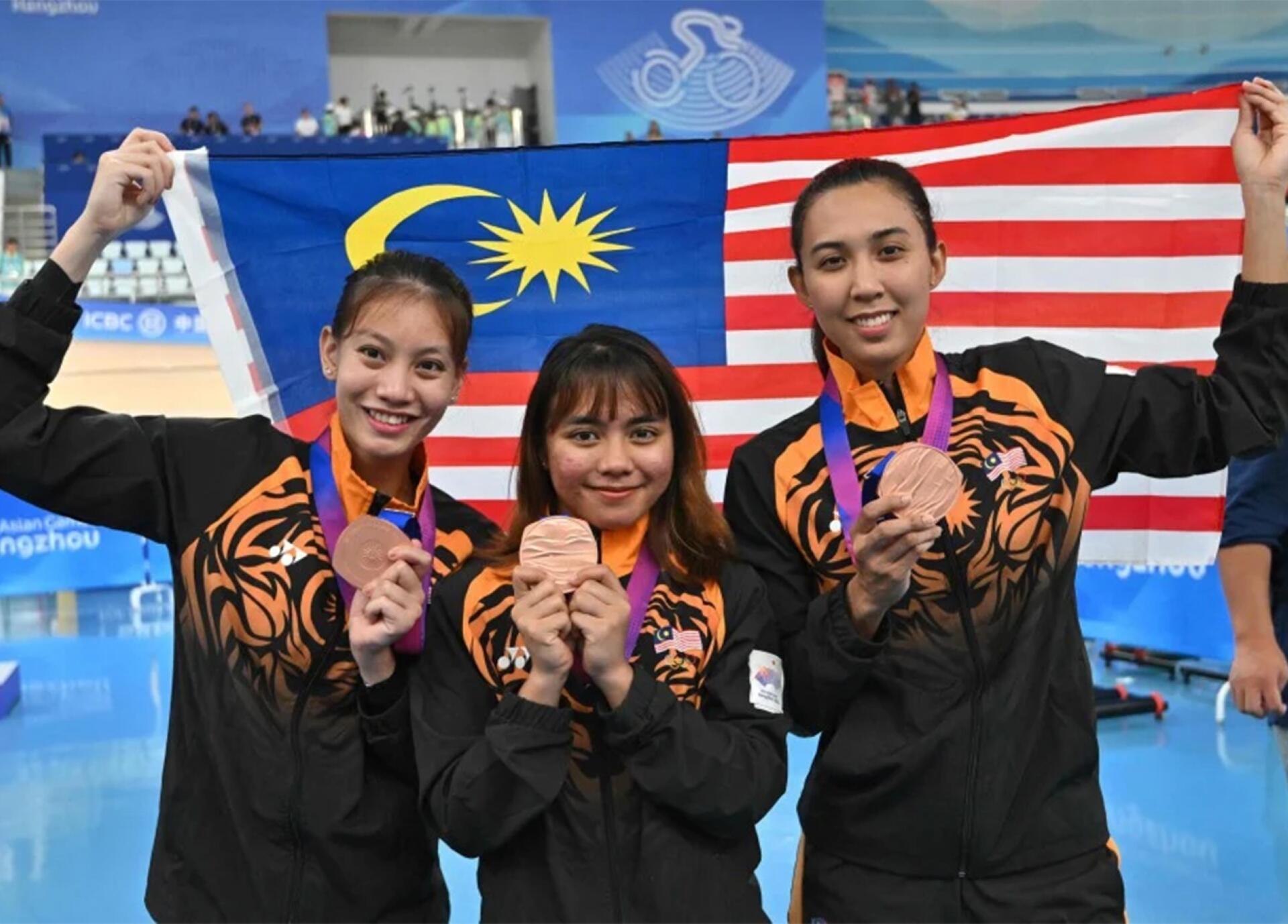

The Asian Games have played an important role in Malaysia’s sporting journey ever since the country first participated in the Asian Games of 1954. Through the decades, Malaysian players have represented the nation and delivered memorable performances in sports like athletics, badminton, squash, sepak takraw, swimming and more.
Participating in the games has not only provided Malaysian athletes with valuable international exposure but has also established Malaysia’s reputation as a sporting nation capable of delivering medal-worthy performances.
As anticipation for the Asian Games scheduled to be held in Japan 2026 builds up, you will want to keep an eye out for top Malaysian players who are all set to shine on the international stage and add to Malaysia's medal tally asian games. It will also be exciting to watch who wins Malaysia's first gold asian games this year.
Have a look at Malaysia's medal tally in the Asian Games over the years.
| Year | Host City | Gold | Silver | Bronze | Total | Rank |
|---|---|---|---|---|---|---|
| 1954 | Manila | 0 | 0 | 0 | 0 | - |
| 1958 | Tokyo | 0 | 0 | 3 | 3 | 15 |
| 1962 | Jakarta | 2 | 3 | 9 | 14 | 8 |
| 1966 | Bangkok | 7 | 5 | 6 | 18 | 4 |
| 1970 | Bangkok | 5 | 1 | 7 | 13 | 7 |
| 1974 | Tehran | 0 | 1 | 4 | 5 | 17 |
| 1978 | Bangkok | 2 | 1 | 3 | 6 | 12 |
| 1982 | New Delhi | 1 | 0 | 3 | 4 | 15 |
| 1986 | Seoul | 0 | 5 | 5 | 10 | 14 |
| 1990 | Beijing | 2 | 2 | 4 | 8 | 10 |
| 1994 | Hiroshima | 4 | 2 | 13 | 19 | 9 |
| 1998 | Bangkok | 5 | 10 | 14 | 29 | 12 |
| 2002 | Busan | 6 | 8 | 16 | 30 | 12 |
| 2006 | Doha | 8 | 17 | 17 | 42 | 11 |
| 2010 | Guangzhou | 9 | 18 | 14 | 41 | 10 |
| 2014 | Incheon | 5 | 14 | 14 | 33 | 14 |
| 2018 | Jakarta & Palembang | 7 | 13 | 16 | 36 | 14 |
| 2022 | Hangzhou | 6 | 8 | 18 | 32 | 14 |
| TOTAL | All Asian Games | 69 | 109 | 166 | 344 | - |


Early Participation and Milestones
1954
Malaysia debuts at the Asian Games
1962
Mani Jegathesan won Malaysia's first-ever gold in the men’s 200m athletics event
1978
2 gold medals in athletics and bowling each
1982
Rabuan Pit became a national hero by winning a gold medal in the men’s 100m and a bronze medal in the 200m
1986
Malaysia won 10 medals in total
1998
Malaysia sent a large contingent to the Bangkok Asian Games
2014
Malaysia won 5 gold medals in sailing, karate and squash
2018
Malaysia earned 7 gold, 13 silver, and 16 bronze medals, marking its best performance in recent years
2023
Malaysia finished 14th in the overall ranking and won a total of 32 medals
Debut in 1954
Malaysia (then Malaya) debuted at the 1954 Asian Games in Manila, marking its entry onto the Asian sporting stage and introducing Malaya to the rest of the world as a nation of budding sporting talent.
The Malayan contingent consisted of just eight athletes, led by M. Harichandra, Annie Choong, Cletus Gomez, Michael Parry, M. Balakrishnan and others, all participating in athletics events. The team was led by N. M. Vasagam as Chef de Mission, and Mr Lim Thye Hee (athletics coach).
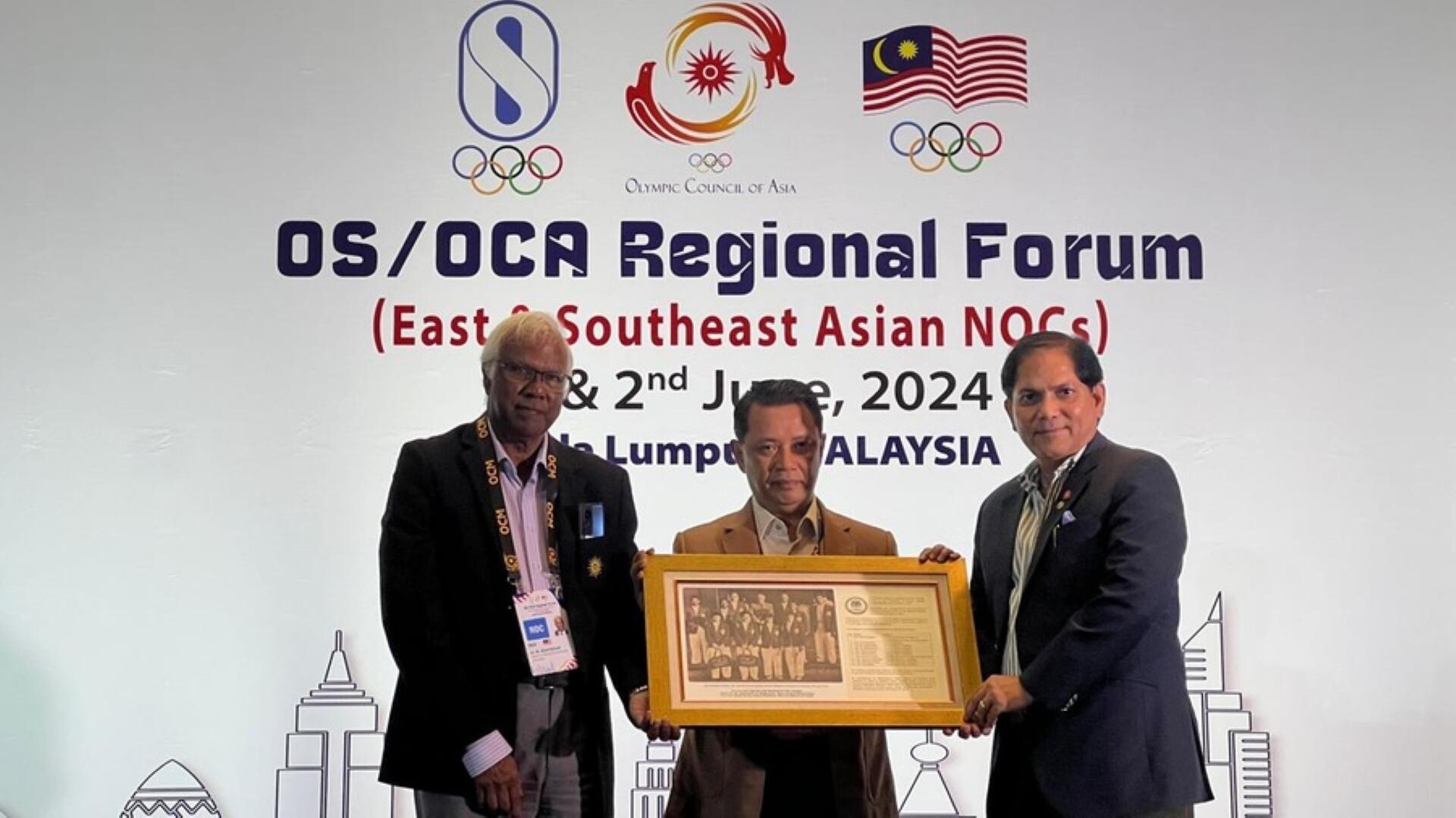
It was a challenging experience--the athletes had to face off against experienced competitors from countries like India, Japan, and the Philippines. As a result, they returned empty-handed, but several players showed potential.
✅ Athletics (Men's 4* 100 m): M. Harichandra, M. Balakrishnan, Cletus Gomez and Michael Parry finished in 5th place
✅ Athletics (Women's 4* 100 m): Annie Choong, Carmen Koelmeyer, Maureen Siebel and Fay Siebel finished in 4th place
✅Annie Choong also participated in the women’s long jump event, finishing 6th
First Gold Medal Achievement
It was in 1962 that Malaysia finally achieved a historic breakthrough at the Asian Games when Mani Jegathesan secured Malaysia’s first-ever gold medal in the men’s 200 metres. Competing in the men’s 200 metres, he clocked a historic record time of 21.30 seconds, earning Malaysia’s first gold asian games in athletics.
He also won a silver in the 100m and 4x400m, adding to Malaysia's medal tally at the Asian Games.
His win became a turning point for Malaysian sports. It gave other players hope that they too could compete in international events like the Southeast Asia Games, the East Asian Games, or the Asian para games and compete against top athletes in Asia.
Since then, Malaysia has become a regular participant at the Asian Games, achieving success in sports such as badminton, squash, bowling, and athletics, winning gold, silver and bronze medals galore.
Piqued to know more about the Asian Games. Read the history of the Asian Games to know more.
🏅Medal Tally and Performance Over the Years
Overall Medal Count
Over the following decades, the country has improved steadily and emerged as a mid-tier sporting nation.
Malaysia has won a total of 344 medals in the Asian Games up till now.
🏅 69 gold
🥈 109 silver
🥉 166 bronze
Here is a table showing Malaysia's medal count by sport.
| Sport | Gold | Silver | Bronze | Total |
|---|---|---|---|---|
| Athletics | 8 | 8 | 21 | 37 |
| Badminton | 7 | 8 | 21 | 36 |
| Bowling | 12 | 13 | 7 | 32 |
| Cycling | 4 | 6 | 9 | 19 |
| Cue Sports | 1 | 3 | 0 | 4 |
| Equestrian | 1 | 4 | 6 | 11 |
| Karate | 9 | 9 | 16 | 34 |
| Sailing | 5 | 9 | 7 | 21 |
| Sepaktakraw | 4 | 7 | 5 | 17 |
| Squash | 14 | 7 | 10 | 31 |
| Swimming | 1 | 5 | 3 | 9 |
| Wushu | 3 | 2 | 5 | 10 |
| Others Combined | 0 | 28 | 56 | 84 |
| TOTAL | 69 | 109 | 166 | 344 |
Malaysia has been competing in the Asian Games since 1954, achieving a total of 69 gold, 109 silver, and 166 bronze medals, ranking 13th overall.
🔢 First participation: 1954
💯 Best edition: 2006 Doha – 42 medals (8 G, 17 S, 17 B).
🏸 Most successful sports: Athletics, Badminton, Squash, Bowling and Karate
🏃Sports Malaysia has never missed: Athletics and Badminton
🎖 Most decorated Asian Games athlete: Nicol David (9 medals, including 5 golds)
🏊 Medal tally at Hangzhou 2023: 32 medals (6 G, 8 S, 18 B)
🤽Sports Contributing to Malaysia's Success
Over the following decades, the country has improved steadily and has developed into one of Southeast Asia’s stronger mid-tier sporting nations, especially in squash, bowling, badminton, karate, sailing, and athletics.
Badminton
Badminton has been traditionally one of the most successful Malaysian sports at the Games. Its legendary athletes like Lee Chong Wei, Lee Zii Jia, Aaron Chia/Soh Wooh Yik and others, have won multiple medals for the country.1
Here is a look at Badminton's wins at the Asian Games.
- Lee Chong Wei (one of Malaysia's most celebrated players)
- Rashid Sidek
- Koo Kien Keat & Tan Boon Heong
- Aaron Chia & Soh Wooi Yik
- Misbun Sidek
- 3 Bronze Medals in Men's Singles (2006, 2010, 2018)
- Bronze in Men's Singles (1994)
- Gold in Men's Doubles (2006 )
- Bronze in Men's Doubles (2022
- Bronze Medal in Men's Singles (1982)
Diving
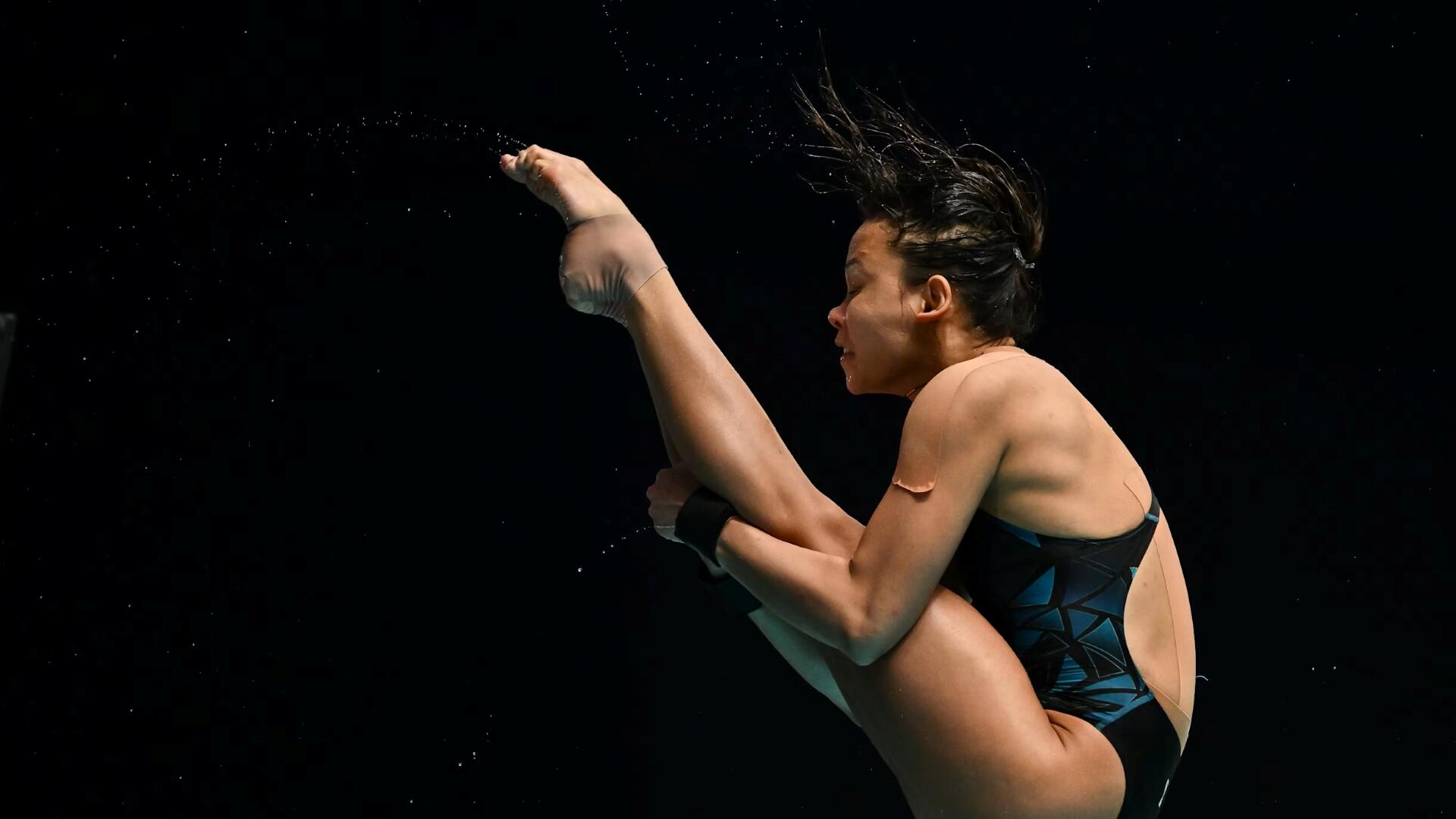
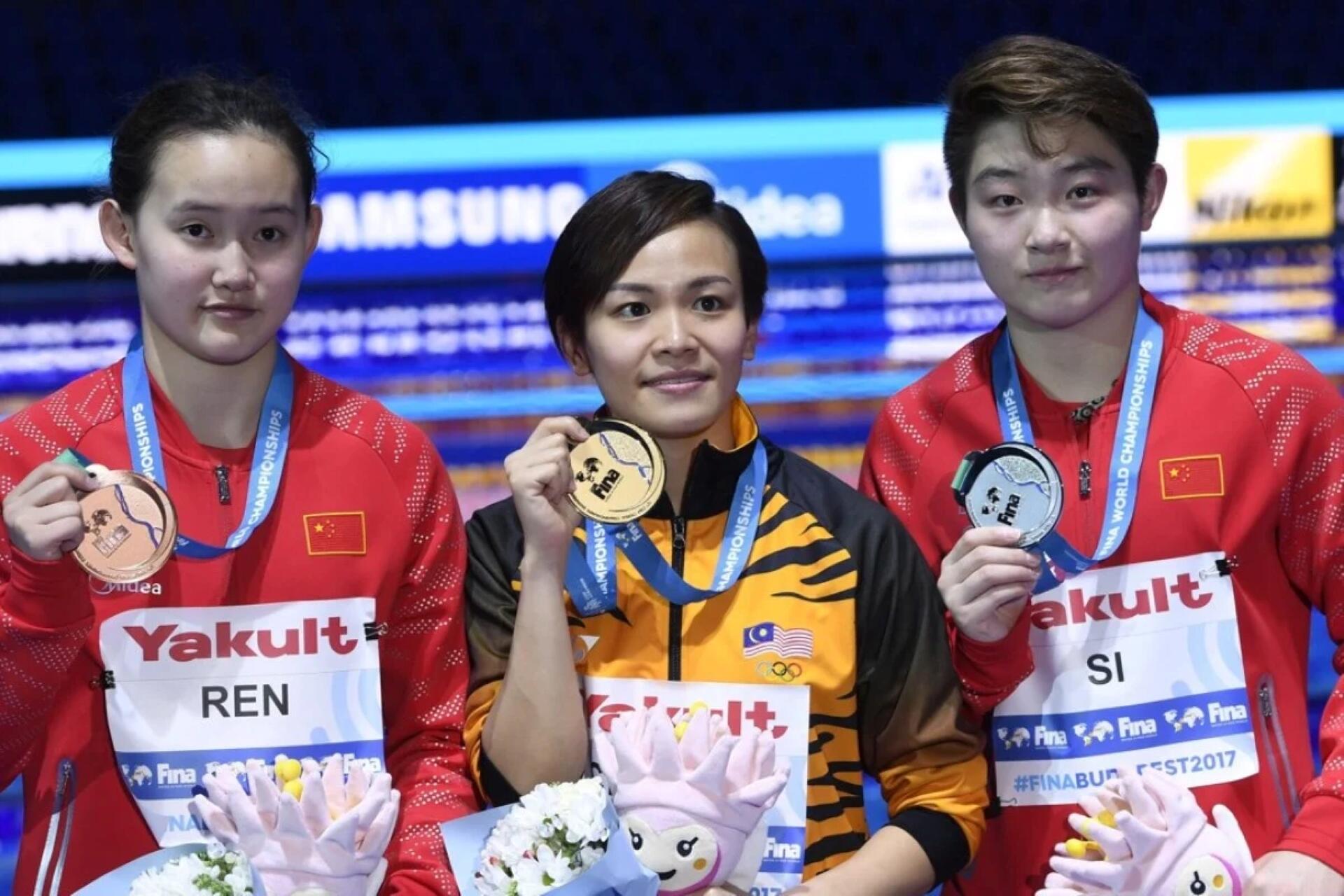
Diving is one of Malaysia’s strongest sports at the Asian Games, with Malaysian divers like Pandelela Rinong and Cheong Jun Hoong regularly delivering impressive performances. In the 2010 Asian Games in Guangzhou, Malaysian divers won gold and silver medals in both individual and synchronised events.
Even at the 2023 Asian Games in Hangzhou, Malaysia won bronze medals in diving, keeping the nation on the podium.
Pandelela Rinong, Malaysia’s “national unity icon", is a two-time Olympic winner, seven World Championships medalist, two Commonwealth Games champion, and nine Southeast Asian Games champion is the queen of diving. She has won a total of 5 medals at the Asian Games.
At the 2023 Games, she won the:
- Women’s 10m Platform (Individual): She secured third place, ending Malaysia's 13-year wait for an individual medal in diving.
- Women’s 10m Synchronised Platform: She teamed up with Nur Dhabitah Sabri to win the bronze.
Cycling
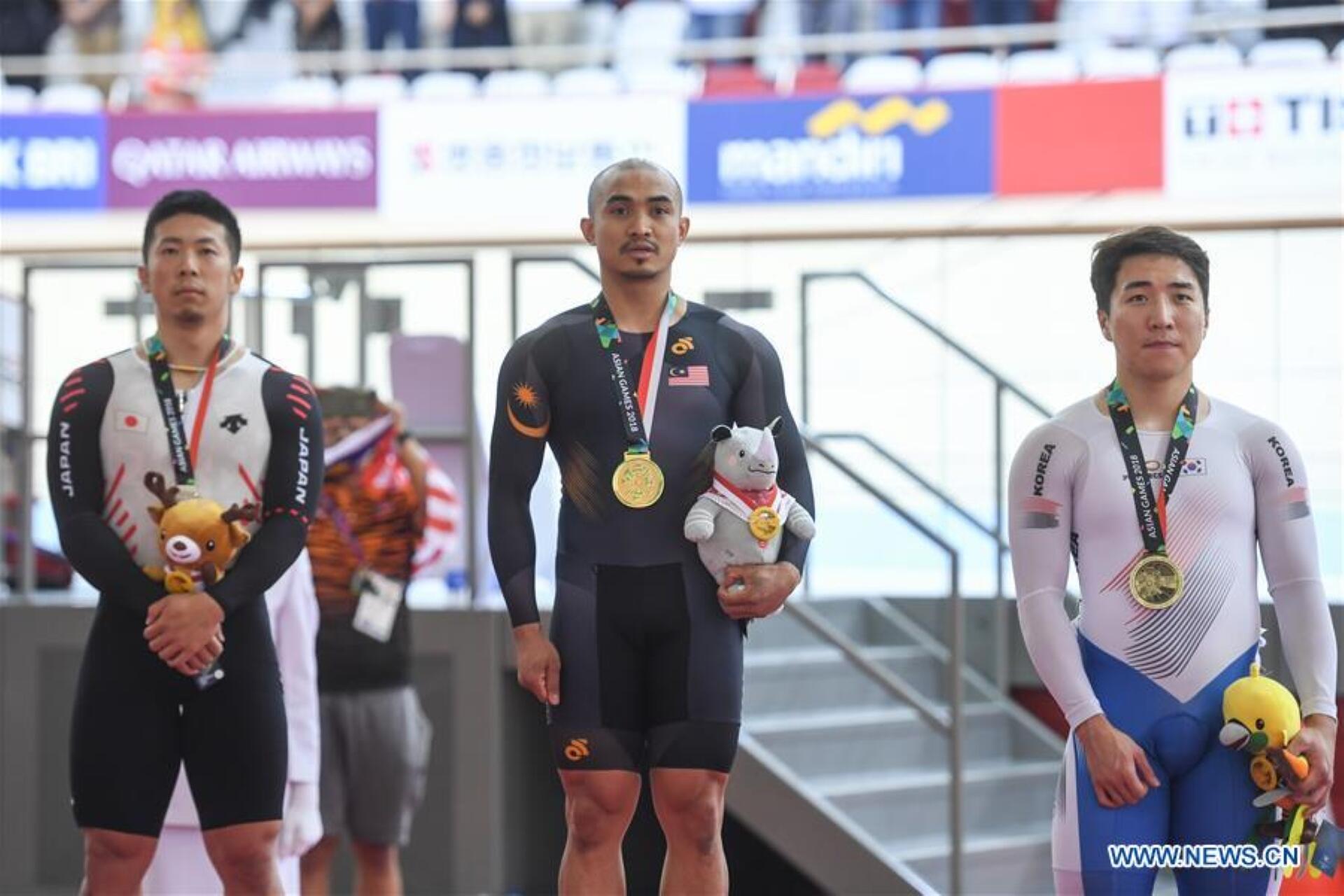
Cycling has been one of the strong shows at the Asian Games, with athletes winning medals in the sprint and keirin events. In 2023, Malaysia won four bronze medals in Hangzhou. These included men’s and women’s team sprints. Muhammad Shah Firdaus Sahrom earned bronze in sprint and keirin.
Its leading figures are:
Azizulhasni Awang (“Pocket Rockman”)
- a gold medal in the 2010 Asian Games and several other medals over the years, inspiring a generation of cyclists
- first Malaysian cyclist to win a gold medal at the Asian Games, claiming the men's sprint title at the 2018 Jakarta-Palembang Games
- first Malaysian to compete in the Olympic 5 times
Josiah Ng Onn Lam
- won silver medals at the 2002 and 2006 Asian Games.
- First Malaysian cyclist to enter the Olympics final
Athletics
Malaysia has a rich past in athletics at the Asian Games, particularly between the 1960s and the 80s, when our athletes performed exceedingly well at track and field events.
- Mani Jegathesan won three gold medals at the 1966 Asian Games
- Rabuan Pit won the gold in the men’s 100m dash in 1982
However, recent athletic performances are falling short of the mark, showing a drop in athletic performance when competing in elite international events.2
After a long gap, Malaysia finally returned to the podium in 2023.
- Shereen Samson Vallabouy won bronze in the women’s 400m, ending a 17-year drought
- Muhammad Azeem Fahmi added bronze in the men’s 100m, ending a 41-year wait
🏆Recent Performances and Future Prospects
2023 Asian Games Recap
At the 2023 Asian Games, Malaysia delivered a commendable performance and secured a total of 32 medals (6 gold, 8 silver and 18 bronze) to finish 14th in the overall medal rankings.
Despite sending around 300 athletes, a significantly lower number than what was sent to the 2018 Asian Games (447), Malaysian athletes demonstrated excellence in various sports.
Here are some of the key medal winners for Malaysia:
🥇Key Gold Medal Wins
- Equestrian: Mohd Qabil Ambak Mahamad Fathil (individual dressage)
- Karate: Arif Afifuddin Malik (men's U-84kg kumite)
- Sailing: Nur Shazrin Mohamad Latif (women's ILCA6)
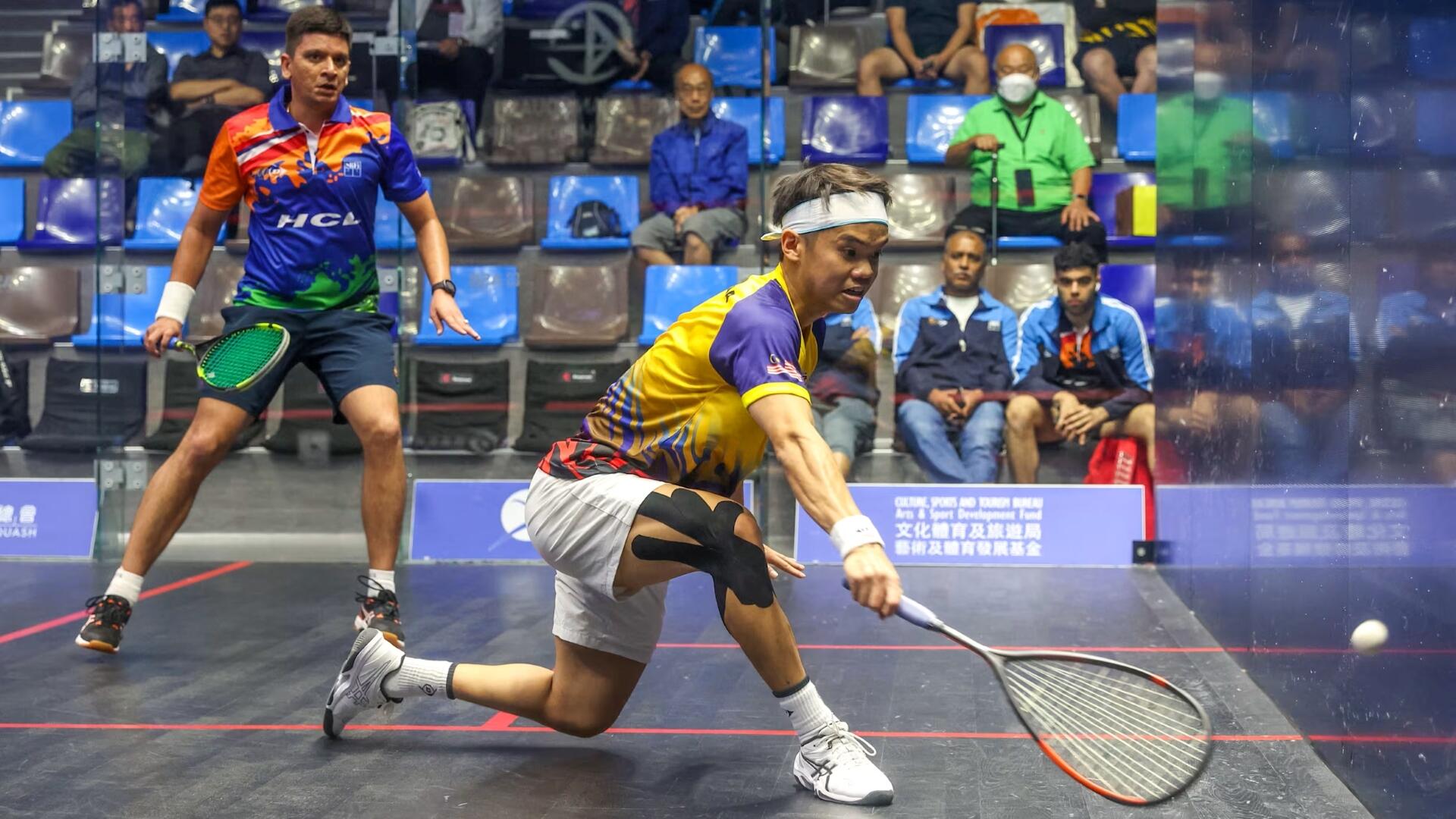
- Squash: Ng Eain Yow (men's singles), Sivasangari Subramaniam (women's singles), women's team
🥈Key Silver Medal Wins
- Esports: The Arena of Valor team
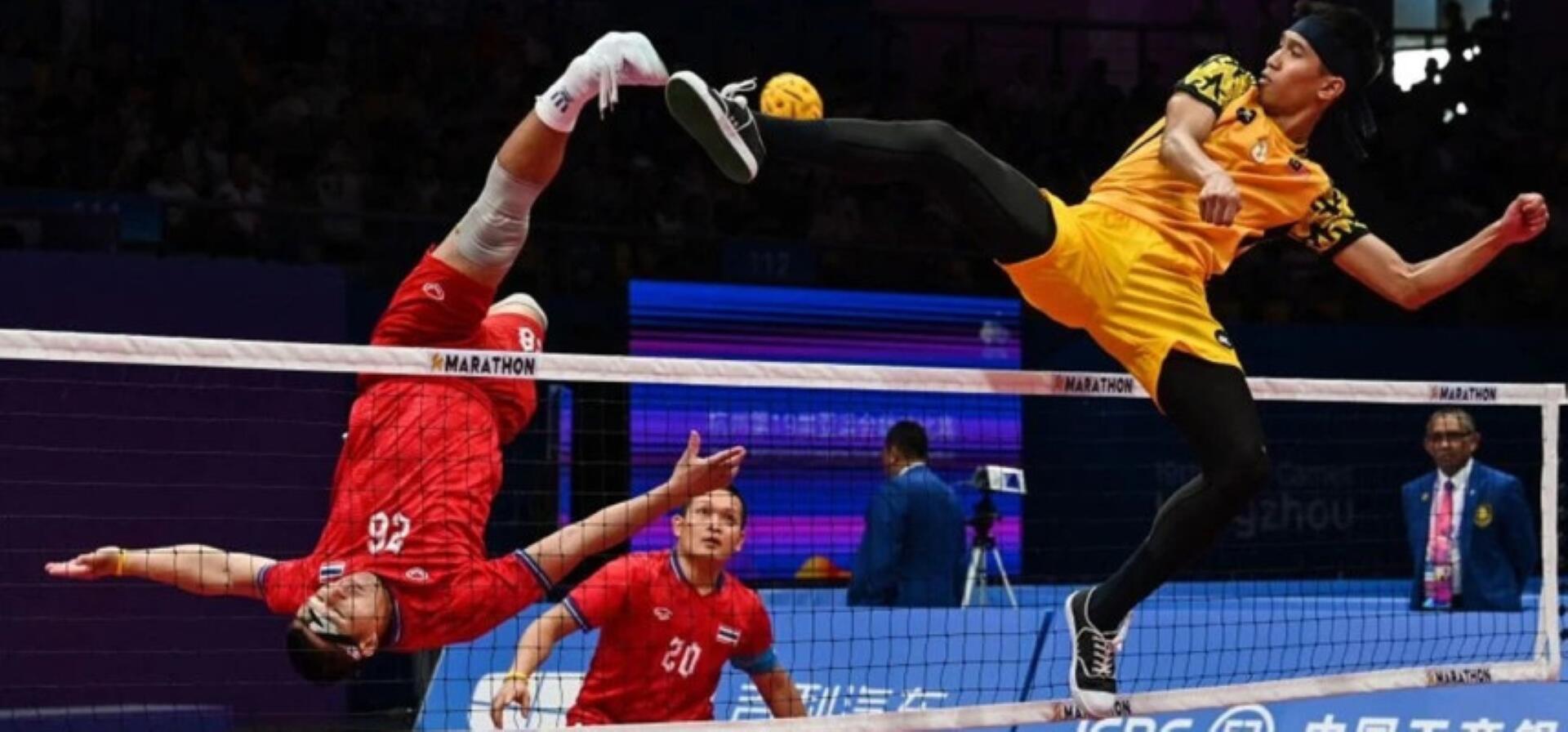
- Sepak Takraw: The men's regu and team regu events
- Karate: Lovely Anne Robberth (Women's Team)
- Squash: Mohammad Syafiq Mohd Kamal/Aifa Azman (mixed doubles)
- Wushu: Tan Cheong Min (women's nanquan and nandao)
- Diving: Ng Yan Yee/Nur Dhabitah Sabri (women's synchronised 3m springboard)
🥉Key Bronze Medal Wins
- Archery: Compound men's team
- Diving: Bertrand Rhodict Lises/Enrique Maccartney Harold (men's synchronised 10m platform), Pandelela Rinong (women's 10m platform), Pandelela Rinong/Nur Dhabitah Sabri (women's synchronised 10m platform), Muhammad Syafiq Puteh/Ooi Tze Liang (men's synchronised 3m springboard)
- Athletics: Shereen Samson Vallabouy (women's 400m), women's 4x100m, Muhammad Azeem Fahmi (men's 100m)
- Cycling (track): Muhammad Shah Firdaus Sahrom (men's sprint, men's keirin), men's and women's team sprint
- Esports: DOTA2
- Badminton: Aaron Chia/Soh Wooi Yik (men's doubles)
- Gymnastics (artistic): Aimy Muhammad Shairul (men's vault)
2026 Asian Games Outlook
To reduce the pressure on athletes, this year, the Ministry of Youth and Sports (KBS) has decided to adopt a more athlete-friendly approach when setting national medal targets. Therefore, instead of setting targets based on colour, the Ministry’s focus is on helping athletes perform to their full potential and win the maximum medals, irrespective of their colour.
In this respect, Youth and Sports Minister Hannah Yeoh said:
What we’re saying is that when the National Sports Council (NSC) releases its medal targets, it’s for the total number of medals. We are not specifying a colour. We are talking about the total medals. This is so that all athletes, as per our post-mortem for the Asian Games, feel their contribution is valued, even if it’s a bronze medal.
Youth and Sports Minister Hannah Yeoh
The focus has shifted to “medal-potential sports,” with Malaysia identifying key sports expected to contribute medals. Core medal-winning sports identified for the Asian Games 2026 are:
These sports are:
✅Badminton
✅Archery
✅Diving (Aquatics)
✅Karate
✅Cycling
✅Wushu
✅Squash
In fact, the sports ministry has launched the special ASIAKOM project to prepare athletes for the upcoming Asian Games. The project focuses on 39 elite athletes across nine sports and provides them with a range of support to perform well at the Asian and Commonwealth Games.
Speaking about Asiakom, Deputy Youth and Sports Minister Adam Adli Abdul Halim said
The project focuses on 39 athletes from nine sports, emphasising training, competition exposure, coaching management, training camps, and sports science and medical support.
Sports Minister Adam Adli Abdul Halim to Parliament
🎯The Sports Ministry, as well as the Olympic Council of Malaysia, has decided not to set any medal targets to reduce the pressure on athletes.
💪🏽Instead, the focus is more on performance and providing athletes with all the support and help so they perform well in the Games.
2022 Asian Games (Malaysia Actual)
14th rank overall
2026 Asian Games (Malaysia Target)
Focus on overall performance rather than the colour of the medal.
See who else is participating at the 2026 Asian Games.
Challenges and Triumphs
Malaysia’s achievements at the Asian Games were marked by resilience, perseverance, and a deep desire to bring laurels for the country. At the 2023 Hangzhou Asian Games, the Malaysian contingent exceeded our expectations by surpassing the medal target and securing a total of 32 medals overall.
I had waited five years for the opportunity to make amends for the mistakes I made in 2018. It was a similar performance today but I am fortunate to have a group of teammates who kept on reminding me to stay calm.
Tan Cheong Min, silver medal winner in Wushu
Despite facing injuries and strong international opponents, Malaysian athletes delivered memorable performances and brought home medals in sports such as squash, wushu, track cycling, and e-sports.
Below are some of the noteworthy achievements by the Malaysian contingent.
1️⃣One of the most closely watched athletes was Lee Zii Jia, Malaysia’s young shuttler. He had a difficult 2023. After rising to rank no 2, he fell out of the top 10 to a rank of 18 due to loss of form. He has faced intense public scrutiny and criticism after several high-profile exits from major tournaments. In the 2023 Asian Games, he was defeated by India's H.S. Prannoy (score: 16-21, 23-21, 22-20) in an intense, nail-biting, three-game quarter-final match.
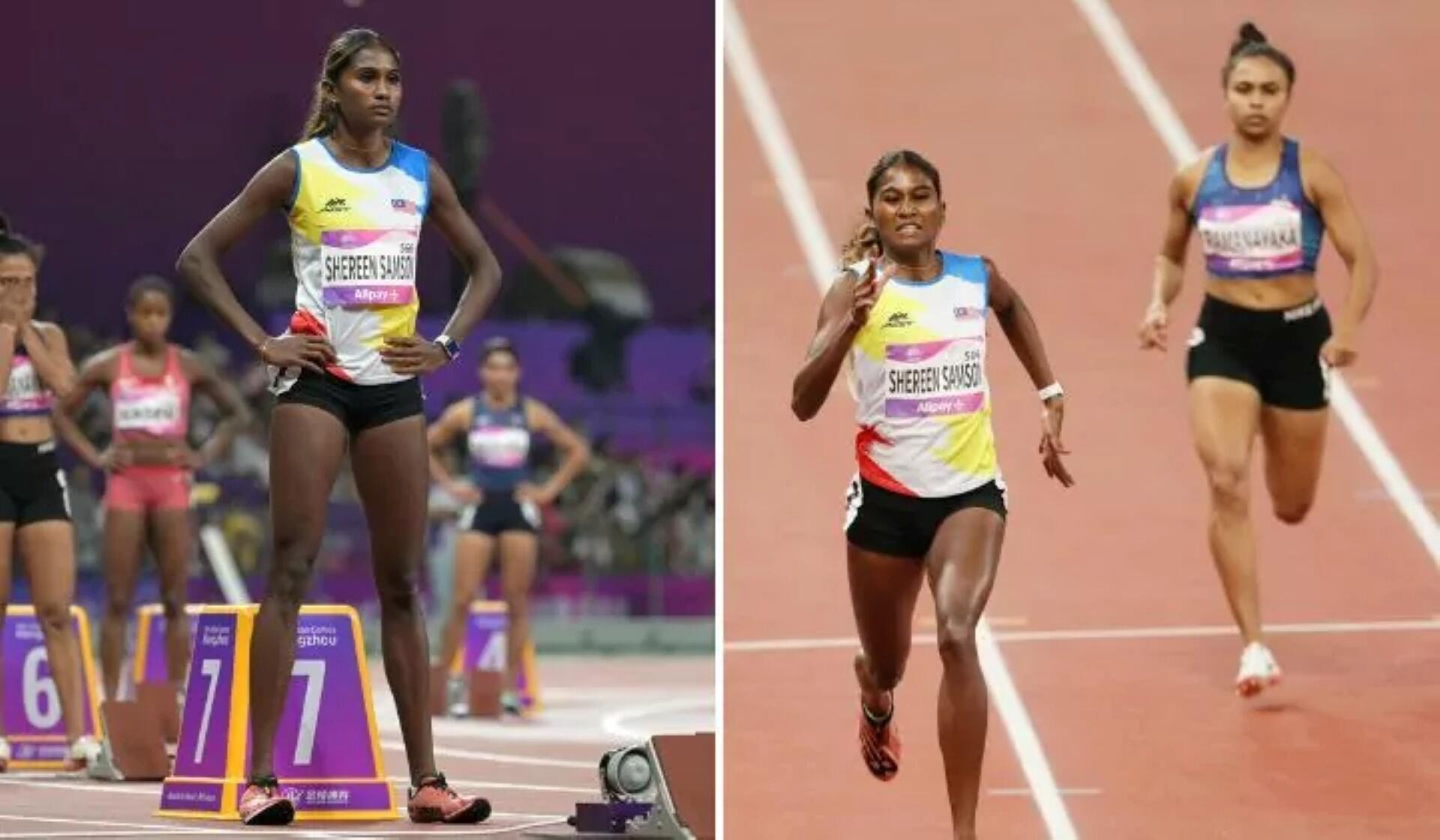
2️⃣History was created by Malaysian sprinter Shereen Samson Vallabuoy, who finally won a medal in athletics at the Asian Games in the women’s 400m category after 17 long years. The last Malaysian female athlete to win this was Noraseela Khalid, who won the bronze in 2006.
3️⃣In squash, Sivasangari Subramaniam's win was inspiring as she came out of a crippling car accident a year ago.
4️⃣Esports made its first appearance as an official medal sport. The Malaysian Dota 2 squad won the bronze medal while the Arena of Valor team—consisting of Lai Chai Chein, Nicholas Ng, Yong Zhang Quan, Ong Jun Yang, Eng Jun How, and Chong Han Hui—bagged the silver medal.
5️⃣Another one for the history books came from Mohd Qabil Ambak Mahamad Fathil, who got the first-ever gold for Malaysia in the Asian Games equestrian event. He won in the Individual Dressage section.
6️⃣Meanwhile, legendary Malaysian track cyclist Azizulhasni Awang faced heartbreak just days before the Hangzhou Asian Games when he suffered a heavy crash, forcing him to pull out of the Games.
The Future of Malaysia in the Asian Games
What athletes need is the right support at the right time.
Keeping that in mind, efforts to improve the medal tally and performance potential of athletes are underway. Last year, the government designated 20 sports as High-Performance Core Sports, with an aim to produce more remarkable Malaysian athletes. These sports are:
- aquatics (swimming and diving)
- weightlifting
- badminton
- cycling (track)
- lawn bowls
- athletics
- sailing
- table tennis
- sepak takraw
- bowling
- wushu
- gymnastics (artistic and rhythmic)
- esports
- hockey
- karate
- archery
- taekwondo
- tenpin
- shooting
- silat
- squash
The decision to designate these sports as high-performance was made at the first Cabinet Committee on Sports Development (JKPS) meeting, chaired by Deputy Prime Minister Datuk Seri Ahmad Zahid Hamidi.
NSC is implementing these 20 core sports, alongside others, and MoHE and MoE will also roll out these 20 sports based on their respective approvals, that’s the key focus. This means all agencies will implement the 20 high-performance Core Sports at their levels.
NSC director-general Jefri Ngadirin
This initiative aims to enhance national sports development through a holistic and integrated approach to athlete development, starting from the school level, to higher education institutions and all the way to the national level.
Also, recently, the Malaysian government has earmarked a budget of RM580 million for sports development. This is welcome news and will definitely strengthen our athletic performance and result in more podium finishes.
Development Programmes
In addition to this, several developmental programmes have been introduced to help Malaysian athletes succeed, like:
TNB Thunderbolts programme – Spearheaded by Tenaga Nasional Berhad (TNB) and the Malaysian Hockey Confederation (MHC), the TNB Thunderbolts programme invests in grassroots-level hockey players and offers them structured training and technical support. It links school-level play directly to the national competitive stage. This programme aims to cultivate the country's next generation of elite athletes.
The National Football Development Programme (NFDP) – Similarly, the NFDP is a long-term programme that is designed to promote and develop football across the nation. The programme hosts more than 230 players between the ages of 13 and 17, who are selected from across the country. The programme follows a five-year development course, during which players are given structured training and provided with the means to succeed in international arenas.
Malaysia’s journey at the Asian Games reflects the nation’s steady growth as a sporting nation. Right from Malaysia's first gold at Asian Games won by legendary sprinter Mani Jegathesan, to achieving Malaysia Asian Games medal target at numerous editions by remarkable Malaysian athletes like Nicol David, Lee Chong Wei and others, the targets to increase Malaysia's medal tally asian games keeps increasing. To ensure that Malaysian athletes continue adding to Malaysia's medal tally Asian Games, greater investment in grassroots athletes and providing them with world-class training opportunities must continue.
References
- Zakiyah, N. N., Soedjatmiko, S., & Ramadhan, I. (2026). Analysis of Psychological Resilience and Achievement Motivation in badminton athletes. SPORTIVE Journal of Physical Education Sport and Recreation, 10(1), 581–590. https://doi.org/10.26858/7q8bd038
- Thung, J. S., Gao, J., Hao, C. P. Y., Azis, N. Z., Amin, M. Q. a. M., See, M., Nor, E. N. a. M., Kasim, M. F. M., Fazil, M. H. N., & Kok, L. Y. (2023). Comparing Malaysian and international track and field records through strength, weaknesses, opportunity and threats analysis to formulate strategies for performance improvement. Malaysian Journal of Movement Health & Exercise, 12(1), 14–20. https://doi.org/10.4103/mohe.mohe_32_22
Summarise with AI:
Did you like this article? Leave a rating!

 Loading...