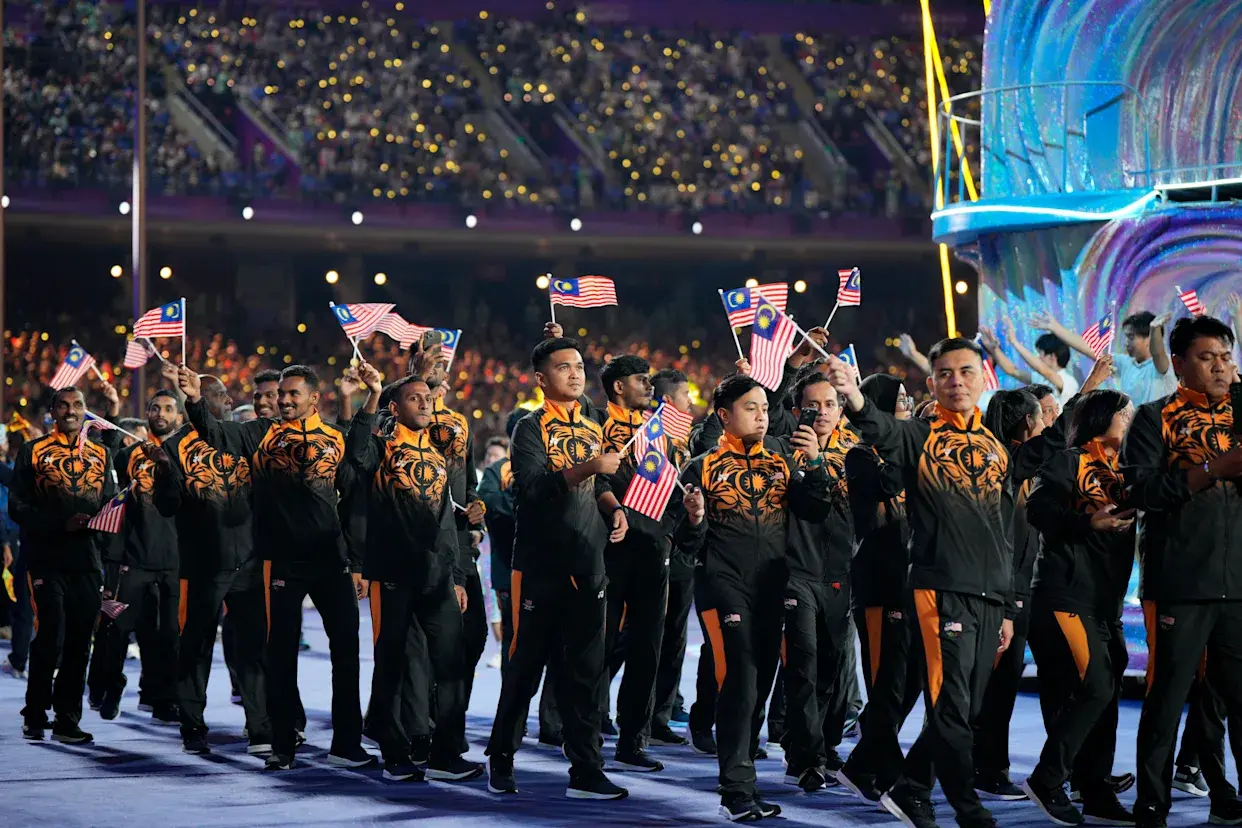

The Asian Games are a major sports event held every four years, bringing together athletes from several Asian countries to celebrate unity and sportsmanship among nations. Organised by the Olympic Council of Asia (OCA) and recognised by the International Olympic Committee (IOC), the Asian Games promote friendly relations between nations.
As the second-largest sporting tournament in the world after the Olympics and the biggest tournament in Asia, the Games feature a range of sporting competitions with athletes being awarded gold, silver, and bronze medals for first, second, and third place, respectively.
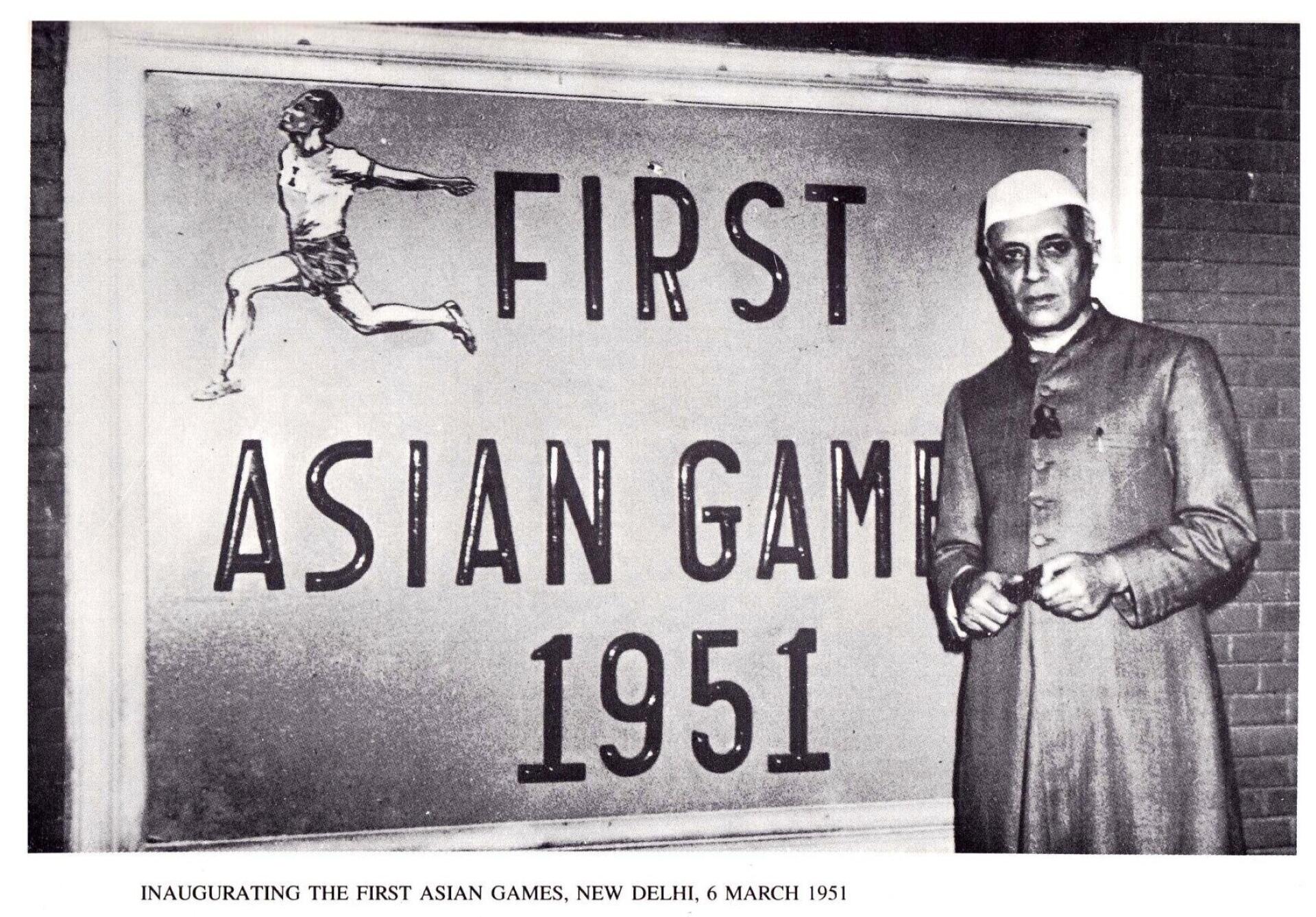
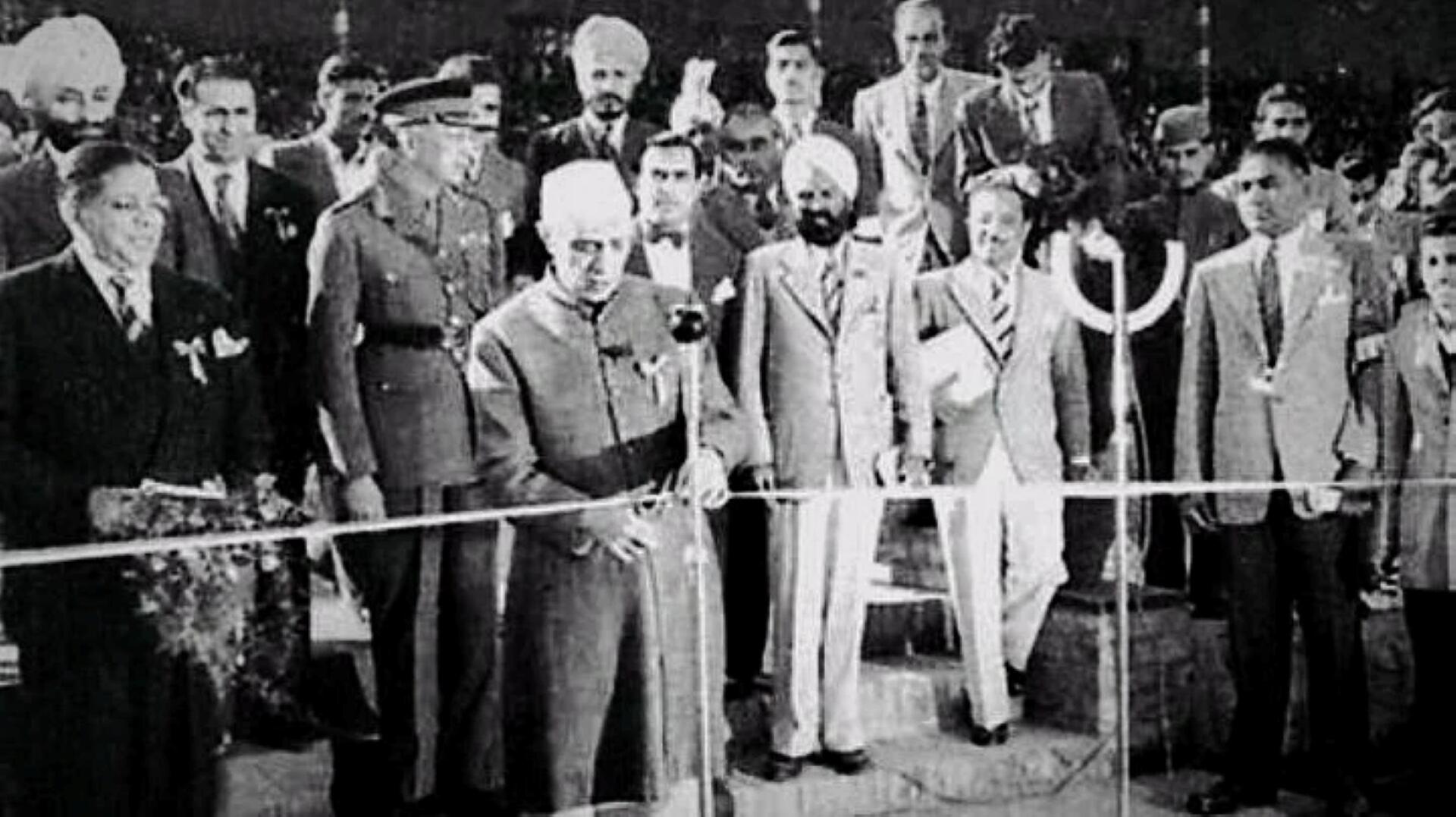
The First Asian Games took place in New Delhi in 1951 with 11 countries participating. Since then, that number has expanded considerably, now involving 45 countries, with athletes competing across a range of sports.
The Asian Games, also known as Asiad, are Asia's largest sporting event and second only to the Olympics in terms of size and scope. The Asian Games were started after the Second World War as a symbol of hope and peace and to represent the brotherhood among nations.
The Games are held at an interval of 4 years and feature representation from 45 nations across Asia.


📜The History of the Asian Games
The idea behind the Asian Games can be traced to the Far Eastern Championship Games (1913–1938), which were organised among countries like China, Japan, and the Philippines. These games were intended to create solidarity among these nations. However, they were suspended following Japan’s attack on China in 1938.
After the Second World War, many Asian nations gained independence, and they began conceiving of a kind of games that promoted harmony among Asian nations and helped them showcase their sporting prowess, just like the Olympics. This proposal was mooted in 1948, during the London Olympic Games, by Guru Dutt Sondhi and representatives from several Asian nations.1
Guru Dutt Sondhi is credited as the founder of the Asian Games. A sporting event called the 'West Asian Games' was organised in 1934 in New Delhi under the guidance of IOC member Guru Dutt Sondhi. During the 1948 Summer Olympics in London, he proposed the idea of a multi-sport event that would promote unity among Asian nations.
As a result, the Asian Games Federation (AGF) was formed in 1949, and the first official Asian Games took place in New Delhi in 1951. A total of eleven countries participated with competitions in six sports: athletics, aquatics, basketball, cycling, football, and weightlifting.
🌏Participating Nations and Host Countries
Participating Nations
This year, 45 countries will participate in the Asian Games. Here’s the full list of participating countries according to region:
| Region | Countries Participating in Asian Games |
|---|---|
| Southeast Asia | Malaysia ⭐, Brunei, Cambodia, Indonesia, Laos, Myanmar, Philippines, Singapore, Thailand, Timor-Leste, Vietnam |
| Central Asia | Kazakhstan, Kyrgyzstan, Tajikistan, Turkmenistan, Uzbekistan |
| West Asia | Bahrain, Iran, Iraq, Jordan, Kuwait, Lebanon, Oman, Palestine, Qatar, Saudi Arabia, Syria, United Arab Emirates, Yemen |
| South Asia | Afghanistan, Bangladesh, Bhutan, India, Maldives, Nepal, Pakistan, Sri Lanka |
| East Asia | China, Hong Kong, Japan, Macau, Mongolia, North Korea, South Korea, Taiwan (Chinese Taipei) |
This year's logo, themed 'Energy of Asia', depicts an aerial view of Gelora Bung Karno Stadium, which was built when Jakarta hosted the 1962 Asian Games.
According to the AINAGOC, each colour has a meaning.
The purple is used as an image of the iris, which is the prefectural flower of Aichi.
The gold describes the Kinshachi, the golden tiger-fish roof ornaments and the symbol of the Nagoya Castle.
The green inspires the high environmental consciousness among people of Aichi-Nagoya, fostered through the EXPO Aichi 2005, the COP10 and the UNESCO World Conference on ESD.
Host Countries
1951
India
11 countries participated
1954
Philippines
18 countries participated
1958
Japan
33 countries
1962
Indonesia
1966
Thailand
1970
Thailand
1974
Iran
1978
Thailand
1982
India
1986
South Korea
1990
China
1994
Japan
1998
Thailand
2002
South Korea
2006
Qatar
2010
China
2014
South Korea
2018
Indonesia
2022 (held in 2023)
China
2026 (upcoming)
Japan
🏀Sports Featured in the Asian Games
The Asian Games feature a mix of traditional Olympic sports along with region-specific sports of Asia, such as Kabbadi, Sepak Takraw, Wushu and Jiu-Jitsu, among others. Since the inaugural games, the number of games has grown substantially, growing from just 6 sports to 32 sports today, reflecting the diversity of Asia’s sports.
✨32 sports included in the Paris Olympic Games
✨05 sports played in the five regions of Asia
✨02 sports proposed by the OCA
✨02 sports proposed by the Organising Committee
In total, 41 sports
This year's Asian Games will feature 32 core sports along with 11 additional sports and disciplines unique to Asia, while also marking the debut of new sports like surfing, cricket and Mixed Martial Arts.
1️⃣ Core Sports
Here is a look at some important core sports featured in the Asian Games.
🎽Athletics
Athletics is one of the most popular sports at the Asian Games. Key event categories include field events, track events, and road and combined events. They are also often the most-watched contests. Countries like China, Japan and India win the most medals.
🏊♀️ Swimming
Swimming is one of the top sports at the Asian Games and features a variety of aquatic events and races. Swimming competitions include freestyle, butterfly, breaststroke, backstroke, and relay events for both men and women. Swimming has now grown to include 41 medal events. Countries like Japan, China, and South Korea have consistently dominated the medal tally.
🤸Gymnastics
Gymnastics is a core sport in the Asian Games ever since it was introduced in the Tehran Asian Games in 1994. Gymnastics includes 3 core disciplines:
- rhythmic gymnastics
- artistic gymnastics
- trampoline events
In gymnastics, athletes perform complex routines that showcase flexibility, balance, coordination, and strength. Asian countries like China and Japan have dominated the sport, producing award-winning athletes.
In the Asian Games, the qualifying marks vary by country, unlike the Olympics, where qualification standards are uniform across nations. For instance, in Malaysia, the Olympic Council of Malaysia (OCM), through its Selection Committee, retains discretionary powers to select athletes for the Asian Games.
🏸Badminton
Badminton is a core medal event in the Asian Games since 1962. The sport features 7 categories: singles, doubles, and mixed doubles events. Asian countries such as China, Indonesia, India, and Malaysia have dominated badminton for many years. The intense matches and high skill level make badminton extremely popular among spectators.
2️⃣Regional Sports
Apart from the core games, the Asian Games also feature sports that are unique to the region. The 20th Asian Games Aichi-Nagoya 2026 will feature the following regional sports:
✅Kabaddi (popular in South Asia)
✅Sepak Takraw (widely played in Southeast Asia)
✅Wushu and Go (East Asian origin)
✅Kurash and Jujitsu (Central Asian martial arts)
🤼Kabbadi
Kabbadi is a contact sport from India
🦵Sepak Takraw
Sepak Takraw is Malaysia’s national sport and is celebrated for its spectacular kicks and vibrant aerial jumps. Played with a woven rattan ball, the fast-paced sport allows athletes to use any part of their body other than their hands to send the ball over the net.
It commonly involves two teams of three facing each other across a net. The team which scores the most goals wins. Sepak Takraw was first introduced as a demonstration sport in the 1992 Asian Games, where it garnered huge popularity. Since then, it has been featured in every edition of the Asian Games.
🥷Wushu
Wushu is a traditional form of martial arts that was featured in the Asian Games during the 1990 edition. Sports wushu has 2 disciplines: Taolu and Sanda.
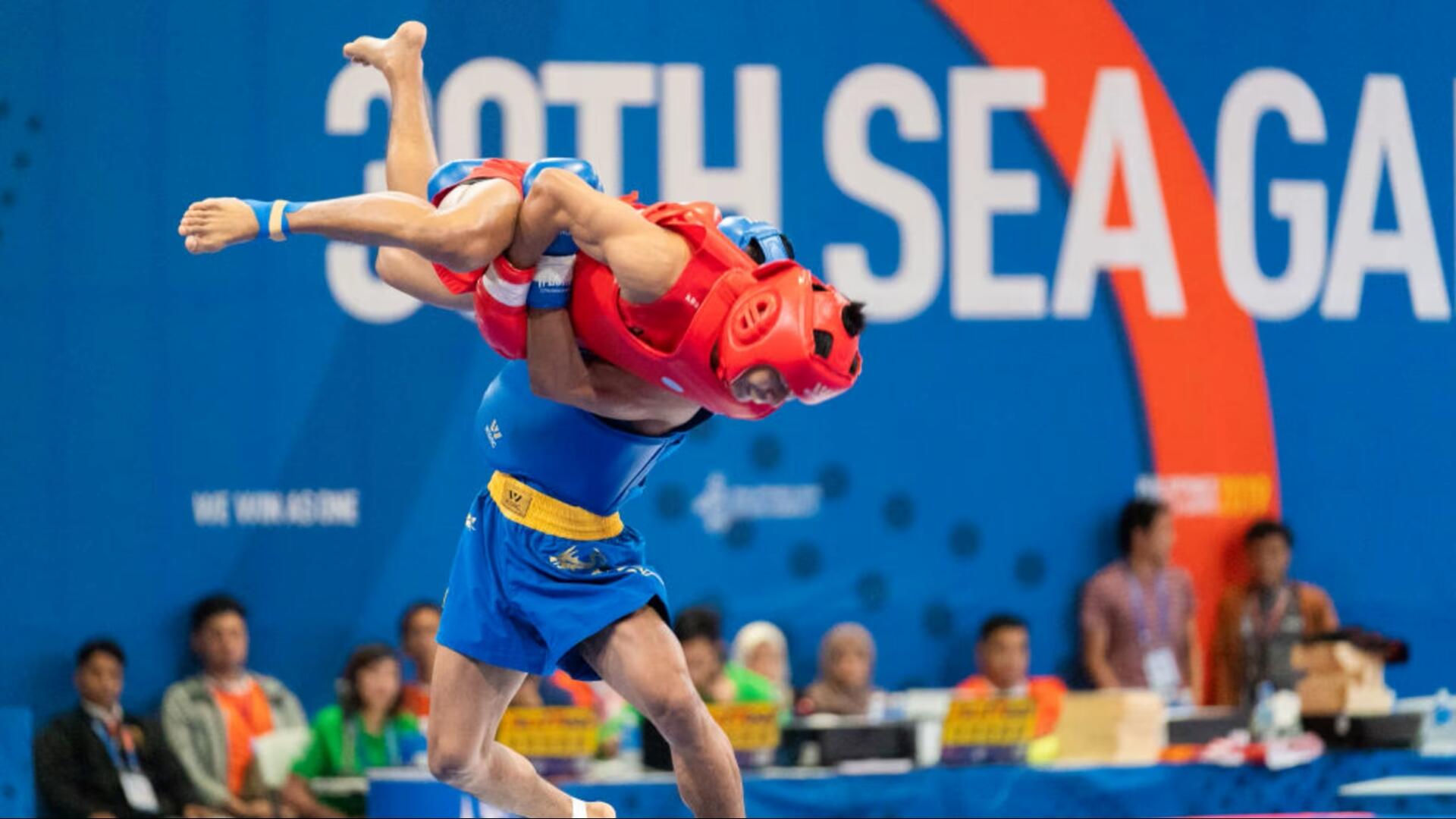
👉Sanda- It is a full-contact combat sport
👉Taolu – It is a combination of gymnastics and martial arts
A total of 15 medals were on offer across two disciplines in the 2023 Asian Games.
💪Kurash
Kurash is an ancient form of wrestling from Central Asia. It is a standing form of combat sport where wrestlers wear distinctive green and blue jackets and attempt to throw off their opponents.
Points are scored in three descending orders of magnitude: Halal, Yonbosh and Chala. Halal is the highest possible scoring technique, and scoring a halal means you win. It is achieved when the opponent is thrown onto their back with full force.
Asian Games vs. Olympic Games
Asian Games
- It is a multi-sport event for Asian nations
- Conducted every 4 years
- Began in 1951
- Smaller in scale and participation
- It is regulated by the Olympic Council of Asia (OCA)
- Promotes sports within Asia
Olympic Games
- It is a multi-sport event for countries worldwide
- Held every 4 years
- Began in 1896
- A larger number of athletes
- It is regulated by the International Olympic Committee (IOC)
- Focuses on worldwide competition
Scope and Scale
The Olympics and the Asian Games are both major international sporting events; however, they differ in the number of participating countries and athletes. The Olympic Games are a worldwide event featuring athletes from 206 National Olympic Committees (NOCs). In comparison, the Asian Games are limited to Asian countries and feature players from 45 nations.
However, although the Olympics have a much larger number of participating countries, surprisingly, the number of athletes participating in the Asian Games is larger. For example, in the 2023 Asian Games held in Hangzhou, 12,500 participants participated, while 10,500 participated in the 2024 Paris Olympics.
Another key difference between the two lies in the variety of sports that are played at the events. The Olympic Games feature mainly internationally popular sports, whereas the Asian Games, in addition to core Olympic games, include traditional Asian sports like kabaddi, sepak takraw, and wushu. This gives the Asian Games a stronger regional identity.
The Aichi-Nagoya 2026 Asian Games sports programme will include Olympic sports, traditional Asian disciplines and regionally diffused games, ensuring representation from across Asia’s zones.
Yasuhiro Nakamori (Acting Director General, Aichi-Nagoya 2026)
Notable Moments and Records
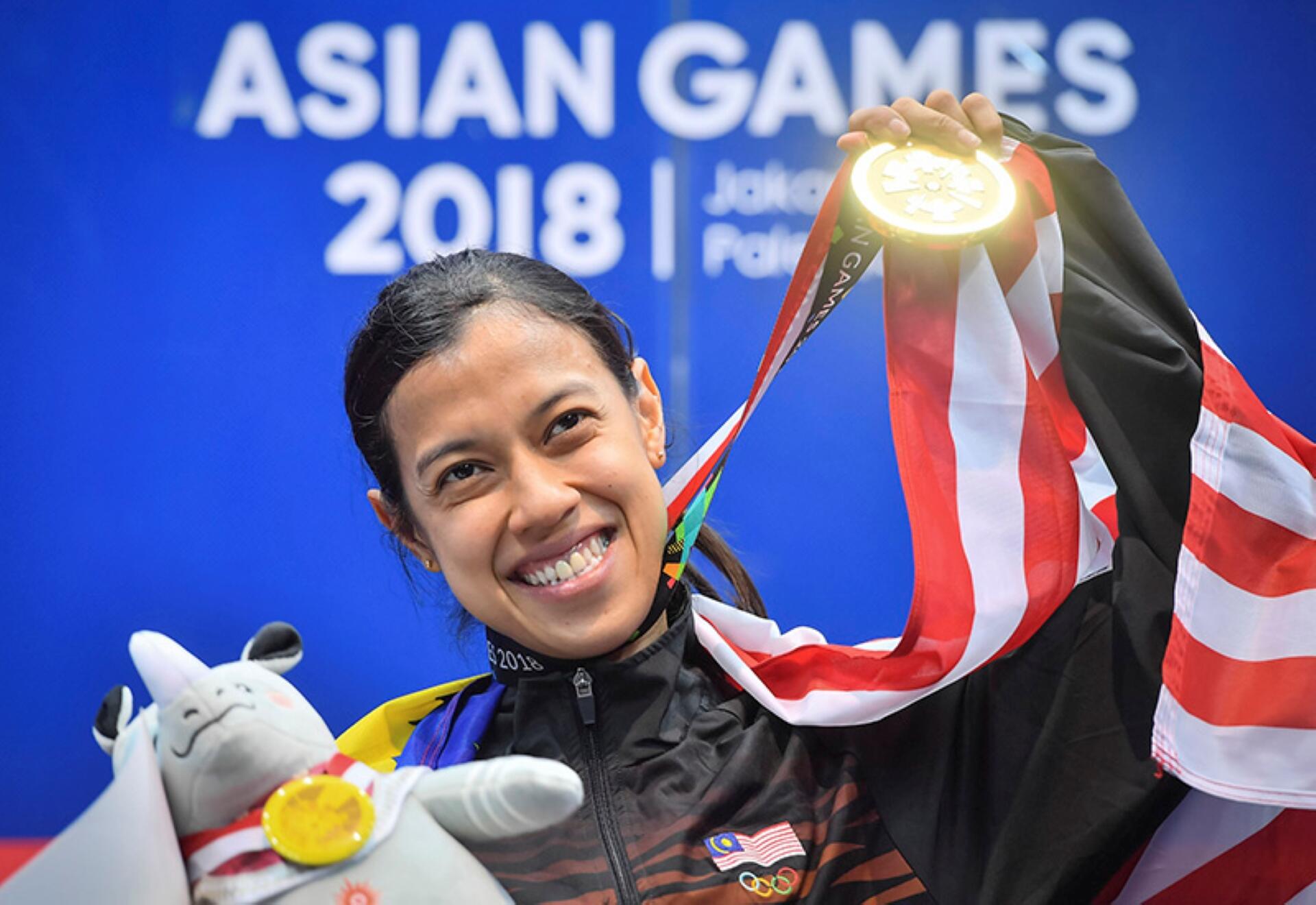
Malaysia has produced many memorable performances in Asian Games history, with its athletes setting records and achieving historic milestones across athletics, badminton, diving, squash, and other sports.
Here are some of the most notable moments and records by Malaysian athletes:
M. Jegathesan
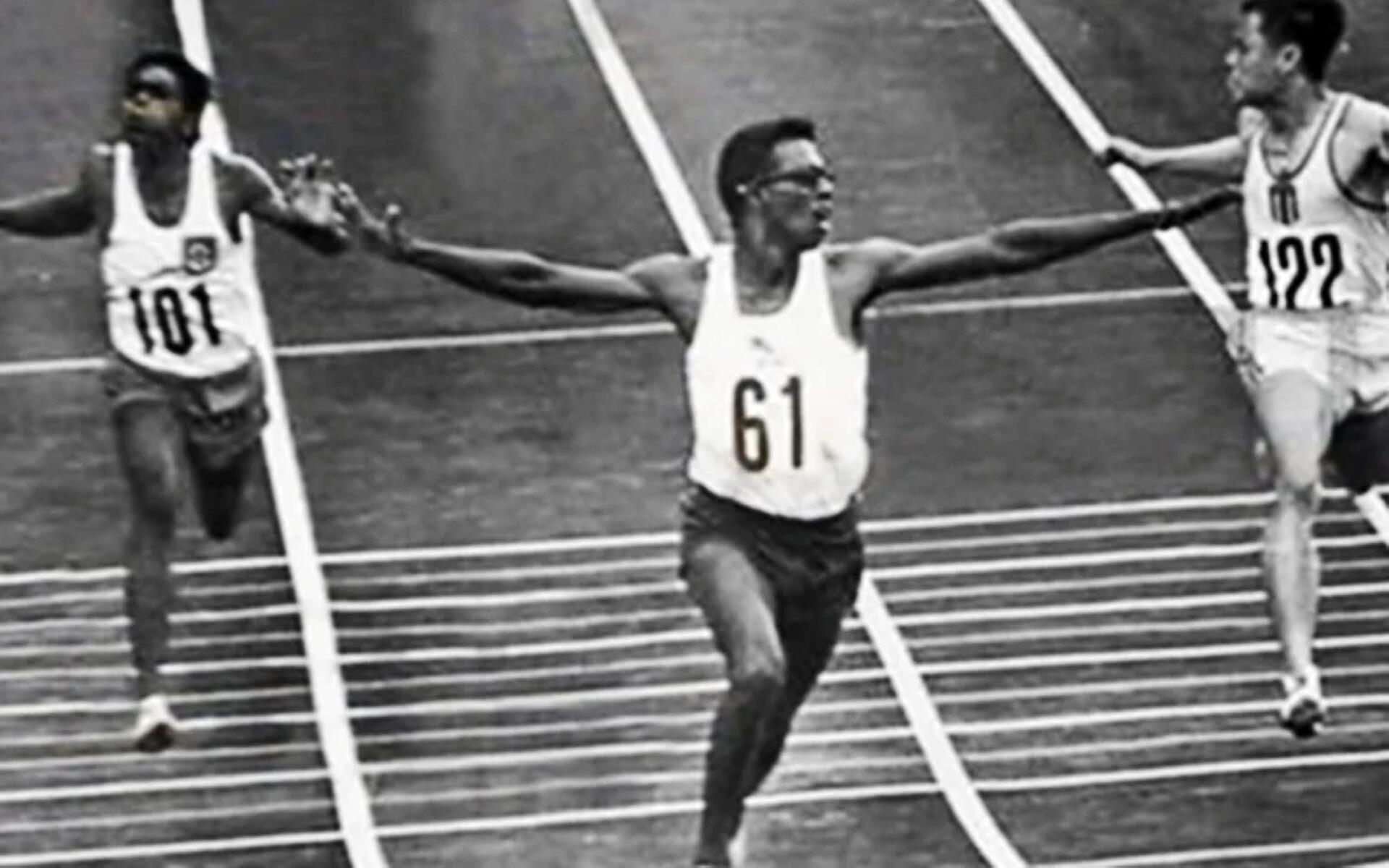
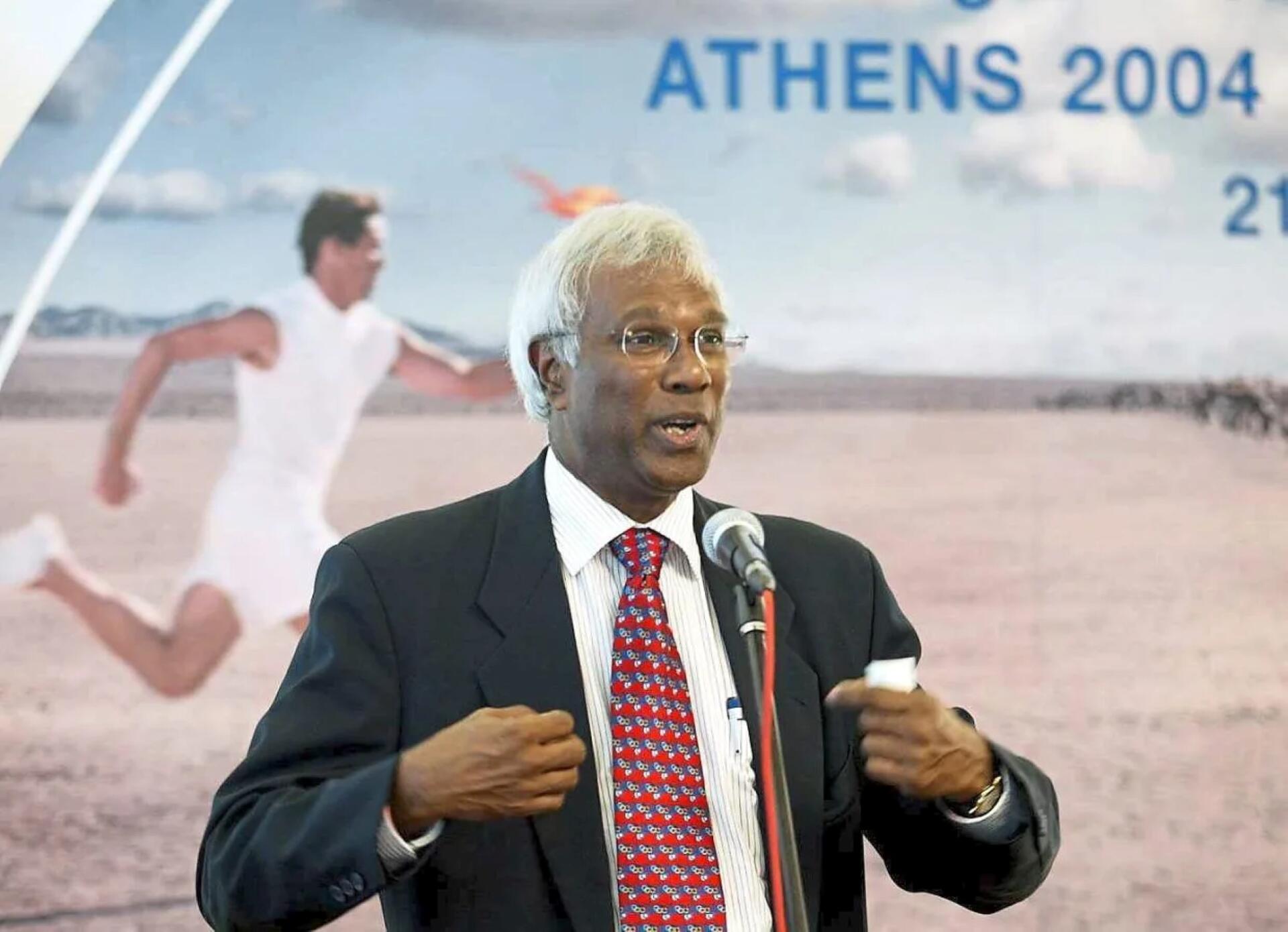
Widely regarded as one of the greatest Malaysian athletes ever, M. Jegathesan was also known as the Flying Doctor. It was during his medical studies that he began practising in earnest, and very soon he earned the title of Fastest Man in Asia. At the 1966 Asian Games in Bangkok, he brought back home 3 gold medals.
📌Held Malaysia’s national 200m record for nearly 49 years
📌Was the first Malaysian athlete to win an Asian Games gold
Muhammad Azeem Fahmi
Muhammad Azeem Fahmi is a prominent track and field Malaysian athlete who created history at the 2023 Asian Games by winning a bronze medal for Malaysia in the 100m after decades.
📌Bronze – Men’s 100m (10.11s)
📌First Malaysian to win a 100m medal in 41 years since 1982
📌1962 Asian Games: Mani Jegathesan won Malaysia’s first gold
📌1982 Asian Games: Rabuan Pit took the title of "Asia's Fastest Man" after securing the 100m gold
📌1986 Asian Games: Nurul Huda Abdullah won 2 silver and 2 bronze medals
📌2018 Asian Games: Cheong Jun Hoong won Malaysia's first individual diving gold medal
📌 Consistent badminton medal performances led by Lee Chong Wei and earlier legends
Shereen Samson Vallabouy
Shereen Samson Vallabouy is a track and field female player from Malaysia.
📌Won gold in the women’s 400m at the 2022 Asian Games (held in 2023 in Hangzhou)
📌Ended Malaysia’s 17-year wait for an athletics gold medal at the Asian Games
Learn about Malaysian games history and the sports contributing to its success at the Asian Games.
Azizul Hasni Awang
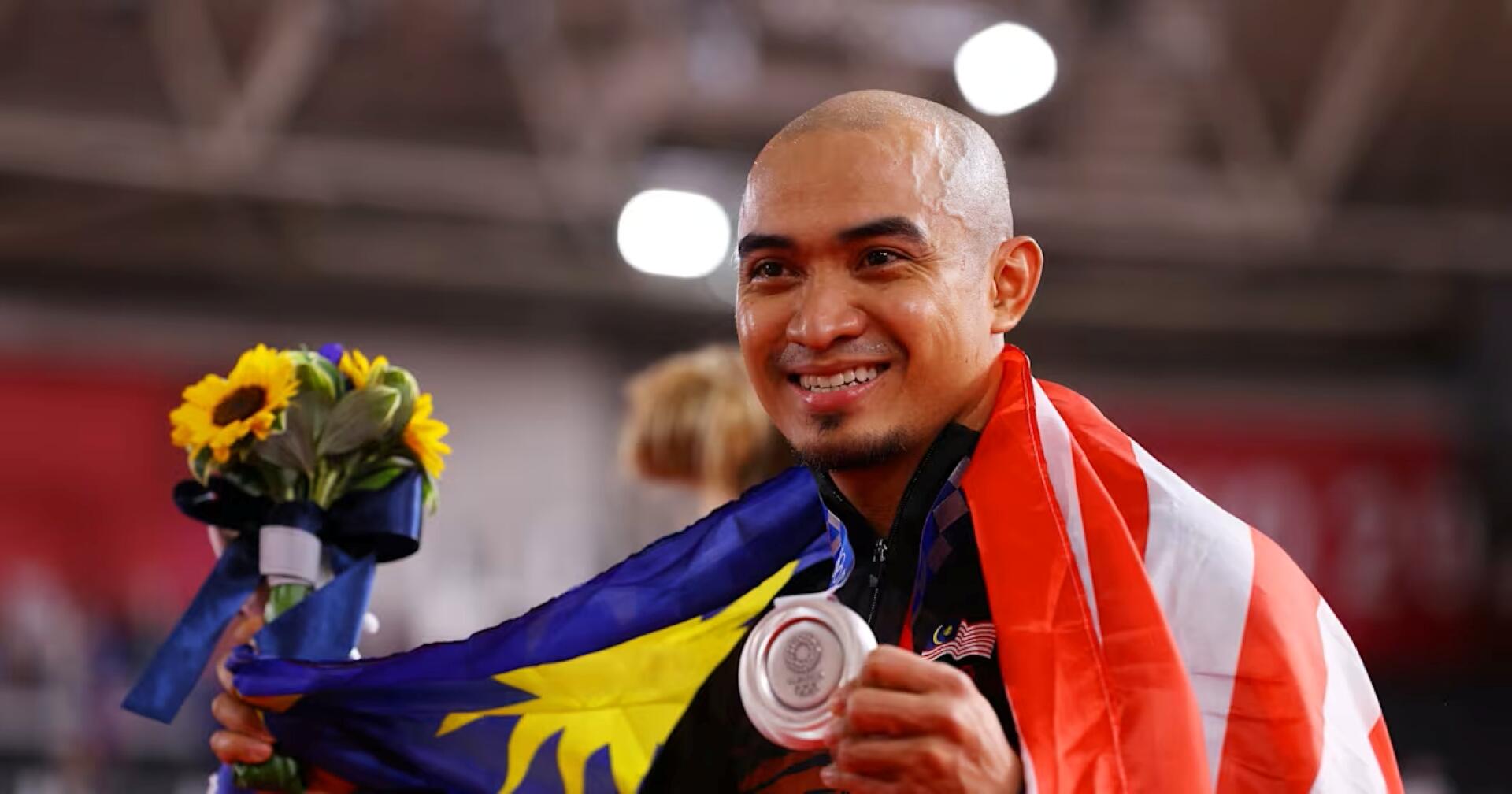
Azizul Hasni Awang, known as the ‘pocket rocket’, is widely regarded as Malaysia’s greatest track cyclist. Azizul’s passion for cycling began as a child, after which he began his professional cycling career in 2008 after training in Terengganu and at the Bukit Jalil Sports School.
📌Gold medals at the 2008 & 2009 Asian Cycling Championships
📌Silver in a World Championship medal in 2009 (first Asian cyclist to win a medal in this tournament)
📌Winner of the Keirin event at the 2008 / 2009 UCI Track Cycling World Cup
📌Olympic bronze at 2016 and silver in keirin
Now is the perfect time to read more about some of the top Malaysian athletes.
The 2026 Asian Games
The 2026 Asian Games are going to be held in the city of Nagoya and the Aichi Prefecture, Japan, from September 19 to October 4, 2026. This will be the third time Japan has added its name to the Asian Games list of host countries. Approximately 15,000 athletes and team officials are expected to participate in the Games.
Do you want to know more about the Asian Games 2026? Explore our detailed guide on the Asian Games 2026 for everything that you need to know about it.
⌛Duration: Sat 19 September to Sun 4 October, 2026
🏟Venue: Nagoya City Mizuho Park Athletic Stadium
🌍Participating Countries: 45 countries
👥Teams: Up to 15,000 people, comprising athletes and officials
Ahead of the action-packed event at Nagoya, here is a closer look at the new sports that are going to be introduced at the Asian Games Aichi 2026.
🆕Introduction of New Sports
While the 2026 Asian Games will feature the main core sports, several new sports are going to be introduced this year, like mixed martial arts (MMA) and surfing. The Olympic Council of Asia has also confirmed that cricket and have been included in the sports programme for the 20th Asian Games after being granted international status by the ICC in the 2023 Asian Games.
🏄♀️Surfing
This year, surfing is making its debut at the Asian Games and is scheduled from Sept 19 to Oct 4. Taking advantage of Japan's excellent coastline and world-class infrastructure, surfing will be held at Pacific Long Beach in Tahara, Aichi, a venue built especially for high-performance shortboard competition.
Teenage Malaysian surfer Lucas Wehle is going to represent Malaysia after his spectacular performance at last year's Mahabalipuram Asian Surfing Championships, where he became the first Malaysian surfer to advance to the quarter-finals of the tournament.
🥊Mixed Martial Arts (MMA)
MMA is going to debut in the 2026 Asian Games. It will feature six medal events – four for men and two for women. It will be classified as a combat sport alongside kurash and jiu-jitsu. MMA's inclusion in the Asian Games reflects the rising popularity of combat sports in Asian nations.2
🏏Cricket
This is going to be cricket’s fourth appearance at the Asian Games and is going to be played in the T20 format, with gold medals for women and men at the Korogi Sports Park. The tournament will feature 8 women's teams and 10 men's teams, and will serve as a pathway to the LA 2028 Olympics.
It will be great to have cricket in the 2026 Games, and we at JCA will provide all kind of support. It would leave a fantastic legacy, and go a long way in promoting the game in the country.
Japan Cricket Association chief executive Naoki Alex Miyaji to Reuters
From a modest regional event featuring 11 nations and 6 sports to a continental sporting spectacle showcasing 45 nations and 500+ events, the Asian Games have come a long way. From traditional sports like Sepak Takraw and kabaddi to the inclusion of new-age sports like esports, Freestyle BMX, and mixed martial arts, the Asian Games continue to march with the times.
Beyond the medals, the Asian Games remain a powerful symbol of unity in diversity, celebrating the culture and traditions of Asian nations and showcasing how regional diversity can be celebrated through sports.
References
- Attali, M. (2015). The 2006 Asian Games: self-affirmation and soft power. Leisure Studies, 35(4), 470–486. https://doi.org/10.1080/02614367.2015.1035311
- Olympic Council of Asia. (2023). 20th Asian Games Aichi-Nagoya 2026. In Asian Games (Vol. 3). https://www.aichi-nagoya2026.org/en/assets/file/tournament/pr3.pdf
Summarise with AI:
Did you like this article? Leave a rating!

 Loading...