
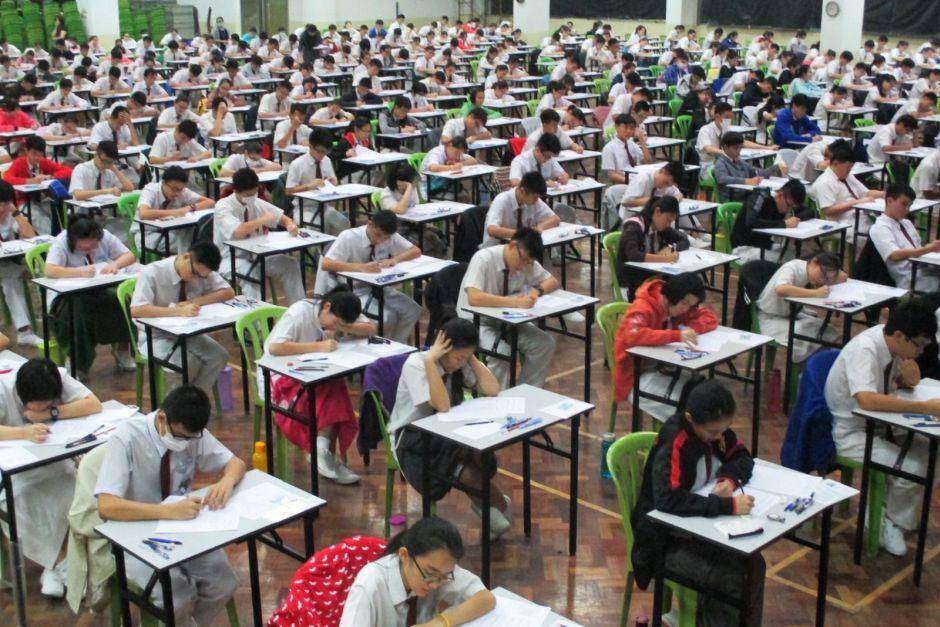

Do you know that the UEC is the only school-based exam qualification in Malaysia that uses simplified Mandarin Chinese as its medium of instruction?
The Unified Examination Certificate (UEC) is a pre-university exam that is exclusively taken by students who are studying at Chinese Independent High Schools. It was established in 1975 by the United Chinese School Committees’ Association of Malaysia, commonly known as the Dong Zong, to unify academic assessments and facilitate higher education opportunities both locally and internationally for Chinese students.
The UEC is administered by the Dong Zong every year and emphasises Mandarin language and a curriculum aligned with Chinese cultural and educational traditions. As of today, there are 60 registered Chinese independent high schools in Malaysia.
In this article, you will learn more about the UEC, including its subjects, education pathways and effective strategies to ace this exam.
| Year/Period | Development of the UEC Examination in Malaysia |
|---|---|
| 1975 | The first Unified Examination Certificate (UEC) examination was held from 11–17 December 1975. A total of 6,141 students from 42 Chinese Independent Secondary Schools participated. The examination was introduced by Dong Jiao Zong to provide a unified assessment system for Chinese Independent Secondary Schools. |
| 1976–1980s | UEC became the standard examination for Chinese Independent Secondary Schools throughout Malaysia. Examination procedures, grading standards, and curriculum frameworks were progressively strengthened. |
| 1990s | Growing numbers of overseas universities began accepting UEC qualifications for admission, increasing its value as a pathway to higher education abroad. |
| 2000–2010 | The examination system expanded in scale, with more candidates, broader subject offerings, and greater international recognition. UEC graduates increasingly entered universities in Asia, Europe, Oceania, and North America. |
| 2011 | UEC examination administration achieved ISO 9001 certification, reflecting improvements in quality assurance and examination management. |
| 2015 | The Sarawak State Government began recognizing UEC qualifications for recruitment into the state civil service, marking a significant milestone in domestic recognition. |
| 2018 | UEC reached its 44th year. By this time, cumulative UEC candidates exceeded 645,000, demonstrating its long-term role in Chinese Independent Secondary Education. |
| 2018–2020 | Federal recognition of UEC became a major national policy debate involving issues of education, language, and public-sector employment. |
| 2021–2025 | UEC continued to be recognized by many private higher education institutions in Malaysia and by universities in the United Kingdom, Australia, New Zealand, Singapore, Japan, South Korea, Canada, and the United States. |
| 2025 | UEC marked its 50th anniversary, highlighting five decades of continuous operation since its establishment in 1975. |
| Present (2026) | UEC remains the principal examination system for Malaysia's Chinese Independent Secondary Schools, with Junior, Senior, and Vocational streams. International recognition remains strong, while discussions on broader federal recognition continue. |


📚What is the Unified Examination Certificate (UEC)?
Definition and Purpose
The UEC, abbreviation for Unified Examination Certificate, is a unified exam taken by students studying in Chinese Independent Schools in Malaysia. Unlike other national secondary schools in Malaysia, Chinese Independent Schools, as the name indicates, function independently. They are run by Dong Zong, also known as the United Chinese School Committees Association of Malaysia and use the Mandarin language as the mode of instruction in the schools.
The examination is held every year for students studying in Forms 3, 4, and 5, covering a wide range of subjects, including Mathematics, Science, Chinese Language, and others.
The objectives of the UEC include:
✅To provide a unified assessment of the Independent Chinese Secondary Schools’ academic performance
✅To help UEC graduates pursue higher studies and improve their employment opportunities
✅To provide local and foreign higher educational institutions with a reliable academic authentication for student admissions
✅To provide employers with an academic reference and facilitate higher education opportunities
Because of its high standards, the UEC remains a popular examination.
Historical Background
To understand the UEC, we must first understand the concept of Independent Chinese Secondary Schools. Following the recommendations of the Rahman Talib Report 1960, the Education Act in 1961 was implemented, which made primary education free and set up a unified national curriculum for the country.
Under this policy, if a Chinese school in Malaysia wanted to receive a subsidy, it had to convert to an English medium school and in 1962, the government terminated subsidies for the partially subsidised schools.
Secondary schools that chose to remain outside the system came to be known as independent secondary schools, and the Chinese secondary schools which did not follow the diktat of the Rahman report came to be known as Independent Chinese Secondary Schools.
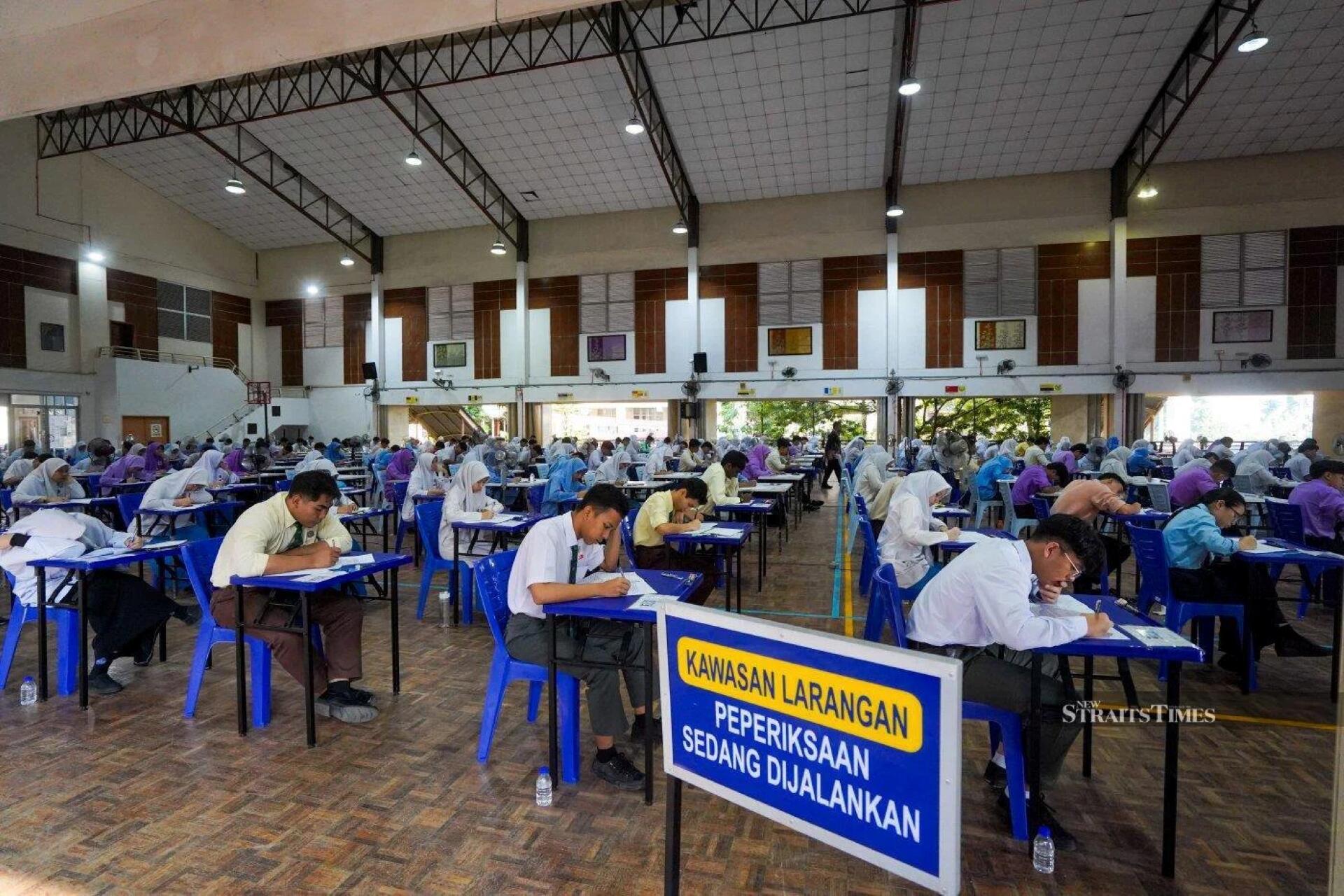



Following the conversion, the Ministry of Education suspended the Form 3 Three Examination and the Chinese Secondary School Entrance Examination. With no standardised examination to evaluate their academic qualifications, students faced significant hurdles in getting admission to higher education institutions.1
As a result, in 1973, the National Independent Chinese Secondary School Development Committee was established to address this. In 1974, it brought into force the Consolidated Curriculum and Examination Group Report, which laid the foundation for a unified examination system for junior and senior secondary schools.
Finally, the next year, in 1975, the first UEC for Junior Secondary Education was successfully conducted, marking the start of a standardised assessment system for Independent Chinese Schools in Malaysia.
1960
The Rahman Talib Report recommended a unified national education system.
1961
The Education Act 1961 was implemented. Schools had to convert to English-medium schools to receive government subsidies.
1962
The government withdrew subsidies from non-converting schools, leading to the establishment of Independent Chinese Secondary Schools (ICSS).
Post-1962
Students lacked a standardised examination that limited their access to higher education.
1973
National Independent Chinese Secondary School Development Committee was established.
1974
A unified curriculum and examination framework were introduced.
1975
The first Unified Examination Certificate (UEC) for Junior Secondary Education was held.
📈Structure and Levels of the UEC
The Unified Examination Certificate (UEC) exams in Malaysia consist of three levels, which include the Junior Middle Three exams, Senior Middle Three exams and the Vocational section exams.
Here is the list of subjects that students will study for different levels and streams.
Junior Middle Level
The Junior Middle Three level corresponds to the third year of junior secondary education. It is taken by Form 3 Chinese students (age 15) in Malaysia and spans 3 years of study.
Students sit for 8 papers, namely:
- Chinese Language
- Bahasa Malaysia
- English
- Mathematics
- Science
- History
- Geography
- Art
Senior Middle Level
The senior middle level is equivalent to the final year of senior secondary education, taken by Form 6 students. At this stage, students get to choose from a diverse range of subjects based on their interests and career goals.

All students, irrespective of their chosen stream (Science, Commerce or Pure Art), are required to study 3 compulsory language subjects.
In total, they can sit for 7 subjects up to a combination of 10 subjects.
The curriculum offers 22 subjects:
- Accounting
- Advanced Mathematics
- Advanced Mathematics I
- Advanced Mathematics II
- Art
- Bahasa Malaysia
- Basic Circuit Theory
- Biology
- Bookkeeping & Accounts
- Business Studies
- Chemistry
- Chinese Language
- Computing & Information Technology
- Digital Logic
- English
- Economics
- Fundamentals of Electrical Engineering
- Geography
- History
- Mathematics
- Physics
- Principles of Electronics
Vocational and Technical Sections
In addition, the vocational and technical sections comprise 5 subjects:
- Car Repair & Maintenance
- Car Repair & Maintenance (Practical)
- Fine Art & Craft
- Fine Art & Craft (Practical)
- Industrial English
If you're interested in knowing more about vocational studies in Malaysia, you can also refer to this guide to understand the Sijil Vokasional Malaysia (SVM).
The UEC is internationally accepted by over 1000 universities as an entrance qualification, including private institutions in Malaysia as well as universities in China, Singapore, and Taiwan.
UEC is also accepted in Sarawak and Sabah, the only two Malaysian states where it is accepted for entrance to state-run universities and the state civil service.
📕UEC Subjects and Syllabus
The Senior Middle curriculum categorises subjects into compulsory core subjects and elective subjects depending on the chosen stream.
Core Subjects
All UEC candidates have to take 3 mandatory core subjects. They are:
✅Chinese Language
✅English Language
✅Bahasa Melayu (Malay Language)
Here is the list of subjects that students will study for different levels and streams.
Learn more about the assessments for lower secondary at the Malaysian public schools.
| Subject | Description |
|---|---|
| Chinese Language | Mandatory language subject that develops reading, writing, comprehension, and communication skills in Chinese. |
| Bahasa Melayu | Mandatory national language subject covering grammar, comprehension, writing, and communication. |
| English Language | Mandatory English language subject focusing on comprehension, vocabulary, grammar, and writing skills. |
Elective Subjects
The UEC curriculum offers a limited number of elective subjects that help students learn the subjects of their choice apart from the core prescribed subjects. Elective subjects are mostly optional, so students can choose subjects based on their interests.
Language Medium
The language of instruction for UEC students is mainly Mandarin Chinese, and it is used to teach all core subjects. However, students now need to learn Bahasa Melayu if they want to apply to public universities.
📋What Is The Grading System Of UEC?
Grading Scale
The UEC grading system follows a different grading system from its public school equivalent, STPM.
For STPM (Form Six studies) in public schools, students only need to sit for four subjects and their grades are calculated using the Cumulative Grade Point Average (CGPA) system.
| Grade | CGPA |
|---|---|
| A | 4 |
| A- | 3.67 |
| B+ | 3.33 |
| B | 3 |
| B- | 2.67 |
| C+ | 2.33 |
| C | 2 |
| C- | 1.67 |
| D+ | 1.33 |
| D | 1 |
| F | 0 |
When it comes to UEC, the subjects are graded according to nine grades as listed below:
- A1
- A2
- B3
- B4
- B5
- B6
- C7 [Pass]
- C8 [Pass]
- F9 [Fail]
Gain a better understanding of the SPM exam taken by Form 5 students in Malaysian public schools.
Candidates who don't have an SPM certificate but sit for History and Bahasa Melayu are eligible for the following 4 programmes:
✅Bachelor of Arts in Chinese language studies with honours
✅Bachelor’s degree in Chinese language with education
✅Bachelor of Arts in Chinese Studies
✅Bachelor’s degree in Chinese language and linguistics
Comparisons with Other Qualifications
Here is how the UEC differs from the SPM and the STPM.
| Aspect | SPM | UEC (Senior Middle) | STPM |
|---|---|---|---|
| Full Name | Sijil Pelajaran Malaysia | Unified Examination Certificate | Sijil Tinggi Persekolahan Malaysia |
| Education Level | End of Form 5 | End of Senior Middle 3 (equivalent to Year 12) | Form 6 (Pre-University) |
| Typical Age | 17 | 17-18 | 18-20 |
| Purpose | Secondary school completion | Senior secondary qualification for university entry | Pre-university qualification |
| Grading System | A+, A, A-, B+, B, C+, C, D, E, G | A1, A2, B3, B4, B5, B6, C7, C8, F9 | A, A-, B+, B, B-, C+, C, C-, D+, D, F |
| University Entry | Usually requires Foundation, Diploma, A-Level, STPM, etc. | Accepted by many private and overseas universities for direct degree entry | Accepted by public and private universities for direct degree entry |
| Recognition in Malaysian Public Universities | Fully recognised | Limited recognition (depends on institution/programme) | Fully recognised |
| International Recognition | Moderate | Widely recognised by many overseas universities | Widely recognised internationally |
🌏Recognition of the UEC in Malaysia and Internationally
Local Recognition
The UEC is widely accepted by most private universities in Malaysia. Some universities that accept UEC degrees are Sunway University, UTAR, Taylor's, HELP, UCSI, in addition to Monash, Nottingham, and Heriot-Watt Malaysia campuses.2
Recently, the Higher Education Ministry notified that students seeking admission to public higher education institutions (IPTA) can apply through two separate admission routes.
Speaking about it, Higher Education director-general Datuk Prof Dr Azlinda Azman said:
The first route applies to students from UEC, tahfiz or private school backgrounds who also possess a full Sijil Pelajaran Malaysia (SPM) certificate. They can apply for any programme subject to their decision, There is no discrimination, no bias.
Datuk Prof Dr Azlinda Azman
The second admission route comprises students who do not possess a full SPM certificate.
Under this pathway, candidates will only be considered for selected programmes identified by public universities, subject to academic suitability, interviews, and other admission requirements.
Datuk Prof Dr Azlinda Azman
International Recognition
Here are some countries and higher learning institutions that acknowledge UEC as a pre-university qualification.
Singapore
Singapore has recognised the UEC qualification since 1997, and many universities, polytechnics and colleges have received many Malaysian UEC graduates.
Here is the list of countries that also accept the UEC qualification to pursue a degree.
- Taiwan, China and Hong Kong
- United Kingdom
- Australia
- America
- Canada
- New Zealand
- Ireland
- South Korea, Japan and many more
In short, the UEC certificate can take you places, be it in Malaysia or overseas.

🎓Entry Requirements for Higher Education with UEC
Malaysian Universities
The general rule of thumb for minimum degree entry requirements for private universities and colleges in Malaysia is this:
📌Most of the time, students can proceed to a direct degree programme if they score 5 credits (Bs) in any subject for their UEC exams.
📌If students have at least 3 credits (Bs) to 4 credits (Bs), they cannot enrol for a degree programme straight away and must choose to do a Diploma/ Foundation programme locally.
However, different degree programmes/universities will indicate their specification for their targeted UEC entry requirement. This could be due to the nature of the degree and also the ranking of the universities.
📌For the Bachelor of Computer Science (Hons) offered by Asia Pacific University in Malaysia, the UEC entry requirement is 5 Grade B Passes in the Science Stream, including Mathematics and one Science or ICT subject.
📌For the BSc Nutrition (Hons) offered by the University of Nottingham Malaysia, the UEC entry requirement is at least 1 A and 4 B3S, including biology and chemistry, excluding Bahasa Malaysia and the Chinese language.
On a side note, some universities may require students to calculate the cumulative points from their best 5 or 6 subjects' results for a scholarship application.
UCE requirements to study in Malaysia:
Level of Study
🧡 Diploma course
💙 Bachelor's Degree Programmes
💚 Professional Qualifications
UEC Grade
🧡 Minimum grade B in 3 relevant subjects
💙 Minimum grade B in 5 relevant subjects
💚 Minimum grade B in 5 relevant subjects
To determine if you meet these requirements, you will have to convert your grades into points. Here's how to calculate them.
| UEC grade | Point |
|---|---|
| A1 | 1 |
| A2 | 2 |
| B3 | 3 |
| B4 | 4 |
| B5 | 5 |
| B6 | 6 |
👨💼Why Is UEC Popular Among Students And Parents?
Now, let's talk about the 3 main reasons why many students still prefer to take the UEC over the years.
1️⃣One of the most cost-effective pre-university programmes
Do you know that some local foundation programmes can go up to RM20k? For other pre-university programmes like A-Level, Australian Matriculation (AUSMAT), the amount could be higher depending on the institutions that you are studying at.
In general, you only need RM5000 to RM8000 a year if you're studying for UEC at a Chinese Independent High School. The costs include tuition fee, annual fee, daily expenses and hostel fees if you're from outstation.
2️⃣Shorter duration
The entire duration to get a UEC qualification takes only one year. By the time your results are released, you'll be only 19 years old. Imagine entering the first year of a degree before the age of 20!

You're able to complete your studies early and graduate earlier than your same-age peers who took the A-Level, for instance.
Discover more about the secondary school examinations in Malaysia.
3️⃣Internationally recognised comprehensive syllabus with Chinese-language emphasis
This is perhaps one of the most important reasons why UEC remains a top pick among the Chinese community in Malaysia.
The syllabus of UEC is distinctively curated from learning materials from China and Taiwan, making it a globally recognised qualification. UEC graduates, therefore, have a solid foundation in the Mandarin language and Chinese history, making them strong candidates to thrive in Chinese-speaking countries if they choose to study or work there in the future.

🤯Is UEC Very Difficult And What Should You Take Note Of If You Take It?
By now, you should have a better understanding of the UEC exams, including the subjects offered and the grading system. Perhaps this will lead to the impression that it is super difficult to score. With the right preparation tips, you can definitely score well in your exam.
Tip 1: You need to be a master of the Chinese language
Given that most of the exams will be conducted in Chinese, you definitely need to make sure your Chinese skills are top-notch. This means you have to consistently improve your reading and writing in Chinese to have excellent comprehension and answer explanation skills when you're attempting the exams.
Ensure you practice Chinese daily by reading different books in Chinese, improving your vocabulary, and practising consistently in Chinese. A strong foundation in the Chinese language will help you sit for your exam with more confidence and score well.
If learning a foreign language is your passion, you can check out this guide on the UPBA.
Tip 2: Take note of the entry requirements for your desired degree
It is important to set a feasible and clear goal as you prepare for your UEC exam. When you have verified the minimum entry requirement for the programme that you want to study, it serves as a guideline to motivate and educate you on:
- which subjects to register
- which subjects to prioritise based on your current level
- the ideal grade combination you should aim for
For example, if you want to pursue a degree in Chemical Engineering, you'll know that the minimum entry requirement for UEC is to pass with 5Bs, including Mathematics and Physics / Chemistry.
Tip 3: Take up private tutoring
After confirming the UEC entry requirement for the programme that you intend to study, the next step is to develop an effective studying routine that will help you score well in your registered subjects.
To deepen your understanding of the subject, you might even want to attend private tutoring lessons after class. At Superprof, you can find experienced tutors across a wide range of subjects who can help you build strong foundations in the subject and equip you with the best studying and exam-answering techniques for different learning levels, including tips on how to prepare for IGCSE.
Whether you need a Science tutor, Chinese tutor, or even a Bahasa Melayu tutor, Superprof has you covered! You can even choose between face-to-face lessons and online lessons to have the best flexible learning experience.
Worried about your fees? Don't worry! With Superprof, you can set the maximum budget for the hourly rate for your lessons and get connected to tutors who match your price range.
It's easy as ABC, right?
References
- Lam, K. C., Ting, Y. W., Ang, L. H., & Hoe, F. T. (2022). Framing of the unified examination certificate by Malaysian ethnic newspapers. Manusya Journal of Humanities, 25(1), 1–22. https://doi.org/10.1163/26659077-25010021
- Lam, K. C., Ting, Y. W., Ang, L. H., & Hoe, F. T. (2022b). Framing of the unified examination certificate by Malaysian ethnic newspapers. Manusya Journal of Humanities, 25(1), 1–22. https://doi.org/10.1163/26659077-25010021
Summarise with AI:
Did you like this article? Leave a rating!


 Loading...
UEC science and maths subject are taught in Chinese? The syllabus was set by who?
Hi! I actually got 3As for my UEC and I think it’s such a waste to not study abroad with it. So, I would like to know how long is the validity of a UEC results like will it be valid after a year?
Yes, it is valid