
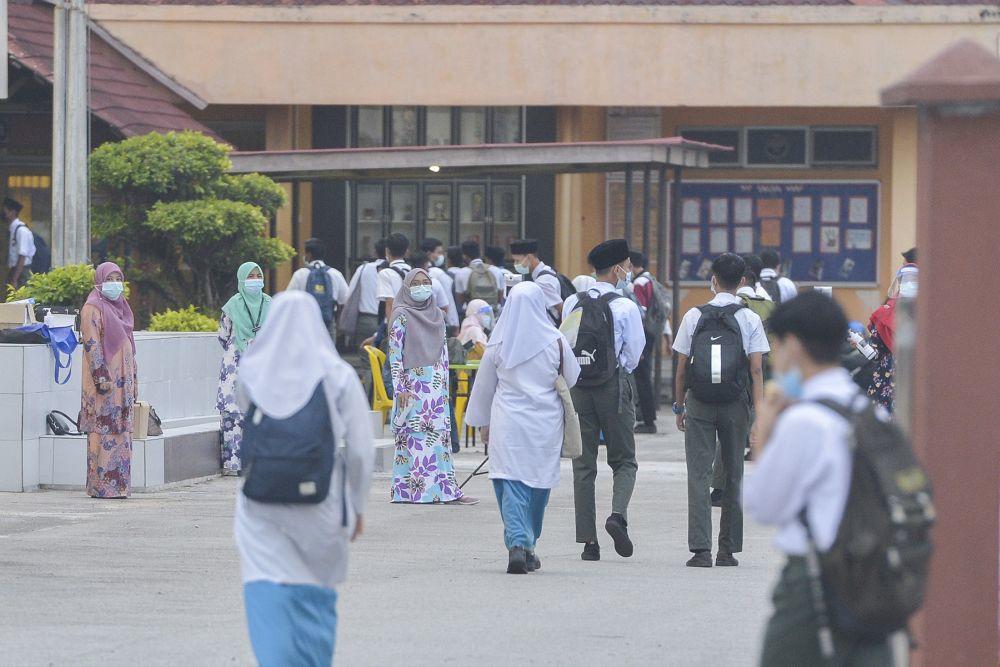

What is SPM in Malaysia? This question may be for anyone unfamiliar with the most important examination for high-school students in the country.
The Sijil Pelajaran Malaysia is the national examination taken by Form 5 candidates at the end of Sekolah Menengah.
As one of the most important milestones in the country's secondary education system, it plays a major role in university admissions, scholarships, and future work options.
This article will provide a better understanding of everything candidates and parents need to know about the SPM grading system, subjects list, eligibility requirements, and post-SPM learning options in 2026.
| Category | Details |
|---|---|
| Full Name | Sijil Pelajaran Malaysia (SPM) |
| Education Level | National secondary school qualification |
| Exam Year | Form 5 (17 years old) |
| Administered by | Malaysian Examinations Syndicate (Lembaga Peperiksaan Malaysia) |
| Equivalent to | O-Level / secondary school certificate |
| Grading System | A+ to G |
| Minimum Credit | Grade C |
| Compulsory Subjects | Bahasa Melayu, English, Mathematics, History, Moral/Islamic Studies |
| Passing requirements to obtain the certificate | Pass in Sejarah & Bahasa Melayu |
| Pathways After SPM | STPM, matriculation, diploma, foundation, A-Levels, TVET |





📘Overview of the SPM Examination
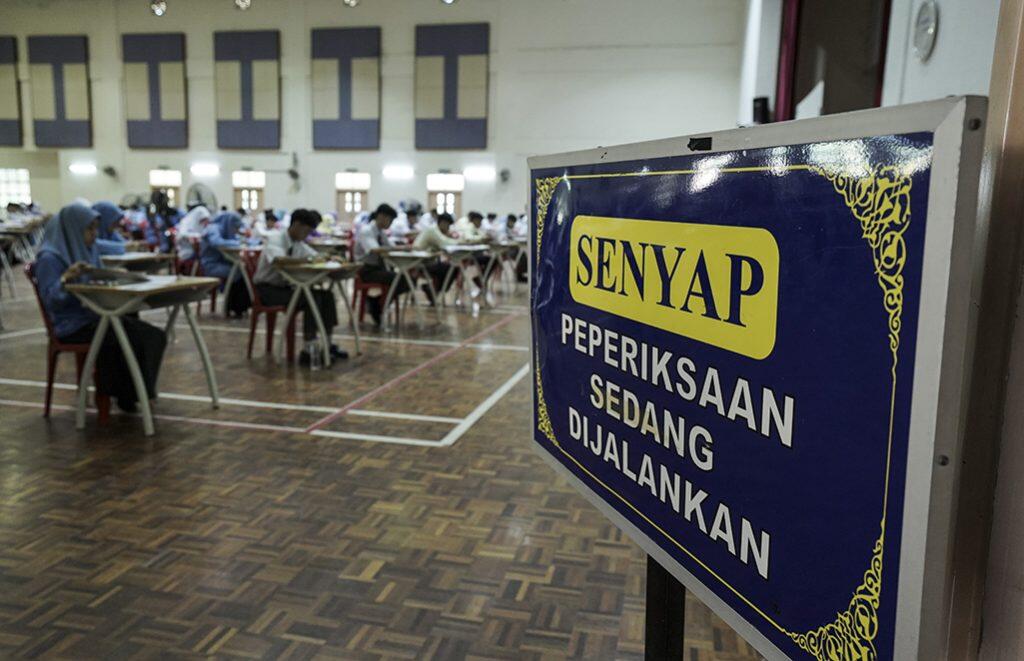
The Sijil Pelajaran Malaysia is a national examination sat by Form 5 candidates at the end of upper secondary education (Form 5). It is designed to assess students' knowledge, communication abilities, critical thinking, and practical skills developed throughout Sekolah Menengah.
It is also part of the country's wider secondary-level examination system, which includes other assessments and tests that build up to the final examination.
Today, it follows the KSSM syllabus (Kurikulum Standard Sekolah Menengah). It was implemented in 2017 through a phased rollout to replace the old KBSM syllabus (Kurikulum Bersepadu Sekolah Menengah), which had been in use since 1989.
KSSM replaced KBSM as part of Malaysia’s education reform under the Education Blueprint 2013–20251 to shift learning from an exam-focused system to a more student-centred approach that emphasises critical thinking and real-world skills.
This approach was much needed to equip our youngsters to meet the 21st-century skill requirements.
KSSM focuses more on:
- Higher-order thinking skills (HOTS/KBAT)
- Application-based learning
- Communication and analytical skills
- STEM
- Real-world problem solving
Form 5 candidates from government schools, private learning institutions, homeschool programmes, and independent institutions can register for SPM.
It is generally considered the equivalent of the O-Levels. It uses a grading scale from A+ to G, with a C typically recognised as a credit.
Meanwhile, STPM is a pre-university qualification taken in Form 6 and is commonly regarded as the equivalent of A-Levels.
📝SPM Examination Structure
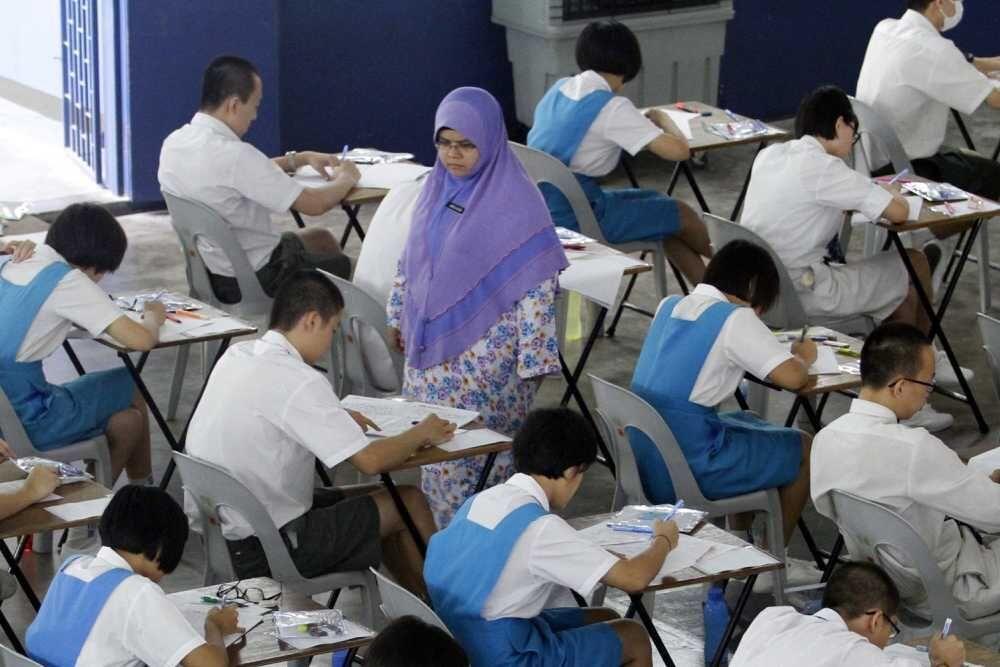
Knowing the structure helps to understand the whole examination better. It includes multiple formats depending on the subjects. Form 5 candidates are evaluated through:
- Objective questions
- Structured questions
- Essay writing
- School-based assessment (PBD) in selected papers
- Oral tests
- Practical-based understanding in science papers (assessed through written papers and school activities)
The updated KSSM syllabus also places stronger emphasis on:
- KBAT (Kemahiran Berfikir Aras Tinggi) (HOTS)
- Application-based learning
- Communication skills
- Analytical thinking
- Real-world problem-solving
- Student understanding rather than rote memorisation
SPM Core Subjects: Paper Format & Question Types
| Compulsory subjects | Paper types |
|---|---|
| Bahasa Melayu | Paper 1: Writing (directed writing, essay writing) Paper 2: Reading comprehension, literature, grammar, KBAT/HOTS questions Paper 3: Speaking test (oral communication) Paper 4: Listening test |
| English | Paper 1: Writing (guided and extended writing) Paper 2: Reading comprehension, literature, grammar, vocabulary, KBAT/HOTS questions Paper 3: Speaking test Paper 4: Listening test |
| Mathematics | Paper 1: Objective questions (MCQ) Paper 2: Structured questions, problem-solving, real-life applications, KBAT/HOTS questions |
| Science | Paper 1: Objective questions (MCQ) Paper 2: Structured questions, experiment-based questions, data interpretation, application questions, KBAT/HOTS |
| Sejarah (History) | Paper 1: Objective questions (MCQ) Paper 2: Structured questions, essays, source-based questions, KBAT/HOTS |
| Pendidikan Islam | Paper 1: Objective questions Paper 2: Structured questions, essays, Quran & Hadith understanding, KBAT/HOTS |
| Pendidikan Moral | Paper 1: Objective questions Paper 2: Structured questions, case studies, essay questions, value application, KBAT/HOTS |
KBAT (Kemahiran Berfikir Aras Tinggi) or HOTS (Higher-Order Thinking Skills) refers to a student’s ability to analyse, evaluate, and apply knowledge to solve problems, rather than simply memorising facts.
📚SPM Subjects List
Form 5 candidates are required to take at least 6 core subjects, as mentioned above, although many sit for additional elective topics depending on their stream and the school's offerings.
Science and mathematics may be taught bilingually under the Dual Language Programme (DLP), although this depends on the school.
Compulsory subjects
- 1103 Bahasa Melayu
- 1119 English Language
- 1223 Pendidikan Islam [Taken by Muslim candidates]
- 1225 Pendidikan Moral [Taken by non-Muslim candidates]
- 1249 History
- 1449 Mathematics
- 1511 Science [Taken by candidates from Commerce and Art stream]
Some commonly offered elective subjects include:
- 3472 Additional Mathematics
- 4531 Physics
- 4541 Chemistry
- 4551 Biology
- 4561 Additional Science
🎨Arts and Health
- Pendidikan Seni Visual
- Pendidikan Musik
- Sports Science
💼Economics and Business
- Entrepreneurial Studies
- Business
- Principles of Accounting
- Economics
🌏Language and Literature
- Literature in English
- Malay Literature
- Arabic
- Chinese
- Tamil
- Japanese
- Korean
- French
- German
- Communicative Chinese
- Chinese Literature
- Tamil Literature

📖Social Sciences and Religion
- Geography
- Tasawwur Islam / Islamic Worldviews
- Quran and Sunnah Studies
- Syariah / Islamic Law Studies
- Quran Recitation / Arabic-based Islamic papers
- Bible Knowledge
⚙️Technical and Vocational
- Agricultural Science
- Computer Science
- Engineering Drawing
- Mechanical Engineering Studies
- Electrical & Electronics Engineering Studies
- Civil Engineering Studies
- Multimedia Production
- Digital Graphic Design
- Interior Design
- Catering / Food Studies
- Automotive / Technical Skills
Not all schools offer every elective subject, as availability depends on streams, facilities, and teaching resources.
Find out more about the vocational studies and SVM exams in Malaysia.
The official limit by the MOE is 10 papers, but candidates are permitted to take two additional papers, usually languages like Arabic, Chinese, Tamil, or Bible Knowledge. This makes the maximum limit for the number of papers a student can take 12.
⚖️SPM vs IGCSE: Which Should You Take?
IGCSE (International General Certificate of Secondary Education) is an extremely popular and functional alternative to SPM. Let's talk about how the IGCSE examination system differs from it.
a) Government vs International schools
Firstly, SPM is a government-administered public school qualification taken by all Form Five candidates (17 years old) before they leave. The questions are set by the Malaysian Examinations Board.
On the other hand, the IGCSE is an English-medium international curriculum commonly offered by international schools. Students can go for this qualification at the end of Year 10 (15 to 16 years old) or Year 11 (16 to 17 years old), depending on when they start and complete the syllabus for the taught subjects.
Cambridge Assessment International Education and Pearson Edexcel are the two principal boards offering IGCSE qualifications worldwide.
b) Public universities vs Private tertiary institutions and overseas universities
Secondly, these two examination systems differ in terms of the learning routes available after completion.
The SPM qualification is a strong pathway for local tertiary institutions, which are also recognised for selected programmes or universities overseas. You can also continue your Form Six studies and take the STPM exams.
In contrast, the IGCSE route is internationally benchmarked and often leads to advanced learning options such as A-Levels or the International Baccalaureate Diploma Programme (IBDP). These are widely recognised by tertiary institutions both domestically (especially private institutions) and overseas, offering broader global opportunities.

c) Budget-friendly vs High-cost qualification
Lastly, cost is an important factor when comparing the two learning options.
Let's be honest, education can cost a lot even before one reaches tertiary learning stages.
Government learning institutions are heavily subsidised by the state. Form 5 candidates in government schools do not pay any fees, making it the most affordable option for many parents.
On average, fees may range from approximately RM 700 to RM 1,300 per subject. For students taking around 7 papers, the total costs alone may reach several thousand ringgit.
Overall, the cost difference reflects the broader difference between government-funded institutions and privately funded international institutions.
Whilst many parents opt for government schools these days, there is no one-size-fits-all solution. The choice between these two depends on a student’s strengths, goals, and financial circumstances.
Ultimately, both options allow learners to pursue tertiary education successfully.
Many private universities in the country recognise both SPM and IGCSE as entry qualifications for foundation and diploma programmes. However, requirements such as minimum credits, subject combinations, and English proficiency may vary depending on the university and course.
📋SPM Requirements and Eligibility
Wondering about the official requirements?
Earlier, we mentioned that Form 5 candidates, typically aged 17, will sit for this peperiksaan, but they are not the only ones.
1. Current Form Five candidates in government schools
Candidates will register for the subjects according to their designated streams (Science, Commerce, Art) with the assistance of their form teacher.
2. Private candidates
Others can register as private candidates. They may include:
- Homeschool candidates
- Adult learners
- Candidates retaking selected papers (SPM Ulangan)
- Candidates from private learning institutions
- International candidates
First-time private candidates are also required to take the core compulsory papers.
There’s a window period for those who want to register themselves as private candidates. Candidates should always check the deadline and the latest updates from Sistem Pengurusan Peperiksaan Atas Talian (SPPAT) KPM, an online portal used by the Malaysian MOE (KPM).
The fees consist of a basic fee of RM20, subject fees ranging from RM10.50 to RM20.50 depending on the type of assessment, and a late registration fee of RM150 for candidates who register after the deadline.
📅SPM 2026 Exam Date and Schedule
The 2026 academic year marks the first time the school term is fully returning to the traditional January-December cycle after several years of disruption due to the COVID-19 pandemic.
The official 2026 exam date schedule is typically announced by the Kementerian Pendidikan a few months before the real peperiksaan.
While exact dates may change each year slightly, candidates can generally expect the following timeline.
Early 2026
Candidate registration confirmation
Mid-year 2026
Peperiksaan percubaan (trial exams)
Late Nov and Dec 2026
Written papers begin (main test period)
March 2027
Results released (estimated based on previous cycles)
Candidates are always advised to follow updates from their schools and the Malaysian Examinations Board.
📊SPM Grading System
Since 2009, the examination has adopted the following grading system. You can see the complete updated grades in the table below.
| Grade | Mark Range | Remarks | Grade Value |
|---|---|---|---|
| A+ | 90-100 | Cemerlang Tertinggi | 0 |
| A | 80-89 | Cemerlang Tinggi | 1 |
| A- | 75-79 | Cemerlang | 2 |
| B+ | 70-74 | Kepujian Tertinggi | 3 |
| B | 66-69 | Kepujian Tinggi | 4 |
| C+ | 60-65 | Kepujian Atas | 5 |
| C | 50-59 | Kepujian | 6 |
| D | 46-49 | Lulus Atas | 7 |
| E | 40-45 | Lulus | 8 |
| G | 0-39 | Gagal | 9 |
Discover the latest updates on the PBD assessments for lower secondary schools in Malaysia.
🧠Study Tips for SPM Students
Preparing for the Form 5 final assessment can feel intimidating and overwhelming, especially when balancing tuition, assignments, and extracurricular activities.
Here are some practical revision tips for candidates preparing for the 2026 academic year.
1. Build a Realistic Study Schedule
One of the most important preparation strategies is proper time management. Instead of cramming at the last minute, learners should create a weekly revision timetable that covers all topics consistently.
The timetable should prioritise weaker ones while still allocating time for stronger ones to maintain balance.
It is also helpful to:
- Break revision into smaller learning sessions
- Set daily or weekly learning goals
- Include shot breaks to avoid burnout
- Leave extra time for revision closer to the peperiksaan period
Example of a Simple Revision Timetable
| Day | Focus Area | Task | Time |
|---|---|---|---|
| Monday | Bahasa Melayu | Complete 1 essay outline and revise grammar notes | 1 hour |
| Tuesday | English | Practise 2 comprehension passages and review vocabulary | 1 hour |
| Wednesday | Mathematics | Solve 8–10 structured questions from one chapter | 1 hour |
| Thursday | Science | Revise 1 topic and answer 5 experiment-based questions | 1 hour |
| Friday | Sejarah (History) | Read and summarise 1 chapter and answer 2 KBAT questions | 1 hour |
| Saturday | Pendidikan Islam / Pendidikan Moral | Revise key concepts and complete 5 structured questions | 45 minutes |
| Sunday | Past-Year Papers & Review | Attempt 1 past-year section and review mistakes or notes | 1–1.5 hours |
2. Focus on Understanding Instead of Memorisation
The KSSM syllabi place stronger emphasis on Kemahiran Berfikir Aras Tinggi (KBAT/HOTS), meaning candidates are expected to apply knowledge, analyse information, and solve problems rather than rely solely on memorisation.
Candidates should therefore:
- Practise explaining concepts in their own words
- Understand formulas and methods instead of memorising blindly
- Learn how to apply knowledge to unfamiliar scenarios
- Analyse past-year KBAT-style questions
3. Practise with Past-Year Papers
Past-year papers remain one of the most effective approaches to date. They help learners become familiar with:
- question formats
- time management during exams
- marking schemes
- frequently tested topics
Kertas percubaan can also provide useful practice, especially for essay-based and structured questions.
4. Strengthen Exam Techniques
Knowing the content alone is not always enough. Learners should also develop good peperiksaan strategies, such as:
- reading instructions carefully,
- planning essay answers before writing,
- managing time for each section,
- reviewing answers before submission.
Superprof also offers articles for various Form 5 topics that share revision tips, exam strategies, and preparation techniques to help learners work towards their target grades.
Check out our Superprof blog for more revision guides and subject-specific resources!
Small daily improvements over time create stunning results
Robin Sharma, leadership expert and author
5. Use Reliable Study Resources
Candidates can support their revision with:
- textbooks and workbooks,
- teacher-provided notes,
- online learning videos,
- revision groups,
- revision workshops.
While they can easily access materials online, they should avoid relying entirely on tips, summaries, or notes shared on social media without verifying the accuracy of the information.
6. Take Care of Physical and Mental Well-Being
Maintaining good health is equally important during exam preparation. Candidates should aim to:
- get enough sleep,
- eat balanced meals,
- stay physically active,
- and avoid excessive stress and anxiety
A healthy body and mind not only improve memory, concentration, and overall well-being but also help manage stress and anxiety more effectively.
Taking short breaks between revisions can help reduce stress and improve concentration. Techniques such as the Pomodoro Method, learning for 25 to 30 minutes followed by a 5-minute break, are commonly recommended to prevent burnout during long revision periods.
🎯Post-SPM Education Pathways
What are the future learning routes that candidates can pursue after completing their Form 5?2
Let's switch perspectives now.
If you're a recent Form 5 graduate, you may wonder what the next step is to take for your pre-university programme within the country once your results are released. For your information, you can't enter a degree programme with your Form 5 results.
You can refer to the list below to understand the entry requirementsfor each programme.
1. Pre-University Programmes
- Form Six Studies (STPM)
Candidates need to secure a C in Malay and pass their Sejarah paper. STPM usually takes about 1.5-2 years to complete and is one of the main routes into the public universities (IPTA).
- Matriculation
The minimum basic requirement for matriculation is 5 credits, including credits in certain compulsory subjects, depending on the stream. There are science, computer science, professional accounting, and accounting streams to select from.
Always check the official entry requirements on the MOE's website for detailed information.
Entry to this programme is based on a race quota, 90% of selected students are Bumiputeras (Malays and natives from Sabah and Sarawak), whereas 10% will be selected from non-Bumiputeras.
- UEC (Unified Examination Certificate) in Chinese Independent High Schools
If you are currently a student in a Chinese independent high school like Foon Yew High School, you can sit for the UEC (equivalent to STPM and A-Level) after completing Form 5.
2. IPTA (public higher education system)
IPTA refers to the country's public university system, which includes institutions such as Universiti Malaya and Universiti Kebangsaan Malaysia.
Entry into IPTA is highly competitive and is usually based on qualifications such as SPM, STPM, Matriculation, foundation programmes, or equivalent pre-university qualifications.
UPU (Unit Pengambilan Pelajar) Online system, which is the official centralised admission portal managed by the Ministry of Higher Education to manage candidates' admission to IPTA, polytechnics, community colleges, and public skills training institutions (ILKA).
Private Tertiary Institutions
- Foundation programme
To enter this programme, you need to have at least 5 credits.
- Diploma programme
For a diploma, you need to have at least 3 credits.
- A-Levels, South Australian Matriculation (SAM)/ Australian Matriculation (AUSMAT)
You need at least 5 credits for this. Most universities require you to have a credit in English and certain Science subjects if you intend to take Science-related courses.

Vocational and Technical Training
Not every student needs to follow a traditional learning route.
There are also strong Technical and Vocational Education and Training (TVET) routes, which focus on practical, hands-on, and skills-based learning.
These include:
- TVET diploma programmes (offered by polytechnics and vocational institutions)
- Skills certificates
- Vocational colleges and technical training institutes
These routes can lead directly into industries such as:
- Hospitality
- Multimedia and digital design
- Automotive technology
- Healthcare support services
🌍Studying Overseas with SPM Qualification
The answer is YES!
We got you covered for the important information to achieve your goal of studying overseas after completing your Form 5.
Here are some important points to take note of:
a) Look up the entry requirements for the programmes that you want to apply to
Before the actual Form 5 exams, you should start equipping yourself to ace the subjects that you have registered for. The standard entry requirement is 5 credits, but it's always better to aim for strong results.
If you feel that you need extra guidance on certain subjects, you can hire experienced tutors from Superprof! Learning has never been so easy, where you can find tutors for various topics with just a few clicks. Simply browse and select a tutor based on qualifications, experience, hourly rate, and teaching style.
b) Take the relevant language proficiency test
Depending on the countries that you plan to pursue advanced learning, it's important to make sure you have some basic knowledge of the medium of instruction (such as English, Chinese, Japanese, German, and Korean) that will be used during your lessons. Get that certificate before the application!
Learn how the UPBA can help you to gain a foreign language proficiency at SPM level.
c) Pick a recognised pre-university pathway
Students with Form 5 qualifications can continue overseas by first completing a recognised pre-university programme such as:
- A-Levels
- International Baccalaureate Diploma Programme (IBDP)
- Australian Matriculation (AUSMAT)
- Foundation programmes (in the country or abroad)
- Diploma programmes
These qualifications are widely accepted by universities in countries like the UK, Australia, Canada, and others.
Popular Destinations for Malaysian Students 🌍

- Australia
- United Kingdom
- Singapore
- New Zealand
- Ireland
🌟Looking Ahead
The SPM in Malaysia is an important milestone that shapes students’ future learning routes. While it can be challenging, understanding the grading system, choosing the right elective subjects, and preparing consistently can make a big difference.
At the end of the day, it is just one step in a larger journey toward pre-university studies, skills training, or future learning opportunities.
References
- Ministry of Education. (n.d.). Malaysia Education Blueprint 2013 - 2025. In Executive Summary.
- Planning your path after SPM. (n.d.). Gaharu. https://www.malaysia.gov.my/en/categories/school--education/pre-university-programme/planning-your-path-after-spm
Summarise with AI:
Did you like this article? Leave a rating!

 Loading...
hi,
i have a situation here , not sure if you are kind to share ur opinion.
My child completed GCE O level in Brunei. In order for him to enrol wz public institutions such as UITM, ITM and uni, he is required to have SPM.
what is the best way to get around this situation?
Thanks
Ai Lee