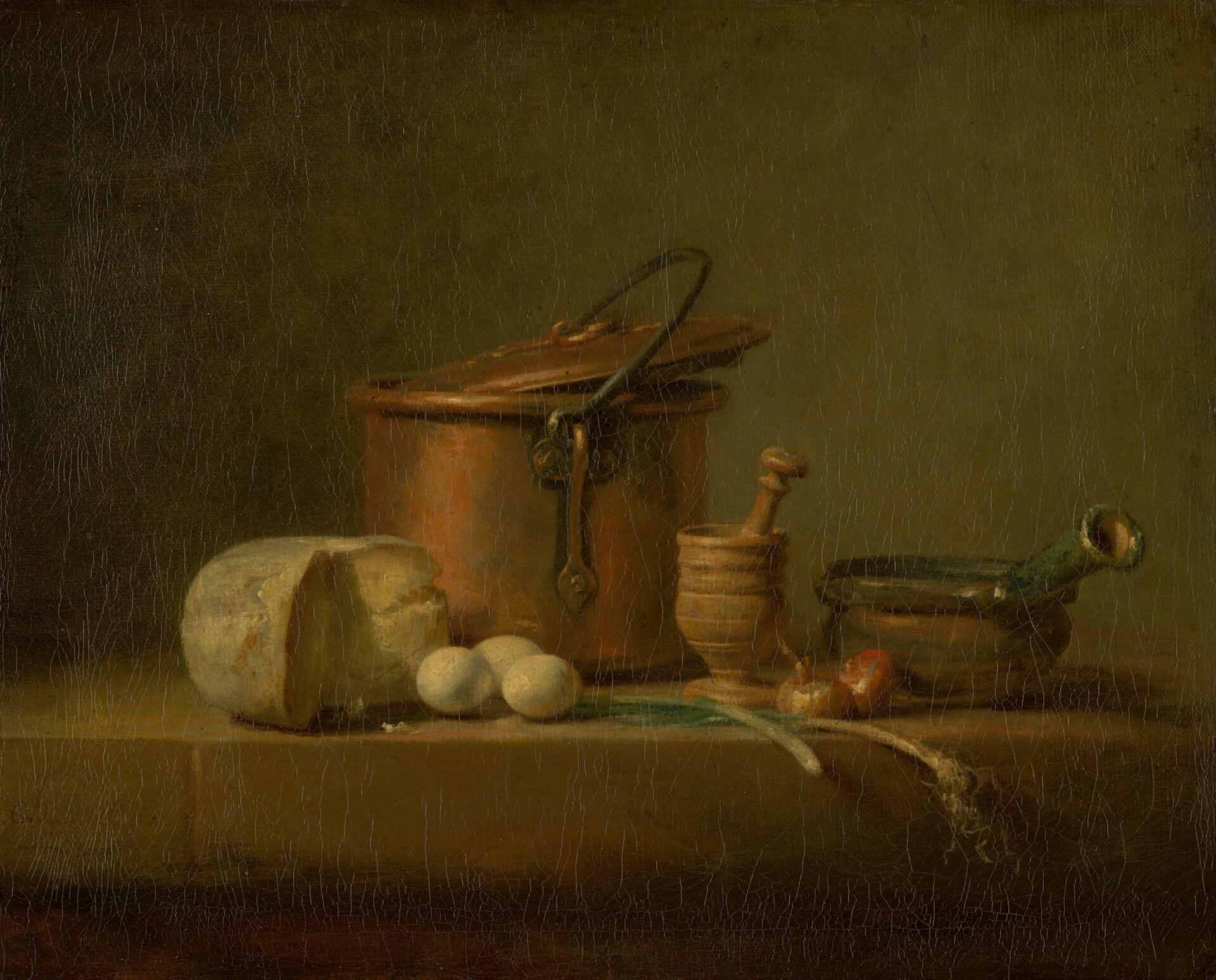

Still life artists use everyday objects to explore colour, light, texture, shape, and composition. Sometimes, these objects can also carry deeper meanings about life, wealth, or death.
For Malaysian art students and hobbyists, still life is a great art form to begin building your skills with. It's also accessible, meaning you can start with things you already have at home, such as fruit, flowers, cups, books, and ceramics.
In this guide, we'll explain what still life art is, introduce some of the most famous still life artists, explore what makes their work distinctive, and show what you can learn from them.
| Artist | Key Work | Why Study Them |
|---|---|---|
| Caravaggio | Basket of Fruit (after 1597) | Close natural detail and signs of decay |
| Jean-Siméon Chardin | The Ray (1728) | Texture and light on humble objects |
| Paul Cézanne | The Basket of Apples (c. 1893) | Shifting viewpoints and form |
| Giorgio Morandi | Still Life (c. 1955) | Composition and negative space |
| Salvador Dalí | Living Still Life (1956) | Objects suspended in motion |
| Andy Warhol | Still Life (1976) | Pop Art and repeated imagery |


What Is Still Life Art?
Still life1 is a genre of art that depicts inanimate objects, usually arranged in a particular setting by the artist. These can include fruit, flowers, books, bottles, ceramics, food, or other everyday objects. While these may seem like ordinary objects, the way the artist arranges and represents them can completely change the viewer's perspective.
For still life artists, the subject becomes a way to study things like light, colour, texture, shape, and composition. A painting of fruit, for example, can show how light falls on a shiny apple, how different colours work together, or how objects create shadows.
A still life can also tell a story, and the chosen objects may carry symbolic meanings. In European still life, for example, skulls, extinguished candles, and decaying fruit were sometimes used to express vanitas ideas2 about mortality and the temporary nature of worldly possessions.
You should also know how to distinguish still life from a few related forms:
| Type | What It Focuses On | Typical Approach |
|---|---|---|
| Still life painting | Objects, arrangement, colour, light, and composition | Can range from highly realistic to abstract or stylised |
| Still life drawing | Form, proportion, tone, perspective, and observation | Often uses pencil, charcoal, graphite, or ink |
| Botanical illustration | Accurate depiction of plants and their features | Prioritises botanical detail and identification |
Despite common assumptions, still life is not always limited to realistic representation. As the genre developed, artists increasingly used it to experiment with form, space, colour, and composition. This is one reason still life appears across such different periods and movements, from 17th-century Dutch painting to Cézanne and modern art.
If you're interested in learning more about this, read our piece on the history of still life art.
6 Famous Still Life Artists You Should Know
Here are six artists that are especially useful to know if you're studying the genre of still life art.
1. Caravaggio
Caravaggio's Basket of Fruit is one of the early works that helped establish still life as an independent subject. Painted in Rome sometime after 1597, it shows a basket of fruit and leaves against a plain background. The Biblioteca Ambrosiana describes the painting as a prototype of the still life genre.
Italy / Baroque
1571–1610
Naturalism with dramatic light and shadow
Fruit, leaves and flowers, often with blemishes and signs of decay
Basket of Fruit (c. 1597–1600), Ambrosiana, Milan
What makes it stand out is the close attention to natural detail. Some fruit looks fresh while other parts are already damaged or withering. This gives the simple arrangement a sense of passing time and mortality.
2. Jean-Siméon Chardin
French painter Jean-Siméon Chardin became known for scenes of food, kitchen objects, and domestic life. His The Ray (La Raie), painted in 1728, is one of his best-known still life works and is now in the Louvre. It was also the reception piece that helped secure his admission to the French Royal Academy.
France / 18th century
1699–1779
Quiet realism with soft, layered brushwork
Kitchen objects, copper pots, fish, game and fruit
The Ray (1728), Musée du Louvre, Paris
Chardin's work is worth studying for its careful observation of texture and light. Instead of making ordinary objects look grand, he found visual interest in their surfaces, shapes, and arrangement.
3. Paul Cézanne
Paul Cézanne pushed still life in a very different direction. His The Basket of Apples, painted around 1893, is held by the Art Institute of Chicago.
France / Post-Impressionism
1839–1906
Solid, structured forms seen from shifting viewpoints
Apples, oranges, jugs and folded tablecloths
The Basket of Apples (c. 1893), Art Institute of Chicago
Look closely, and the table, basket, and objects do not follow conventional perspective perfectly. Cézanne presents the objects from slightly different viewpoints within the same composition. This makes the painting a useful example of how still life could become a way to investigate form, space, and the act of seeing, rather than simply copying objects realistically.
4. Giorgio Morandi
Italy / 20th-century modernism
1890–1964
Muted, tonal compositions built from repeated arrangements
Bottles, jars, vases and boxes
Still Life (c. 1955), National Gallery of Art, Washington
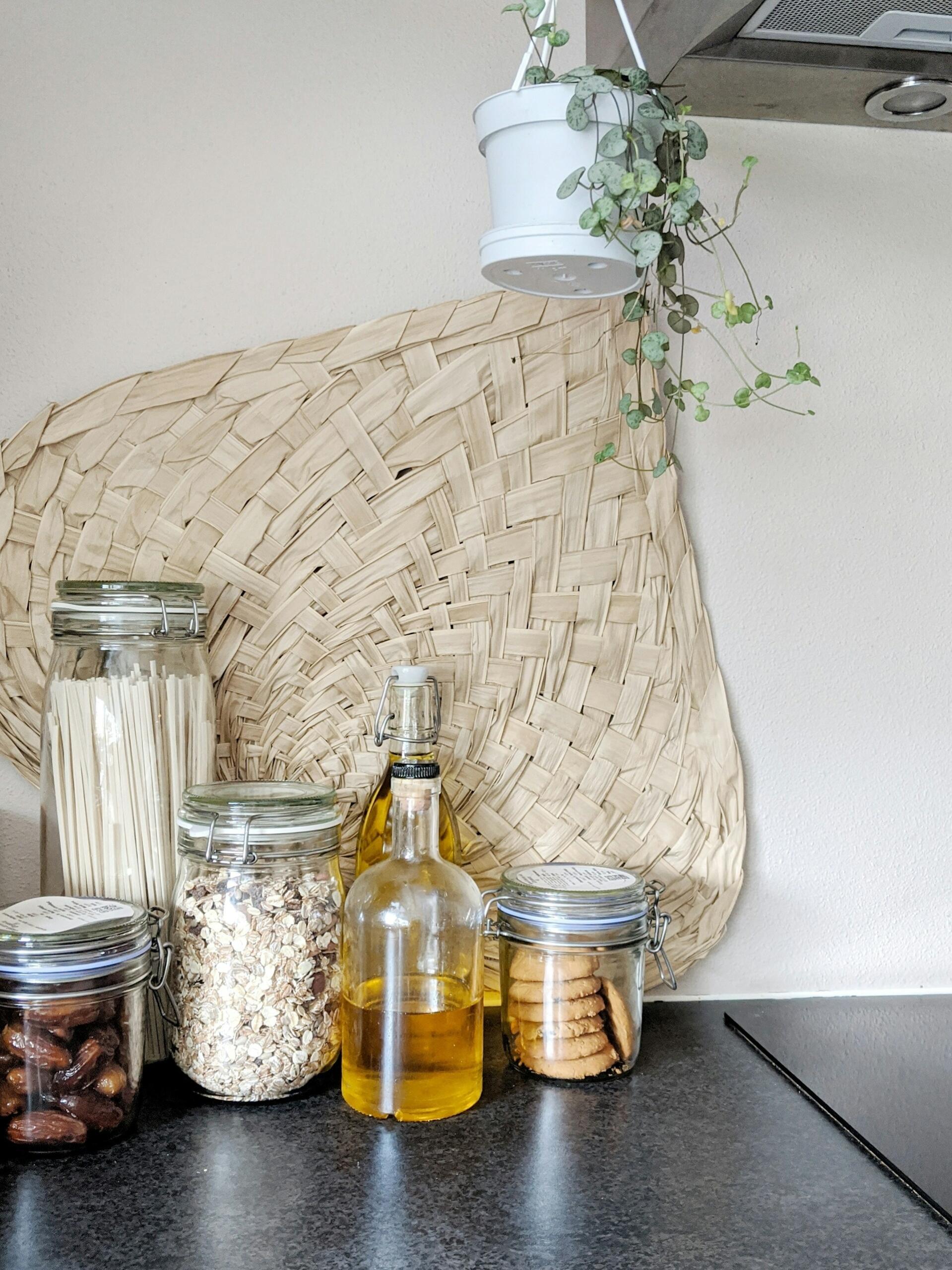
Italian artist Giorgio Morandi spent much of his career painting still lifes of simple objects. His Still Life, painted around 1955 and now at the National Gallery of Art in Washington, brings together a tall white bottle and a group of box-like blocks in a closely arranged group.
Morandi was less interested in the objects themselves than in how they worked together as a composition. He repeatedly explored their shapes, volumes, colours, textures, and the spaces between them.
Nothing is more abstract than reality.
Giorgio Morandi, in a 1955 interview
5. Salvador Dalí
Salvador Dalí brought still life into his Surrealist practice. His Living Still Life (Nature Morte Vivante), painted in 1956, shows fruit, glasses, and other objects apparently suspended in motion. Rather than keeping objects stable and carefully arranged, Dalí makes the still life feel as if it is moving.
Spain / Surrealism
1904–1989
Surrealist, with objects suspended in mid-air
Fruit, glassware and floating everyday objects
Living Still Life (1956), The Dalí Museum, St. Petersburg, Florida
The painting dates to Dalí's Nuclear Mysticism period, when he became interested in the relationship between modern science, religion, and spirituality. It is an oil painting that is now held by the Salvador Dalí Museum in St. Petersburg, Florida.
6. Andy Warhol
Andy Warhol also explored still life, bringing the bold imagery and techniques of Pop Art into the genre. His Still Life (1976), held by The Metropolitan Museum of Art, uses acrylic and silkscreen on canvas to turn a hammer and sickle, a familiar political symbol, into a still life. The work shows Warhol's interest in mass-produced imagery, repetition, and familiar objects.
United States / Pop Art
1928–1987
Silkscreen prints with bold colour and repeated imagery
Consumer products (soup cans, Coca-Cola bottles), flowers and familiar symbols
Still Life (1976), The Metropolitan Museum of Art, New York
Warhol's use of commercial imagery became a defining part of his Pop Art practice. His famous Campbell's Soup Cans (1962), for example, consists of 32 canvases, each depicting a different Campbell's soup variety.
Old Masters (Caravaggio and Chardin)
- Close observation of real objects
- Careful realism and natural detail
- Symbolic hints such as decay and passing time
- Light and texture that describe each surface
Modern Artists (Cézanne to Warhol)
- Experiments with form, space, and viewpoint
- Repeated objects studied for composition
- Surreal movement and scientific ideas
- Mass-produced imagery and Pop Art techniques
Check out some more modern artists here:
Still Life Drawing Artists: Who Should You Study?
If you want to improve your still life drawing, here are some artists whose techniques you can observe and study:
- Albrecht Dürer: Study Dürer for his precise observation of natural forms and his attention to fine detail. His Dead Blue Roller (c. 1500 or 1512) is a particularly interesting example of an early still life study from nature.
- Jean-Siméon Chardin: Chardin is useful for studying how objects are arranged and how light, texture, and tone describe different surfaces. Have a look at The Silver Tureen.
- Giorgio Morandi: His closely arranged bottles, boxes, and vessels are particularly useful for studying composition, proportion, and the use of negative space. See some examples here.
- Wayne Thiebaud: His paintings and drawings of cakes, food, and everyday objects are useful for studying form, shape, and cast shadows.
Proportion: judging the size of one object against another
Tone: using light and dark values to show form
Perspective: representing objects and depth from a particular viewpoint
Negative space: observing the spaces around and between objects
Cast shadows: showing how light falls around an object
Composition: deciding where objects sit within the frame
Try It Yourself
Want to try making your own still life piece? You do not need an expensive set-up. Put a few objects on a table, such as a mango, ceramic cup, glass bottle, or woven basket. Use one light source and keep the arrangement simple.
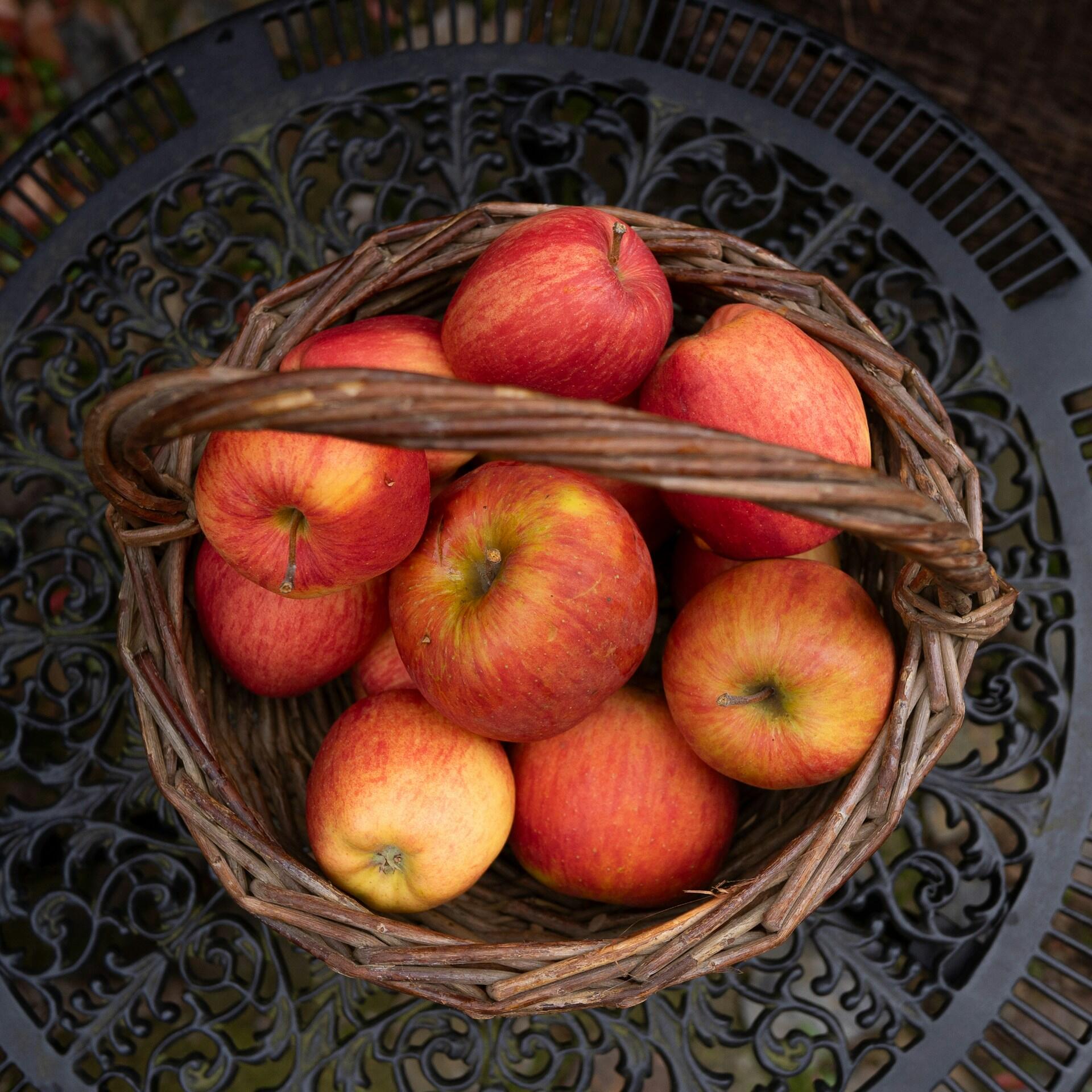
Start by blocking out the main shapes. Then look at the spaces between the objects, where the shadows fall, and how the light changes each surface. Add smaller details only after the overall proportions are working. For additional tips, check out our still life drawing guide.
Still Life Art in Malaysia: What Can You Look At?
Still life can also reflect the places, food, and everyday objects that surround us. Artists working in Malaysia and the wider region have used the genre to depict local life rather than simply copying European still life traditions.
A good example is Georgette Chen's Untitled (1960), held in the ILHAM Foundation Collection. Chen, a pioneer of the Nanyang style, taught in Penang before settling in Singapore. The painting arranges garlic, daikon, eggs, a glass bottle, and a traditional earthen pot on a rattan table. These familiar objects give the still life a distinctly local setting while also exploring culture and everyday life.
Khaw Sia's Still Life with Lobster (1983) is another example of how still life appears in Malaysian art. The watercolour depicts a carefully arranged group of objects and food by a first-generation Malaysian artist who lived and worked in Penang. The painting is part of the ILHAM Foundation Collection.
If you want to see more Malaysian art in person, the National Art Gallery (Balai Seni Negara, formerly the National Visual Arts Gallery) in Kuala Lumpur and ILHAM Gallery are good places to start. Both maintain collections that you can explore alongside their exhibitions and programmes.
To explore further, read our piece on modern still life art.
Learn Still Life With Superprof
If you want to develop your still life skills further, working with an art tutor can give you space to experiment with proportion, shading, composition, and perspective, while getting feedback along the way. Superprof has drawing tutors who can help you practise at your own pace.
References
- Tate. (n.d.). Still life. In Art Terms. Retrieved October 7, 2026, from https://www.tate.org.uk/art/art-terms/s/still-life
- Liedtke, W. (2003, October). Still-life painting in Northern Europe, 1600-1800. In Heilbrunn Timeline of Art History. The Metropolitan Museum of Art. Retrieved October 7, 2026, from https://www.metmuseum.org/essays/still-life-painting-in-northern-europe-1600-1800
Summarise with AI:
Did you like this article? Leave a rating!

 Loading...