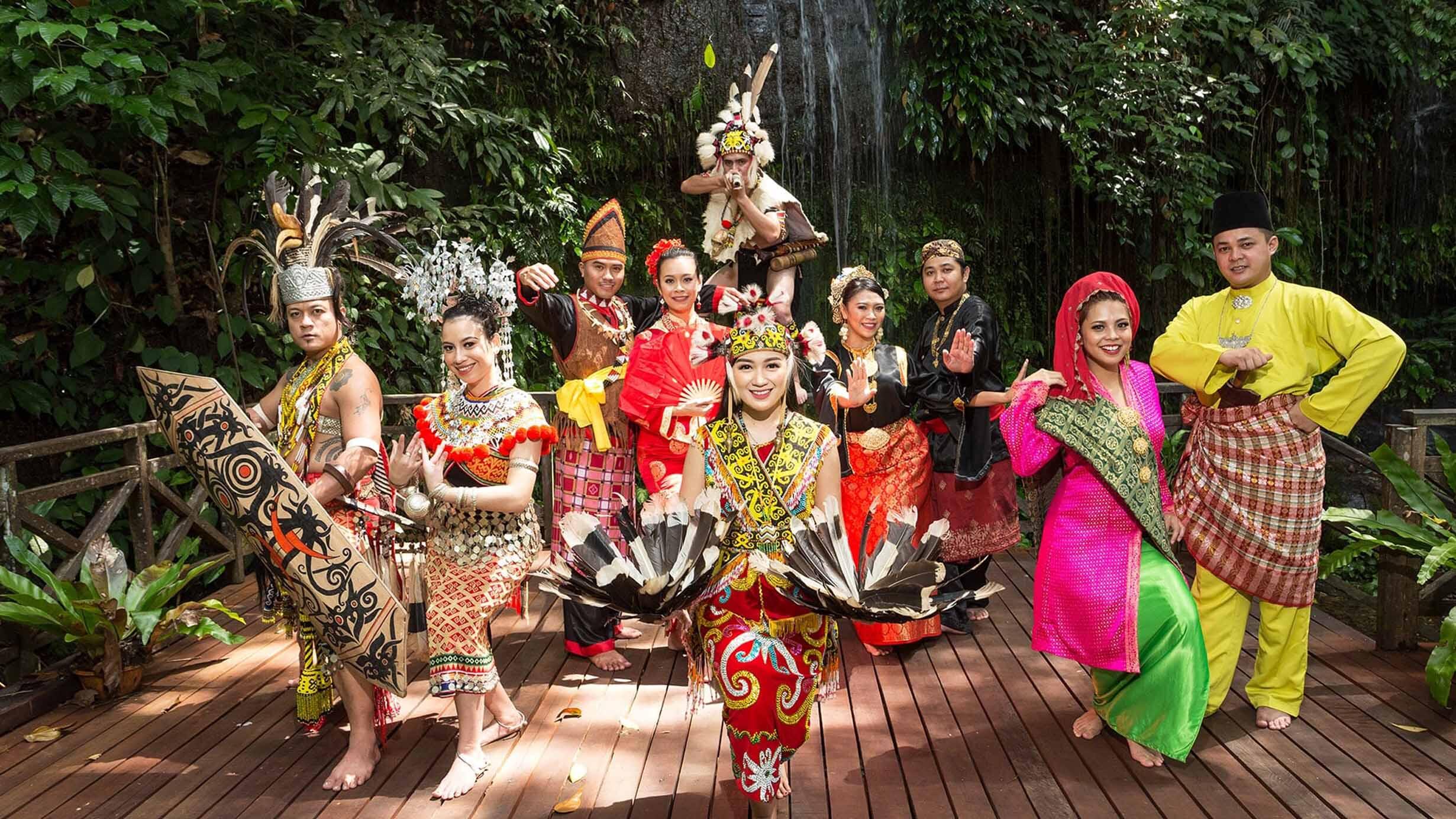

Sarawak, the largest state in Malaysia and also known as the land of Hornbills, is located on the island of Borneo, the third-largest island in the world. It is a vibrant cultural mosaic shaped by its unique blend of ethnic communities. From the Iban to the Melanau and Bidayuh, each group contributes to a rich legacy of cultural dances that reflect their identity, beliefs, and history.
The beauty of Sarawak's traditional dance lies in its diversity. Whether it’s the Iban warrior Ngajat dance or the graceful Kenyah Datun Julud dance, these performances are more than art – they are living archives of indigenous heritage passed down through generations.
| Dance | Culture Origin | Key Characteristics | Occasion/Meaning |
|---|---|---|---|
| Ngajat (Male) | Iban | Strong, energetic movements; warrior-like stances; use of traditional weapons such as parang and terabai | Symbolises bravery and warrior heritage; performed during Gawai Dayak and celebrations |
| Ngajat Induk (Female) | Iban | Graceful, flowing movements; delicate hand gestures; traditional attire, including Pua Kumbu and headdress | Represents femininity, elegance, and cultural pride |
| Datun Julud | Kenyah | Smooth, flowing arm movements inspired by the hornbill; continuous, elegant motion | Celebrates joy, gratitude, and important occasions such as births and festivals |
| Rejang Beuh | Bidayuh | Rhythmic group formations; coordinated, graceful movements emphasising unity | Performed during harvest celebrations and social gatherings |
| Alu-Alu | Melanau | Slow, symbolic movements reflecting spiritual beliefs and elements of daily life | Performed during the funeral rites to comfort the bereaved family. |


💃The Significance of Traditional Dances in Sarawak
Cultural Identity and Heritage
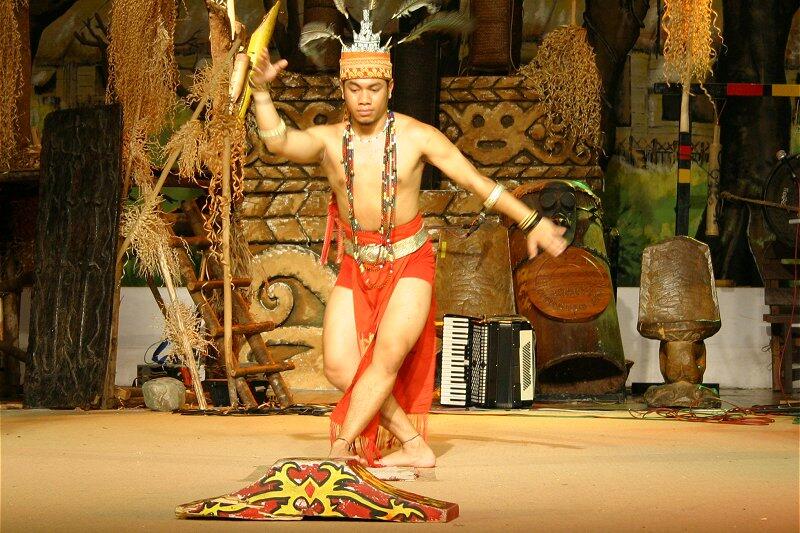
Sarawak’s cultural dances are the cornerstone of its indigenous communities. They are performed during festivals such as Gawai, rituals, and communal gatherings, serving as expressions of identity, heritage, and cultural continuity.
They symbolise courage, grace, community spirit, and a deep connection to nature and the spirit world.
Social Cohesion
These dances bring people together during festivals and celebrations. Whether performed in village longhouses or public events, they serve as a powerful medium for connecting diverse ethnic groups, nurturing community bonds, and safeguarding shared cultural identity despite rapid modernisation.
These performances foster unity by encouraging people to dance together – regardless of their backgrounds and social statuses.
Spiritual Expression1
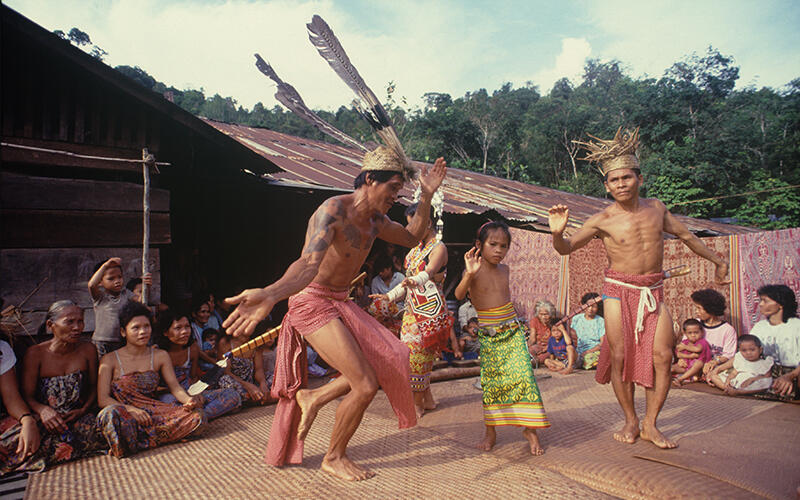
Many dances are not merely performances for entertainment. These dances are deeply rooted in animistic beliefs and act as meaningful mediums for spiritual expression, bridging the physical world with the supernatural realm of spirits and ancestors.
They are often performed for purposes such as healing, protection, and maintaining harmony between humans and the spiritual world.
Gawai Dayak is celebrated annually on 1st June, marking the end of the harvest season and honouring the traditions of the Iban tribe in Sarawak.
✨Prominent Traditional Sarawak Dance Forms
Iban Traditional Dance: Origins and History
The Ngajat dance, one of the most iconic traditional dances in Sarawak, can be traced back to the 16th century. Historically, it was usually performed to celebrate warriors returning from battle, symbolising strength, bravery, and honour.
Today, it is performed during Gawai Dayak, a thanksgiving festival for a bountiful harvest, as well as to welcome guests to village longhouses and during special ceremonies.
Ngajat2
The Ngajat dance is characterised by energetic, rhythmic movements that reflect agility, strength, and alertness. Dancers often perform gestures inspired by birds and warrior-like stances, symbolising the historical identity of the Iban community.
The performance is accompanied by taboh music, featuring traditional instruments such as the ngkerumong (gong row) and bebendai (knobbed gong). In some variations, props or ceremonial elements may be used to highlight its cultural meaning.
Ngajat Induk3
Traditionally, this variation of Ngajat is performed by Iban women, emphasising grace and cultural elegance. It is characterised by graceful, flowing movements and delicate hand and arm gestures.
The performance highlights femininity, beauty, and cultural refinement rather than aggression, like the male’s version.
However, contemporary staged performances frequently present mixed-gender adaptations for cultural and tourism-related contexts.
👘 Attire – Traditional Iban Ensemble
Male dancers typically wear the traditional sirat (loincloth), along with elaborate feathered headgear such as the Ketapu, which in those days was made from the hornbill feathers. Their attire is further enhanced with decorative accessories, including beads and other ornaments.
Female dancers wear the ngepan, a highly detailed and symbolic traditional attire or dress of the Iban community. The costume often includes intricately woven Pua Kumbu textiles, along with silver jewellery, beadwork, and decorative headdresses.
Today, Sarawak has a strict conservation law for its famous hornbill feathers, as the state's official bird is protected under the law. As a result, in contemporary performances, substitutes or alternative materials are often used instead.
Pua Kumbu is a traditional, handwoven, ceremonial cotton textile created by the Iban people of Sarawak, Malaysia. In 2012, it was declared a Malaysian Fine Art National Heritage by the National Heritage Department of Malaysia.
Its intricate designs and symbolic designs are primarily inspired by spiritual visions, dreams, and traditional folklore.
Datun Julud Dance: Cultural Background4
Also known as the “long Dance” or “Hornbill Dance”, Datun Julud is a traditional dance of the Kenyah tribe, a subset of the Orang Ulu people in Sarawak. The dance is performed by women and celebrates joy, peace, and gratitude.
According to folklore, it is said that this dance was created by Nyik Selong, a respected leader (often described in oral tradition as a king or prince) of the Dayak Kenyah tribe in Apo Kayan.
However, he had a problem choosing a successor as he had no heir. After a long period of waiting, he welcomed a grandchild into his family, bringing great joy to the community.
To express gratitude for the blessing, he celebrated the occasion with a feast and performed this dance as a celebration of happiness and thanksgiving. This is how the dance is said to have originated, according to the legend.
👘 Performance and Attire
The dance is performed in slow, graceful motions with controlled footwork and flowing arm gestures, accompanied by the rhythm of the sape (traditional lute).
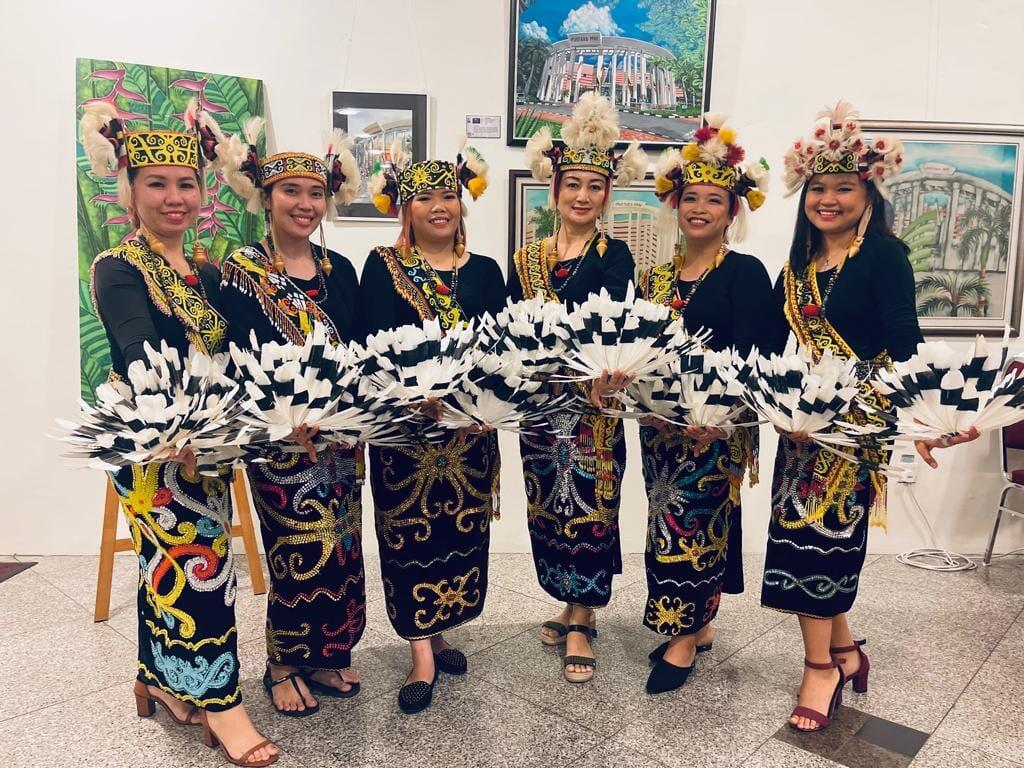
The costume consists of a vibrant, intricately designed sarong and a beaded top or vest decorated with colourful patterns. Dancers also wear an elaborate headdress with tufts and beads, along with traditional brass or copper earrings that stretch the earlobes.
The most distinctive feature of the dance is the kirep (feather fans) representing the wings of a hornbill in flight. The feather fans are traditionally made from hornbill feathers; these are now often recreated using substitutes in modern performances.
This is also seen in other ethnic dance forms, including Malay dance styles, which have adapted over time.
Rejang Beuh (Eagle Dance)5
The Rejang Beuh is a well-loved traditional dance in Sarawak performed by the Bidayuh community. It’s deeply rooted in folklore and nature, with movements inspired by the flight and behaviour of an eagle.
It is traditionally performed after the harvest season as a form of celebration and entertainment for guests visiting the longhouse.
According to folklore, the dance tells the story of a Bidayuh hero, Madu Ujong, who was sent by Raja Bintang to defeat a mythical celestial bird known as Tingkilang Ramang. If he succeeded, he would be granted the honour of marrying the king’s daughter, Dara Buda.
👘 Performance and Attire
The dance symbolises the flight of the eagle spirit, combining graceful movement with sudden, sharp downward gestures to mimic fighting.
The performance is accompanied by traditional instruments such as gongs, drums, and the gulingtang, along with small bells attached to the ankles.
Dancers are typically adorned in traditional Bidayuh attire, featuring beadwork, ornamental accessories, and garments such as sarong-style garments or loose-fitting trousers, with variations for both male and female performers.
These variations reflect differences in community practices as well as adaptations for modern performances.
In contemporary performances, fabric or scarves are sometimes tied to the female dancers' fingers to emphasise the wing-like movements.
A similar use of movement and symbolism can be seen across Indian, Chinese, and Orang Asli dance traditions, each shaped by its own cultural narratives.
Alu Alu Dance: Melanau Funeral Rite6
The Alu-Alu dance is an important traditional performance of the Melanau community in Sarawak. It is performed to provide comfort and solace to the bereaved family over four nights.
The dance movements are also inspired by dreams, daily activities, traditional healing practices, and folk games, reflecting the cultural richness and creativity of the Melanau people.
👘 Performance and Attire
The movements are expressive and may vary depending on performance context and interpretation.
The highlight of this dance performance is the climax involving a bamboo pole. A male dancer climbs the bamboo pole to rest his stomach on the tip of the pole, and he is spun by his fellow dancers.
This part of the dance demonstrates physical strength, coordination, and courage, accompanied by rhythmic, fast-paced music.
In terms of attire, female dancers typically wear black satin blouses, paired with songket sarongs, and ornamental accessories. The male dancers wear traditional Baju Melayu.
🌏The Role of Traditional Dances in Modern Sarawak
Traditional dances in Sarawak continue to play a vital role in bridging the state’s rich indigenous heritage with its rapidly evolving society. While many dances have transitioned from their functional and ritualistic origins to theatrical performances, they remain essential for cultural preservation and helping younger generations stay connected to their roots.
Traditional dances also play an important role in tourism and cultural exchange. By being performed at festivals, heritage events, and public celebrations, they allow visitors to experience the diversity of Sarawak’s cultures. Similar parallels can be seen in traditional dances in Sabah, another part of Borneo, which also reflect the state’s rich mix of indigenous communities and heritage practices.
🎉Experiencing Sarawak Cultural Dance Traditions
One of the best ways to experience Sarawak’s traditional dances is through cultural festivals. Festivals such as the Rainforest World Music Festival provide opportunities for visitors to witness live performances, songs, and even take part in interactive workshops.
The festival is typically held annually around June or July in Kuching, Sarawak. In 2026, the festival will take place from 26-28 June at the Sarawak Cultural Village.
Another immersive experience can be found at cultural heritage sites such as the Sarawak Cultural Village, where visitors can observe traditional performances in a village-like setting. These live shows offer a closer look at the costumes, movements, and meanings behind each dance, making it a valuable educational and cultural experience.
🌺Conclusion
Traditional arts are more than entertainment – they are living symbols of identity, history, and indigenous culture. Though modern performing arts, such as K-pop and hip hop, which are widely popular today, communities and cultural custodians need to safeguard the cultural heartbeat of Sarawak while adapting to a rapidly changing world.
Terima kasih, semoga kitai terus ngelindungi adat dan budaya Sarawak.
Thank you, may we continue to protect Sarawak’s customs and culture.
References
- Magiman, M. M., Alli, H., & Bakar, F. A. (2026). Revealing the symbolic role of Buket philosophy and cultural motifs in social development in Sarawak. Cogent Arts and Humanities, 13(1). https://doi.org/10.1080/23311983.2026.2623392
- Arts and culture information. (n.d.). https://pemetaanbudaya.jkkn.gov.my/en/senibudaya/detail/1079
- Bt. (2024, May 10). Allure, mysticism, folklore in the dances of Sarawak. BorneoTalk. https://www.borneotalk.com/post/allure-mysticism-folklore-in-the-dances-of-sarawak
- Arts and culture information. (n.d.-b). National Department for Culture and Arts (JKKN). https://pemetaanbudaya.jkkn.gov.my/en/senibudaya/detail/1086
- Arts and culture information. (n.d.-c). National Department for Culture and Arts (JKKN). https://pemetaanbudaya.jkkn.gov.my/en/senibudaya/detail/1094
- Arts and culture information. (n.d.-d). National Department for Culture and Arts (JKKN). https://pemetaanbudaya.jkkn.gov.my/en/senibudaya/detail/1085
Summarise with AI:
Did you like this article? Leave a rating!

 Loading...