
Malaysia is often seen as a melting pot of cultures in Asia, shaped by centuries of migration, trade, and shared traditions. This rich diversity is reflected in the country’s festivals and traditional dances, each expressing its own identity and history.
From the graceful storytelling of Bharatanatyam, to the energetic movements of the Lion Dance, and the deep spiritual connection of Sewang, these dance forms reflect the history, beliefs, and identity of their communities. Malaysian ethnic dances are living traditions passed down through generations, offering a window into the country’s cultural diversity and shared heritage.
| Dance | Cultural Origin | Key Characteristics | Occasion / Meaning |
|---|---|---|---|
| Mak Yong | Malay | Dance-drama combining storytelling, music, and stylised movements | Cultural performances, historical storytelling |
| Joget | Malay (Portuguese-influenced) | Fast-paced partner dance with lively rhythm and playful interaction | Weddings, social celebrations |
| Zapin | Malay (Middle Eastern influence) | Rhythmic footwork, synchronised group movements | Cultural events, religious and community gatherings |
| Lion Dance | Chinese | Acrobatics, coordinated movements, and the use of the lion costume | Chinese New Year, symbol of luck and prosperity |
| Fan Dance | Chinese | Graceful movements using handheld fans, visual storytelling | Cultural showcases, stage performances |
| Bharatanatyam | Indian (Tamilnadu, South India) | Classical dance with intricate footwork, hand gestures (mudras), and facial expressions | Religious and cultural performances, storytelling |
| Bhangra | Indian (Punjabi) | Energetic movements, jumps, strong beats and group choreography | Festivals, weddings, celebrations |
| Sewang | Orang Asli | Circular movements, chanting, collective participation | Healing rituals, ceremonies, and community gatherings |
| Silat | Malay | Martial art with stylised movements and choreography | Ceremonial performances, cultural demonstrations |
| Kuda Kepang | Javanese (Malay community) | Dancers with woven horse props, rhythmic and symbolic performance | Cultural festivals (often adapted due to regulations) |


🪭The Essence of Malaysian Ethnic Dance
Traditional performing arts in Malaysia reflect the country’s cultural diversity, where each community expresses identity, belief systems, and social values through movement, rhythm, and performance. This includes regional traditions in East Malaysia, such as the Sarawak dance.
Among the most prominent traditions are Malaysian Chinese traditional dance, Indian traditional dance in Malaysia, and Orang Asli traditional dance. Each one of these dances carries a distinct cultural identity, history, and values of its respective communities.
Traditionally, these dances were closely connected to spiritual rituals, royal court traditions, community bonding, and representations of daily life. Some originated from animistic beliefs linked to nature and spiritual worlds, while others developed through cultural exchange, trade, and migration.
Today, however, these traditional dances in Malaysia have evolved significantly while maintaining their cultural roots. They are now commonly performed at cultural festivals, school events, tourism showcases, and national celebrations such as Malaysia Day and Merdeka Day.
🎭Malay Traditional Dances
Malay traditional dances form a core part of Malaysian ethnic dance, reflecting storytelling, customs, and historical influences shaped over centuries.
Mak Yong
Mak Yong is a traditional Malay dance-drama that combines dance, music, and drama into a single performance art.
Joget
Joget is a lively and social dance that reflects cultural blending, with influences traced back to Portuguese folk dance (Branyo).
Zapin
Zapin originates from Middle Eastern traditions and was introduced to the Malay world through early trade and Islamic influence.
Datuk Ramli Ibrahim is a celebrated Malaysian dancer known for mastering both Bharatanatyam and Odissi. He was also awarded the Padma Shri by the Government of India, the highest civilian award for artists, in recognition of his contribution to classical Indian dance.
🐉Malaysian Chinese Traditional Dance
Lion Dance1
The Lion Dance in Malaysia was introduced by Southern Chinese immigrants during the 19th century and is one of the most iconic performances within the Malaysian Chinese community, especially during Chinese New Year.
Traditionally, it holds strong cultural and spiritual significance in Chinese tradition. The lion is believed to ward off negative energy, bring prosperity, and symbolise strength and good fortune.
Beyond its spiritual meaning, the Lion Dance plays an important role in preserving cultural identity and passing down tradition through generations. It is commonly performed at festivals, business openings, weddings, and public celebrations.
It was listed as a National Cultural Heritage of Malaysia in 2007 and has evolved from a solely Chinese custom into a shared cultural activity featuring dancers from different ethnicities.
👘Performance, Attire & Music
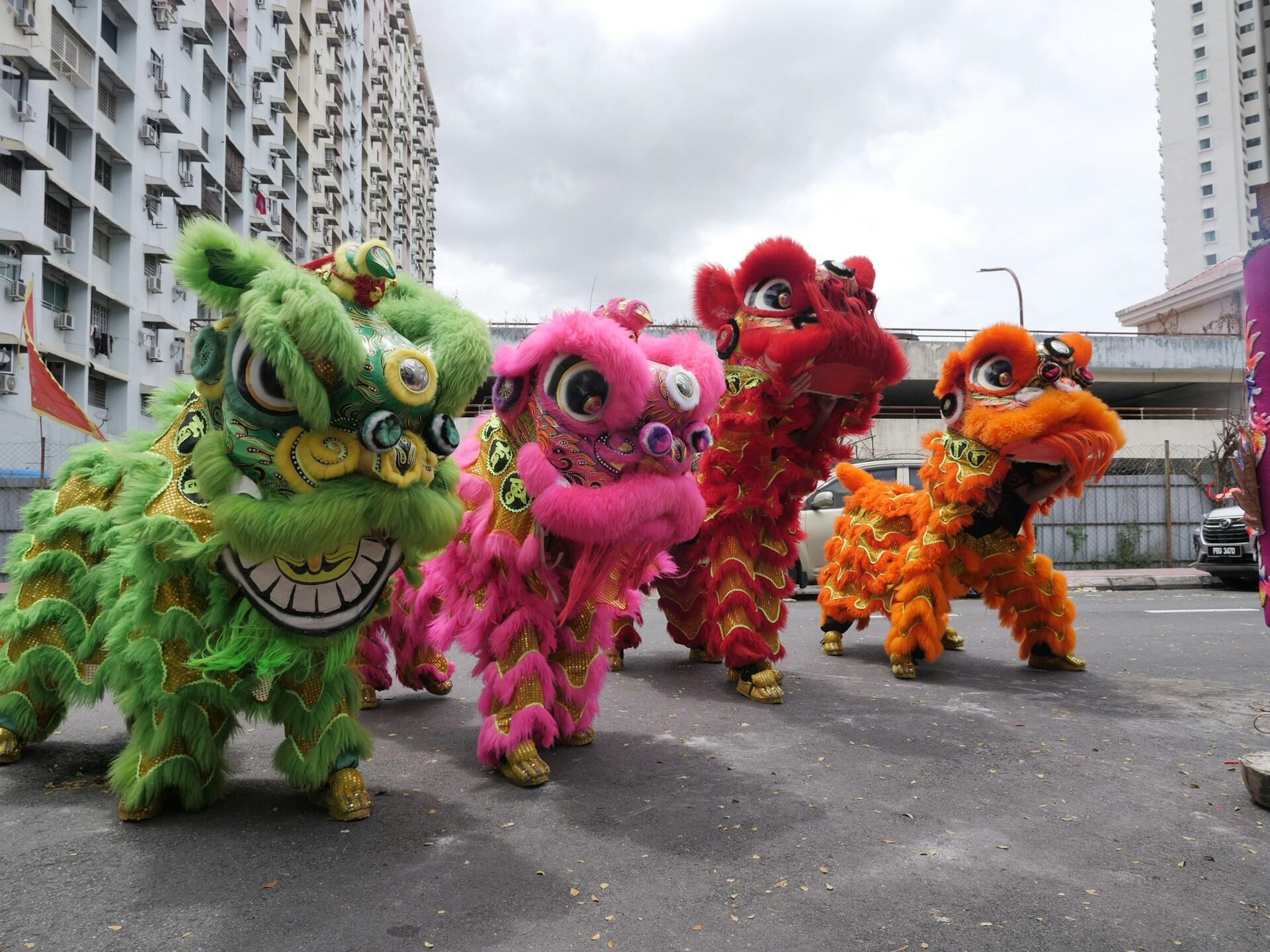
The Lion Dance is performed in pairs, with one dancer operating the head, controlling the eyes, mouth and expression, and the rear dancer operating the tail, usually bending over to form the hind legs.
Performers wear flexible, lightweight clothing with protective gear such as knee and elbow pads. For acrobatic performances, especially on poles, they also wear specialised shoes designed for grip and balance.
The lion costume is made of brightly coloured fabric such as velvet and is often decorated with fur-like textures and ornamental patterns. Mirrors are sometimes placed on the lion’s forehead to symbolise protection and to ward off negative energy. Colours on the lion’s head carry symbolic meanings linked to bravery, wisdom, and strength.
The performance includes expressive movements that mimic the lion’s behaviour, such as curiosity, alertness, aggression, and playfulness, often combined with elements of martial arts.
It is accompanied by live music, typically featuring a large drum, cymbals and gong. The music helps guide the movements and energise the performance.
Fan Dance2
Chinese Fan Dance is a traditional dance with a history of over 2,000 years, where fans are used as expressive performance props. It is commonly performed in Malaysia during cultural events, ceremonies, and stage performances.
In Malaysia, fan dance performances are still maintained by individuals and performing arts groups who aim to preserve this traditional art form.
👘Performance, Attire & Music
Dancers use one or two silk fans, highlighting grace, fluidity, and visual storytelling in their movements.
Movements often involve spinning, opening, and closing of the fan, emphasising wrist techniques, arm extensions and full-body coordination.
The attire includes vibrant, lightweight clothing designed for fluid movement, such as traditional Hanfu, flowing skirts or cheongsams (qipao) combined with elaborate hair accessories. The fans are often made of silk or bamboo.
Some performances may also include flowing scarves to enhance visual movement.
🥻Indian Traditional Dance In Malaysia
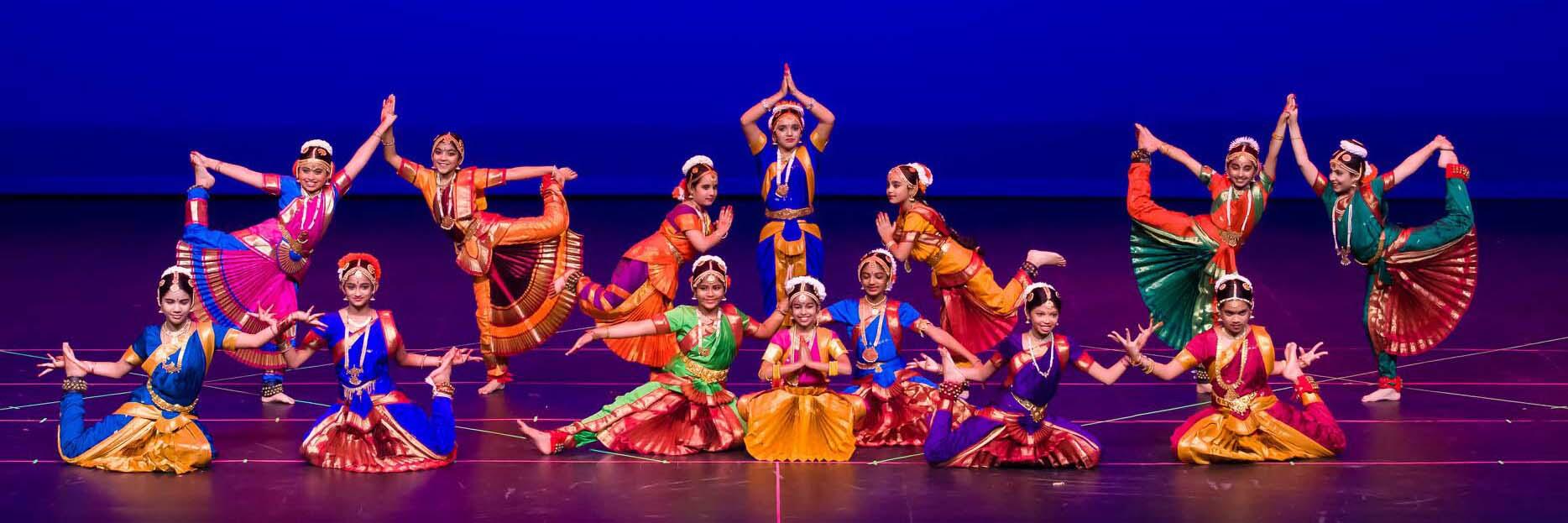
Bharatanatyam3
Bharatanatyam is an ancient Indian classical dance form, with origins tracing back over 2,000 years to Tamil Nadu, India. Its techniques are based on the Natya Shastra, an ancient Sanskrit Hindu text on performing arts attributed to Sage Bharata, which outlines the principles of drama, music, and dance.
It is a highly expressive storytelling dance form that communicates tales, emotions, and myths, primarily from Hindu scriptures.
These stories are conveyed through intricate body movements, hand gestures (mudras), and facial expressions (abhinaya). It requires extensive training, discipline, and long-term practice to master its technical and expressive depth.
In Malaysia, Bharatanatyam is widely practised within the Indian and other ethnic groups, and is taught in schools, academies, and performing arts institutions, preserving its classical tradition.
👘Performance, Attire & Music
A Bharatanatyam dancer is known for their elaborate and vibrant attire. The costume is a specially designed Bharatanatyam outfit using a Kanchipuram silk saree, although variations exist.
It consists of a blouse and a stitched lower garment that resembles pants to support movement and the araimandi (half-seated pose). There’s also a pleated fabric at the front that opens into a fan shape when the dancer does the araimandi pose.
Dancers wear traditional jewellery, including headpieces, necklaces, bangles, forehead ornaments, nose rings, earrings, armlets, and a waist belt.
One of the most distinctive accessories, salangai (ankle bells), is worn on both feet, which emphasise rhythm and footwork.
The stage makeup for performances is usually bold and traditional, designed to enhance facial expressions, especially the eyes, which play a key role in storytelling.
It is performed to Carnatic classical music accompanied by instruments such as the mridangam (drum), violin, flute, and veena, supporting the rhythm and emotional tone of the performance.
Bhangra4
Bhangra is an energetic folk dance originating from the Punjab region, introduced to Malaysia by Sikh communities.
Traditionally, it was performed to celebrate the harvest festival of Vaisakhi, symbolising joy, gratitude, and community spirit. In Malaysia, it is especially popular at weddings, cultural festivals, and public performances.
👘Performance, Attire & Music
Bhangra is a high-energy dance characterised by lively, rhythmic movements, including jumps, kicks, shoulder shrugs, and coordinated group formations. The performance is expressive and often encourages audience interaction.
It is traditionally accompanied by the dhol (double-sided drum) as the main instrument, along with others such as the tumbi and sometimes the tabla.
Dancers typically wear bright and colourful traditional attire. Men often wear a kurta, lungi (or chaadra), and turban, while women wear salwar kameez with a dupatta (shawl).
🌿Orang Asli Traditional Dance
Sewang5
The Orang Asli traditional dance known as Sewang is a deeply spiritual and communal performance tradition among Orang Asli communities in Malaysia.
Sewang is traditionally performed during healing rituals, ceremonies, and community gatherings. It reflects the Orang Asli’s close relationship with nature, ancestral spirits, and spiritual beliefs.
👘Performance, Attire & Music
The dance is performed in circular movements, with the dancers moving in rhythmic steps while chanting or singing. When it comes to the costumes, they wear traditional clothing adorned with natural materials such as palm leaves, flowers, and tree bark. The music is created using simple instruments, often made from bamboo, which are struck or shaken to produce rhythmic, tapping sounds.
🪘Traditional Performing Arts In Malaysia
Silat
Silat is a unique blend of martial arts and performance, often included in traditional performing arts in Malaysia. While primarily a self-defence practice, it is also performed ceremonially with stylised, rhythmic movements.
Silat is both. While it is fundamentally a martial art, its performance aspect incorporates rhythm, music, and choreography, allowing it to be presented as a cultural dance form.
Kuda Kepang
Kuda Kepang originated from Javanese culture and involves dancers riding woven horse figures. This traditional Malaysian art is often associated with spiritual rituals, including trance-like performances and storytelling.
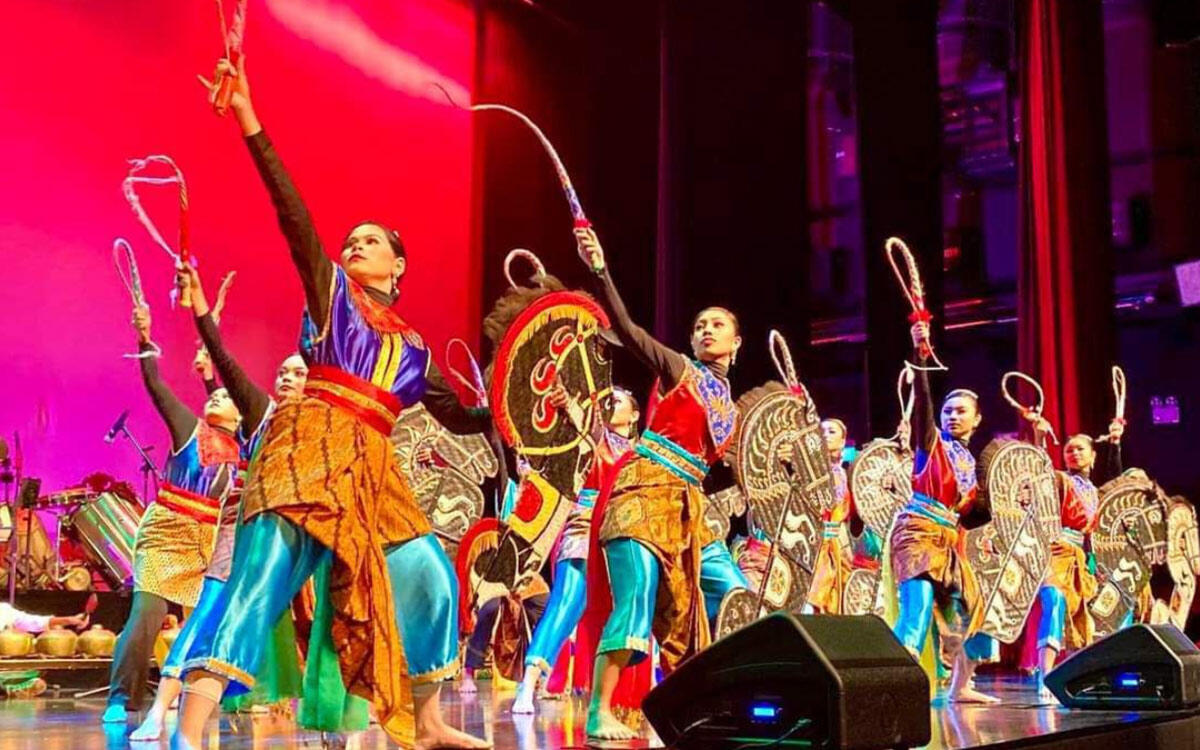
It was banned in Johor for some time and made its way back into the cultural arts world after removing the mystical, shamanistic or trance elements. Now, the dance is widely performed during celebrations such as weddings, blessings of homes, community gatherings, and official state events.
🤝The Role of Traditional Dance in Malaysian Cultural Heritage
Malaysian ethnic dance plays a crucial role in preserving the nation’s rich cultural heritage, reflecting identity, unity, and shared traditions across diverse communities.
These dances bring people together during festivals, celebrations, and national events, highlighting the cultural foundations that shape Malaysia today. This includes performances such as Sabah dance traditions in East Malaysia.
They also play a crucial role in helping younger generations stay connected to their roots. Beyond that, these traditional dances serve as cultural ambassadors showcasing Malaysia’s diversity on both national and international stages.
🌺Conclusion
From the elegance of Bharatanatyam movements to the energetic rhythms of lion dance and the spiritual depth of Sewang, Malaysian ethnic dance reflects the soul of the nation.
These traditions are living archives of the histories, values, and identities of the communities that collectively form Malaysia’s shared cultural heritage.
As Malaysia continues to evolve, preserving these dance traditions is important to keeping its rich cultural heritage alive for future generations.
While I dance I cannot judge, I cannot hate, I cannot separate myself from life. I can only be joyful and whole.
Hans Bos
References
- Arts and cultural information. (n.d.-b). National Department for Culture and Arts (JKKN). https://pemetaanbudaya.jkkn.gov.my/en/senibudaya/detail/1250
- Arts and cultural information. (n.d.-b). National Department for Culture and Arts (JKKN). https://pemetaanbudaya.jkkn.gov.my/en/senibudaya/detail/708
- Arts and cultural information. (n.d.-b). National Department for Culture and Arts (JKKN). https://pemetaanbudaya.jkkn.gov.my/en/senibudaya/detail/719
- Arts and cultural information. (n.d.-b). National Department for Culture and Arts (JKKN). https://pemetaanbudaya.jkkn.gov.my/en/senibudaya/detail/711
- Arts and cultural information. (n.d.-b). National Department for Culture and Arts (JKKN). https://pemetaanbudaya.jkkn.gov.my/en/senibudaya/detail/823
Summarise with AI:
Did you like this article? Leave a rating!

 Loading...